
The New DURA 2 SOLAR Brings All the Best of COROS to Cycling Computers
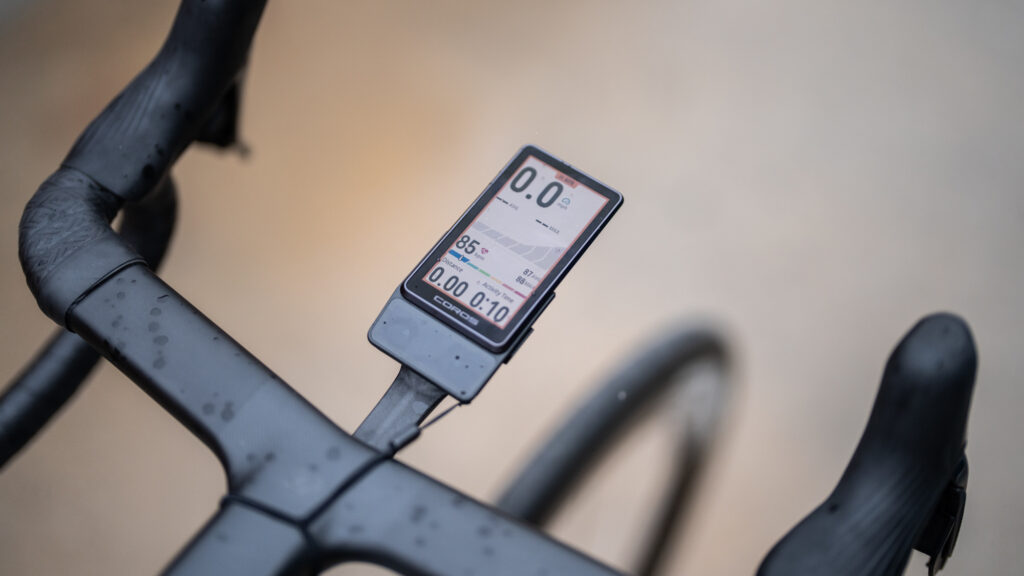
I’ve been rocking the COROS PACE series smartwatch for a couple of years now. I like the app, the graphics, and I love the battery life. But what you will find on my bike is usually a Wahoo product. When COROS launched the first DURA in the summer of 2024, the thing most of us noticed was the price — $249 for a bike computer with 120 hours of battery and a solar panel, from a company a lot of our community already had on the wrist. Then the reviews came in and the execution didn’t match the spec sheet: re-routing needed your phone and a cell signal; the maps had no street names; and the climb screen would chop one climb into a bunch of random pieces.
COROS did what COROS does, which is push software updates every few weeks for two years, and the DURA settled in as a solid budget head unit and I used it from time to time.
Today the DURA 2 SOLAR is way more like the watches that I have used for years. It’s very functional has a great backend and does everything you mostly need and doesn’t over do it. It’s got a 3.5 inch screen, a carbon and anodized aluminum body, voice control, and the same 120 hours of battery and solar that you’ve come to expect, all at a reasonable price.
The Build: Carbon, Alloy, and a Screen You Can Actually Read
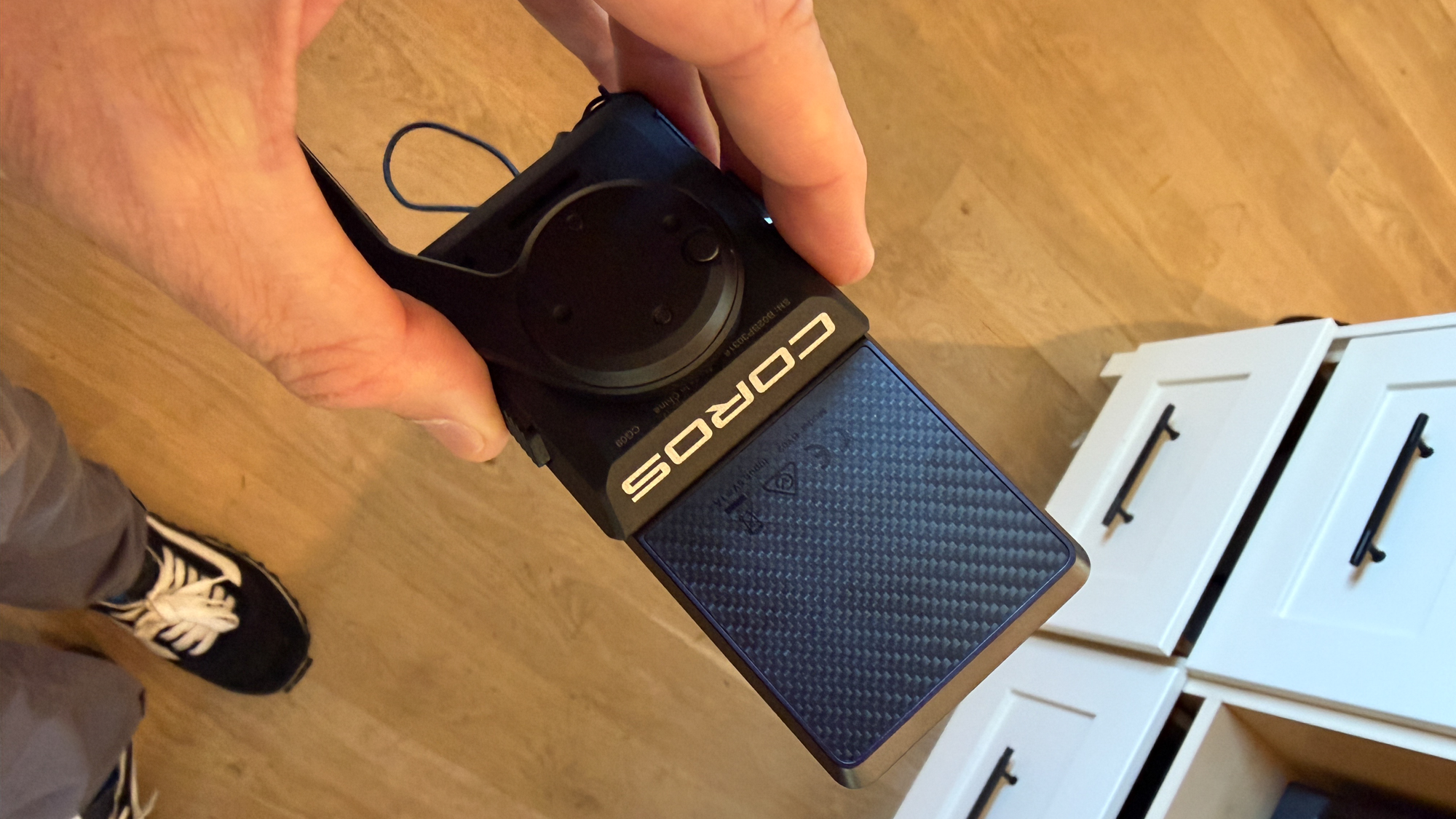
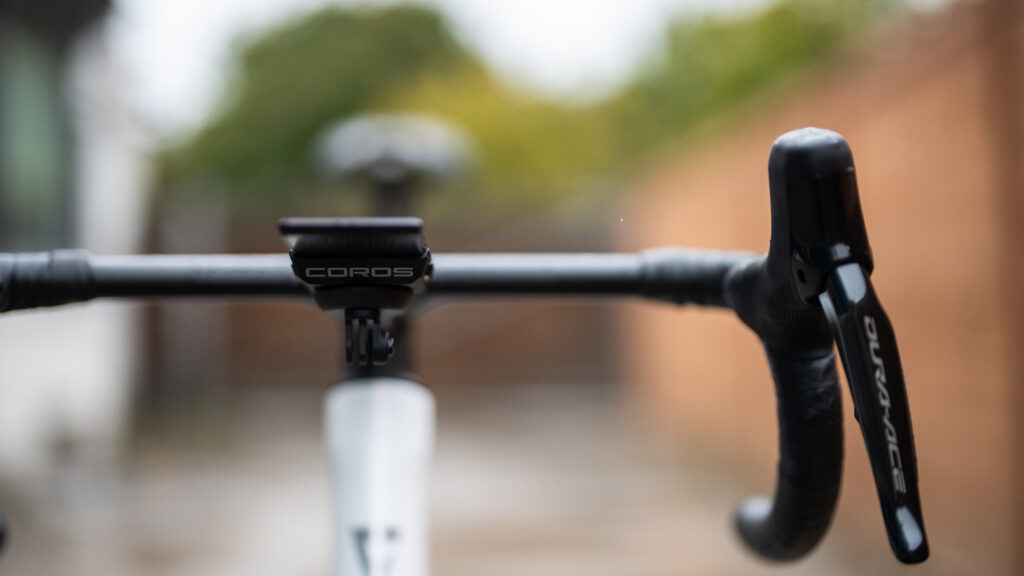
The first thing COROS wants you to notice is that the DURA 2 is way different looking than other bike computers. The original DURA was built on price for sure but it was sturdy. This one gets a woven T700 carbon backplate and a 6000 series anodized aluminum bezel that tapers to 5.7mm at the top edge. And to be frank it’s pretty but also feels a little delicate at the same time. COROS CEO Lewis Wu says bike computers have looked like tools bolted onto otherwise beautiful bikes for too long, and they wanted to build one you’d be proud to put on your bike. It’s cool looking for sure but at the same time it’s the first time I have ever really thought I needed to use the safety strap.
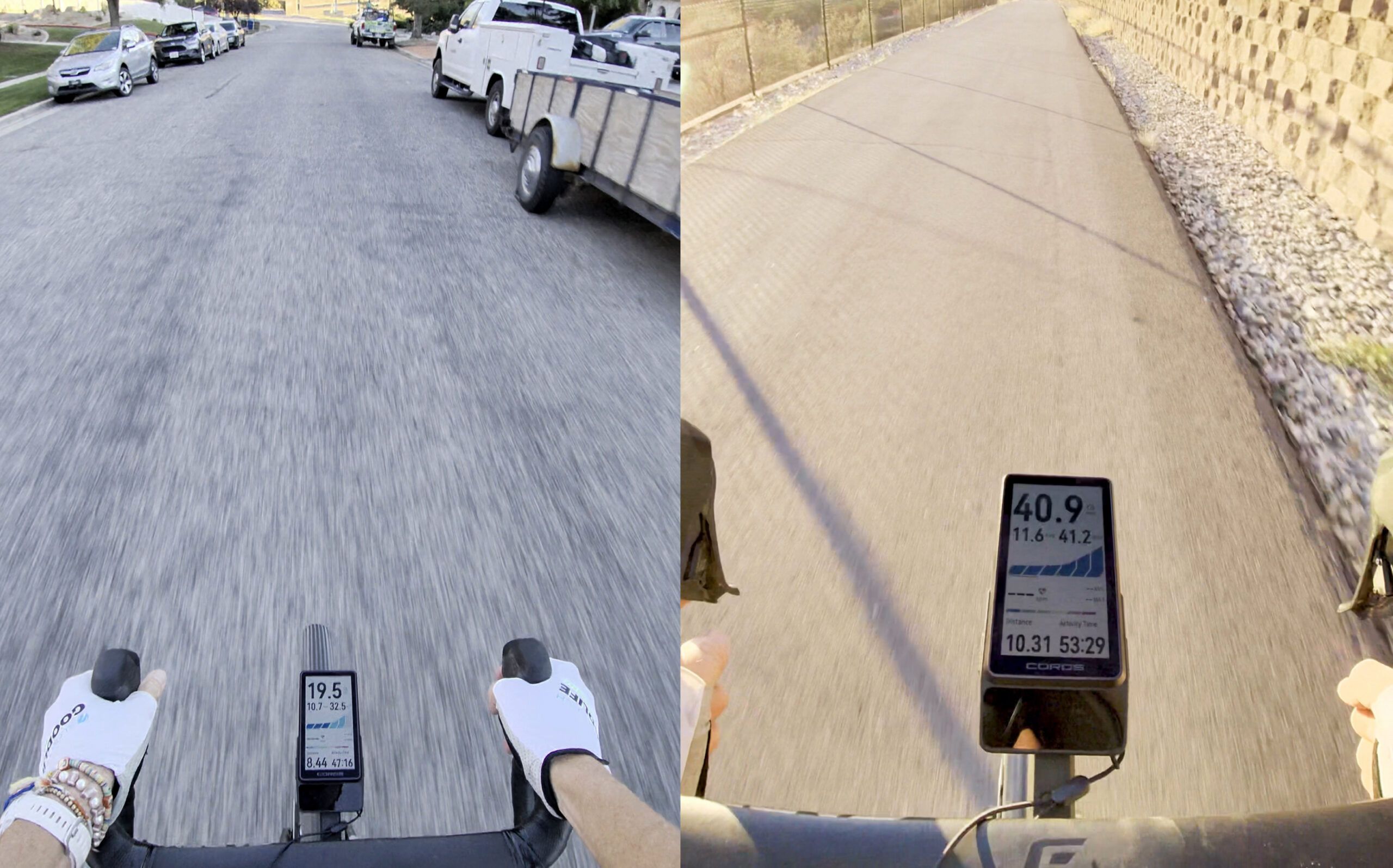
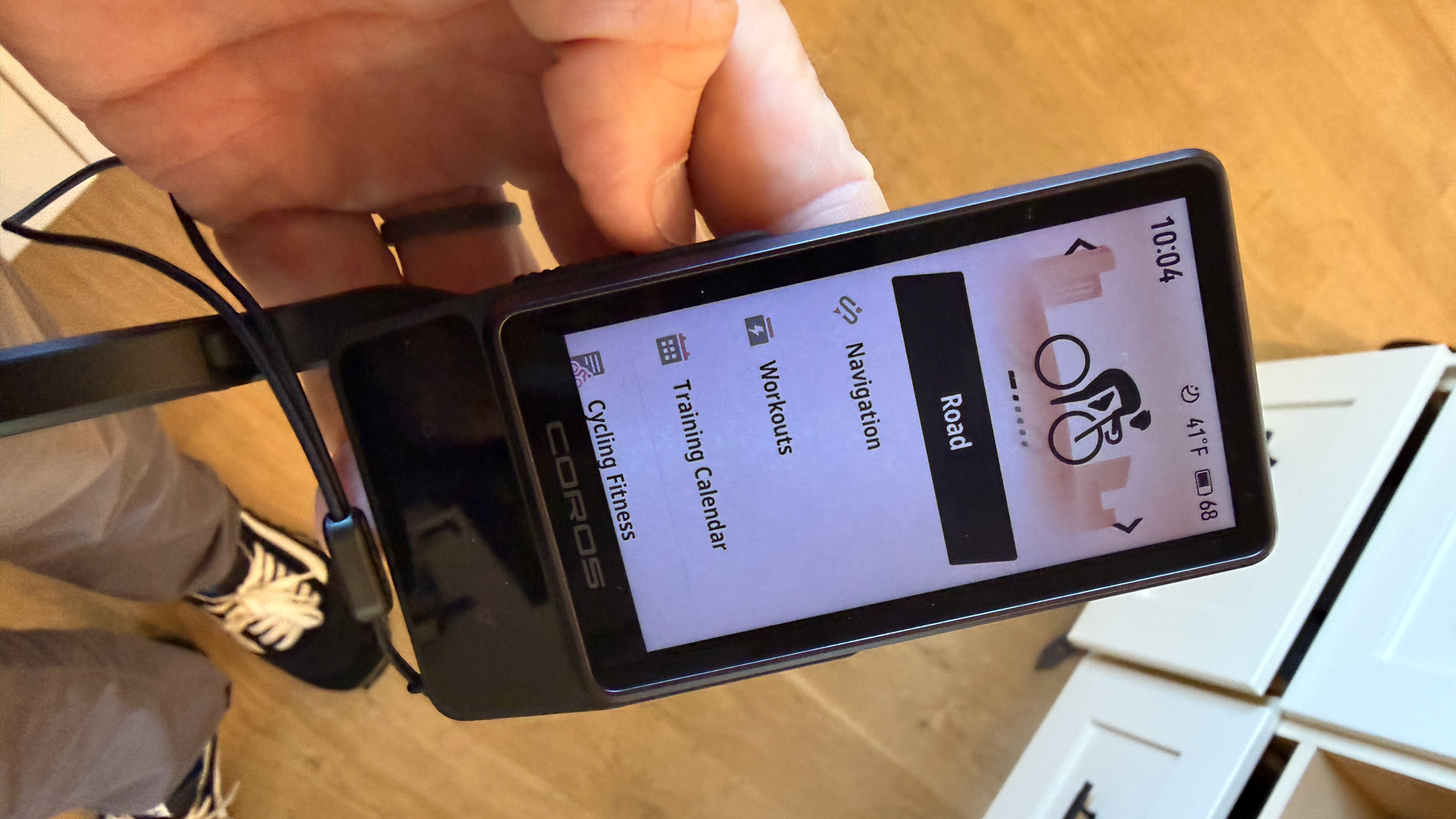
As I get older and the vision gets a little worse the screen is the bigger deal to me. At 3.5 inches, Sharp Gen 3 memory-in-pixel, 336 x 620, a tall 17:9 aspect ratio, about 200 pixels per inch, and a 38Hz refresh rate that COROS says is the fastest of any MIP display out there. Edge to edge, anti-reflective coating, hardened mineral glass, and the panel was developed with Sharp as a COROS exclusive. That’s up from 2.7 inches on the original, which was the thing everyone complained about since the solar panel ate a big chunk of the face. As you can see from the riding photos you can see everything really well.
Buttons, Touch, and Now You Can Talk to It
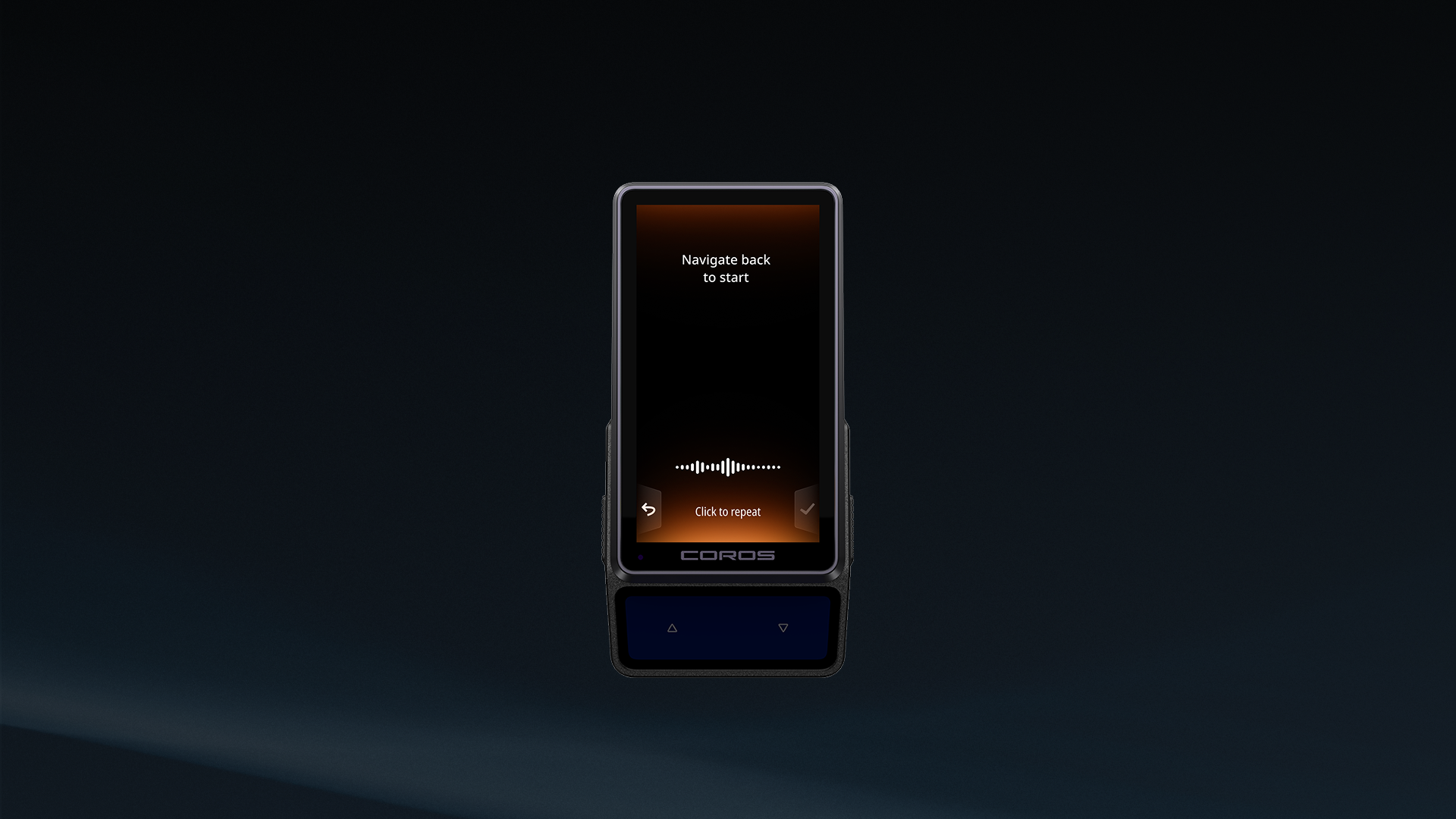
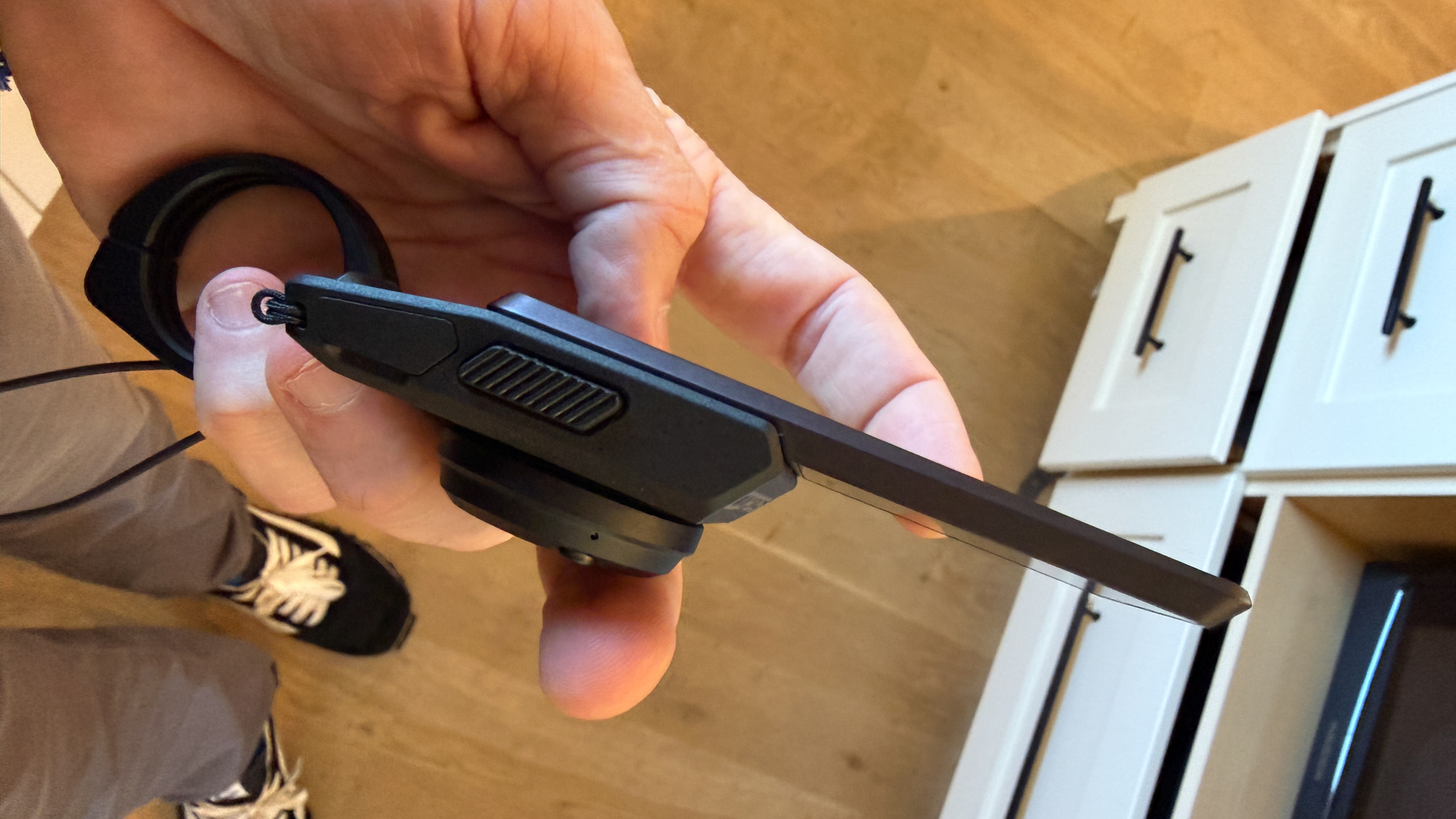
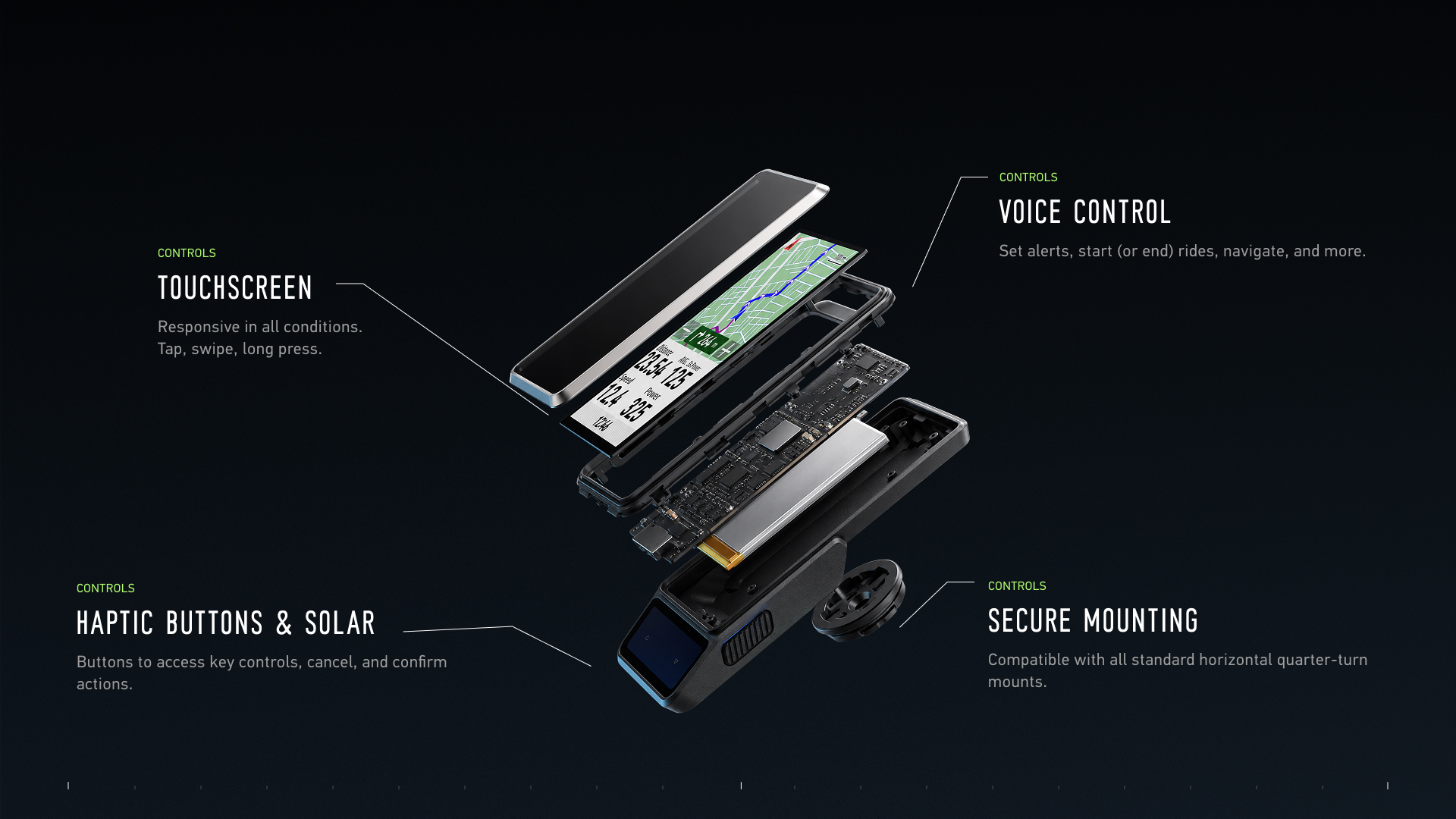
You’ve got three ways to run the DURA 2. The touchscreen does tap, swipe, long press and pinch to zoom, with vertical scroll for data pages and horizontal swipe for maps, media and camera, and all of that is customizable. COROS says it works with bare hands, gloves and sweaty fingers, and that it can tell rain from a finger so you don’t get phantom scrolling. I tested and it’s way better in the rain than even my iPhone. The other thing that I was very happy about was they got ride of the silly side push-in scroll button that was just a bad idea from the start.
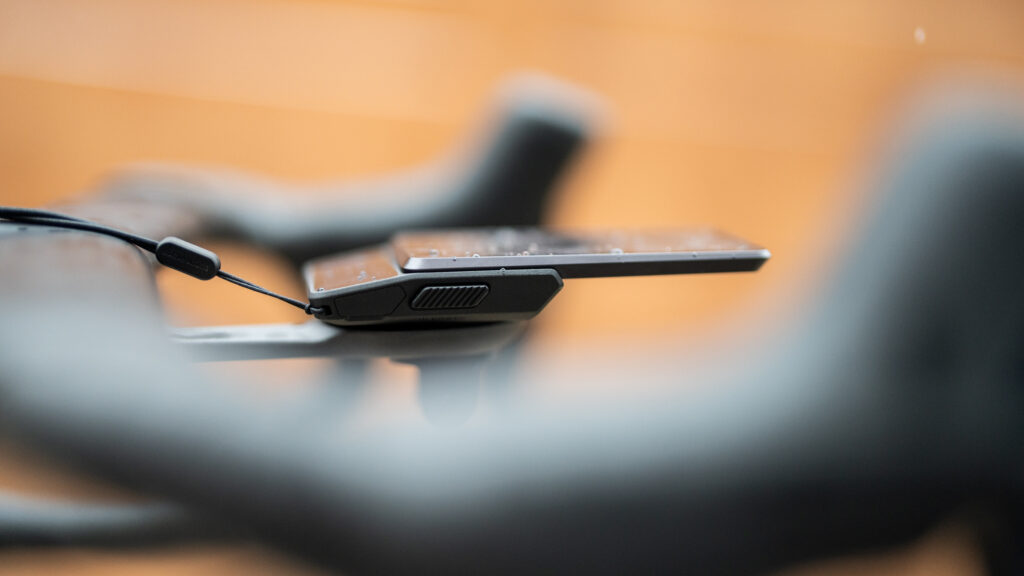
Voice is the new trick. Start and end a ride, set an alert, drop a point of interest, navigate back to start, control the media player, all by talking to it. Voice search for a navigation destination is “coming soon,” and so is saving a voice note after the ride about how it felt. There’s also a double tap bike bell through the speaker and adjustable volume with different alert tones.
Battery: Same 120 Hours, and That’s Fine
COROS claims 120 hours in all systems GPS mode and 70 hours in dual frequency (L1+L5) mode, before solar. Solar adds up to 2 hours of battery for every hour in direct sun. USB-C takes it from empty to full in about 2.5 hours at normal temps, closer to 4 hours below 15 C, and it won’t charge at all at freezing or above 45 C, to protect the battery.
Those are the exact same headline numbers as the first DURA, and that’s fine. 120 hours was already absurd… that’s a couple months of IRONMAN bike volume on one charge. Nobody was asking for more battery. What people were asking for was a bigger screen, and COROS managed that without giving any battery back, which is the part I find impressive, because a 3.5 inch panel at 38Hz should have cost them something.
The solar panel moved to the bottom of the unit, below the screen, with the two haptic buttons reading through it. Whether 2:1 solar gain actually happens in a Utah November versus an August in Kona is something I plan to test out.
Navigation, and the Re-Routing Thing
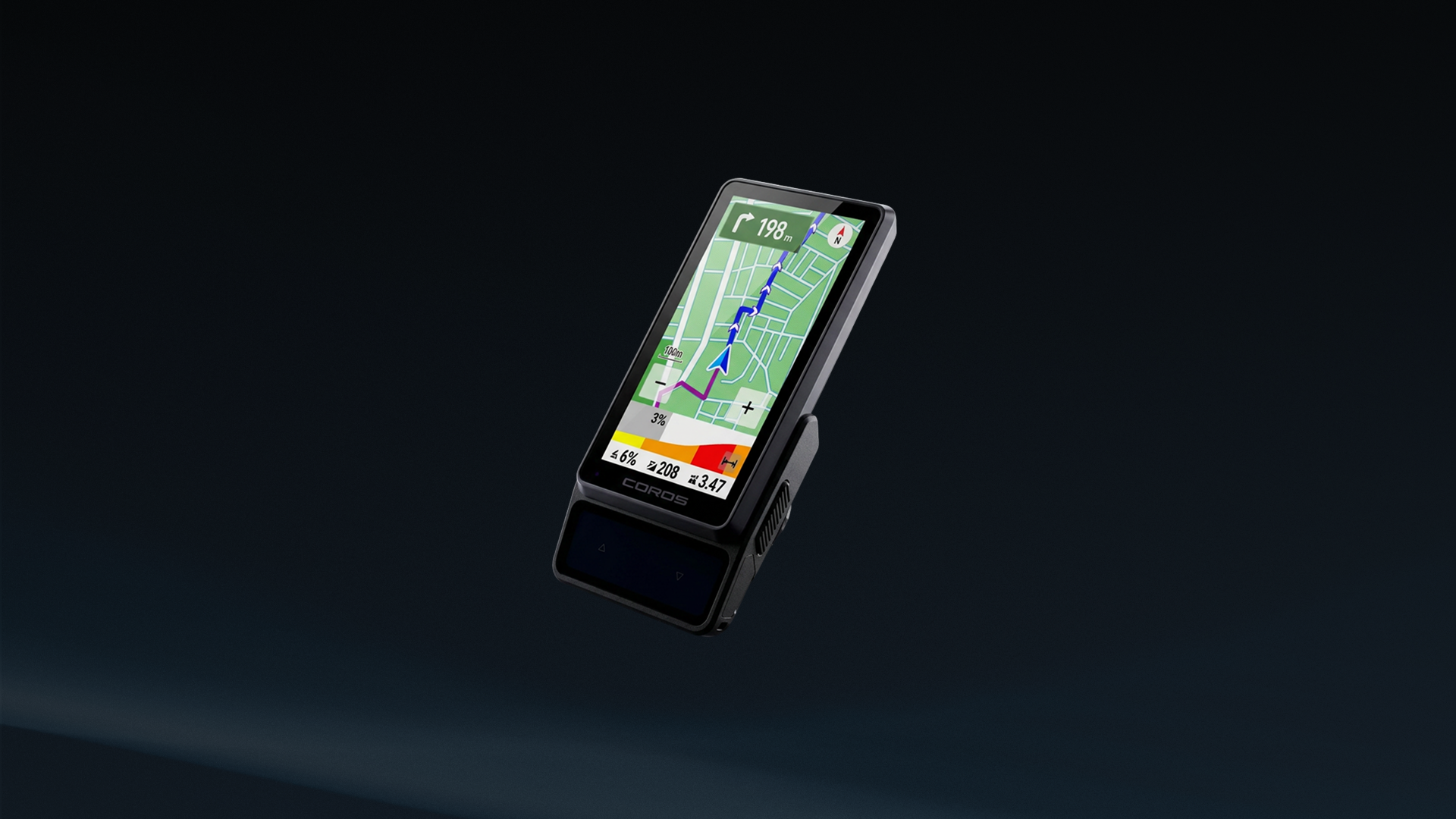
Maps are free, global, built on Mapbox data, and you download them by region in the COROS app. Not all are pre-installed, so keep that in mind. You get street and trail names, points of interest, surface type, turn by turn, an in-app route builder with import and export, waypoints, back to start, weather alerts and live tracking. Climb alerts now work with or without a route loaded, so the unit sees the climb coming and shows you the profile. The off-course alert fires at about 20 meters off the line, and you pick alert only or automatic re-route. These are pretty standard features in bike computers these days so it’s nice to know they are present.
Those are real upgrades, and I say that because the first DURA whiffed on most of them. When DC Rainmaker got his hands on the original version in June 2024, the maps had no street names or points of interest, the off-course warning didn’t show up until 500 to 800 meters after a missed turn, and climbs got chopped into random pieces. All of that is supposedly fixed.
On the original, re-routing was computed in the cloud through your phone and needed a cell signal, which was an issue with the unit. COROS’s answer on the DURA 2 SOLAR is “offline re-routing.” What that actually means: re-routing is still computed in the COROS app, so your phone needs to be connected over Bluetooth. It does not need a cell signal, as long as you downloaded the map region ahead of time. If you didn’t, it needs data.
It still needs the phone, it just doesn’t need the signal. That’s a real improvement for the backcountry gravel and bikepacking crowd with a phone in a pocket and no bars, but it is not on-device routing the way Garmin, Wahoo and Hammerhead do it, no matter how COROS words it. How fast it recalculates with the phone buried in a jersey pocket is at the top of my list to test.
The COROS Ecosystem
The DURA 2 SOLAR runs the same EvoLab engine as the watches: training load, recovery time, VO2 max estimate, threshold zones, an FTP test, performance assessments, structured and interval workouts, nutrition alerts, left/right power, seated vs standing time, and a dynamic training plan. Build workouts in the app or import them. You can pause a structured workout without pausing the ride, and you can start one mid-ride from the pause menu, both of which I’d want. And if you already run a COROS watch like I do rides land in the same training load as your runs and swims, with the free workouts and plans from COROS coaches along for the ride.
Connectivity is ANT+, Bluetooth and WiFi, and rides sync to the COROS server over WiFi without the phone. It pairs with heart rate monitors, power meters, smart trainers, radar, lights, e-bikes, and Shimano and SRAM electronic drivetrains, with Campagnolo coming at the end of 2026. Action camera control for select GoPro, DJI and Insta360 cameras. Offline MP3 storage and a media player. Third party apps: Strava, TrainingPeaks, TrainerRoad, Ride with GPS, Komoot and Zwift.
There is no subscription for anything… maps, app, EvoLab, all free. There is also no third party app store, and COROS says there won’t be one. If you live in Connect IQ, this is not your device. COROS would rather do a handful of integrations well than open the doors.
Mounts, and the $499 vs $549 Question
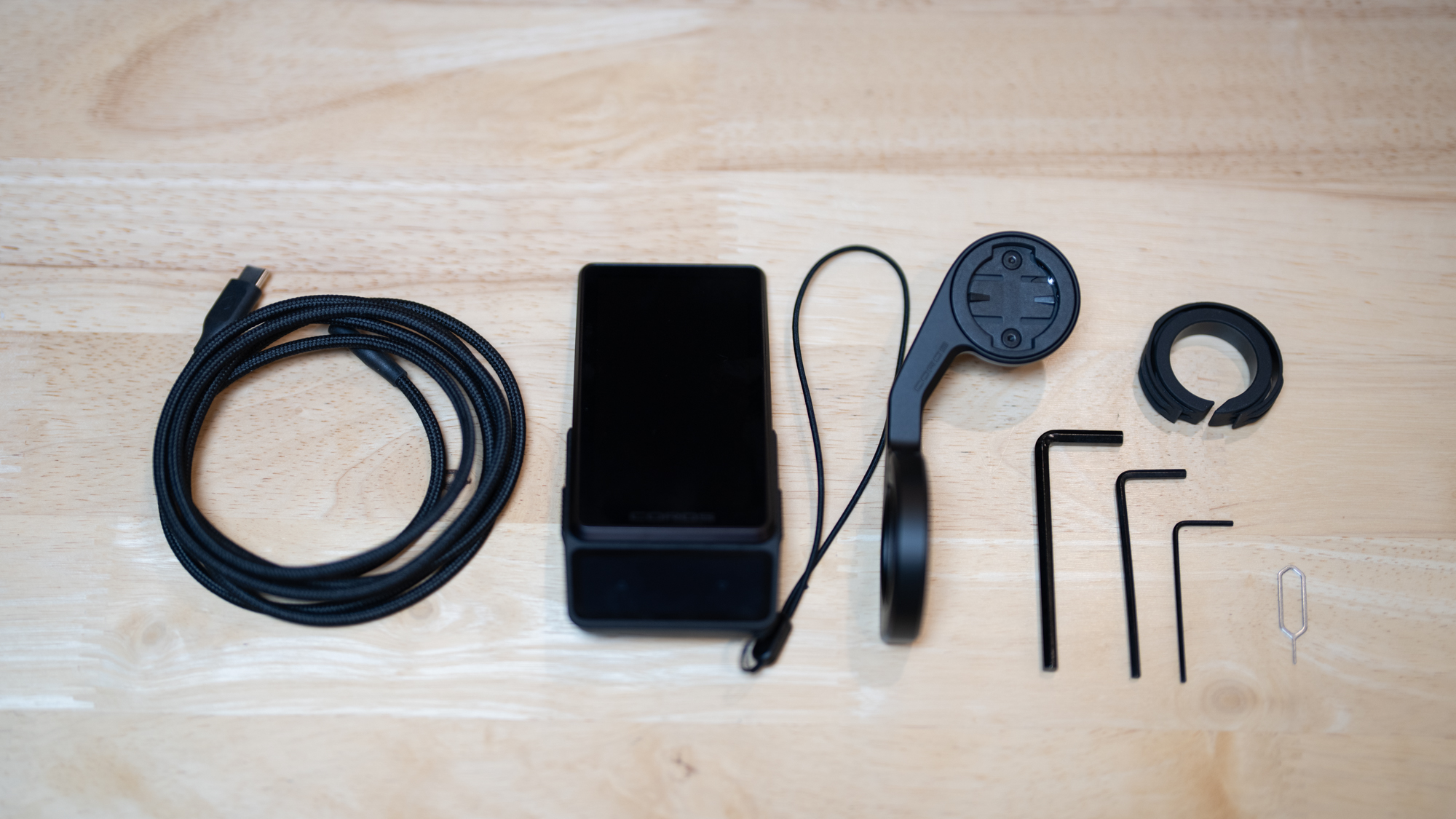
The DURA 2 SOLAR works with standard horizontal quarter turn mounts. Your out-front mount, the computer mount built into your aerobars, the K-Edge on the stem… all of it should work, same as it did with the first DURA.
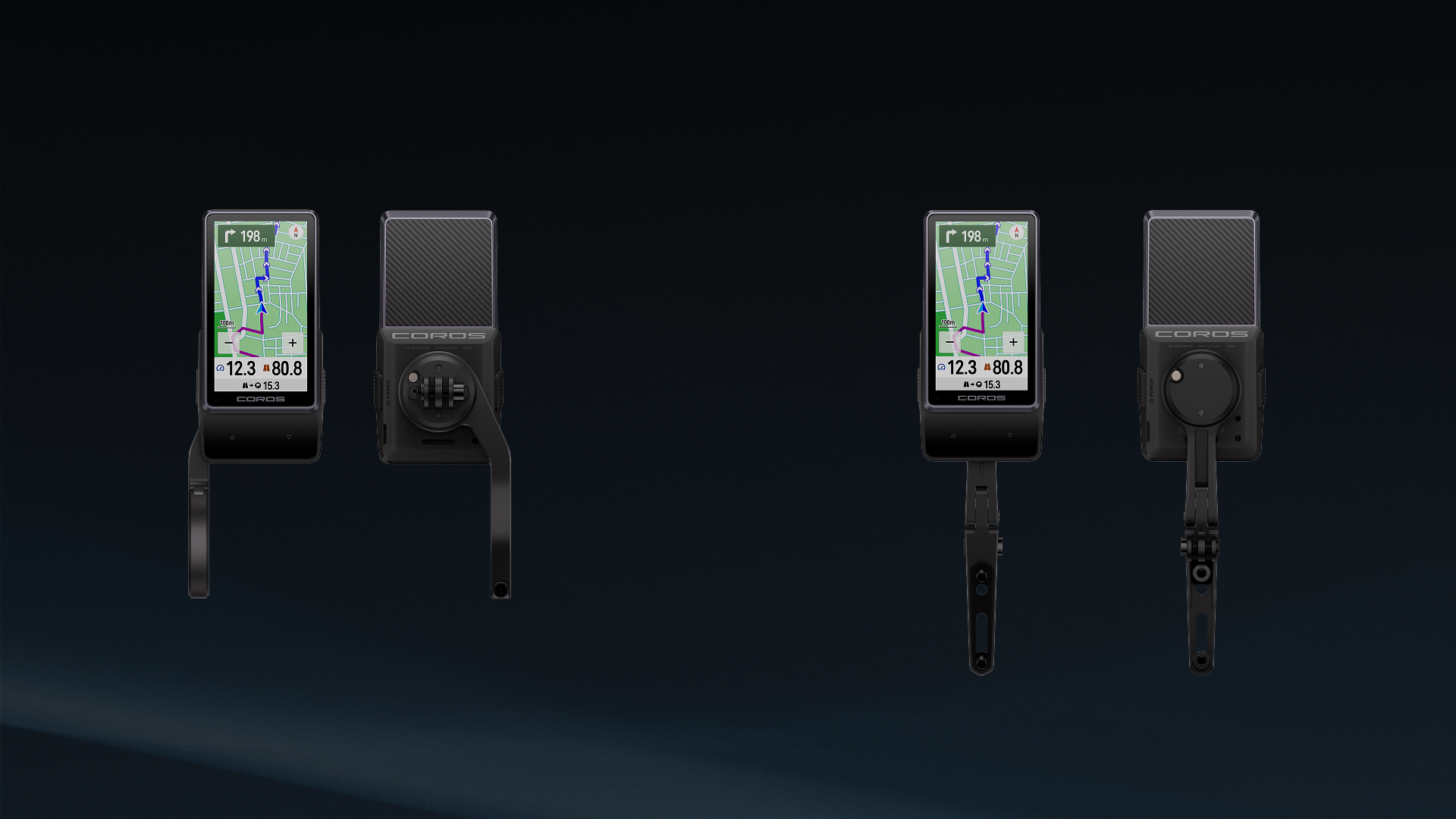
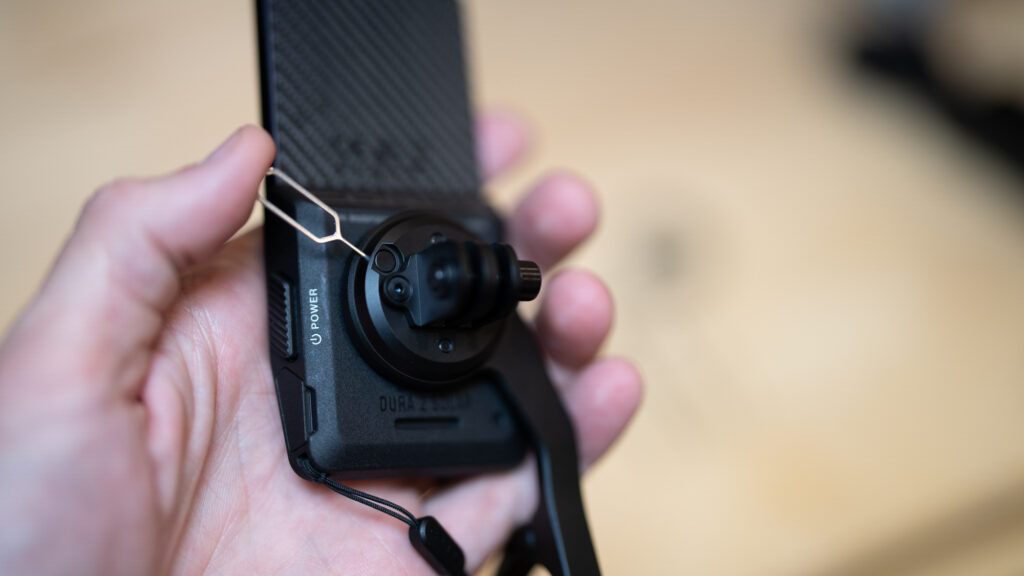
COROS’s own mounts are new. Anodized aluminum, 38 grams each, 70mm of projection, a 3-prong camera and light interface underneath, and a locking mechanism you release with a SIM eject tool (iPhone Tool), which ties into the bike alarm. The Standard Mount clamps 25.4 to 31.8mm round bars. The Out-Front Mount uses a standard 2-bolt interface for integrated cockpits, with -7 to +5 degrees of tilt. It’ll cost you $79 for either one. The computer itself works on any “Garmin” mount plate if you already have those around your home shop.
DURA vs. DURA 2 SOLAR
Same battery and same mount standard, and basically the same weight. Just about everything else changed, including the price — which is double the original.
| DURA (June 2024) | DURA 2 SOLAR (Nov 2026) | |
|---|---|---|
| Price (USD) | $249, mount included | $499 unit only, $549 with Standard Mount, $79 mount alone |
| Screen | 2.7-inch MIP touchscreen with adaptive backlight | 3.5-inch Sharp Gen 3 MIP touchscreen, 336 x 620, 38 Hz |
| Weight | 102 g | 99 g |
| Housing | No carbon or alloy | T700 carbon backplate, anodized 6000-series aluminum bezel |
| Controls | Touchscreen, digital dial, one button | Touchscreen, 2 mechanical buttons, 2 haptic buttons, voice |
| Mount | 44 g quarter-turn out-front, included | 38 g aluminum quarter-turn with lock, sold separately |
| Battery | 120 hr, 70 hr dual-frequency, up to 2 hr per sun hour | Same |
| Maps | Free downloadable maps, no street names or POIs at launch | Free downloadable Mapbox maps with street and trail names, POIs, surface types |
| Re-routing | Via phone app and Google Maps, cell signal required | Via phone app, works offline with downloaded map regions |
| Off-course alert | 500 to 800 m after a missed turn at launch | About 20 m |
| Drivetrain and radar | Shimano, SRAM, Garmin Varia | Shimano, SRAM, radar, lights, e-bikes; Campagnolo end of 2026 |
| Global pricing | €289, £249, CAD $399, AUD $449 | €549, £479, CAD $799, AUD $979 with mount |
Mounting between the extensions. Quarter turn compatibility means your current aerobar computer mount works. At 58mm wide it should fit between most extensions, but it’s 117mm long, so check how it sits with a front hydration system before you assume anything.
Battery. 120 hours plus solar means you charge it a handful of times a season if at all.
No multiple bike profiles at launch. COROS says a software update before the end of the year. Until then it’s one setup for every bike, which works but is annoying if your road and TT bikes run different sensors and you want different data pages.
The watch handoff. If you wear a COROS watch, the pitch is bike on the DURA, run on the watch, one training load. What I don’t know yet is how the two handle triathlon, meaning whether the watch runs the full multisport activity while the DURA records the bike leg and the files merge into one race. So far it’s been nice to not to have to wear a HR monitor on my arm or chest as the computer has done a really nice job using my watch HR.
Radar. Supported, though COROS doesn’t say which units. Varia pairing was flaky on the original at launch, so I’ll be testing that.
Things to Keep in Mind: Continual Feature Updates
COROS ships hardware and then updates it for years. That’s the best thing about the brand, and also why you read the coming soon list before you buy. These are promised but won’t be there when you can actually buy this on November 3:
- Multiple bike profiles (software update planned before the end of the year)
- Voice search for a navigation destination
- Voice training notes saved after a ride
- Customizable left physical button
- Saving location pins during a ride
- Power curve chart on data pages
- Tire pressure sensor support
- A cycling-specific heart rate recovery metric for interval rest periods and post-ride analysis
- Manual lap cancellation
- Support for up to 32 paired sensors
- Campagnolo electronic drivetrain support (end of 2026)
What I Think
The odd shape is something I’m fine with now. At first I was a little taken back with it as it really is very different then all the other options on the market. That might change if I find the DURA 2 to be too fragile long term. I have only been able to use it on a handful of rides so I’m still getting used to the slides and operational buttons. But so far, the touch screen has been grea,t even in the rain and I like having a bell that I can tap to get other people’s attention. We will keep using it and follow up.
It is a little on the pricier side for me (as a computer in general) as it’s the same cost as the Wahoo ACE and that thing is a legit piece of equipment. But I wouldn’t say it’s overpriced either — especially when you compare it to other solar units in fact it’s on the cheaper side. And if you are a big fan of the watches line (which I am). The COROS ecosystem is super easy to deal with and they’ll continue to add features for months and years to come.




Thanks, great review. I liked the COROS Pace 2 and only switched to Garmin bc of the ecosystem (cycling), but now COROS has a really good offering on that front, too. It will take some time for me to switch still but excited to leave the Garmin ecosystem eventually. The bike mount works on Canyon, too I assume?
Any Garmin mounting pad works with this computer. So while Im not 100% sure your canyon set up if you have a mount for Garmin already you should be good to go.
welcoming coros to the big leagues of cycling computers! super sleek design and at 99 grams that’s more than half the weight of the wahoo ACE (super jumbo)