
Lift Yourself to New Heights in the Pool by Adding Fins to Your Swimming Arsenal
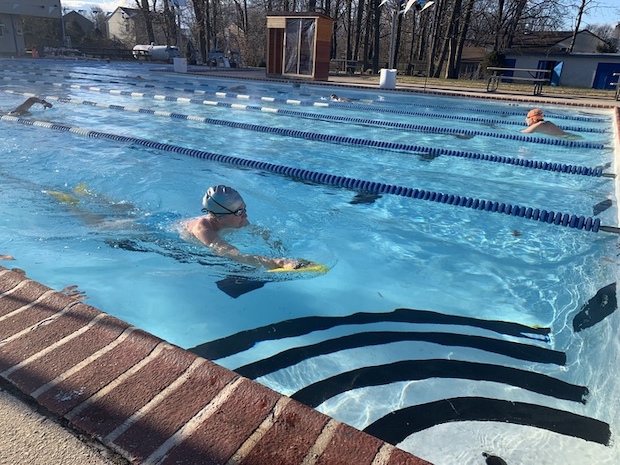
Kicking isn’t the most fun task to tackle in the pool, but a way to make it more enjoyable (and to get through it quicker) is to toss on a pair of fins. These are an excellent tool that will do so much more than just speed up your kicking sets — if you use them properly, they can take your body position from bad to good and from just OK to great.
A previous article on the use of paddles featured swimming coach David Peters. At one point in his life, Peters was a German national swim team member and, after moving to the U.S. and competing at Arizona State University, he took on coaching. He has accrued a number of accolades over the years, including multiple state championships as a high school coach. He now runs a masters group in Gilbert, just outside of Phoenix, where he often recommends that swimmers use fins to get the most out of themselves in the pool.
Picking the Right Fins
Peters says the main thing you need to worry about when picking fins is the size for your feet. You want the fin to be snug, but not too tight, just like if you were buying running shoes. When it comes to the fin blades, there are three sizes to choose from: short-, medium- and long-blade fins.
Short-blade fins are best for speed work. Since they are the shortest of the three options, they do not deliver as much propulsion as the two longer types of fins, but their size allows for faster kicking. These are the fins most masters swimmers choose, as they are an excellent tool to help with body position in the water.
Long-blade fins deliver the most propulsion. These are great for drills, as they help to produce smooth, fluid movement in the water. They can also help with ankle flexibility, which can be an area where newer swimmers need work.
Finally, if you can’t choose between maximum speed and maximum propulsion, you can shoot for the medium-blade fins. These are the best of both worlds, giving you the chance to focus on quick kicks while still delivering significant propulsion in the water.
Learning to Kick with Fins
From the outside looking in, kicking seems like it should be relatively easy. You’re either on your back or holding onto a board on your front and flutter-kicking away behind you. It’s simple, right? Well, Peters says that’s not the case for a lot of new adult swimmers, as they have to learn proper form and body position before they can produce a strong kick.
“If you have five- and six-year-olds, it’s just monkey see, monkey do,” he says. “They see you kick and they’ll kick properly. They can do it because they’re light.”
Even small and light adults can have a hard time getting used to kicking, Peters says.
“Everything is heavier, and the older you are, the more sluggish your body is,” he says. “Your bottom half has a tendency to sink and so that’s the biggest obstacle to overcome for many people—just trying to keep themselves balanced in the water.”
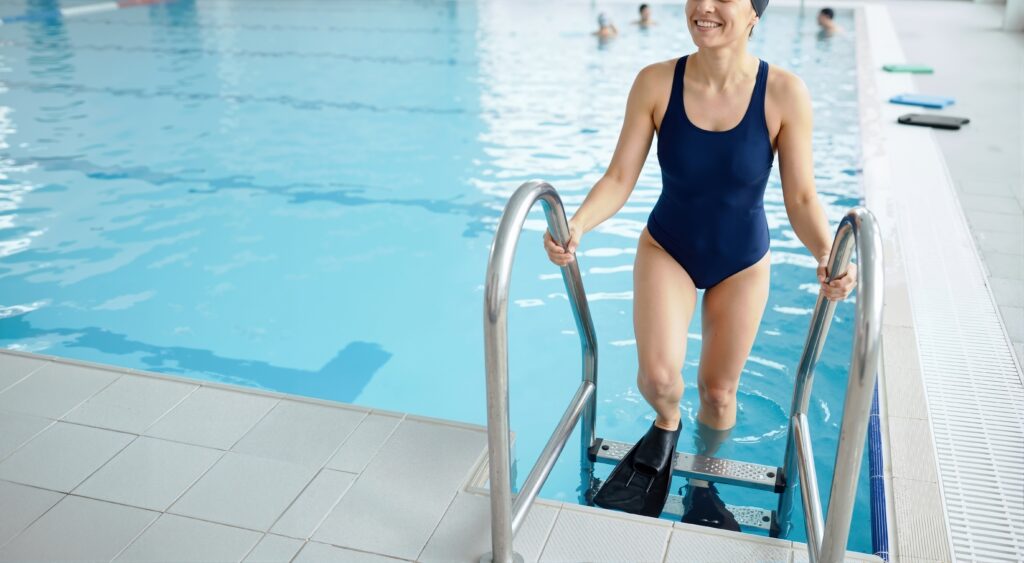
This is where fins can come in handy. They turn even the worst kick into something a little more fluid, aiding with your body position and helping you focus on the rest of your stroke.
“When your bottom half starts sinking, if you toss on a pair of swim fins, you can barely kick and go so much faster and get your body so much more level,” Peters says. “So, for a novice swimmer, fins are very practical and aid them in being able to get to the point where they can swim a lap on their own.”
Common Mistakes with Fins
The mistakes people make with fins will more often than not be present in their regular, finless kick as well. The first one Peters points to is how much leg someone uses to kick.
“So many people kick from the knee down,” he says. He notes that this issue is often present in both flutter kick and during “undulations”—underwater dolphin kick after pushing off the wall in the pool. Instead of kicking only from the knee down, you want to put your full leg into each kick. (For undulations, Peters says it should be your full body going into it.)
With flutter kick, your leg should be relatively straight (you can have a slight bend in your knees, but nothing too pronounced) from your hips down to your toes (making sure to point your toes, whether you’re in fins or not). The kick should be initiated from your hips and core, driving your whole leg down and up in a single unit.
Another big issue Peters says he sees is swimmers “flaring their legs” during the kick.
“Now, your legs are going to come out a little bit further apart when you’re using fins because of the width of them, but you should try to limit the separation,” he says. He says this issue occurs most often during the breathing phase of freestyle.
“They’re rotating to breathe and compensating with their legs,” he says. “What happens is that as they come up to breathe, they’ll flare because they’re rotating their body too far. If they’re breathing to the left, they’ll flare the right leg way out to one side for better balance. That’s evident whether they’re using fins or not.”
This issue will create more drag—and quite a lot of it, considering you’ll perform the flare on every breath.
Relaxing in the Water
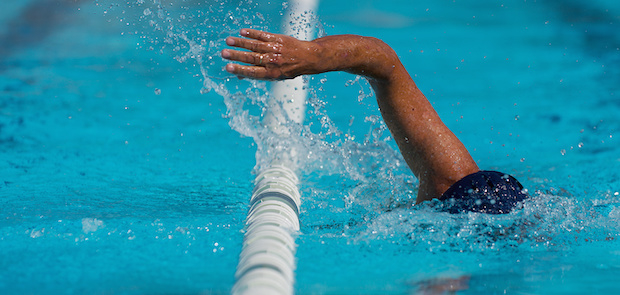
“The biggest thing in swimming is relaxing,” Peters says. “It’s lesson number one that I’ll teach my swimmers at all levels, from zero up to the Olympic level. Relax. You cannot fight the water, because it will win every single time.”
When you’re first getting started with swimming, however, it can be very difficult to calm down and swim smoothly. You have to focus on breathing, keeping your arms going, kicking—it’s a lot. Putting fins on can alleviate some of that stress and tension, allowing you to focus on the other parts of your stroke—your breath, your arms—before eventually moving to focus on your kick.
“As soon as I get them to relax and use their legs, things get easier,” Peters says. “The fins help get them up to a level where they can actually swim.”




Start the discussion at forum.slowtwitch.com