


200 km in 4 Weeks: How a Swim Camp Changed My Swimming For Good
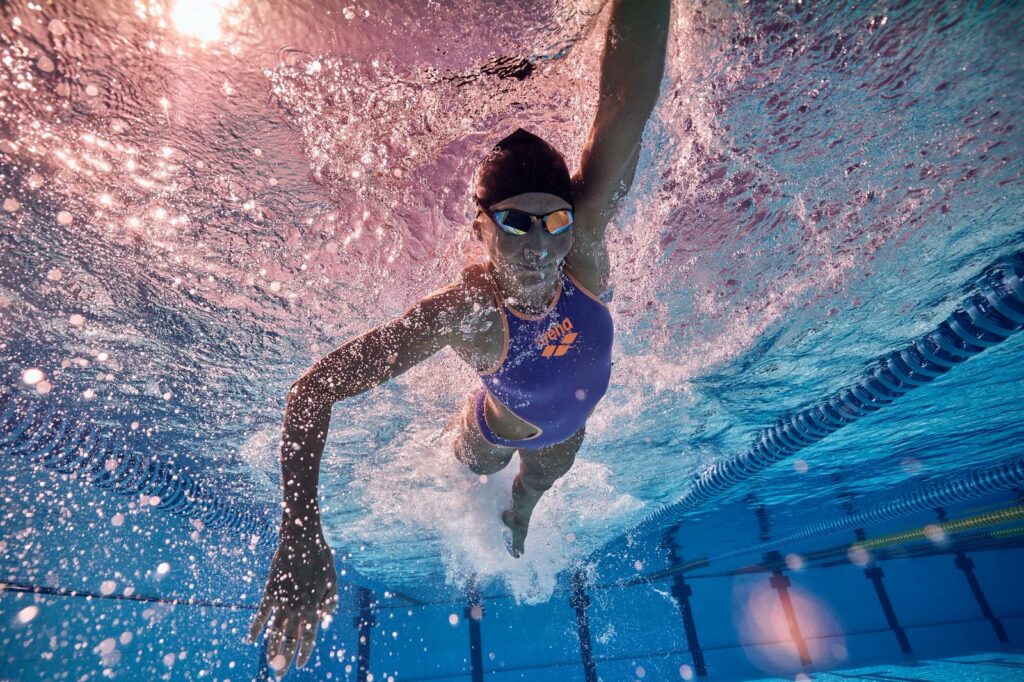
Photo: James Mitchell
It was one of those insane ideas that makes you smile because you know you’re going to do it, but you’re not exactly sure how, or even if you can. The proposal was simple: spend as much time in the water as possible.
“A swim camp?” I asked.
“Yes, we can call it that,” he replied.
My swim coach went through the details of his six-week plan but, honestly, I could only focus on the total meters of each week. Thirty, forty, fifty … was he nuts? But I could feel my cheeks swell with a smile. Dammit. I was doing this.
If you’ve ever asked, googled, or chatGPD’t “how to be a faster swimmer,” you’ve no doubt come across some form of “swim more.” Endurance athletes embrace the power of training volume but, as we all know too well, swimming is so technical that it’s a more complicated equation. Spend too much time on technique and you’ll never have the conditioning to race; spend too much time on conditioning and you’ll be working hard going nowhere fast. I was one of those searchers, constantly looking for answers and doubling-down on work in the hopes something would change, but it never did until I found a swim coach that clicked.
It sounds over-dramatic, but he changed my life. The difference was having a swim coach that took the responsibility to figure out how best to communicate with me. Instead of leaving it up to me to translate “don’t drop your elbow”, he would try different words, drills and examples until something worked. That kept me motivated, engaged and improving. We spent one to two years really working on technique (in just 200 m per session chunks with lots of video analysis, since he was remote), but our big breakthrough came when we did a swim camp. It was – and still is – the best thing I ever did to improve my swimming.
Back then, I had been swimming for about five years and my typical swim load hovered around 20 km a week. I spent two weeks preparing my shoulders for the camp, introducing double swim days, perfecting my pre and post swim shoulder care, and slightly bumping up the volume. Then, over the following four weeks, I swam 200 kilometers. (Admittedly, I had the time, pool access and incredible coaching support to accomplish such a feat.) Each week we gradually, and very carefully, increased the volume. My biggest swim was 9.6 km, my biggest day was 18 km, and I did almost every swim alone. I took four seconds off my 100 m time by the end of the camp and, one month later, I took another five seconds off to get down to 1:12. Realizing the changes I had always wanted to see came with a massive confidence boost, which felt just as good as my new PB.
Now, before you go trying to swim an absurd amount of meters, as I already said, hammering out mass amounts of volume with no guidance or purpose is a very bad idea. It’s a pretty quick road to injury, fatigue and won’t yield the benefits you’re craving. However, a focused training block on swimming with the guidance of a coach truly changed my life, so why can’t it do the same for you?
PREPARATION
A Plan is a Necessity. So is a Coach.
Preparation is essential for a swim camp. If you’re going to commit to a swim camp, it is, again, not just about putting in the distance. With that in mind, you need guidance. That’s not negotiable. Talk to your coach about undergoing a swim camp so you can set appropriate goals and adequately build up to the mental and physical demands before the camp. They will also help you devise a plan (taking into consideration pool access if necessary), significantly reduce your cycling and run training, and monitor your load and feedback to avoid injury.
Aim to commit one full training block to swimming — which is typically three to four weeks. You will be replacing most of your running and cycling with swimming, so be mentally prepared to let your performance in those two sports slide a little. Depending on your other commitments, you might need to just let them go during the camp. Start with frequency, and then build mileage – this will look different for everyone. You might be going from one to two swims per week to four to six, or you might be going from six to 10. Likewise, with mileage, you might be going from 5,000 meters per week to 8,000, or from 15 km to 25 km. Let your coach guide you.
Tip: Normal training rules apply here. A few hard sessions a week is enough.
Injury Prevention
It’s not as sexy as trying to cut five seconds off your 100 m time, but maintaining health is always the primary goal. A coach can help you incorporate more shoulder work in your gym training, nail down a pre- and post-swim routine of activations and stretching, and you may want to consider getting a weekly, or mid-camp, massage to aid recovery.
Tip: “Finish over failure,” is a good mantra here. Aim to always finish healthy, even if it’s earlier than planned, rather than fail and risk injury.
Invest in Technique
Technique preparation is also fundamental to a successful swim camp. Investing in video analysis, or an on-deck coaching session before will tell you what you need to work on and direct the technical aspects of your training. And, even if you currently hate drills, you’ll be glad for the variety when you’re staring down a 9 km set.
Identify two to three key areas you need to work on, and then incorporate drills into every swim, applying the sensations to the rest of the session. Pick just one technical aspect each day, or week, and focus on really feeling changes. A second analysis after the camp is a useful comparison.
Nutrition
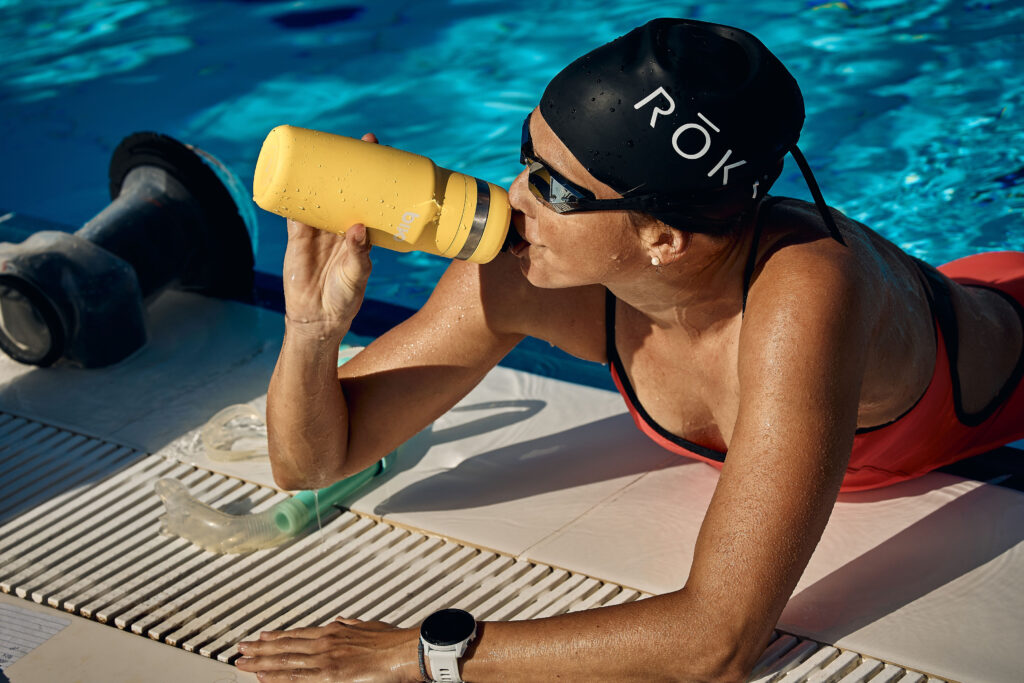
Photo: James Mitchell
Pool side nutrition is often an afterthought, especially if you’re jumping in early, but for health, performance and consistency over the camp, it needs to be a forethought. You need to be swimming fueled at all times, so that means always having adequate hydration, energy and fuel for recovery on deck. Adjust your carbohydrate intake depending on the length and intensity of your session, but always, always take on some carbohydrates – remember how much swimming is ahead of you!
Tip: Take a minute to have a gel before the main set or, especially if it’s an afternoon session, have a gel right before you jump in.
EXECUTE
Mental Game
Seeing so much swimming on your plan can be overwhelming. Just focus on one swim at a time. Inevitably, you’ll have a day when you’re tired, feel like you’re sinking and you’re sick of being wet. Don’t be afraid to make changes by adding toys, altering the rest interval, bringing a friend, wearing your wetsuit, hitting the open water or making it more fun with block starts. Also, there might be a day where you need to shut off your brain and let your watch count the laps. As long as you’re healthy, just keep swimming!
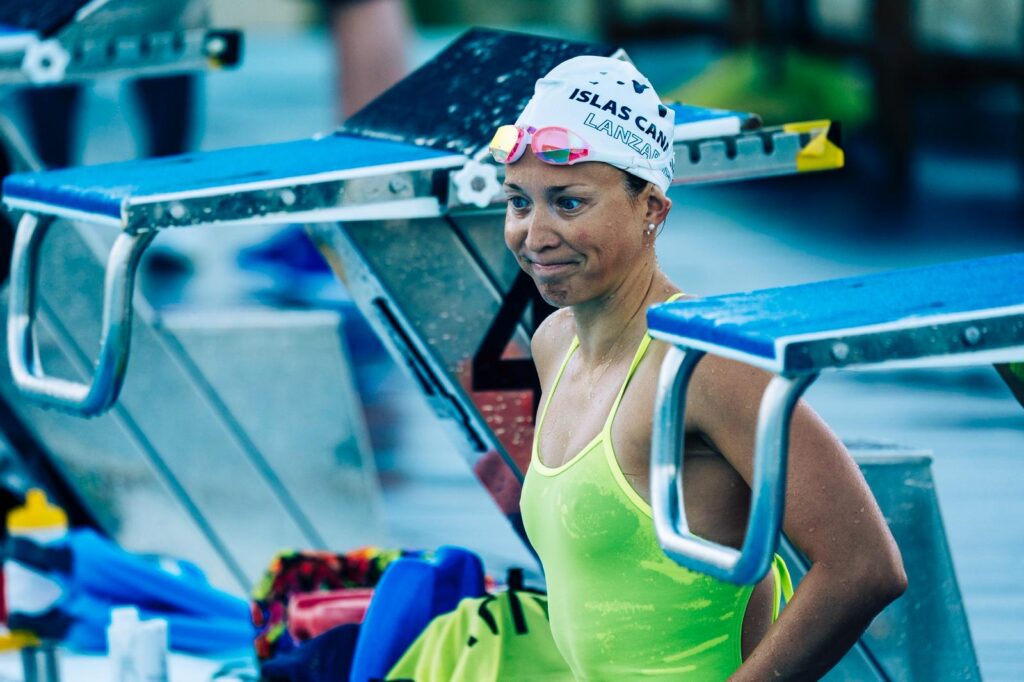
Photo: James Mitchell
Using the Time in Water to Your Advantage
Maybe you’ve been avoiding the other strokes but, possibly out of desperation and definitely for shoulder health, you will want variety. Take the opportunity to practice the other strokes and improve your freestyle. (Backstroke, at the very least, is a great way to get some muscle compensation and a nice way to recover.) The secret to a swim camp isn’t exactly the distance, it’s having so much time in the water that your body figures out how to become more efficient, and practicing the other strokes is a great way to vary the stimulus to that end. Take advantage of overall time in the water to pay attention to how different movements feel and move you in the water.
The Pay Off
Your performance will likely suffer during the camp under the high load, but as your body figures out how to be more efficient, you might be surprised. Still, be prepared to have some really bad swims – get them done and move on. The real benefits of a swim camp come after. Allow your body adequate time to recover, and then enjoy the super compensation from the high load, built up intensity and all that technique work. Put yourself to a 100 m test, and enjoy the physical and mental benefits – for years to come. At the very least, you should feel a big sense of pride and confidence from surviving a swim camp.
Tags:
swimswimming tipsRelated Articles:
Continue the discussion at forum.slowtwitch.com
15 more replies



So on your usual 20k training you were a 1;21 100 swimmer(all out I presume for one) and you progressed to a 1;12 after absorbing the camp stimulus?? That is a huge leap, thinking you might have been a swimmer in your youth and school years??
Congratulations on the great bloc and improvements, would love to hear how much your 1k swim improved(probably not 9 seconds a 100 like the one off, but probably substancial) Besides the added fitness in the water, what do you think was the one technique change that helped the most? How old are you if you don’t mind?
I would love to hear more about the pre-and post swim shoulder care routines. Was it mostly resistance band work and stretching or something more?
I echo Monty’s questions plus were you swimming on a 25 or 50m pool??? I assume your pre-camp and post-camp TTs were both on same length pool??? Also, are all of the pictures of you or are they “stock” pictures???
could you give us a better idea about your swim profile please ie 50 m 100 m 400 1500m . I see you are about 4 min behind a front back female swimmer over 1.9 k and more or less the same level over the last 4 years. thats a nice jump !
Great to read. I’m putting on my annual camp for pros in a little over a month. The ones I put on are a little more than a week, but we get in somewhere between 35k-45k. Everyone usually drops anywhere from 3-8 seconds a 100 depending on where they start, so similar results and there is a path for pros who don’t come from a swim background. The only problem is it takes longer than a week or even a month to see the results pros need to be competitive.
I feel like I’ve just watched the oprah interview with lance. I have so many questions
Type em out!
Well we have 20 already in the hopper..But I can answer a couple of mine just having a look at her results, she is late 30’s in age and was around a 3rd pack swimmer in the pro division, doing 30 to 35+ for half ironman swims.. So no swim background per se, seems to be a full on AOS..
So going 1;12 for a 100 meters is smoking fast for someone of her background, so dive, suit, wetsuit, fins, etc??
I have a few questions about the form in the top picture. Maybe the camera angle is askew.
@SKB that is awesome. 200km in 4 weeks taking into account rest periods and kick sets and drills, that is 4x20 hrs weeks in the at 2500m per hour. Were all strokes involved or was it all freestyle. Regardless a month of 20 hrs in the pool is mentally really hard (I know real fish do it, and I’ve done a few weeks in my life of daily doubles doing 20 hrs of swim only, but at the end of it , I need to do another sport)
From the article…
Great article. To do that volume of swimming, alone and with a remote coach seems really challenging mentally, but the results are impressive.
Are you a triathlete?
how are your swim times 6 months later?
I took 8 months off biking and running and got up to 40,000 yards a week. Times wed MUCH better.
6 months later, after adding biking and running back into the mix, the swim speed all but went away completely.
You can find her pto ranking in like 5 seconds