
Grading the IRONMAN World Championship Broadcast
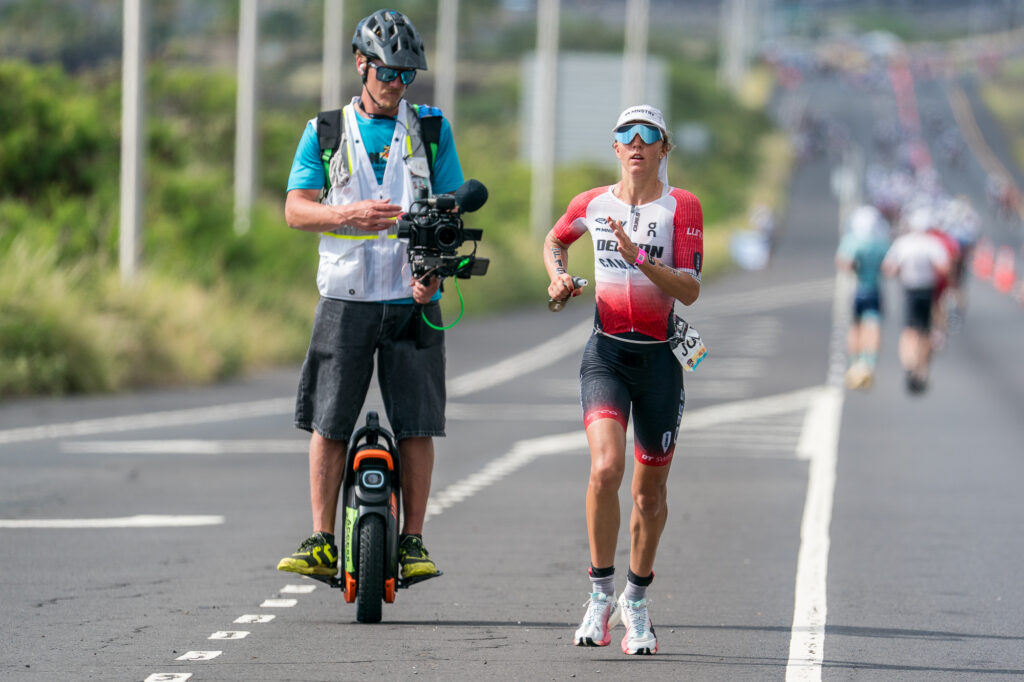
Now that we’re a few days removed from the 2026 IRONMAN World Championship, and my fingers have recovered from frantically banging out roughly 15,000 words over the better part of five days, we’re able to give some time, thought, and attention to arguably IRONMAN’s single biggest marketing campaign piece of the year: the live broadcast of the race.
Make no mistake: the race broadcast of the IRONMAN World Championship serves two purposes. First, it provides coverage that our sport’s biggest fans demand. Second, and perhaps more importantly, it provides inspiration for the next generation of our sport. There are countless stories of those who watched the NBC broadcast, which planted the seed that turned into them becoming triathletes. Hands up, I’m one of them. But, with that time now gone, it’s the broadcast (and subsequent condensed replays on YouTube) that serve that purpose now.
It’s through that lens — as the sport’s premier marketing vehicle — that we’re grading this year’s race broadcast.
Streaming Platform Stability: A+
Hosting on YouTube has been a game changer for the IRONMAN broadcasts over the past year. We, as a sport, are not that far removed from these events being streamed on a platform that, frankly, didn’t work consistently enough. It became enough of a meme that we would hand out grades on the platform performance after every Pro Series race. YouTube just simply works.
The other advantage of YouTube is that it gives you data on viewership. As of this writing, between the live streams and the condensed highlights, there’s just under 4 million combined views — more than double the combined view total from the split days last year (and when you couldn’t watch on YouTube in the United States). It’s been a tremendous improvement.
Hosting and Commentary Team: A-
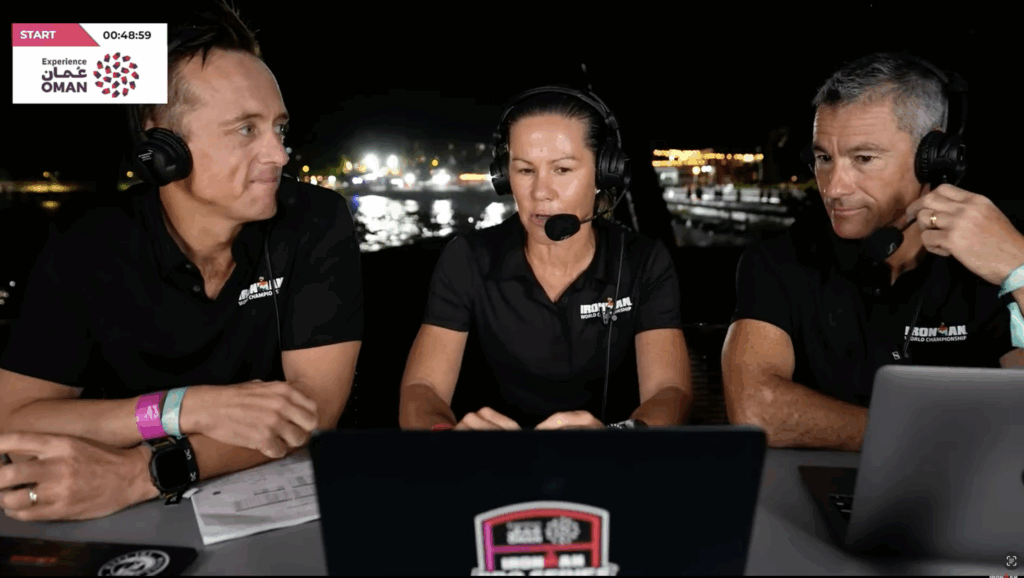
IRONMAN also made the decision to totally revamp their commentary team over the course of 2026. Your three main hosts this year were Will McCloy, Craig Alexander, and Mirinda Carfrae. This team seemed to have really defined roles, with McCloy handling play-by-play and playing traffic cop, and Alexander and Carfrae providing insights and analysis powered by their combined six wins in Kona.
McCloy brings 20 years of traditional sports broadcasting experience to the IRONMAN booth. And it shows. He’s quick to describe what’s happening on screen, toss seamlessly from his fellow analysts to any of the pre-packaged content, and take people in and out of break. Having someone competent in that lead chair brings the entire quality of the broadcast up. He’s also unapologetically enthusiastic as a fan of triathlon. He’s prone to occasionally re-use a phrase or two (I never need another Gladiator reference again), but given that he talked for the better part of nine hours straight, you can forgive it.
On the analysis side, Alexander seemed the more comfortable of the former world champions. He’s generally insightful, but will also tap into his own experiences as an athlete to help describe what we’re seeing on screen. Carfrae, meanwhile, felt slightly as the odd-one-out in a three person booth — which isn’t necessarily her fault, as it’s hard sometimes to step in when you’re trying to find an opening between play-by-play and the other commentator. It’s a bit of a shame, as Carfrae has proven excellent in the on-course reporter role and post-event interviewer.
In summary — this is a big step up on the whole.
Race Coverage: B
Look. The race drama was an A+ (and more on that in the next section). But the actual coverage? It’s a B.
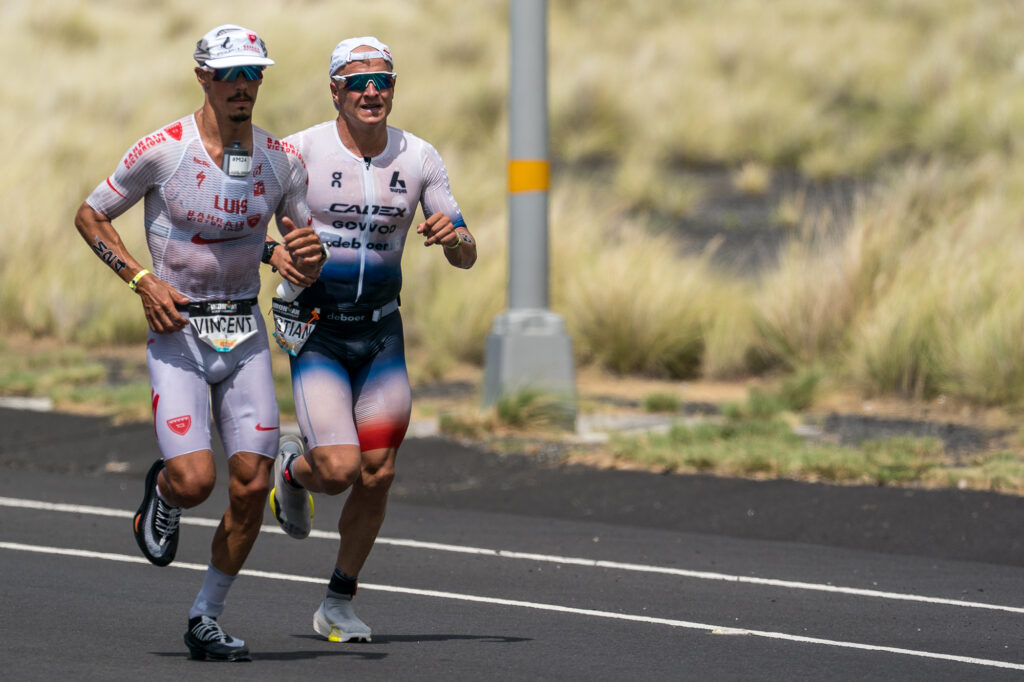
It felt like, as I was watching and frantically typing out my race report, that the main broadcast felt male dominant, particularly in the final hour or so of the men’s bike and then leading into the marathon. Our friends at Triathlete wound up crunching the numbers and coming to the same conclusion: the main broadcast was more men’s race focused. Now, that calculus does not include the numbers from the individual camera feeds to build a quad box, on-demand coverage model. But it’s fair to say that the main broadcast paid more attention to the men’s race than the women’s — something that was called out as a potential issue with the move back to a single day world championship.
That said, though, this year IRONMAN and team did an excellent job of showing us all of the key moments in the race, and that itself can skew these numbers. We got to see, for instance, the moment when Taylor Knibb bridged up to Lucy Charles-Barclay and they started to play games on the bike. We saw Matthew Marquardt’s penalty happen and the near-immediate call by the referee. We saw Vincent Luis’ charge towards the front and Gustav Iden’s chase, and we saw the back-and-forth in the final miles between Knibb and Solveig Løvseth. There’s only so much of Taylor Knibb riding by herself that you can talk about, whereas you had more leap-frogging happening on the men’s bike.
In all — there’s still not enough cameras. There’s not enough of an ability to see more of the dynamics of the race happening because we simply can’t put cameras everywhere. There’s still not enough information that passes to the broadcast team in real-time to help give additional context to what we’re seeing. But, for the most part, it was the best that you could expect given the resources available on the day.
We Need to Talk About When It’s Time to Turn the Cameras Off
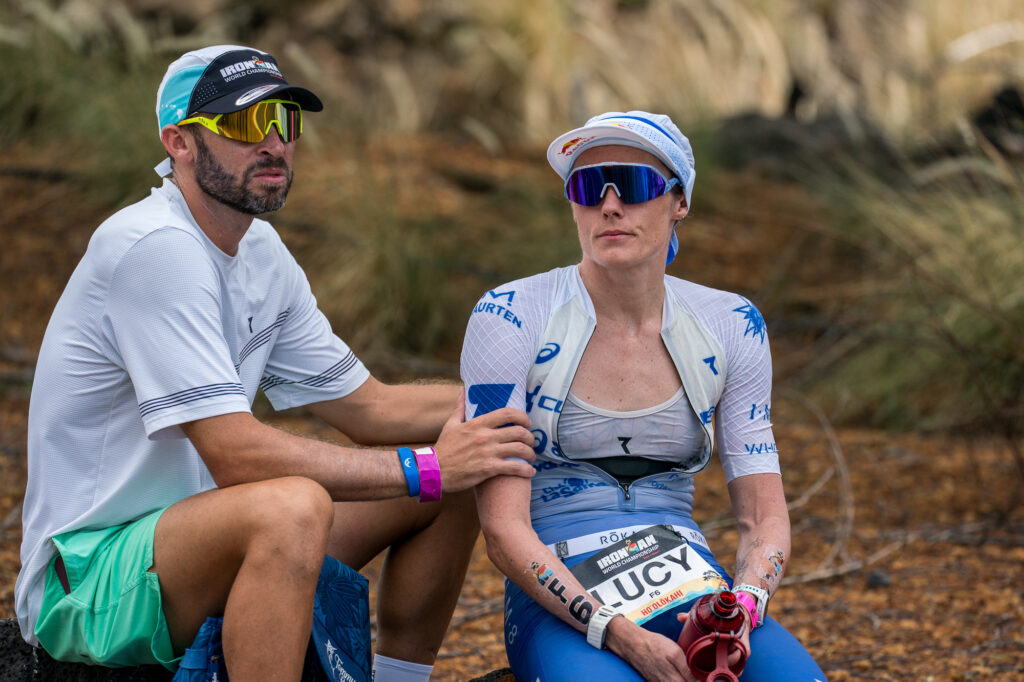
Part of what makes the IRONMAN World Championship special is that it’s a hard race. This year was a particularly challenging day at the office, with a rougher than average swim, rain that added to the sauna effect, and a different wind direction than “normal.” 22 different professional athletes wound up pulling the plug on their days for a variety of reasons, including two athletes who were featured on coverage for a long time: Magnus Ditlev and Lucy Charles-Barclay.
This year we saw these athletes struggle on camera. We saw Patrick Lange with issues and pull off the bike. We saw Marten Van Riel vomiting on the bike. We saw Lucy Charles-Barclay on the side of the Energy Lab, in nearly the same spot she retired from the race last year in, vomiting before exiting the race again. (My daughter happened to be watching with me at the time, and decided she was done watching IRONMAN ever again at that point.) And we saw Magnus Ditlev hit the exit of the Energy Lab and immediately run into the wall, with Vincent Luis passing underneath Ditlev’s outstretched arm at the mile 21 aid station.
In all of these cases, the cameras stayed on the struggling athlete just long enough for us to understand what was happening. And to also let us know that the athlete was, well, safe. Then we moved back to athletes racing.
And then we come to the final mile collapse of Solveig Løvseth.
Løvseth, as the leader of the race, had multiple cameras following her. After a look at the angry Pacific Ocean along the shoreline, the race coverage picks back up as Løvseth is running down Palani Road. It’s apparent about halfway down that Løvseth is struggling. For the next four minutes, the camera stays entirely on Løvseth as you watch her slow, her form deteriorate, then walk. And then, completely uncoordinated, she stumbles and falls backwards. It’s frankly only the skill of the camera operator on board the electric unicycle that prevents a serious collision between the two.
It’s only after Løvseth hits the pavement that we first get a camera cut back to the trailing Taylor Knibb. But that remains only a split screen; we also see Løvseth get back up and stagger, attempting to move forward. At this point, Craig Alexander says, “This is so hard to watch.” It’s only after he says that the feed switches to only show Knibb — but it’s only for a couple of seconds, as then we’re back to watching Løvseth struggle, walk, and lay back on the pavement again.
Knibb and Laura Philipp pass Løvseth during this time, and we watch the cameras chase them through the finish. We then cut back to Løvseth, now carrying a bag of ice, and Julie Derron, who at this point is fourth. We watch Løvseth walk with the bag of ice, have an ice cube, and then stop again, while Derron’s running. The camera remains with Derron as she runs past Løvseth, who is once again sprawled out over the road, with Alexander saying an intervention is needed: “someone needs to make that call right now.”
This unfolds over the course of fourteen minutes of the broadcast. And it’s some of the most uncomfortable sports watching I have done, period.
Let me be fair to the choice to keep cameras on Løvseth. She’s leading the race. It’s like watching any athlete struggle, and it’s one of the most dramatic ends to an IRONMAN, period, let alone the world championship. You probably need to at least stay with her until Knibb passes her for the win.
Once that moment happens, though, there’s no good reason to keep the feed on Løvseth, barring an attempt to try to re-create the Julie Moss moment of crawling to the finish line. No other modern sports broadcast continually would keep the camera on an athlete suffering in the same way. Major professional broadcast sports, once there’s knowledge of an issue, will cut the feed away. Even our fellow endurance sports will pull cameras off of folks; for instance, when Tadej Pogačar crashed during the Vuelta, once it was known he was withdrawing from the race, they got cameras off of him.
All of the people who have been inspired by that absolute struggle, hardest challenge on Earth message have been inspired. The IRONMAN broadcast is trying to capture new triathletes. And you don’t have to look far to see that this stretch of the broadcast has alienated some potential new athletes. For instance, here are just a sampling of comments on The New York Times story on this year’s race, which focused on the late-race dynamics.
“At some point they need to set medical protocols for these events when athletes collapse. It’s not heroic, it’s dangerous. When I was competing 25 years ago, one of the elites collapsed and ended up with sepsis and having most of his large intestine removed. Any time I see someone with wobbly legs, disoriented, and falling… and a fellow competitor urging them on and dragging them to the finish line, it’s embarrassing for the race and the medical staff to let it go on.”
“Do not let this get brushed under the rug. Do not let Lucy Charles-Barclay’s race be forgotten either. Yes, Solveig Løvseth’s collapse was shocking. So was Lucy Charles-Barclay’s second collpase in two years. So was Taylor Knibb’s collapse last year. Nay-sayers will tell you this was about “preparation” or “comparison getting the best of them” – no. These are the best triathletes in the world – hell, some of the best athletes in the world.”
“It might be noted that redlining the body too much and too often may not be wise. A number of former Ironman champs, notably Mark Allen and Dave Scott have serious heart problems. What price glory..”
“Ironman is kinda like the Nathan’s hot dog eating contest. Foolish extremism.”
This is especially an issue had Løvseth been dealing with a more serious medical problem. We’re not that far removed from the above mentioned story regarding Chris Legh having part of his intestine removed following a collapse in the finishing chute in Kona. We don’t need to watch an athlete repeat the experience, either. We’re lucky that Løvseth just needed more time resting, more time with ice, and was able to eventually walk home in eighth.
And yes, I’m guilty of both feeling like the cameras stayed far too long with Løvseth and ultimately becoming more of a fan of hers based on finishing. I’m a man of many opinions.
Overall: B+
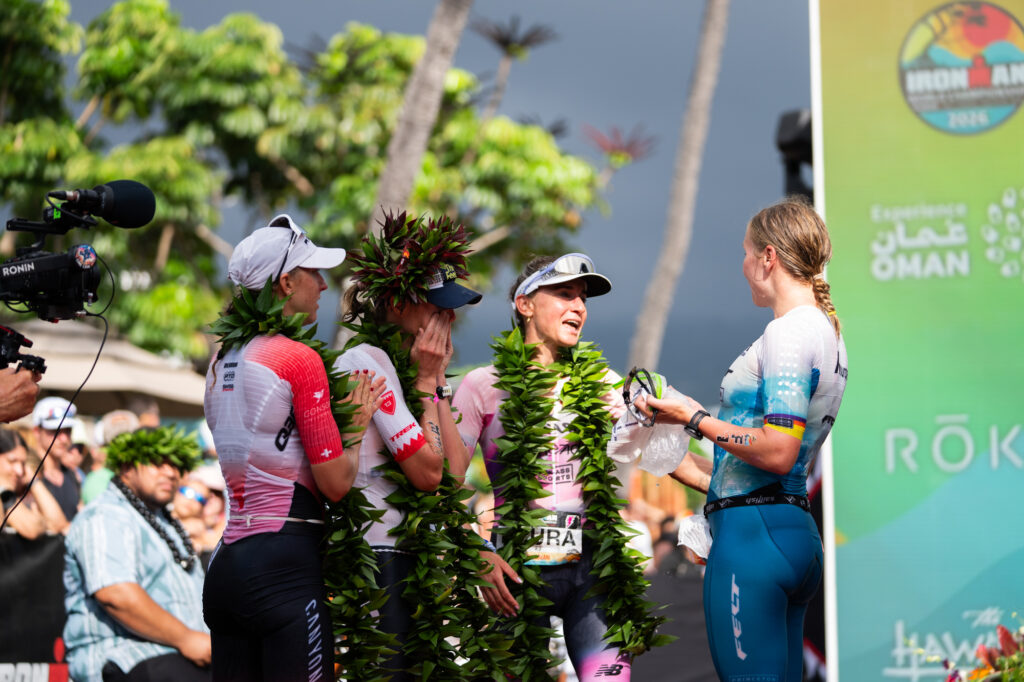
On the whole, IRONMAN and its broadcast partners did a very good job during the return to Kona. It also helped that both Mother Nature and the athletes decided to give us plenty of drama. As always, there’s some room for improvement — more cameras, having production swap cameras at certain times. But, when you do get to actually see the winning move happen in both races (yes, I’m still salty about the men’s 70.3 worlds finish from last year), and the commentary is quality, it’s a good day to watch triathlon.

Start the discussion at forum.slowtwitch.com