
Salomon’s Aero Blaze 4 is the Personification of “If It Ain’t Broke, Don’t Fix It Till It Is”
Back when I was selling running shoes full-time, the most exciting and nerve-wracking moments were when flagship models from your top brands were about to be updated. These were the shoes that sold the most volume in-store by far; in fact, roughly 50% of our volume would roll through a core set of four models. One wrong move from a brand there meant we — and our customers — were now having to figure out a replacement.
Perhaps the most famous example of this was when ASICS decided to update the GT-2170 stability shoe and turn it into the GT-2000 back in 2012. They took feedback from a significant number of non-ASICS runners, looking to capture additional market share with what was then the single highest selling model in specialty running. Based on that feedback, ASICS made the shoe lighter, softer, and narrower than prior iterations of the shoe.
And, I cannot emphasize this enough, nearly everyone hated this shoe.
Almost overnight, ASICS share in our store crumbled. The people who loved the prior shoes transitioned to Saucony and Brooks. The people whom ASICS had made these modifications for wound up chasing their way into New Balance and Mizuno. We wound up having to cut futures orders, over and over again, as GT-2000s collected dust on our shelves. And as we did so, that meant it had impacts across the store; because we weren’t moving as much footwear, we no longer qualified for certain terms for discounts or availability for apparel.
In other words, then, making drastic revisions to your shoes can be catastrophic. That’s particularly true for emerging brands that are trying to capture market share. You might be building momentum with a certain core customer base, and changing a shoe too much could break your brand. (Anybody remember Newton deciding, after telling us that four lugs under the forefoot were fine for years, to then move to five lugs?)
What’s all this have to do with Salomon and the latest iteration of their meat and potatoes everyday trainer, the Aero Blaze 4? Well, let’s start with where Salomon sits in the marketplace these days. Salomon surpassed $2 billion in revenues for the first time this past year, as they look to grow to $3 billion by 2030. Over half of that revenue is coming from its footwear business, with shoes like the Aero Glide and Blaze bringing new road runners to the brand. It’s that growth fueling why Salomon recently inked its long-term naming rights and sponsorship deal with IRONMAN.
The Blaze 4, then, has a bit of weight on its shoulders. And the prior generation shoe is one that I called great, writing that, “I’d put it against a lot of shoes in that mid-price neutral category, and I’d personally pick this out over most of them. It’s that good.” Salomon’s also been busy opening brick-and-mortar locations and new retail distribution partners.
So…no pressure, Salomon.
The Tech Stuff
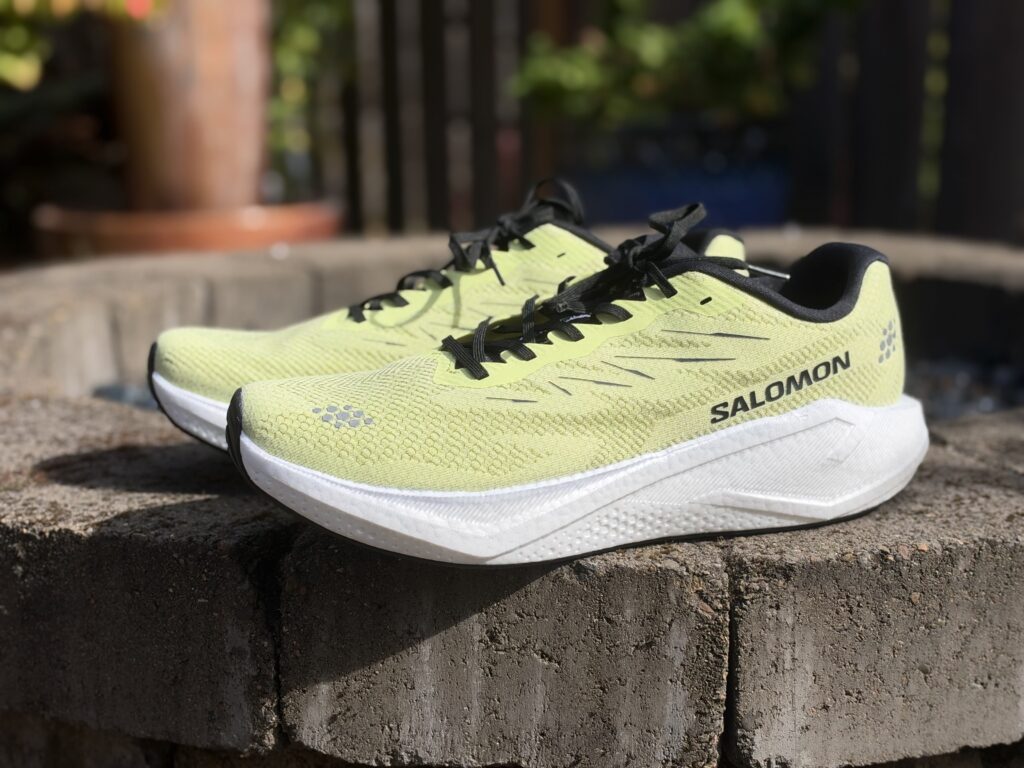
Let’s start off with what carries over from the prior generation Blaze. You’re still looking at an 8 millimeter heel to toe drop here, with published stack heights of 36mm in the heel and 28mm up in the forefoot. Also carried over is the so-called reverse camber construction, which Salomon claims comes from its ski business. Basically, the reverse camber refers to the rocker of the heel and toe pieces of the shoe (similar to curvature in the tips and tails of skis), while also flattening out the midsole when planted underfoot. The prior generation Blaze had it, too, and helped contribute to the smooth ride underfoot.
The two big updates come in the form of materials updates, and they impact the midsole and upper of the Blaze 4. The midsole has moved over from EnergyFoam EVO to the newly introduced optiFOAM². It’s still a lightweight supercritical TPU midsole that, if you look closely enough at the midsole material, it looks like popped popcorn and will remind you of Boost, Adidas’ take on the midsole technology. Perhaps that’s a reason why this generation shoe has more texture to the midsole design than the prior one.
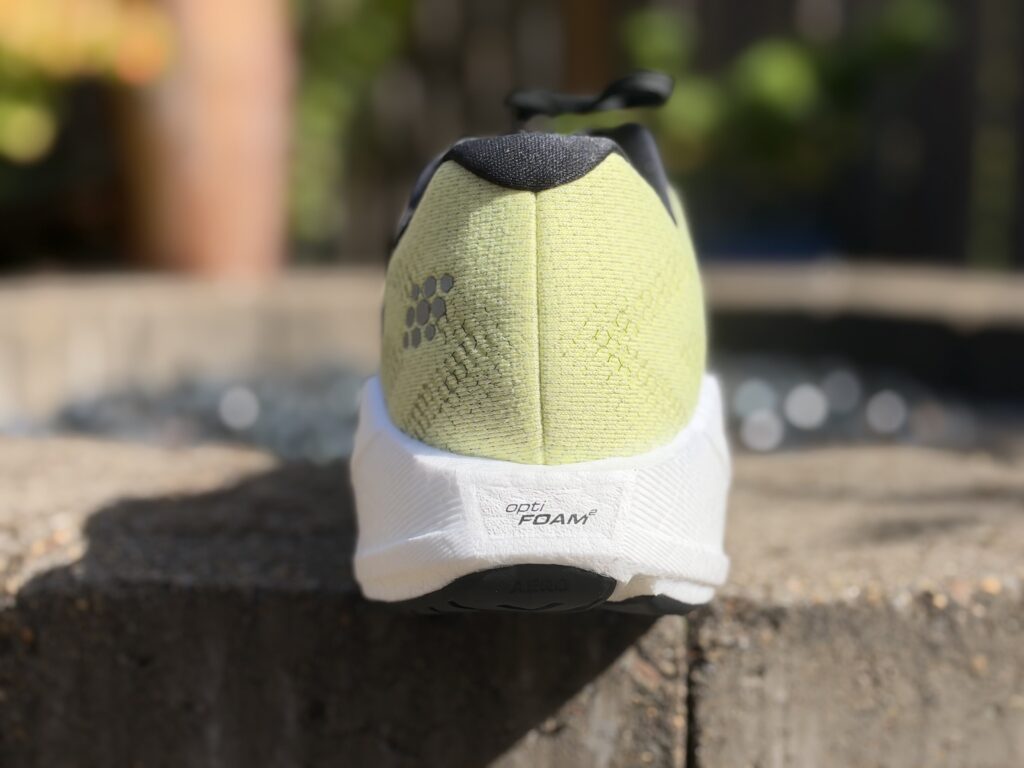
The argued benefits, though, remain the same. We’re talking more cushioning, better energy return, and lighter weight than using a more traditional foam construction. And, if published weight is to be believed, the new foam is doing its job. Published weights reveal a shoe that keeps its lightweight cushioning mantra; the new Blaze is exactly 0.1 ounce lighter than the prior one, with the men’s sample size coming in at exactly 8 ounces. In other words, this is still one of the class leaders in every day training for weight. Comparable shoes from Brooks, Nike, and Saucony all range to an ounce to almost a full two ounces heavier per size.
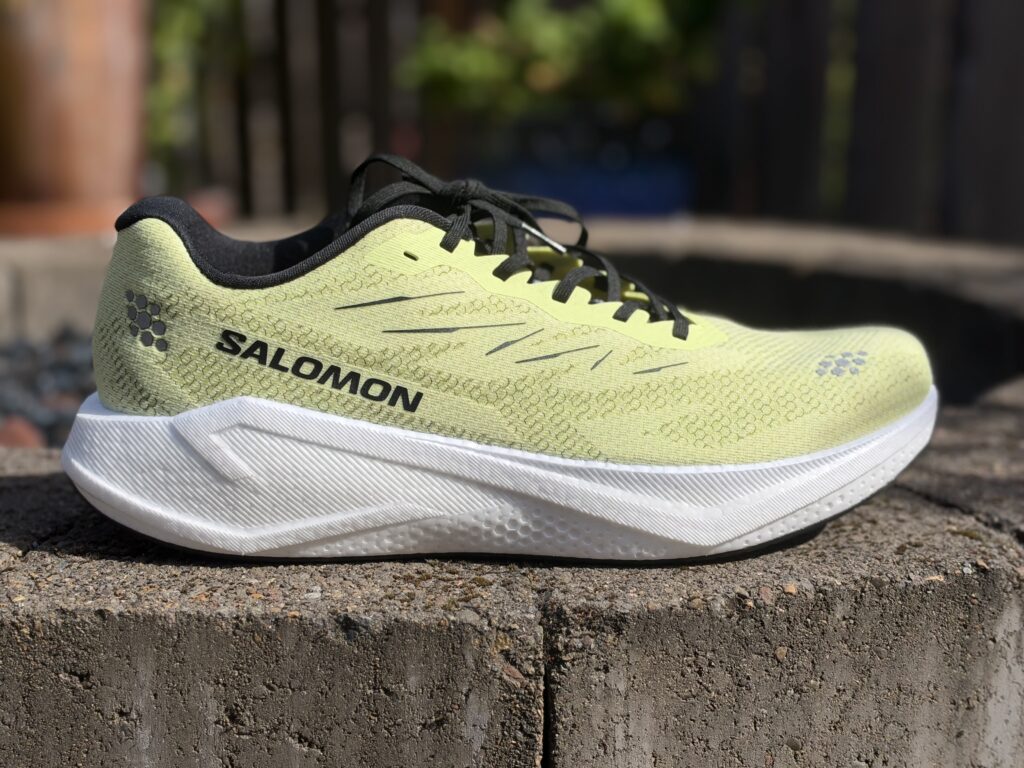
The other major update is in the upper. It’s where a lot of brands are spending more and more of their energy, as they look for ways to help get more runners into their shoes without making a shoe so roomy that it feels like you’ve tied a couple of boxes to your feet. Salomon has introduced a new engineered mesh featuring what the brand calls 5D printing. Supposedly, it’s meant to make the shoe feel airy while providing enough support to properly wrap the foot and keep it secure. It also has the added benefit of giving some visual texture to a shoe that is frankly challenging in color. Salomon calls it Sunny Lime. I might call it Baby Turd Yellow. As always, your mileage may vary.
Running in the Aero Blaze 4
Putting on the Aero Blaze 4 reveals a shoe that, much like its predecessor, will not wow you out of the gate. The heel collar material is slightly nicer. The tongue feels slightly different. It sits a little lower than before, and might have a hair more material to it than before. But otherwise, it’s a shoe that feels lightweight and…well…that’s about it.
And then, much like the predecessor Blaze 3, it’s a shoe that comes alive when you start running in it.
First positive: I don’t have to look at it while I’m running in it. (Yes, I am stuck on the color. I’m sorry.) But really, this is where Salomon has clearly done a lot of homework, and it has paid off. The running experience is simply sublime. The Blaze 4 feels a little softer than the 3, and the heel-toe transition feels a little less jarring than before. It’s also not boardy in the same way that running in a lot of carbon-plated shoes can feel, and that is freeing after having done a lot of testing in carbon shoes.
This isn’t a shoe that is going to make you faster on race day, to be clear. But it’s so light, and fun to run in, that you might be able to go ahead and comfortably race in it. Sure, you’ll give up the advantages of a carbon racer, but for people who don’t necessarily respond well to those types of shoes, or if your course features a lot of climbing, this could be the ticket for that.
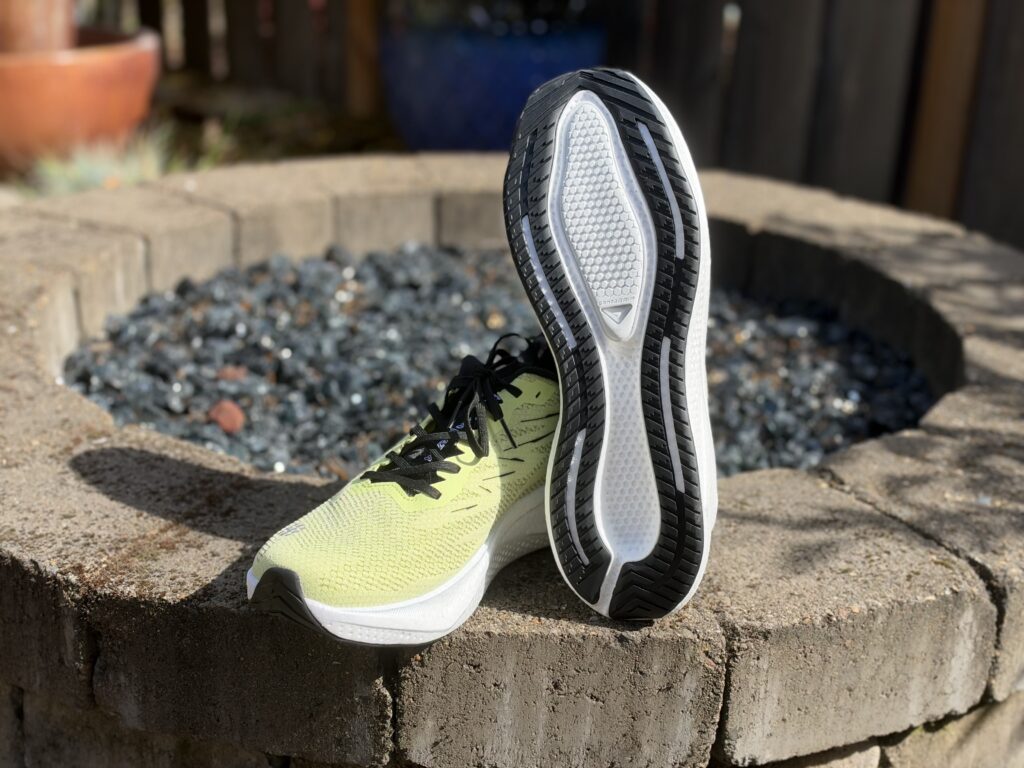
I also need to call out the high-quality grip that Salomon has put on its shoes. The contaGRIP outsole is, for my money, the single best road shoe outsole on the market today. It is tremendously tacky. As I head here into the rainy season here in the Pacific Northwest, the Blaze will wind up picking up more and more mileage for outdoor runs to make sure I’ve got secure footing on our slippery surfaces. I can’t figure out how they’ve managed to make that happen with what just appears to be a standard carbon and blown rubber outsole, but here we are.
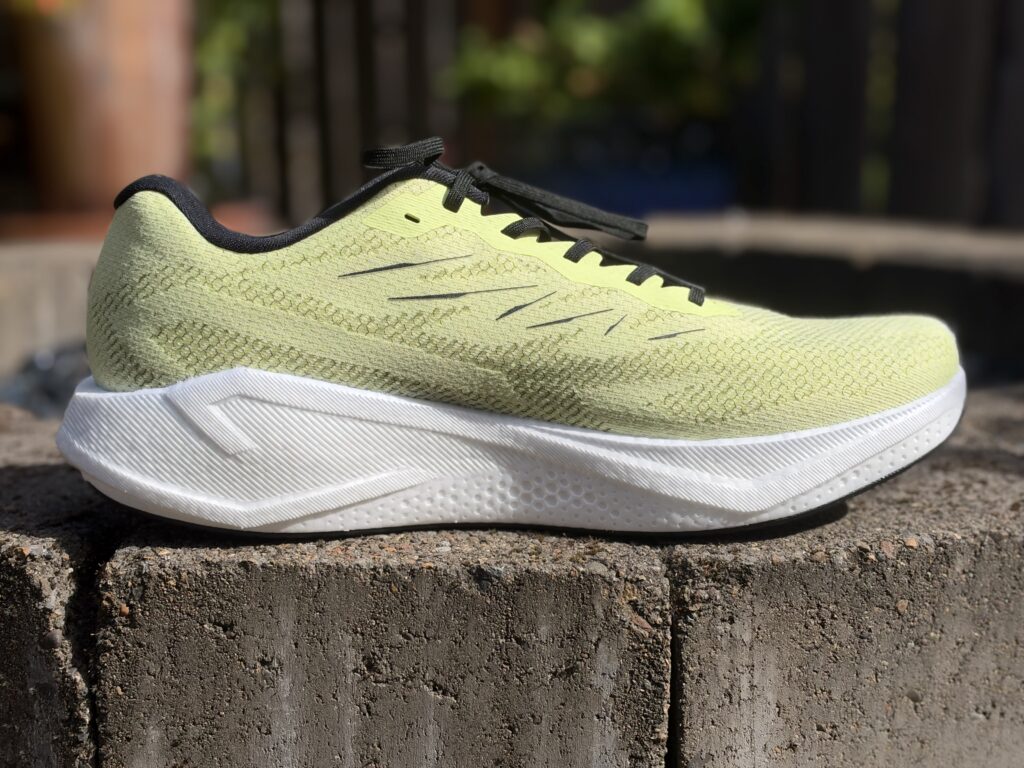
Negatives? I promise, I won’t harp on the color anymore — the shoe is also available in a very sharp blue, as well as in gray or black. What I will harp on about is the continued insistence of putting flat laces in running shoes. This is a hill I will die on: flat laces are for athleisure, oval laces are for performance footwear. Flat laces don’t stay tied, and they fray more frequently. Salomon, please, at least follow the lead of Saucony and give us some oval laces if you’re going to insist on putting flat ones on at retail to make the shoe look better.
Otherwise, though, this shoe remains one that just will happily eat up miles and not complain.
Concluding Thoughts
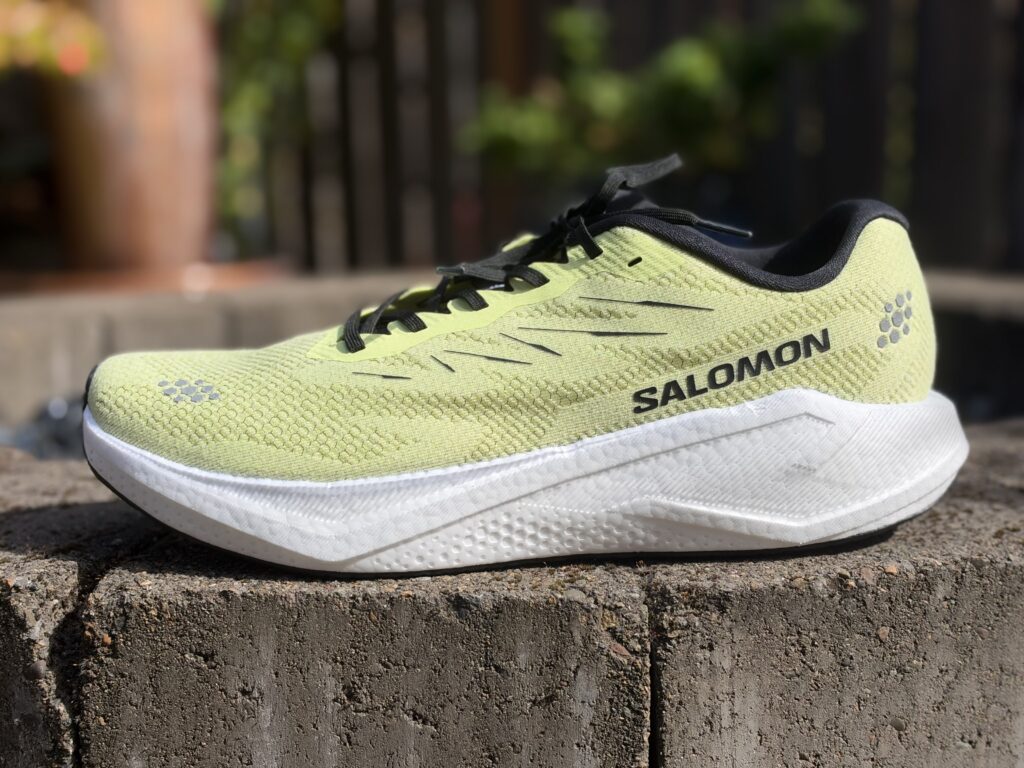
Salomon didn’t really rock the boat with the new Aero Blaze 4. It is a solid update to an already very, very good shoe. If you really liked the prior generation of the shoe, you should love this version. If you tried the Blaze before and didn’t really like it, you’re probably not going to like this one either. For Salomon, though, that’s probably the right approach: they’re growing in the road market in part because their line-up is proving to be popular. Rocking the boat right now would probably be the wrong move.
Probably the single most similar shoe on the market right now would be the Saucony Ride. It, too, features a supercritical foam midsole, an 8 millimeter heel to toe drop, and a price point around $140 (the Ride is $5 more as of this writing). They fit somewhat similarly, too. And that’s a pretty good place for Salomon to operate — the middle of the road gives you the most margin for error, too.
Salomon Aero Blaze 4
Available: Now
Price: $140 USD
Shop Men’s | Shop Women’s



Start the discussion at forum.slowtwitch.com