
Wove’s Tricked Out Ventum Tempus
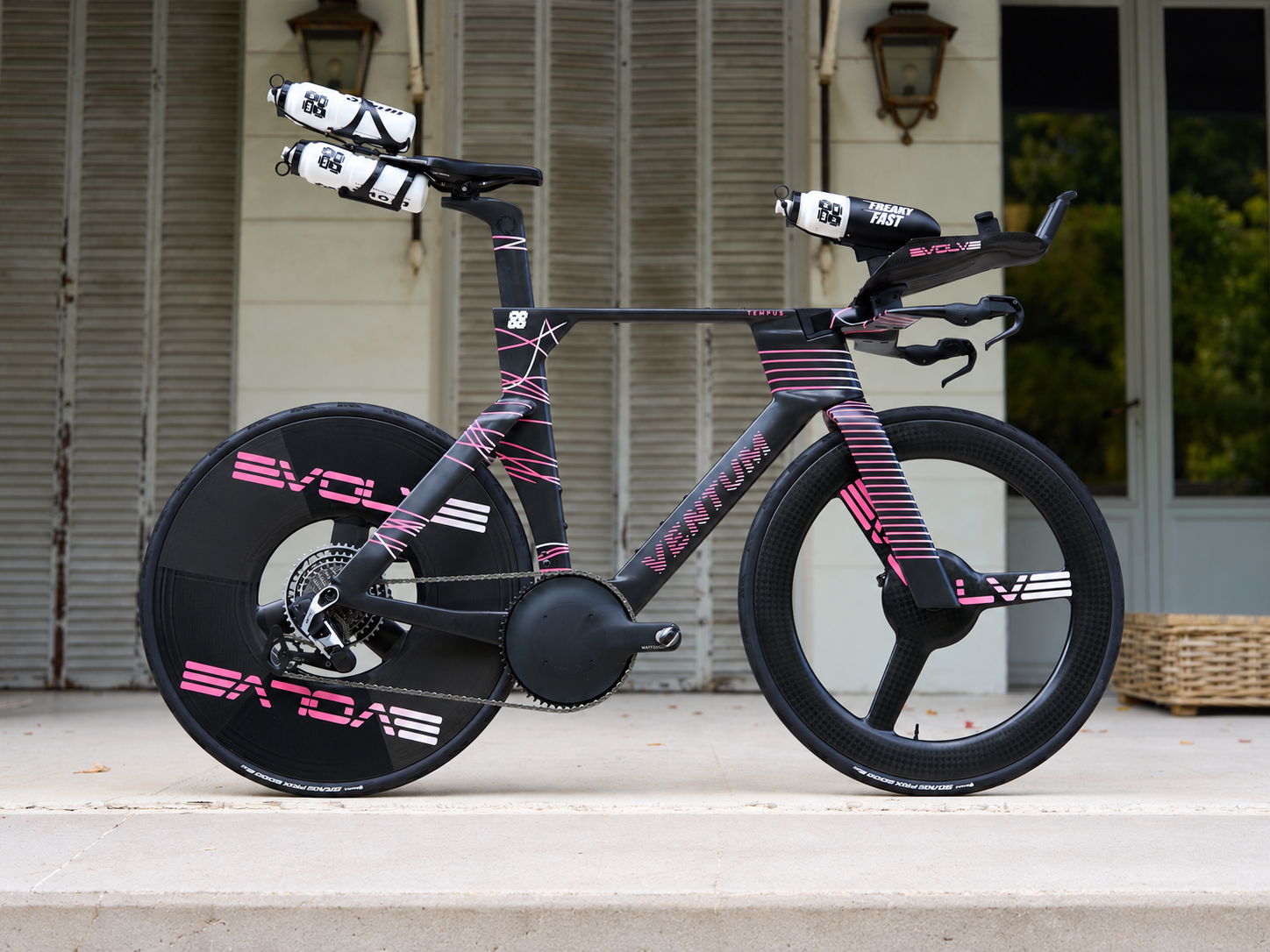
After providing more than 4,000 bike fits since the late 90’s, including those for many of Wove’s pro triathlon and UCI WorldTour athletes, I’ve come to the conclusion that your bike fit begins with your saddle. We built up this year’s Ventum Tempus to be displayed at IRONMAN 70.3 World Championship here in Nice and the IRONMAN World Championship in Kona to demonstrate this point
Dan Empfield wrote about the need to ignore T-shirt sizing when choosing a triathlon bike size, insisting on beginning with frame stack and reach, and he later revised this to focus on bar stack and reach. Empfield argued that many people have a strong emotional tie to what they perceive as their bike size, and these people often end up on bikes that are just too small for them.They might claim that a smaller bike handles better, but outside of the descents at Nice, this is really a non-issue. I am using a 61cm/XL Tempus frame because I’m starting with stack and reach and building the bike from there.
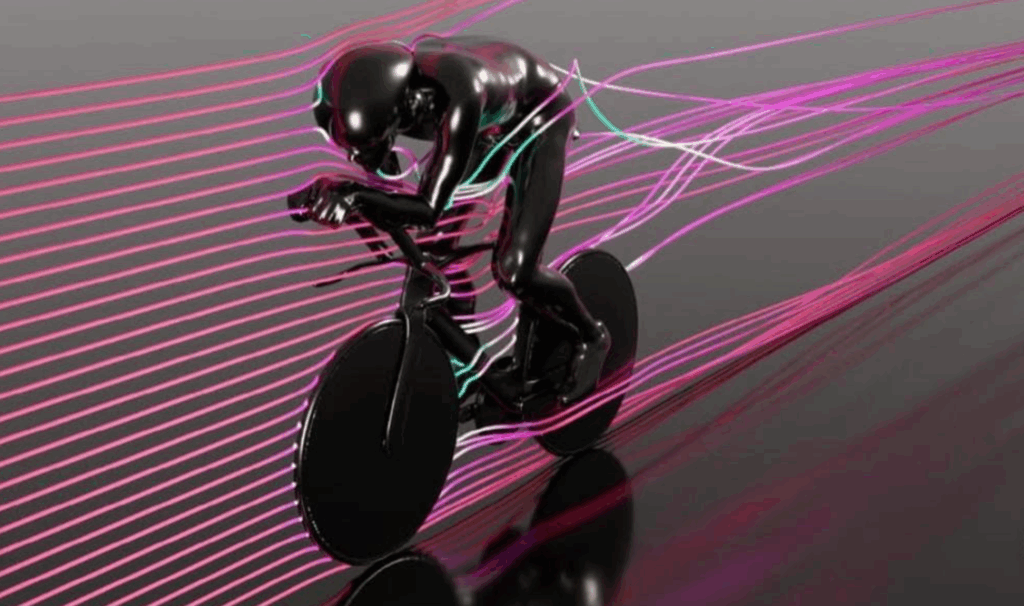
What we are seeing for triathletes of all ages and ability levels is the use of aerobar riser kits to gain 4-7cm of reach, and spacers to gain higher stack. This is being done for comfort and also for aerodynamics, because many people are on frames that are too small and frame manufacturers have not added enough reach into their frames yet.
Case in point: the CFD illustration of Filippo Ganna below that comes from the work Dan Bigham of Wattshop was involved with when Bigham set the hour world record on the track. This was as a test run to gather data for Ganna’s 2022 hour record that still stands. You can see the forward and raised 3D printed titanium aerobar spacers being used. This forward reach spacer is not being used due to UCI wheel base constraints – this frame is well under the UCI wheelbase limits (we tackle that topic here).
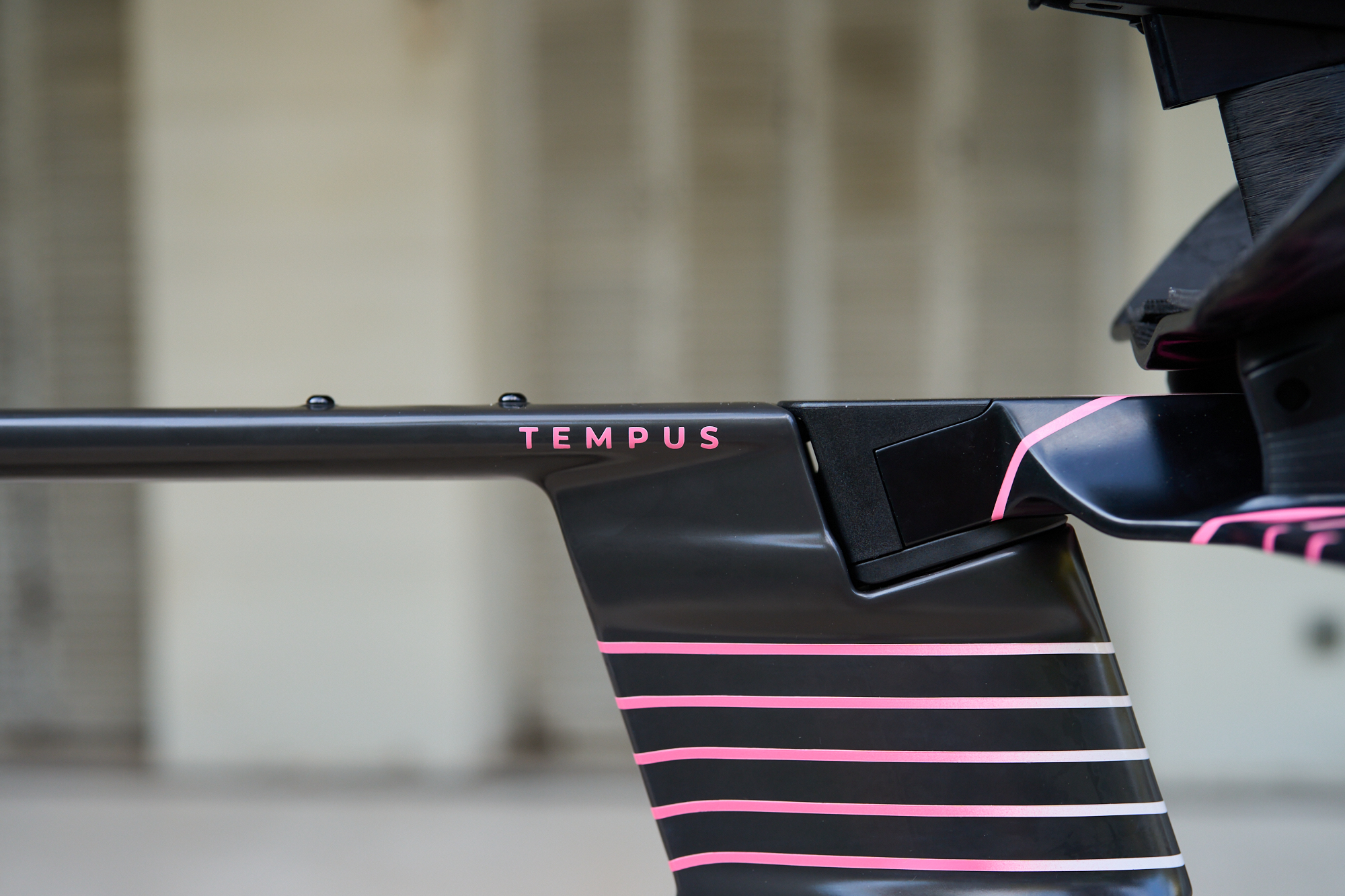
(This CFD illustration of Ganna also served as the inspiration for our paint job on this year’s Tempus, done to perfection by Brindle Custom paint out of Denver, Colorado.)
Aerobar spacer kits used to gain forward reach can create leverage issues on the basebar so, for our build this year, we used the 61cm/XL frame to add additional stack and reach.
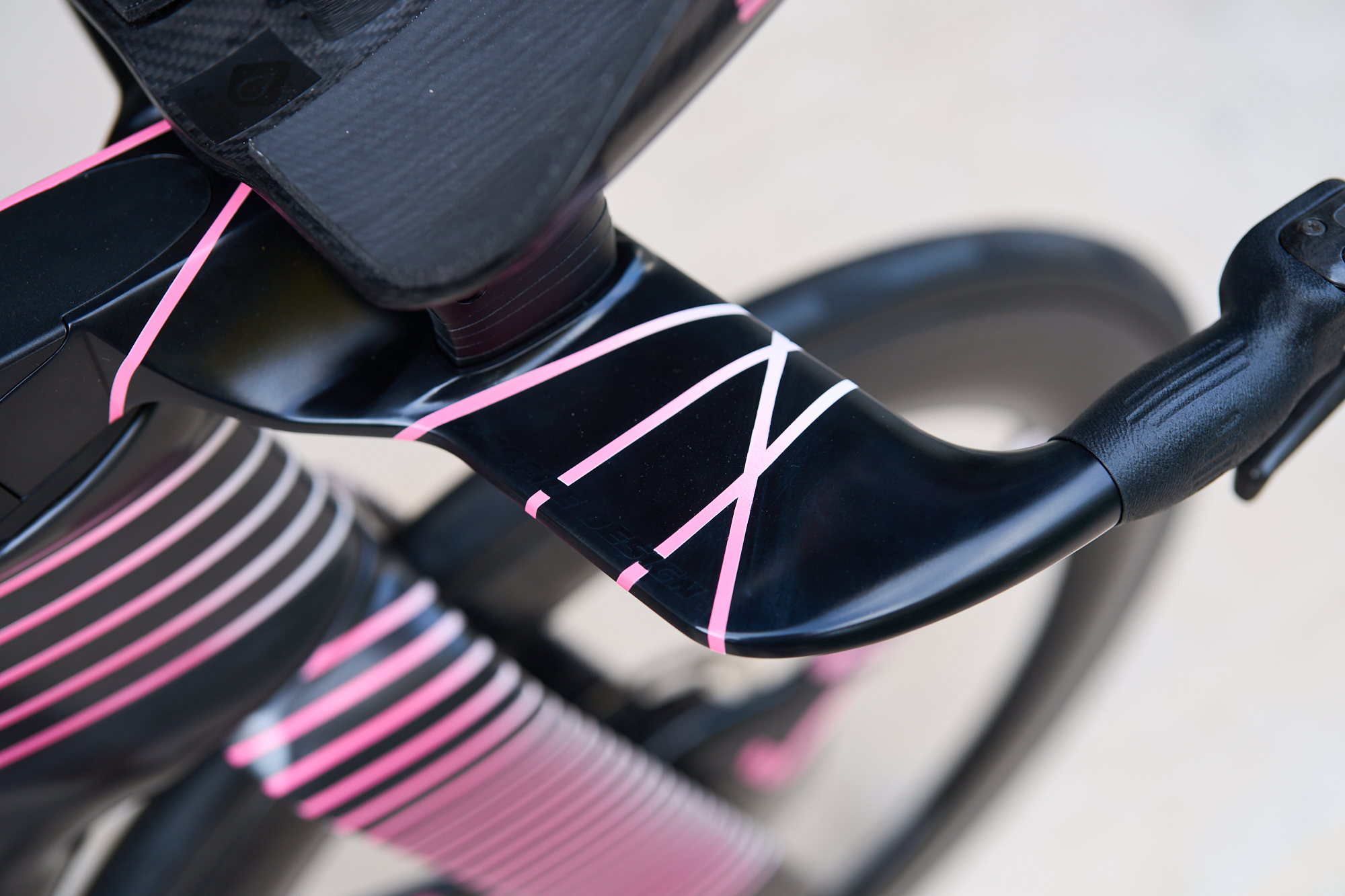
We also went with a new Profile Design Wing Ultimate basebar that has a 15mm longer stem, and a 40mm narrower outside-outside width. We also added 25mm more reach into our Evolve Slipstream aerobars. This combination of larger frame size, longer stem and aerobars allowed us to use stock Profile Design spacers, whereas last year we had to use Tetsuo Wedges that provided 40mm of additional reach. One thing we had not anticipated was the lower stack height of the new Profile Design basebar, so in the near future we will be adding 40mm of additional stack using Profile Design spacers and 7° of additional tilt to the aerobars.
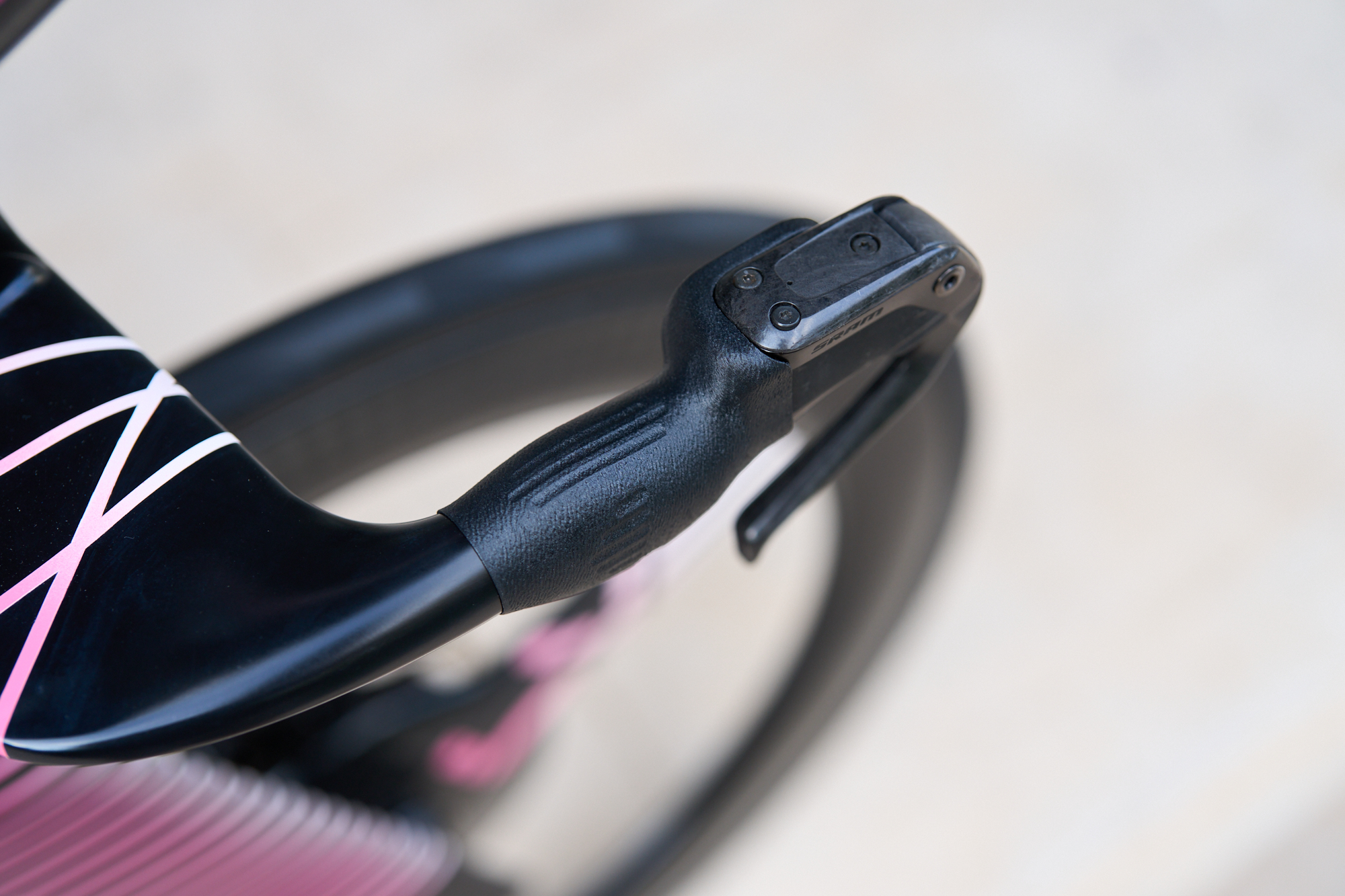
I’m using the Fast TT base bar grips for comfort and security, with integrated SRAM blips for basebar shifting.
Also new for this year’s bike is a setback seatpost. The Ventum Tempus frame has an 82° seat tube angle. While that sounds like the right direction to go now that so many athletes are riding steeper effective seat tube angles (effective seat tube angle can be defined as the angle from the rider’s estimated bone contact with the saddle to the bottom bracket center), Empfield had it right when he landed on an 80° seat tube angle when he introduced the first triathlon bike geometry with Quintana Roo in 1989. Why should we not go steeper than 80°? The orthodoxy being observed in the field is that for full distance races, athletes are naturally landing on 84° effective seat tube angles, and 85-86° seat tube angles for shorter distance races (with Sam Laidlow being the outlier, riding at 87-88° for full distance). This is because athletes are self-selecting a position over the bottom bracket to transfer their mass vertically onto the pedal and perpendicular to the ground (we go into a bit more detail in this blog post). The setback seat post allows us to achieve an 84-85° effective seat tube angle, with the saddle clamp in the middle of the saddle’s rails, compared to having to slam the saddle back far rearward in the clamp.
The Evolve Slipstream aerobars have fins that Harry Walker, founder/owner of Evolve, explained to us: “are aero deflectors to assist the airflow around the body.
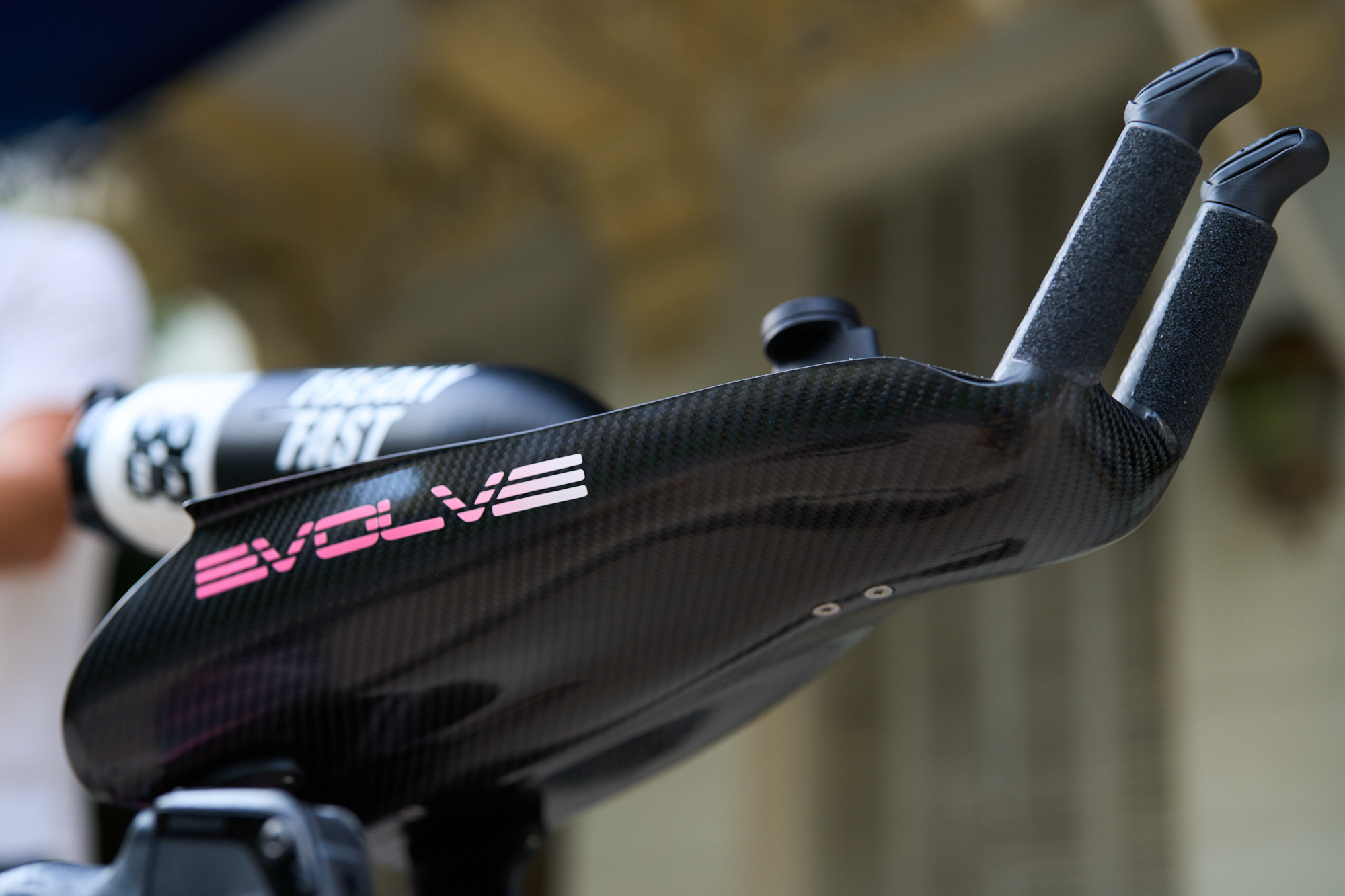
They are copper lined so that heat from the carbon doesn’t transfer to the forearm. So, basically, no matter how hot it gets they won’t heat up. The pads are open cell foam to hold water, while the surface uses the ice fabric, which becomes cold and very supple when wet. This is supplied by the company that make the Canyon Pro bars cooling foam pads.”
We outfitted this build with a Wattshop Cratus Crankset, using a 134mm spindle to provide a super narrow q-factor, while still allowing the crank arm to clear the chainstays even at high torque. (Last year’s 124mm spindle had just a tad bit of rubbing going on.) These cranks can be adjusted between 165mm and 175mm in length – I have mine set at 172.5mm to engage the glute muscles, as shorter crank lengths can over-engage the quads depending on the rider’s height (I’m 6’ 1”) and the distance to the bottom bracket.
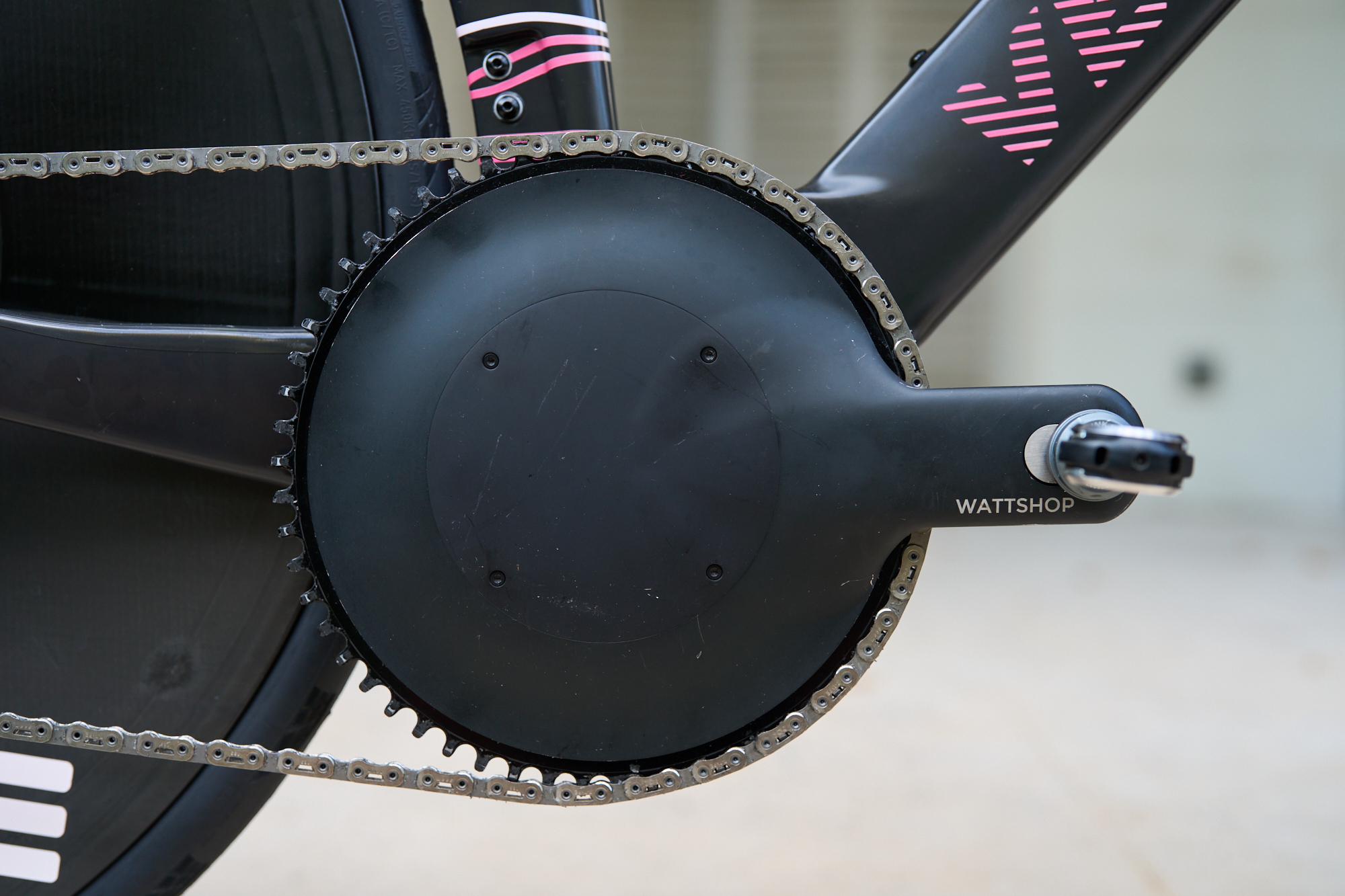
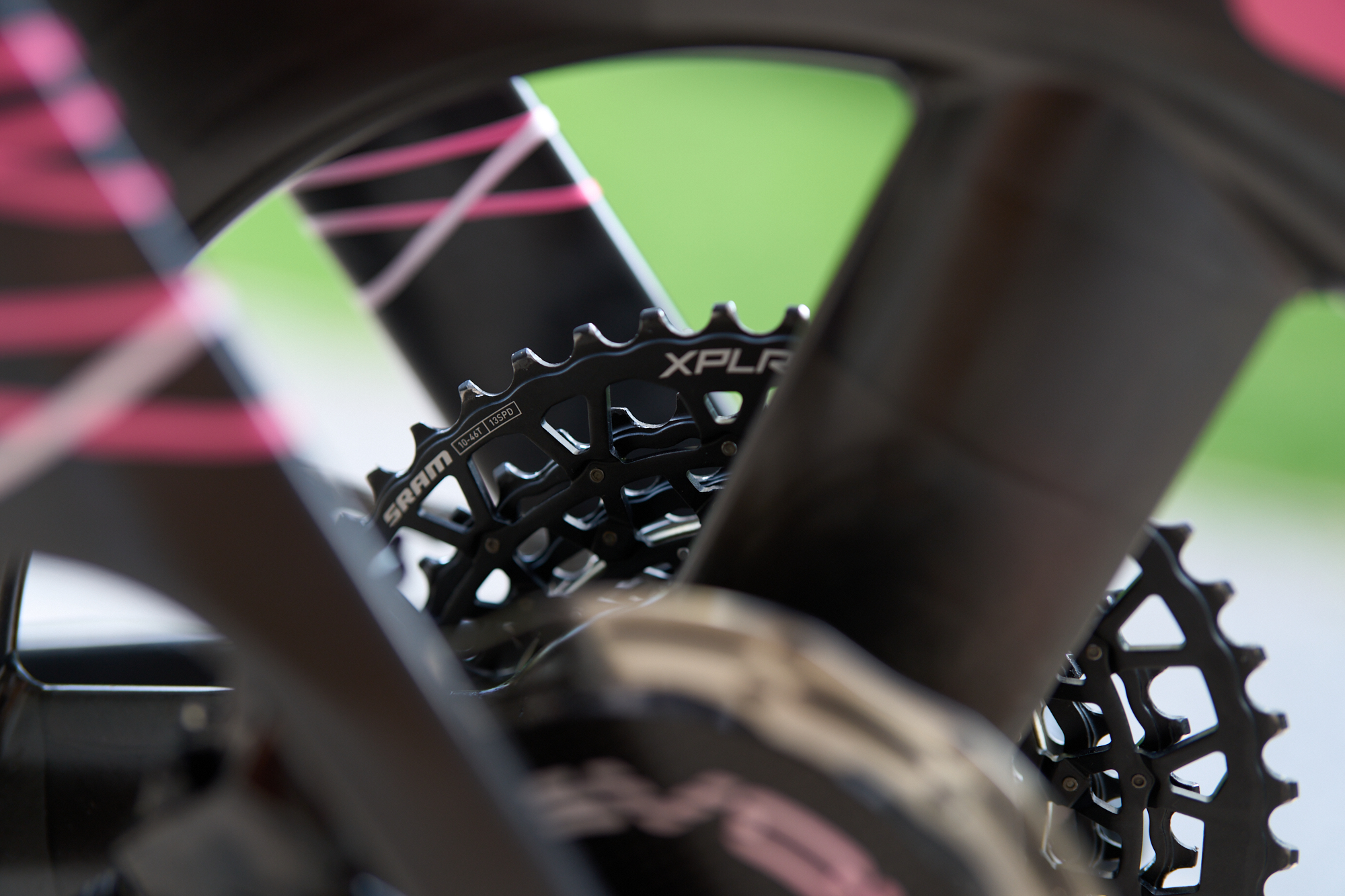
We have a Pyramid 58t chainring paired with a 13 cog SRAM Red XPLR 10-46t rear cassette. For reference, that 58t x 46t gain ratio is equivalent to a hypothetical 39t x 31t.
The rear wheel is a Kona legal Evolve Charger Trispoke, paired with an 80-mm-deep Evolve TroikaMAX+ Trispoke front wheel. Both wheels feature Evolve Aerotor disc lock rings for aero disc rotors.
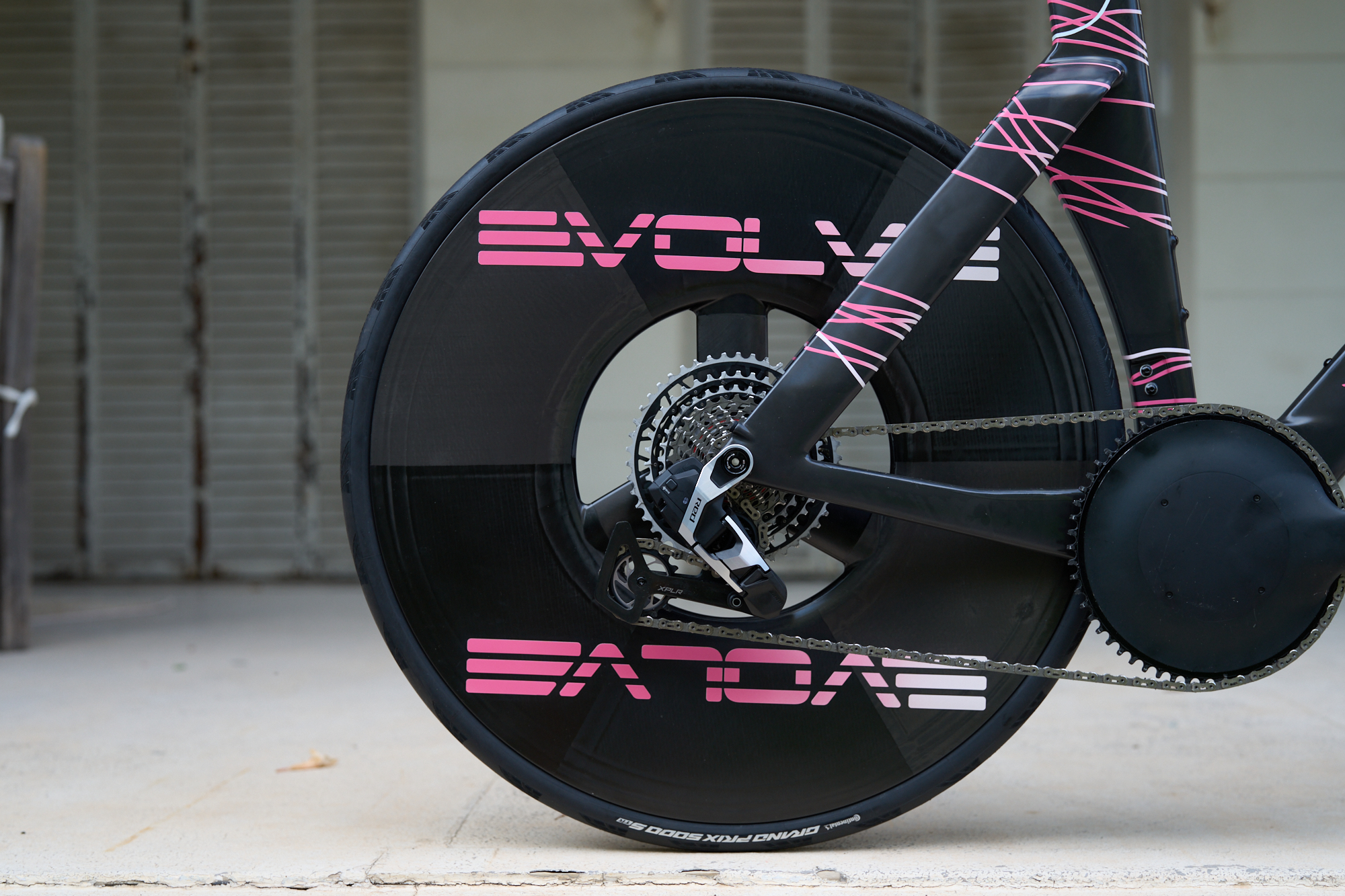
For rear hydration, we have a Wove Double BTS Bottle Bracket, with a Wove BTS Bottle Cage designed to be mounted upside down, and Wove Elite Fly Bottles and integrated retention loops.
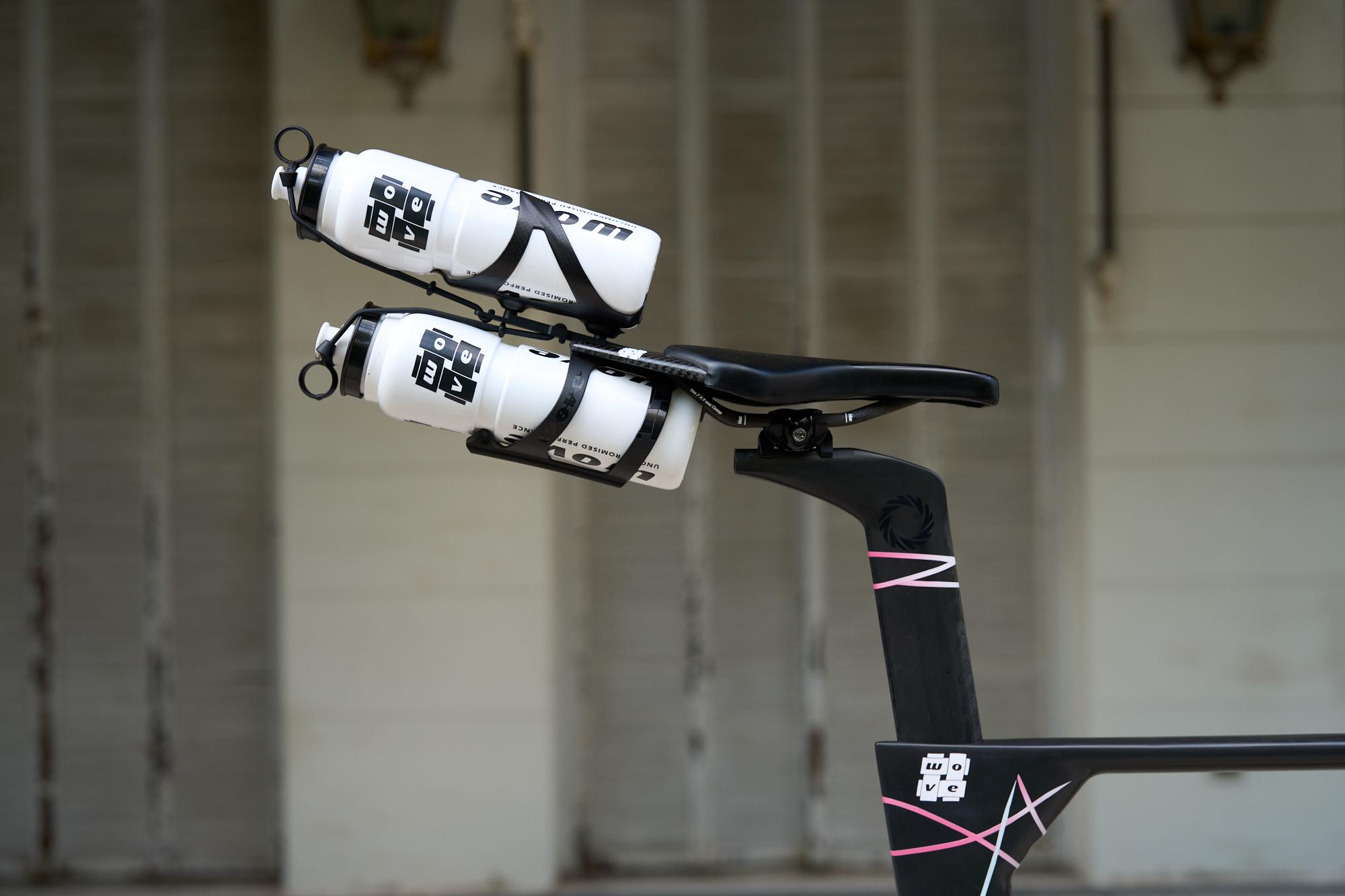
For front hydration we have a Freaky Fast Bottle Rocket aero BTA water bottle cage that cleans air at the front end. It’s all the rage right now among pros and amateurs alike, and I’m impressed with the positive and secure bottle engagement combined with an ease of removing the bottle mid-ride –
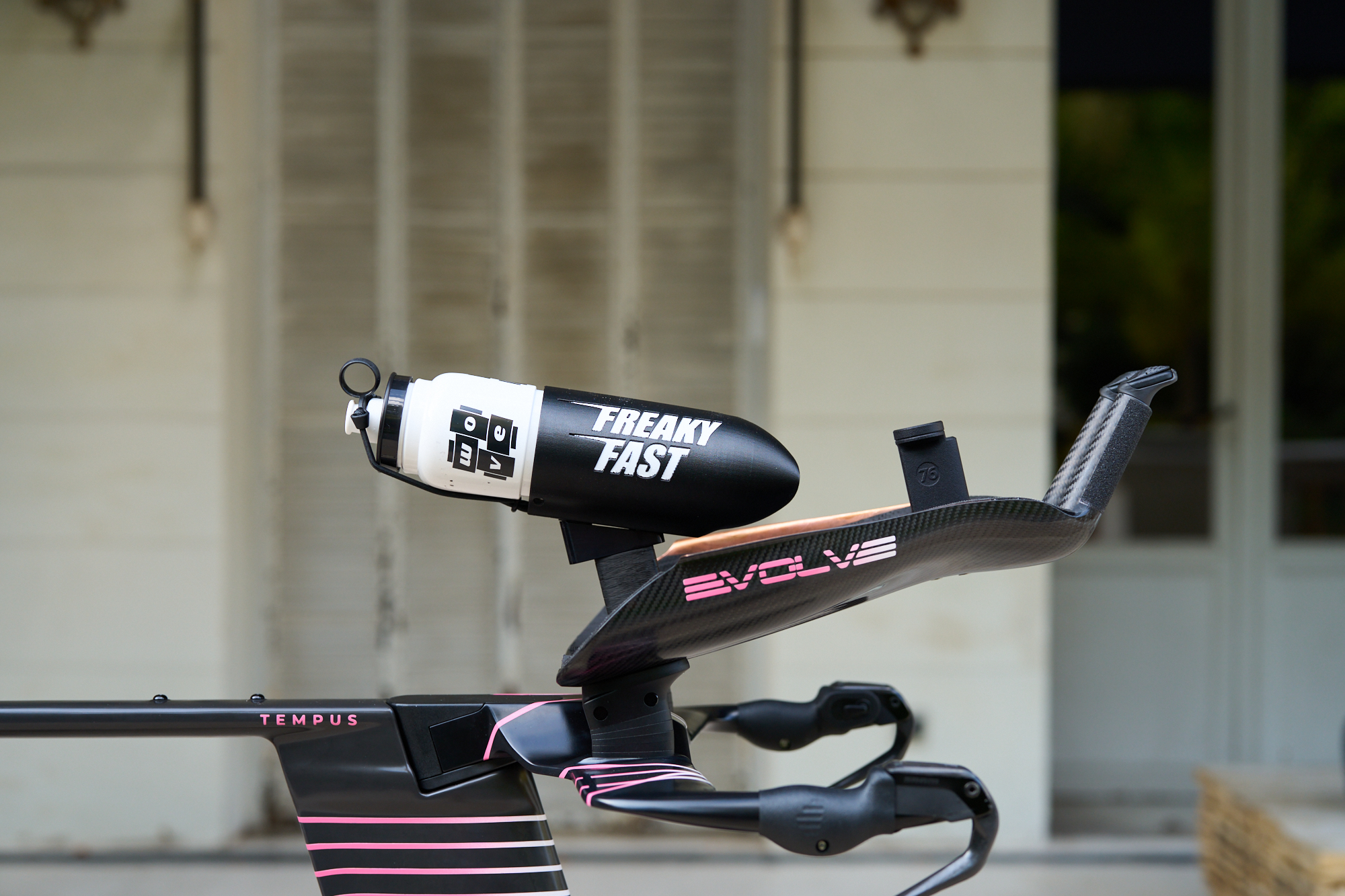
it’s a huge improvement over cages that make mid-race bottle removal a challenge.
Wrapping up, we have Wahoo Speedplay powermeter pedals.
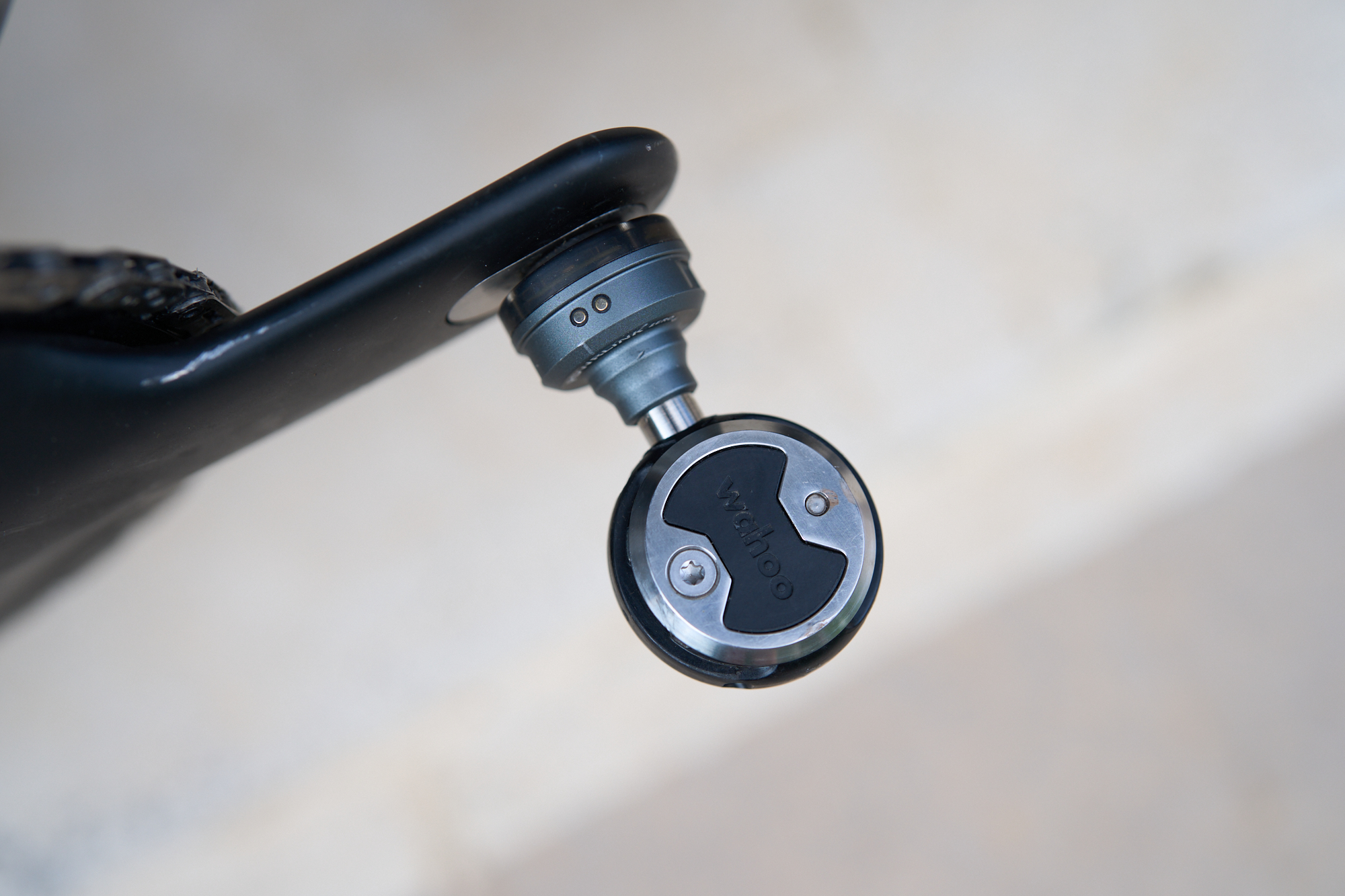
While I love Speedplay for TT and triathlon riding, it’s about time for that power meter sensor to be placed inside the pedal spindle like so many other power meter pedals are successfully doing.
Tags:
Wove SaddlesRelated Articles:


Continue the discussion at forum.slowtwitch.com
9 more replies



If you ever want to sell this let me know.
Will do!
How do you like the Charger? How does it compare to disc or deep section?
Rides like a disc, can’t notice a difference.
Last year’s bike had a tip of nose in front of BB.
Now you are behind the BB.
What is the reason for this change ?
That base bar is interesting, I’ve been waiting for this to hit the market. In addition to the longer reach, it looks like it isn’t flat and has a downward sweep?
Last year’s bike had the nose behind the bb
It does have a downward step - I’ll be adding a 40mm spacer to increase the bar stack and adding 7° additional angle.
that was for a photo shoot prior to the complete build. The final build was closer to the below fit:
And the position photographed yesterday is not complete, as discussed in the article, and here:
I have listened to your pitch on very forward saddles since you were on performance process last year. Just surprised to see things moving backwards.
The blog post below was written prior to the Performance Process podcasts and was the basis of that first podcast and I am stating the same things in this blog post as was shared in the interview yesterday, and the same effective seat tube angles in the below blog post are referenced in the interview yesterday and the past Performance process podcasts: Your Bike Fit Begins With Your Saddle — Wove
Same numbers. Same philosophy.
In your performance process podcast you explained how moving back was biomechanically less efficient. Your words not mine.
I was just surprised. People can judge by the pics if it’s the same position.
the Ventum has just a terrible bike geometry. How on earth can you build a bike with this reach….
@marcag
In the performance review podcast, I actually say nothing about saddle nose in relation to the bb.
I do state there, in the above blog post, and in yesterday’s interview that an effective sta of 84° is typically what we see for full distance races, and 85–86° is what we typically see for half distance races; and in the podcast, I focus on road bike fit and talk about 76° being what we typically see for progressive road bike fits. Effective seat tube angle being measured from the point where the bone is in contact with the saddle down to the bottom bracket.