
What Makes For a Good IRONMAN Course?
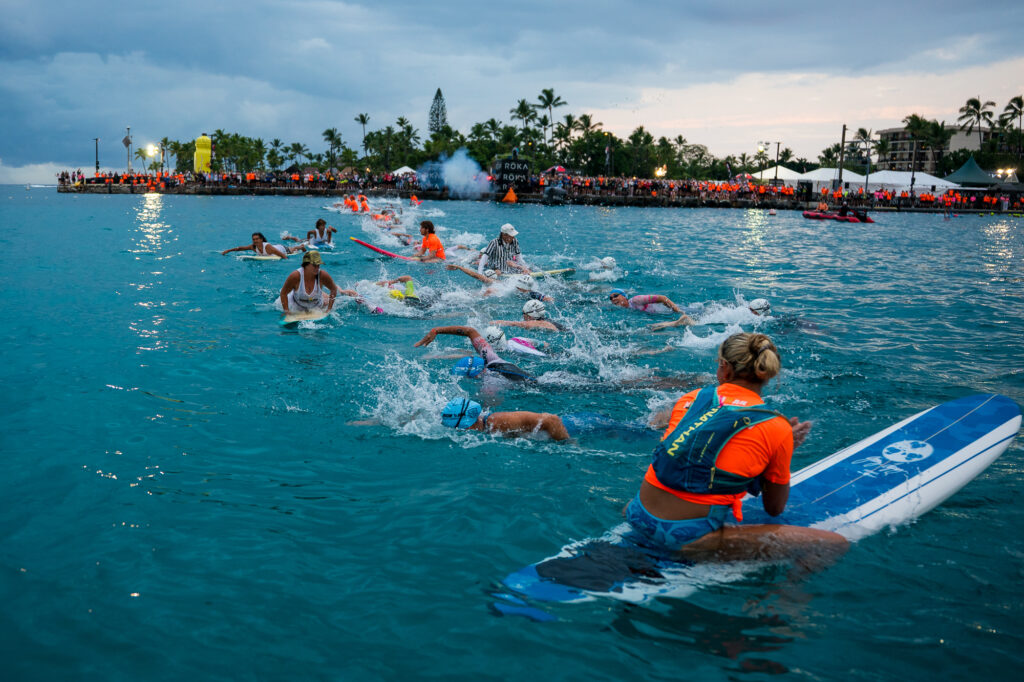
With over 170 races globally, there’s an awful lot of variety in IRONMAN host locations. If we expand this to include other worldwide triathlon race producers, we get close to 250 unique venues. That’s an awful lot of stakeholders, courses to route, and of course, money involved. It is, as we wrote in our article following IRONMAN Jacksonville, a logistical nightmare attempting to produce one of these events.
This past weekend showcased just two of the many obstacles that face race producers on race day alone. At IRONMAN Hamburg, a police investigation is underway after glass and metal shards were spread over a roughly 20 kilometer stretch of the course. More than 300 athletes reportedly suffered punctures as a result. It’s one of the oldest race sabotage tactics in the book; it has happened at other IRONMAN host locations, including but not limited to former race sites in Louisville and Penticton.
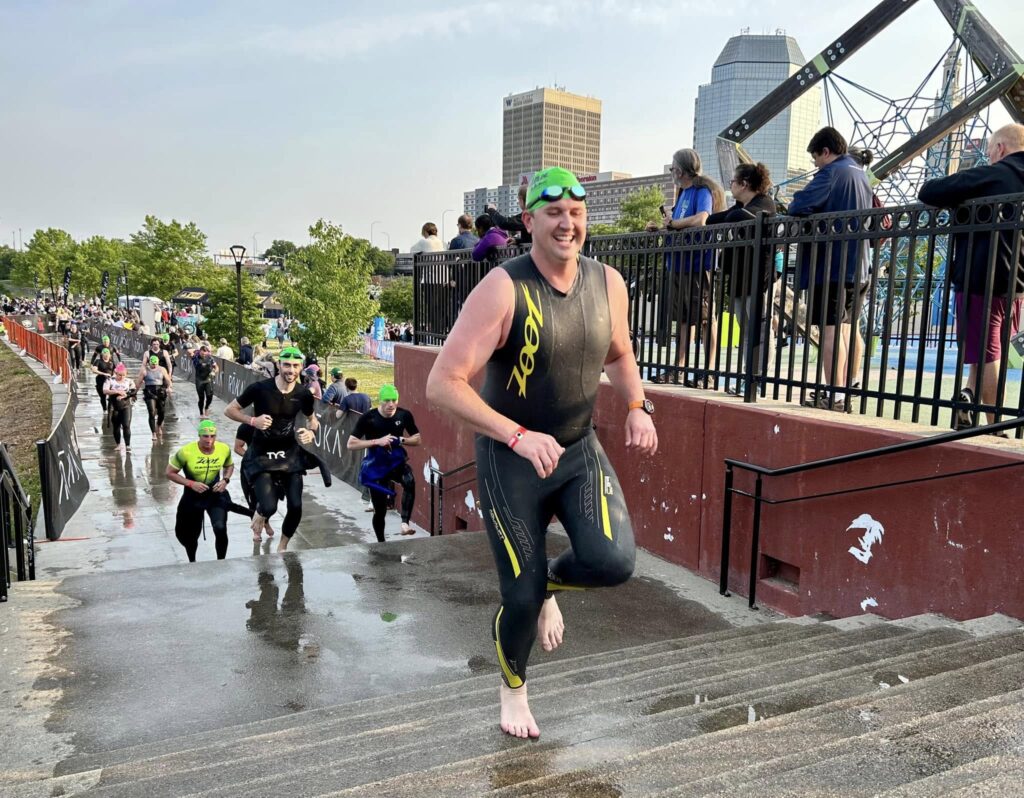
Meanwhile, in Massachusetts, athletes saw a race shortened to a duathlon due to water quality issues in the swim venue, the Connecticut River. This weekend’s rain led to excessive discharge from a nearby water treatment facility, and in turn, lowered the water quality to a point where the swim could not be held. It’s the second year in a row that the swim had been cancelled here, and it’s led to athletes questioning the location of the race.
And, of course, there’s all of the traffic issues we covered back in Jacksonville.
In all, it’s hard to put together these courses in a place that balances all of the needs of both athletes and communities that host us. In many ways, these needs are directly in opposition of one another. A fully closed bike course is ideal for racers, but can be nearly impossible for the community. Similarly, a multi-loop bike course limits the impact to the community, but might be entirely unsafe for the number of athletes on course (or, alternatively, impossible to enforce drafting rules on). A course that is located in an extremely rural area might be safest, but then it does not have the necessary surrounding logistics to support athletes traveling to the race.
Altogether, for a large-scale (meaning at least 1000 participants, as most of these global events draw), these are the elements necessary for a good venue.
Community Support
Look. This sport becomes nothing but indoor triathlon without the support of local communities willing to work with race directors to produce and promote an event.
We’ve seen this time and time again. One only needs to think back to the case of the Malibu Triathlon and how that’s now the Zuma Beach Triathlon. For the uninitiated: the founder of the race, Michael Epstein, had sold the race to a third-party. They eventually sold it to Supertri, who owned and operated the race for a couple of years. The contract came up for renewal with the city, and lo and behold, during the course of renewal, Epstein had put in a bid to produce the race again. The city wound up choosing to award the triathlon permit to Epstein — this despite the fact that Supertri owned all of the assets to the Malibu Triathlon.
It’s just the biggest example of the stark truth: we have nothing without permits. And how we get them is by working extremely closely with communities. Race directors spend countless hours with various community leaders in order to be able to produce an event. And, especially in the case of middle and long course triathlon, we’re talking about many multiples of these communities to pull off a bike course.
As mentioned in my last piece on this topic: this is the number one thing that we, as triathletes, can impact directly. Of course, the most direct thing we can do is actually run for these council or committee positions. But, more broadly, this is where our collective actions and attitudes are most important.
Location Somewhat Near Major Metropolitan Areas
Jacksonville, Hamburg, and Western Massachusetts with Springfield, MA all share a common theme: these are races that feature their respective downtowns. This isn’t a mistake. It’s been a key component of the IRONMAN playbook over the last two decades. It started with the first wholly-owned and operated race outside of Hawaii with IRONMAN Louisville and their finish line at Fourth Street Live. Nearly every new race since has followed along. The peak of that would be IRONMAN New York City, which only survived a single year.
But the point stands. IRONMAN athletes vote with their feet, and there’s generally more of those feet showing up at the races in larger metropolitan areas. There’s the obvious local critical mass that will come out to support “their” big race. But then it makes logistics easier for your longer traveling athletes. There’s more flights. There’s more hotels. There’s more rental cars. And there’s more restaurants to ensure everyone is topped off on fuel before they start on race morning.
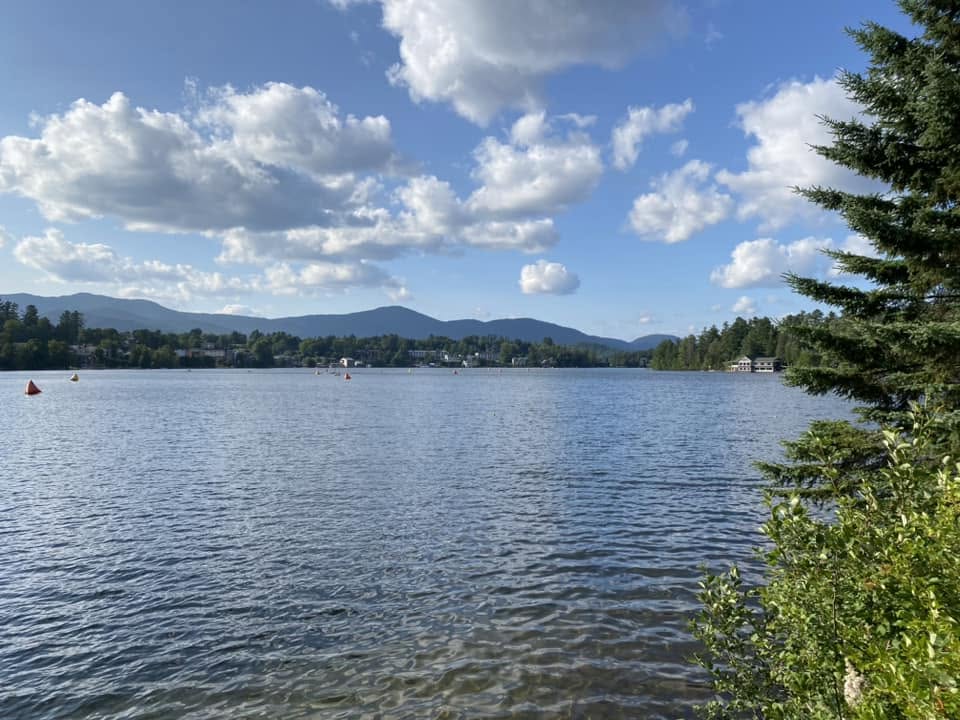
There are, of course, exceptions. The most obvious of them are races that pre-date the modern ownership model of IM racing: Lake Placid and Penticton. Both aren’t in the heart of major metro areas, but they’re accessible “enough.” And the trade-off is that the courses are quieter, the water more pristine, and (well, at least in Lake Placid) you can still get the in-town “we took this place over” that only can be replicated in Kona. Similarly, Alaska and Lake Tahoe were two new race locations in remote areas that, had they been given more time to develop, may have become staples. But both were impacted by a variety of logistical and weather issues that brought their demise.
Clean(ish), Flat Water
You need a safe place to swim. Safe has a few different meanings. It needs to be clean enough that it’s passable for water quality. Infamously, water quality nearly derailed the Paris Olympics, despite a massive investment in water treatment facilities. It’s also the most frequent reason for cancellation in swims these days. Given that many races are now sitting in rivers, many of them face the same issue that we saw in Springfield this past weekend; stormwater overwhelms the water treatment facilities, and it results in diluted discharge directly into these bodies of water.
It also needs to be calm enough for swim safety personnel to actually get out onto the water. The second most common cause for swim cancellation has to do with not being able to put rescue teams in place. Paddleboards and kayaks tend to be the preferred vessel for key members of swim safety, as they are maneuverable in large packs of athletes and easy for athletes to hang onto in moments of rest or panic. But if there’s enough chop or current on the water, and they can’t hold positions on course, it becomes a much bigger problem.
Visibility is also a common concern — both in and above the water. Another former event, IRONMAN 70.3 Connecticut, had its swim cut short due to an impressive amount of fog on race morning that made it extremely difficult to sight athletes next to you, let alone sight a buoy a hundred meters away. And then, of course, there’s visibility in the water. Clarity is part of the water quality; namely, swim safety teams need to be able to see you under the water, too, in the event of an emergency.
Tags:
Challenge FamilyIRONMANRace DirectorRelated Articles:


Continue the discussion at forum.slowtwitch.com
4 more replies



I think the problem with an IM in particular is that it takes COMMUNITIES (plural) support to make it work. It’s every community/county that 56mi of biking has to deal with (most* courses are 2x looped, so single loop IM course is even more roads needed), every person in today’s world has an open handing wanting theirs. And if you don’t get that then you become metro only race which then strains the race name community. It’s the community that is hosting 6mi of the bike race because there is no other option to not go through that community/county road, but that’s another grease wheel you must grease. And said community wants their handout because they aren’t getting the hotels/restaurants getting fillled but their local community is going to be impacted. And if you don’t then good luck having your race only in a metro, or it’ll turn into a nightmare on the local community.
It’s f’ing hard.
All things being equal, I prefer a race that covers more ground on the bike (1 loop is best) and the fewer loops on the run the better, but I understand with the aid stations and duration of the race why this isn’t practical.
My take on proximity to a major metro area is this:
If the race is in a major city, where I don’t have to rent a car, that’s a huge plus, and I would be willing to jump through some travel hoops (multiple connections, etc) to get to a race like that. Perfect scenario like Nice or Milwaukee where you can roll out of the airport and public transit to the race venue.
If the race is in a place where I need to rent a car, I would prefer it be near a major hub at least where the airfares are competitive and transfers are minimal. And in that case, I do not care at all if I have to drive up to 3 hours from the airport to the race as I’m already renting a car and airfare is reasonable.
I would put far distance from an airport, with “we took this place over” as a higher priority over most factors because I agree the course tends to be nicer.
Ruidoso, Coeur D’aelene, etc. are more appealing to me.
Can I drive to it? If yes, I’ll take a look. If no, it won’t be considered unless work happens to take me nearby on the exact right weekend.
Not that it matters to make it a good course, but it’s always nice to have a landmark of some sort when you tell the story of your race … any race
Queen K
Energy Lab
The Beast
Williamsburg Bridge
CITGO Sign
Roosevelt “Mountain” (or Mt. Roosevelt)
Rocky Steps
Manayunk Wall
Everything about this race was perfect
Mont Tremblant is ideal. the village is amazing for families, plenty of food options, a fair amount of hotels, and if you stay in the village you don’t have to drive anywhere.
The course is good overall. The swim is reasonable. The bike can be a bit challenging and riding on the highway is a bit boring but overall it’s a good course. The run has a few challenging miles but it’s fair and a great course.
I am honestly shocked the full was cancelled. I feel next to Kona this is the best village in all of Ironman. Maybe better because of convenience.
Saint George.
Vichy.
The current occupant of that weekend is now UTMB, so IM probably doesn’t care one way or the other.
From a logistics perspective, its likely much easier for a UTMB type event in Tremblant since they don’t have any roads to close - just trails to mark.
Part of this also comes down to what other events are in your portfolio: You can host an IM in either Tremblant or Ottawa, but UTMB needs a venue more like Tremblant to work. (Though I do suppose that UTMB Gatineau could work as well)
Thank you. Good point. I wasn’t sure of the reason why but that makes a bit more sense since they have it anyway.
I remember they have mile markers on the side of the road that were permanent for the bike course on the climb back into town. Not something I ever saw at any event.
Do people think there is any chance the full would come back to St George?
Oh I don’t think that they cancelled it due to UTMB - that looked more like the race was dwindling in numbers post-pandemic. But if they have the calendar slot, they might as well make use of it for their other properties.
The km markers are still up on Duplessis - if you look closely there are a few stapled to trees. There’s also still permanent signage on the 117 still which shows “La Route D’entrainement” as well as lots of IM livery that stays up through the summer. (The 70.3 still sells out quickly)
I like to think so. In an interesting turn of events, the Ladies PGA tour dropped St George from their event calendar that first weekend in May after just a single year running.
They still host the men’s tour, I believe in October. I know less than half as much about golf as I think I do about triathlon though, so maybe someone else can chime in.
Read this article for a cover your butt marketing speak about kicking StG to the curb while saving face.
Anyway, that leaves hope open for the city to bring an Ironman back. But it might have as much to do with new blood on the city council’s as it does the events calendar.
Certainly the odds are better now!
It seemed like the area and IM were kicking ass, maybe IM was relying a bit too much on StG, so is that why they stopped having races whenever it was (last year?)? I’m kinda wondering if they booted them out of the area, what makes them want to bring IM back, so quickly?
You dont know what ya got til it’s gone, maybe?