
Spotted: Elite Squad Using Unseen 3D-Printed Paddles
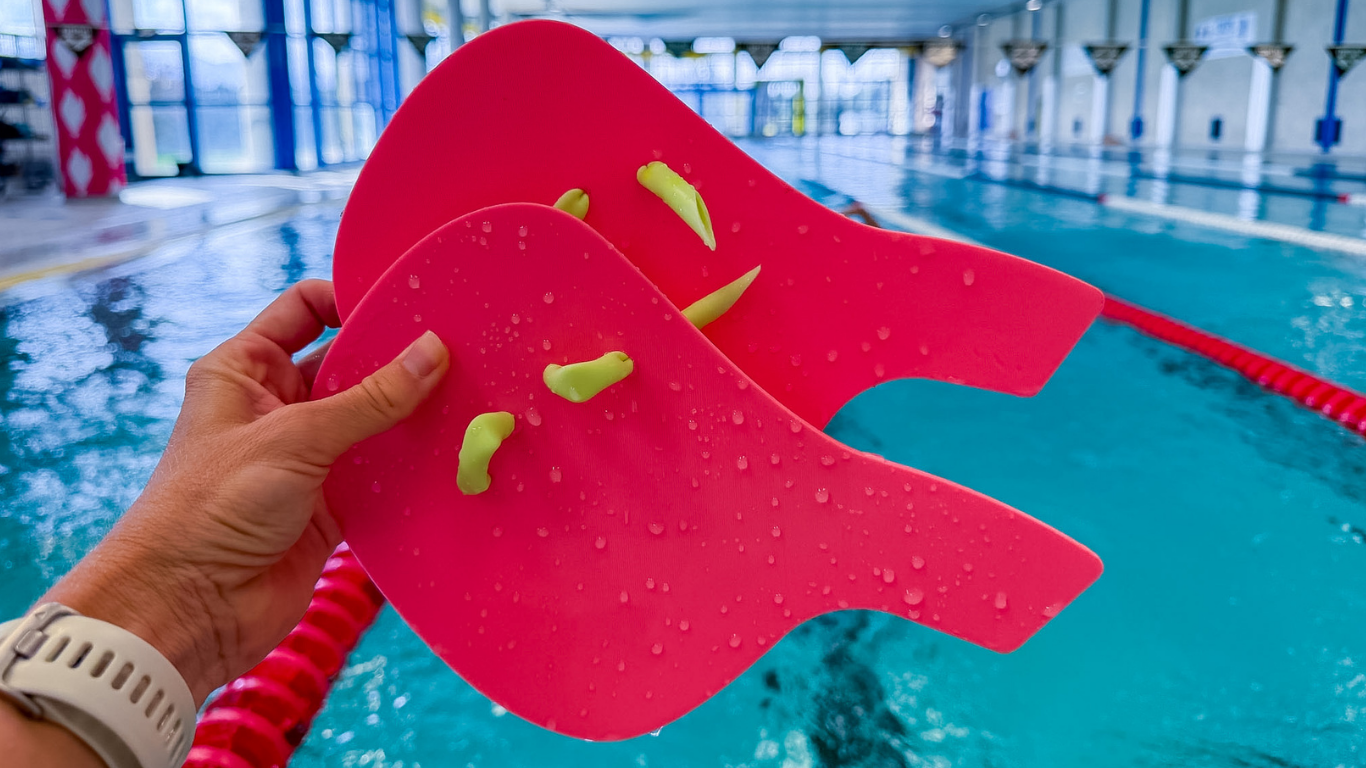
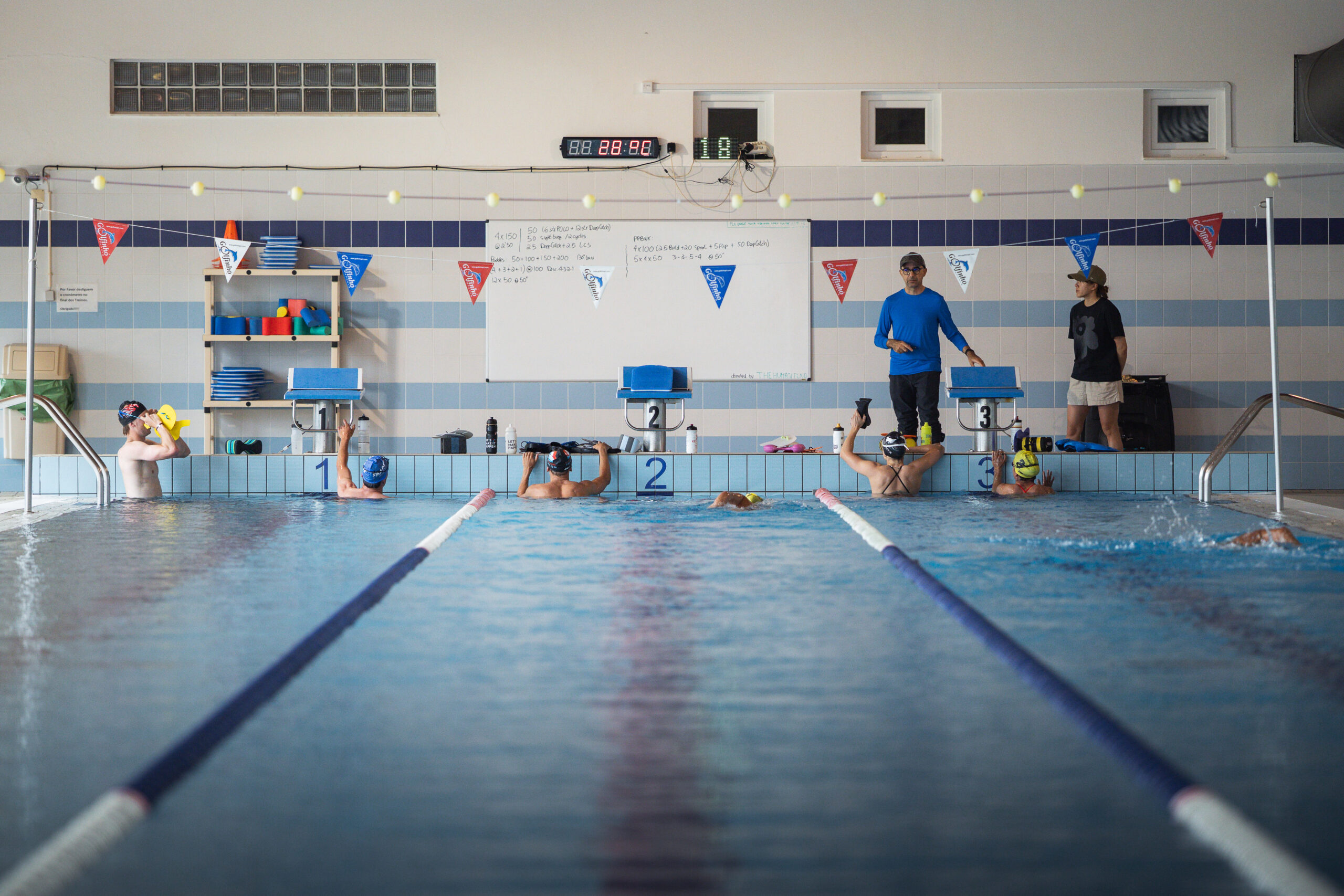
High up in the French Pyrenees, Paulo Sousa’s world-class triathlon squad is hard at work in the pool. After a series of hard fifty meter reps, they move on to paddle work. But they aren’t using paddles that I’ve ever seen before. They are rounded in shape with an off-centre “fin” coming down from the wrist to the forearm. They are loosely reminiscent of a Finis-brand style but they aren’t in their signature yellow and there is no branding on them.
Sousa, whose athletes include Olympic silver medalist Taylor Spivey and the ever-successful Paula Findlay in long course, isn’t one to chase the limelight–but he is one to chase the perfect paddle. An engineer by training who specialized in fluid dynamics, Sousa has been trying to find the perfect swim paddle throughout his career. Well, that was until he decided to make the perfect paddle himself.
Design
Going back to his engineering roots, Sousa busted out the CAD software and used the 3D printer at his local library to turn his ideas into working paddles.
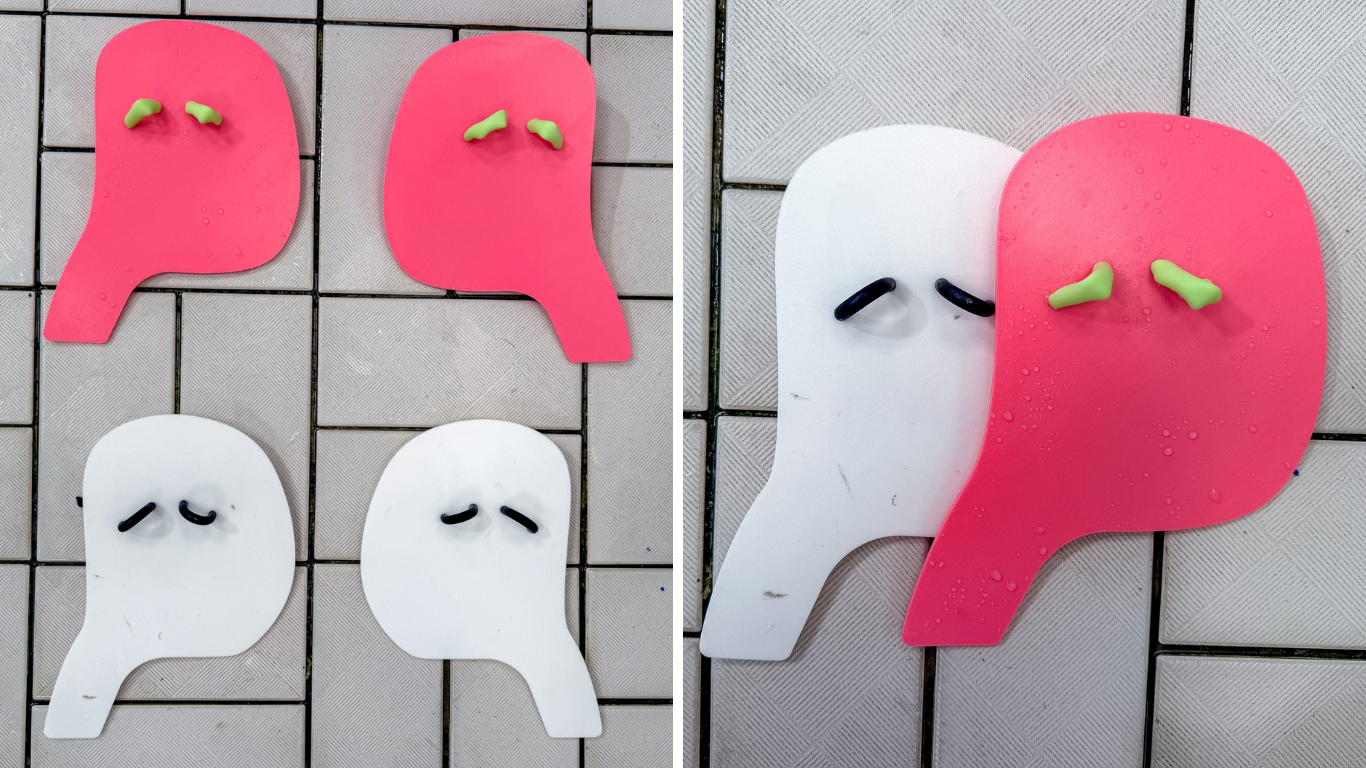
“The design of the shape came through by trying to achieve a couple of things, “ Sousa begins. “One, was to have the center of pressure of the paddle higher up closer to the wrist. And the other objective was for one half of the paddle–as defined by the longitudinal axis of the forearm–to have the same area as the other half of the paddle. So with these two goals, the design of the paddle came through as having the little wing, that little fin.”
Sousa has been through five iterations and is now on the sixth. He points out the small changes he made along the way, including the size and curvature of the wing. Each version went straight to his athletes for pool testing. With a smile, he admits his athletes were skeptical, but, to their surprise, the paddles worked better than expected.
”When I started printing the concept and having the athletes swim with it, I didn’t realize that the little wing not only puts the center of pressure higher up into the forearm, but also applies momentum around that longitudinal axis and that really makes the elbow pop up,” he says.
“The paddle is very stable on the push phase because the centre of pressure is so close to the wrist. It’s higher up on the forearm, so it’s really hard for them to bend the wrist at the beginning of the stroke–which was one of the goals of the paddles…Basically, you really have to get your elbow over your wrist at the beginning of the stroke,” he explains.
Tryouts
Lucky for me, Sousa grabbed a pair for me to try. I swam with both, with just the left and then just the right. I also mixed in swimming with my own paddles (Strokemakers), and then even one of Sousa’s paddles and one of mine at the same time. I also tried to drop my elbow and swim in different ways, which was a good idea in theory, but pretty hard to execute after millions of meters in my own stroke.
First, the paddles were comfortable. Hand placement was relatively high on the paddle. I do prefer a more supple paddle, but the rigidity was similar to that of most other paddles on the market. I’m also used to swimming without a wrist strap, so that didn’t phase me either. In most senses, the paddles felt surprisingly normal (a testament to the design). If you told me they were on the market from a major manufacturer, I’d believe you.
However, these paddles aren’t on the market, and it’s not just the wing that makes them intriguing. But, let’s start with the wing.
Right away, it’s true that the shape of the paddle, and undoubtedly the wing, really does “pop the elbow up.” Thanks to the magic of fluid dynamics, the wing puts force and feedback in the right spot to practically force a high elbow catch and pull. It really works–but, if that’s not the way you swim, it can be trouble.
No Paddle is Perfect
Sousa does say the paddles aren’t for everyone. But no paddle is.
“ I’ve experimented in the past with some models on the market that were not successful, but they also had this concept of having your central pressure on your wrist. I remember using those paddles with my worst swimmers and they just hated the paddles and they just could not swim with them,” he says with a smile.
“The paddles don’t work for everyone, depending on their stroke characteristics,” he continues, mentioning a few athletes who didn’t like his design and don’t use them. “These paddles just aren’t gonna work when you have a lift based stroke and you rely a lot on the sweep…They are designed for those that produce propulsion mainly through drag,” he says.
The biggest caveat here is that his design is for a small group of test subjects who are all elite triathletes with a high level of swimming.
“I’d be curious to see if the paddle teaches, or reinforces,” he says. “If these guys are able to swim a bit better with these paddles, it’s because they already have some fundamentals right and they are able to nail and reinforce the good technical aspects of their swimming.”
The Pressure Point
Thankfully for the test and this article, my stroke did work with the paddles. Once the more obvious characteristics had grabbed my attention, I started to feel the more nuanced design features. Namely, the centre of pressure Sousa kept referencing.
I swam with one of my Strokemaker paddles on one hand and one of Sousa’s on the other. I could feel the pressure was more toward my wrist with Sousa’s paddle. I’m guilty of being a wrist-bender, so having the centre of pressure on the wrist instead of the palm helps correct that, not just with the feeling, but the paddle encouraging you to get “up and over” the catch.
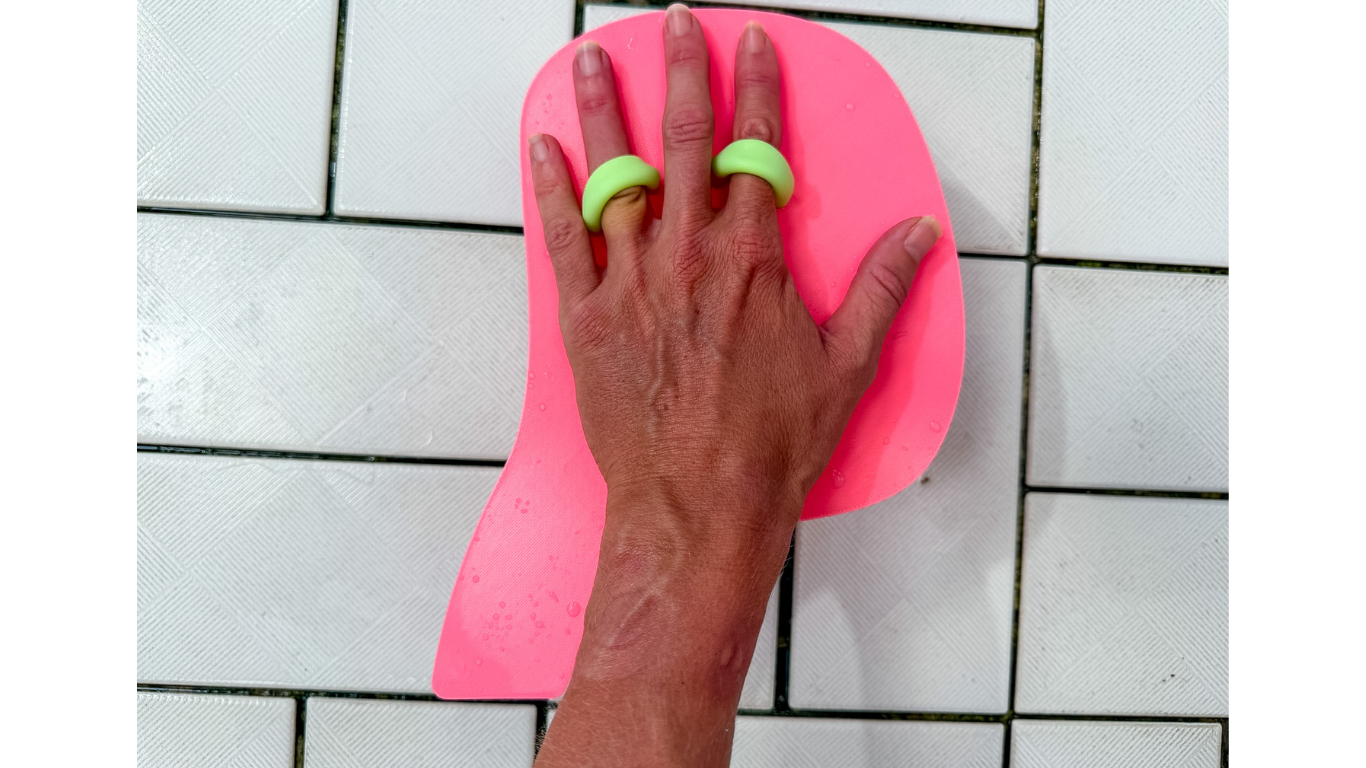
An unanticipated correction for me was also feeling the wing on my forearm. The problem child of my swim stroke, my left arm, can bend in inefficient ways. Every time I felt the end of the wing on my arm, I was able to correct and keep my left arm more aligned. Better stroke mechanics from the combination of balance and wrist pressure helped maintain that correction as well.
Patent Never Pending
In a perfect world, I’d love a pair of Sousa’s paddles with the flexibility of the Strokemakers. But, alas, the paddles aren’t on the market and never will be. Sousa’s paddles are for his squad and his squad only and he has no plans to take them to the masses.
”Maybe someone’s going to see the paddles, take a picture, and steal the design from me,” he says. “It’s just a little bit of a side project that I can nerd-out on.”
But I press Sousa on what consumer-available paddles he can recommend.
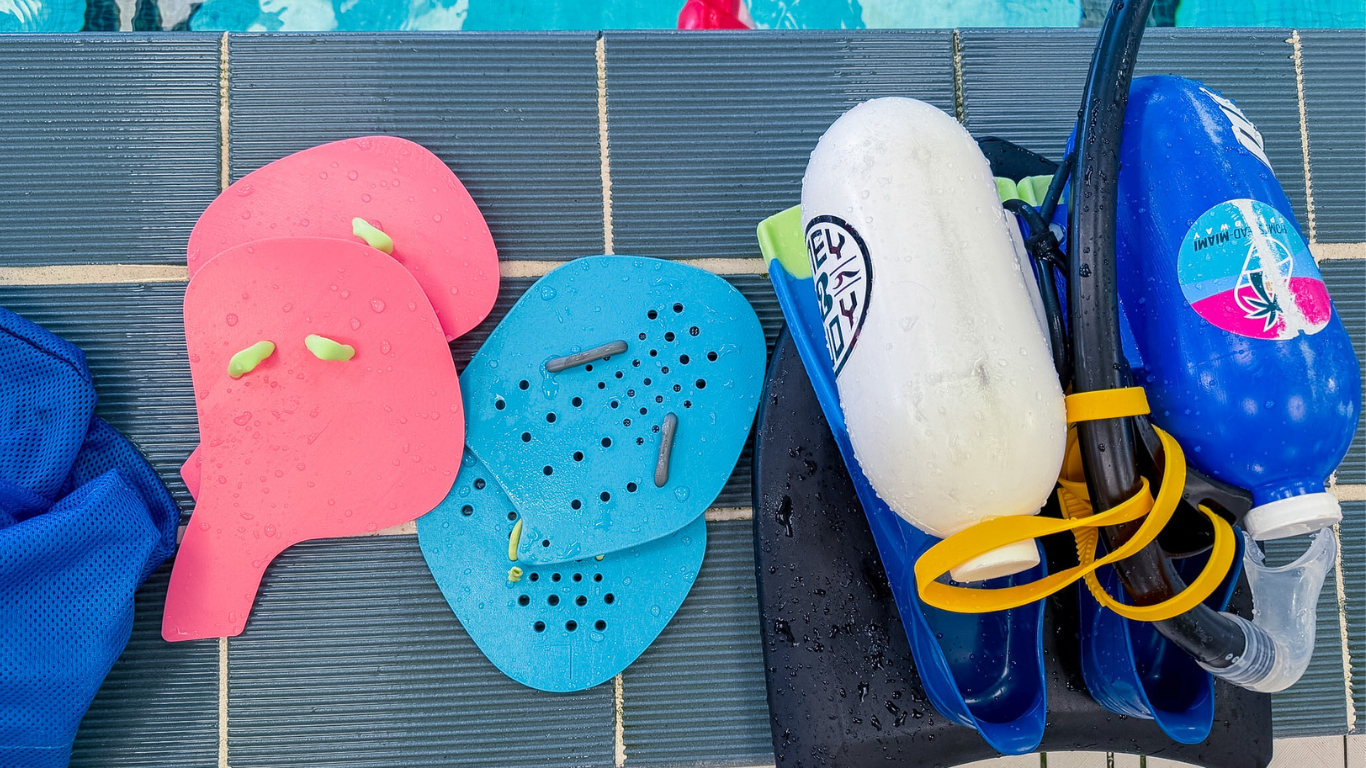
“Any paddle that you can really get your fingers forward on the paddle and really be feeling the pressure on at least the heel of your hands,” he says. “Basically like the Strokemakers or the, or the Tyrs that you’re able to get your fingers a little out of the paddle at the front.”
After he watched me test his, I was a bit relieved to hear my brand of choice was on his approved list. The whole experience got me thinking. Given his approach and reasoning, I’ll be moving my tubing forward so my hands sit higher on the paddle. None of us can have Sousa’s paddles, but understanding his perspective might just help us all catch a bit more water.



Good to see these come to fruition. Was fun discussing the pros & cons of all the paddles on the market last spring with you up in Flagstaff.
It’s always fun to see tinkering hit the water.
Once my fractured ankle heals I’m thinking about getting back in the water. When does my pair arrive?
I wanted to get this done the day of the article, but I had too much going on then forgot. Now that my racing season is done, I remembered it and found time to give it a shot.
The shape is easy to reproduce (overlay below), what is a bit more difficult is figuring out the scale.. For that I kind of compared my hand with the article picture with Sarah’s hand in it.
This pretty much using the size available of my printer bed even after I rotated the paddle to fit (it did not fit out of the gate).
Result:
I have yet to swim with them, I will try in the coming days - but I am not the best person to make a judgement here. I’ve never been a great swimmer and it’s been going downhill in recent years haha!
If there is a revelation I will report back
If you want a real test, send me over a pair. I can put 10’s of thousands of yards on them in no time..
Let me try to swim w them first and make sure they hold up - If they do and if you are interested to try a pair we can talk further about getting a set in your hands
If they hold up, my masters squad would love to grab a few pairs. We are a bunch of washed up D1 swimmers, along with my D3 ass in the back of the lane, so we could provide some decent feedback