


Sea to Summit Triathlon: Adventure Triathlon – New England Style
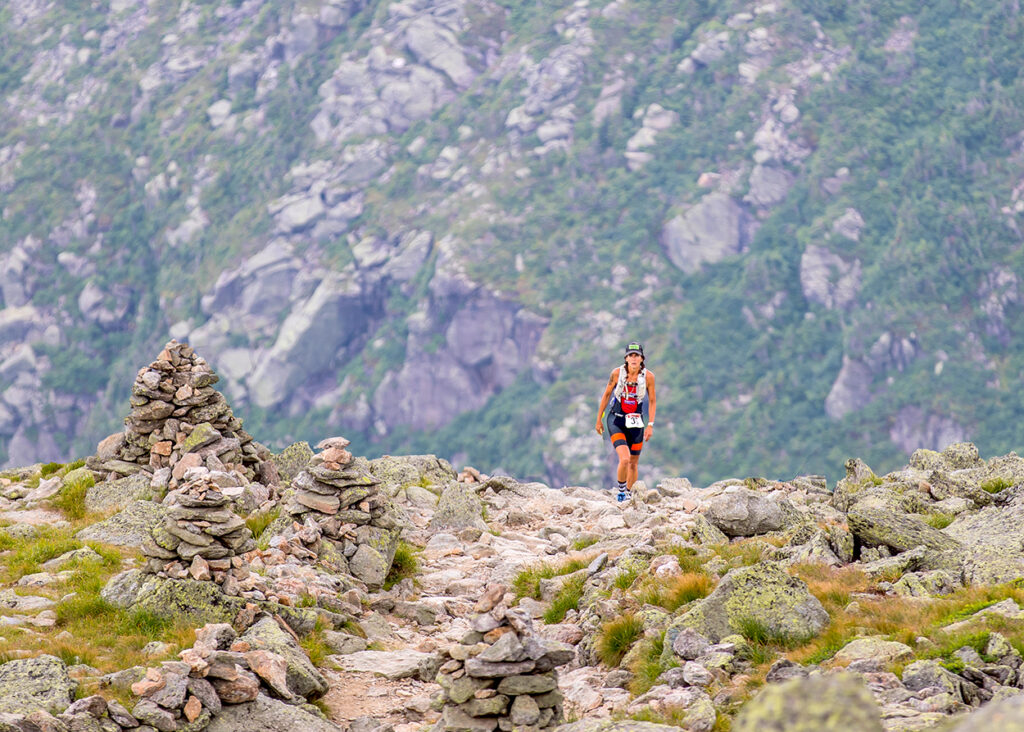
With a finish at the top of Mount Washington and a challenging bike ride that climbs almost 3,000 feet in the last eight miles, the Sea to Summit Triathlon certainly qualifies as an “adventure” triathlon. The uniquely New England endurance race takes athletes from the Atlantic coast to the highest peak in the Northeast – Mount Washington. The race entry is capped at 100 athletes every year – for some it’s a recurrent event on their race calendar, while for others it’s a bucket list event.
“We have so many athletes who get to the finish line at the top of Mount Washington and say to me ‘that was the most amazing thing I’ve ever done,'” race director Andrew Scherding says. “And then they say ‘I’m never doing it again.'”
According to Scherding, the race’s roots go back to 1995 (or possibly 1994) when a group of triathletes decided to combine three difficult disciplines into one. (Sound familiar?) The end result was a couple of mile kayak in a tidal river, a 100-mile bike and “only” a 5.8-mile run up Mount Washington that climbs roughly 4,300 feet. .
The race was reinvented in 2013, this time with a swim instead of the kayak, and Scherding and his wife Kathleen Walker have been putting on the event since 2018. Since its beginning as a triathlon the event has attracted elite endurance athletes – trail runners, cyclists and cross country skiers looking for a challenging event. It remains an iconic event that appeals to those looking for an event that’s simple (the race is self-supported), but tough. And it is certainly tough.
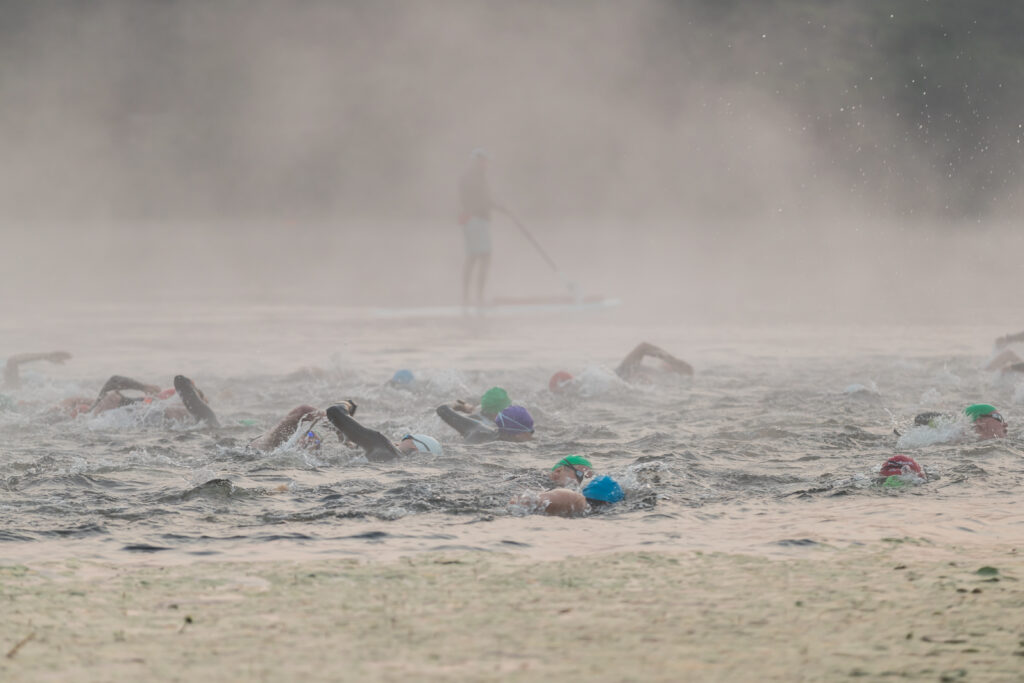
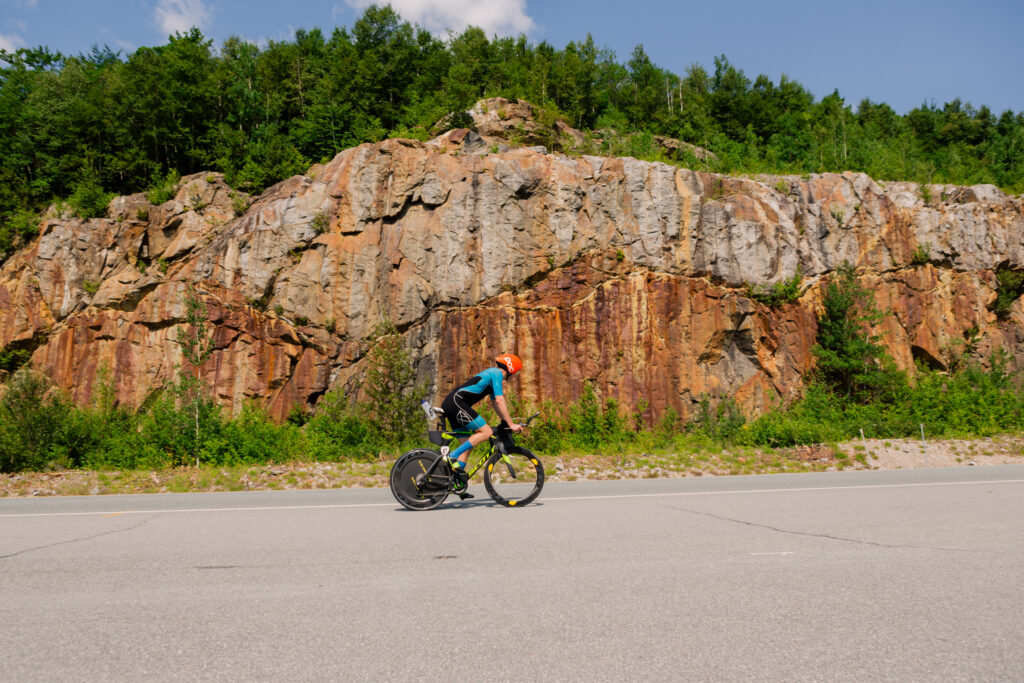
After issues with water quality in the tidal river off Hampton Beach, the 1.2 miles swim got moved to Knight’s Pond, a pristine lake in Maine, a few years ago. Once through that, the athletes head out for the 93 to 95 mile bike course. There’s no set course for the ride that takes the riders from Maine to New Hampshire (hence the variable distance), with the athletes taking in some major climbs as they work their way towards Wildcat Ski Resort. Competitors pull into the parking lot, give their bikes to their “porters” and then see a doctor for a quick health check before they can take on the run. Prior to their heading out, each athlete’s porter must have their backpacks checked – no one is allowed to start the run without a backpack with enough water, nutrition, a headlamp and a first aid kit. Athletes can run by themselves, or with their porter, as they take in the beauty of the Tuckerman’s Ravine Trail on their way to the summit of Mount Washington. Once there, they’re greeted by Scherding, and can bask in the glory of having finished one of the toughest one-day triathlon events on the planet.
Emotional Finishes
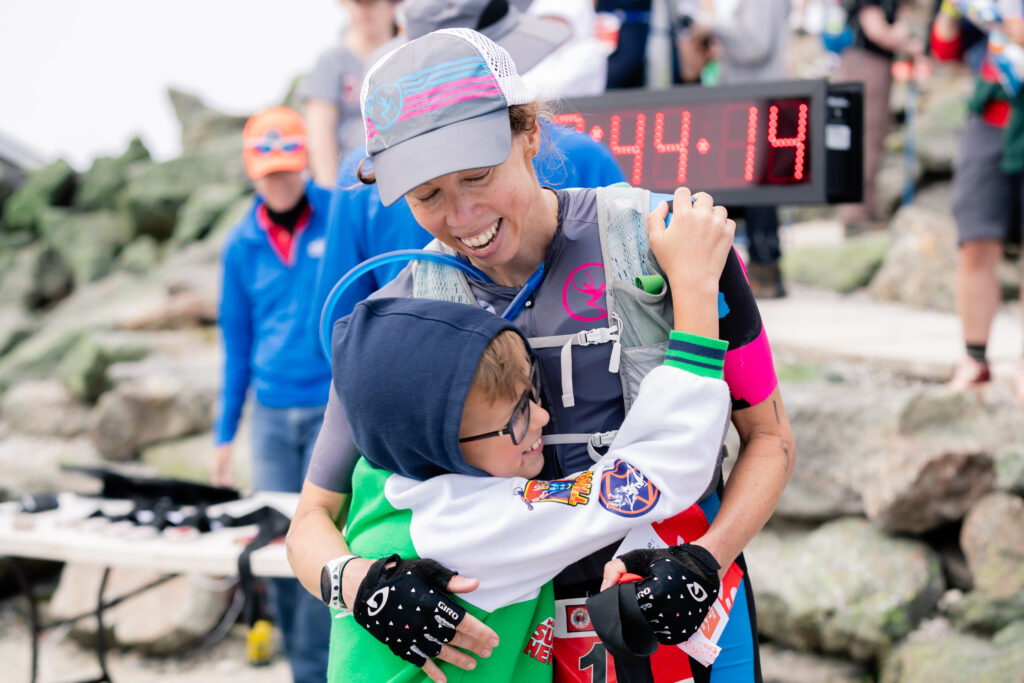
Scherding takes pride in the fact that many athletes talk about how unique the event is.
“It’s something different,” he says. “We get journeymen Ironman triathletes looking for something different. Endurance athletes for whom the carpet in transition area and announcer at the finish line isn’t their thing. The added cachet is that you do have to qualify. To go along the country roads and see the hay bales on the side of the road and be cheered by people on their stoops, then to be cheered on by all the other hikers. Being in nature, crossing over the bridge with the babbling brook underneath. People get emotional. It is not like other races – it’s almost like a different sport.”
Scherding is also proud of the camaraderie that’s generated between athletes and their support crews. Along the way athletes constantly help each other out, while the porters and families become fast friends out on the course.
Qualifying and Registration
Since the event is so challenging and athletes need to be finished before it gets dark on the mountain, the Sea to Summit race enacted qualifying standards. Here’s the breakdown from the event website:
Required for entry into Sea to Summit is the completion of a non-abbreviated 140.6 (“Ironman”) triathlon or a 70.3 distance triathlon with results that show you were in the top 75% of your age group. Additionally your finish time must be better than 14:15 (140.6) or 6:15 (70.3). These qualifying events must have been completed after Jan. 1, 2021. Sea to Summit racers who competed from 2015 to 2025 and finished within the race’s time limit are pre-qualified, as well as any athlete who has qualified for the Ironman World Championships (140.6 or 70.3) during that same 10-year period. Athletes with a current or former pro card are automatically pre-qualified. The race directors do (rarely) allow entries for athletes who have completed other recent events of similar difficulty. But you must contact us beforehand! Athletes must be 18 years of age or older.
There are also two- and three-person relay teams.
You can still register for this year’s event here.



While this sounds like an interesting adventure, I’ve always struggled to understand the justification for it as a race, especially with a $490 price tag. There are no closed roads or even any standard course, therefore no on course support, and you even need to provide a support person to drive the course and chauffeur you down Mt Washington and home.
“This largely self-supported event consists of a 1.2-mile swim, a 95-mile bike ride, and a strenuous 5.5-mile run/climb up the tallest mountain in the Northeast U.S.”
I assume there are no costs for police details either since the course is undefined - choose your own course.
So what is it that this $490 pays for? Lifeguards for the swim and a post-race dinner? …
Timing; insurance; lifeguards; permits; awards; post-race stuff
…at a minimum.
Has anyone does this? Interested, maybe next year.
This strikes me as one of those events that gets maybe 75 to 100 racers?? So they are not taking in a ton of money, and there are no big numbers to amortize their fixed costs. I imagine when they are all in on costs, the race committee perhaps makes a couple bucks an hour, if that…
Unfortunately, outside of maybe Ironman and Challenge, I’m not sure anyone is making a killing putting on these events. I suspect most of these race directors do what they do for love of the sport, and as a participant I sure do appreciate that. But I think it’s still fair to ask questions and try to understand costs and ultimately what we’re paying for.
For a normal triathlon where roads may be closed or police details required, on course support, etc, these costs are easier to understand. For this particular race, there are seemingly far fewer costs, yet the price is quite a bit more than most 70.3’s. Is it equivalent to a 70.3? No, it’s a bit different, but with there being no actual bike or “run” course, left up to the participant to choose their own adventure and requiring them to bring their own porter for transportation and support, no on course aid, etc it invites these kinds of questions.
It’s a good point about the relatively small number of participants. That’s probably going to have an impact on any fixed costs.
Ryan mentioned insurance as one possible factor. The race appears to require a USAT membership or a one day license for an additional $35. I assume this would cover insurance?
I’m also not sure how permitting would factor in when the “course” is mostly undefined, on open roads. Is a permit required to climb up Tucks for this event? Anyone can do it anytime for free without a permit as I’m sure many will be doing on race day. Maybe this event is different somehow?
I get that its a unique event and I know it’s been going on for quite some time. There is clearly interest in it and that’s great. I’m just trying to understand how this mostly self-supported event on mostly public roads and lands costs almost $500.
seeing the title and this time of year, I thought this race would be swim, bike, uphill ski. I know this can be done in Socal, wonder where the water would be warm enough to do this in NE while still having snow (I am from CT)
I’ve done the race 2x.
I don’t have the answer as to why the event’s price tag is as high as it is (I’ve certainly wondered about it). If an athlete is looking for an IM/Challenge type event with swag, a big event “vibe”, and that type of experience, this is NOT the event for you. This is a small, grassroots race with <100 participants. The appeal to me for trying this race was the fact that it is a small race, it is unique (distances, self-supported), and the distances and terrain are sufficiently challenging (I live 14hrs away, so I want something long/difficult enough to make the trip worthwhile).
The first year I did the race (2017), the swim was canceled and the summit of Mt. Washington did not happen due to rainstorms all day long. The “run” (it really is more like a speed hike because of the elevation gain) went up to the treeline and back down the mountain to the Wildcat Ski area for the finish. The organizers did a good job of executing Plan B when the weather didn’t cooperate.
The second year I did the race (2022), the swim got moved to it’s current location (Knights Pond) because of poor water quality of the previous swim venue. I’ve never had an open water swim in smoother water. I didn’t want the swim to end that day. The day was hot (90+F by late morning), but the experience was still awesome. I used a cue sheet on the bike because cell reception in the area is bad. At one point, I thought I was off-course on the bike because there were no athletes around and no porters’ vehicles passing by, but I recognized a downhill section 5 minutes later from the previous race so no issue. You may need to stop at one or two lights at intersections (in/near Conway), just roll w/ it. Save your legs for the last 9-10 miles of the bike for the ~1,300’ climb up to the B to R transition at Wildcat. I was wilting in the heat on this section. The total distance of the run is only ~5-6miles. The first mile is flat and then after you pass the Pinkham Notch Visitor Center and hit the trailhead, it’s all uphill. The first half of the climb is easier than the second half of the climb because the pitch gets steep with some scrambling in the back half. I planned on hiking back down to the car at the Wildcat Ski area after the race, but because I was so baked from the heat, I grabbed a hiker shuttle and got a ride down the mountain. Most athletes have friends or family members that drive up to the summit.
If I have the opportunity to do this race again, I will do it.
It is almost like you expect race directors of these sort of events to put the time in working on the event,over the whole year, for free.
When you run an official event,you need insurance,to get that insurance you need to get permits from the local councils.
Ultramans run at about $1,400USD for their events with open roads and no support. No race like this,except maybe the guys in Brasil and Mexico are making decent money.
The Extreme Tri’s are the same
The comparison with Extreme Tris is indeed interesting. I did the Norseman last year and it’s also on open roads (albeit police patrolled) and self-supported (with the exception of a small aid station at the foot of Zombie Hill). It’s an iron-distance point to point course vs an hybrid distance with a short swim and very short hike. You get some goodies and a few social events in the days leading to the race (warm up swim with coffee and such). You have the ferry trip to the race start, and a nice all you can eat buffet + party on the evening. It costs $600. It’s not cheap but IMO acceptable (especially considering the cost of living in Norway, which is high). I’m interested in this S2S race but wouldn’t enter mainly because of the cost per mile of racing. I guess I’m sticking with the Xtri tour for “adventure” racing.
Yeah Norseman is the premier “niche” Triathlon in the world.
I feel for the smaller races as I know the uphill battle they face competing with the monster that is Ironman. I’m hoping the new X-Tri in Penticion next year gets enough interest to keep it going past its first couple of years.
i did the race in 2015, still have the email receipt. it was <$300 at that time. also have raced almost every other event up mt washington: inferno, Otto road ski, ski/bike to the clouds 10k, and the regular running and biking hillclimbs. prices range wildly from $50 for the ski/bike 10k to whatever absurd price the bike hillclimb is now. not sure why this one is so expensive especially considering the points made previously (open course without any traffic control, self support on the road and the mountain.) i would certainly do it again, but the price is a major turn off.
Is the swim really a one hour time limit? I can get behind having to complete a ful Ironman in under 14 hours or a 70.3 in under 6 hours to qualify. But of those who do meet the qualifying time, how many can finish the 1.2 mile swim in one hour. Unless I am missing something here, such as a downriver swim?
The cutoff for a 70.3 swim, which is the same distance, is an hour and 10 minutes…
Well heck, I clearly need more coffee when I am reading these articles. Thanks for the clarification!
I didn’t recall the swim cutoff being very aggressive, but just went to the race website to see. The answer is yes, there is a 60 minute cutoff. That translates to 2:51 per 100yds which seems manageable. There’s no current at Knights Pond, so no downstream swim (two laps around the lake).
If an athlete proactively shares with the RD that “I’m a weak swimmer, but can rip it on the bike and run” that the RD would be accommodating based on my comments below.
The RD was accommodating to me just to get into the race. It had been many years since my hardcore triathlon racing days as I have gotten into different endurance activities over the last 15+ years. I had no recent triathlons for which to provide qualifying time standards. So I sent them my “Endurance Sports Resume” providing times of open water swim races, Gran Fondo’s, half marathons, all the Colorado 14er’s I’ve summitted, bla bla bla. They were quick to respond confirming, “You’re good to go!” The intent is to make sure the athletes are sufficiently battle tested and will be able to complete the course which is quite vigorous for bike and “run” (hike) legs.
Other than the price tag, I loved everything about this race. If the price tag were lower, I would want to do this every year because this race scratches my adventure tri itch. But it’s not, so at best I will only occasionally do this race.
If folks are expecting this to be like other tri’s, it’s not. In 2022, the top 5 athletes got held up on the road during the bike leg, because storms from the night before had knocked down some lines that were crossing the road in one of the rural sections. One of us (it wasn’t me) finally decided, “I’m going to ride over the lines and see what happens.” Nothing happened, so the five of us continued after a 5-10 minute delay evaluating options. I felt bad for the top 3 guys because they were waiting around a lot longer trying to figure out what to do. You and your porter are on your own out on the road. If that’s not acceptable to someone, this likely is not right race for that person. For me, I love the idea of seeing and experiencing a different part of country on my bike over challenging terrain provided that the roads are safe traffic wise. I treat it like a catered, epic training day and look forward to peeling off the physical and emotional layers as the race progresses and things get hard. At this race…I don’t care about my time, I don’t care about my place. Hell, everyone participating can say, “I placed top 100!” The IM branded 70.3’s and 140.6’s are fine. I’ve done too many to count. My focus nowadays is on adventure: getting in a 13mi run in a blizzard a couple of weeks ago, hiking/running the Maroon Four Pass Loop outside of Aspen, riding the entire GAP in a day and doing it again the next day, Grand Canyon rim to rim (to rim maybe), gravel bikepacking, open water swims, busting out a sub 5hr century ride on a training day. These things aren’t easy for me, but give me something to strive for. Starting and doing an activity that I think that there’s a 50/50 chance on whether or not I can complete it is amazing for self discovery, problem solving, and building mental toughness (if the mind is willing, the body will follow). This race is one of the few that taps into that frame of mind for me.