
Joe Friel, Endurance Sports’ Most Influential Coach, on His New Book and More
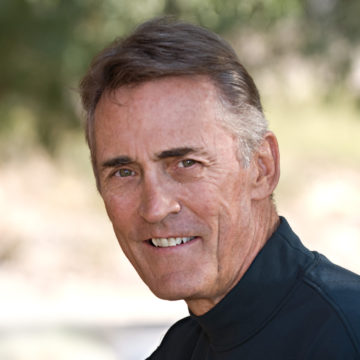
He is regarded as the most influential coaching figure in endurance sports and, later this month, aerobic junkies over the age of 50 will have another of his books to look forward to – the second edition of Fast Over 50: How to Race Strong For the Rest of Your Life (Velopress, May, 2026). It is the latest of Joe Friel’s 19 books on training, which also include The Triathlete’s Training Bible and the Cyclist’s Training Bible, works that remain the “go-to” source of training information for triathletes and cyclists across the globe.
Thanks to a master’s degree in exercise science and decades of experience coaching runners, cyclists and triathletes, Friel has become endurance sport’s training guru. In 1999 he used all that knowledge to co-found TrainingPeaks with his son, Dirk, and Gear Fisher. The platform has become the gold standard when it comes to training software.
With Fast After 50 hitting bookshelves this month, we caught up with Friel for a chat about his extensive experience in the world of coaching and find out more about the new book.
With 19 books to your name, is it still exciting when you have a new book coming out?
Strangely enough, I enjoy writing. When I was younger, I got a C+ in a writing class in college — I’d never gotten a C in any class I’d ever taken in high school or college. It’s a strange thing that I finally wound up writing books. I’d like to talk to my professor from back in those days to let her know that she actually succeeded. I learned how to write, I guess.
You really got into the coaching thing early on, at a time when people actually making a living at it was pretty rare. Can you tell me a bit about your background?
I officially started coaching athletes in 1980, but prior to that, for 10 years, I was a high school track coach, so I had some experience coaching, but it was with juniors. It was kind of a change when I started coaching adults.
What drew you to it?
It actually goes way back to when I was a kid. I started competing in sports when I was about 12 or 13. I really enjoyed it — I played football, I wrestled, I ran track and field — and I always enjoyed hanging out around the coaches so I could learn more about being a better athlete. That sparked my interest in coaching. I’d go to my coach’s house in the afternoon, just talking. I just enjoyed the whole idea. A lot of fun.
What prompted you to move into coaching athletes full-time? I’m guessing there were a few people saying, “You’re going to do what?”
It started kind of indirectly. I didn’t plan to become a coach — there was no thought about it at all. In 1980, I owned a running store, and I eventually bought a bike store next door. I had a master’s in exercise science, and people would come in and ask questions, and we’d talk while I sold them a pair of shoes or a bike or whatever. Eventually, some of these people would say, “Would you write that down for me?” I was spending more time writing training plans for athletes and talking to them than I was selling shoes and bikes. So I decided something had to change, and I was going to start charging — I figured that would cause them to leave me alone and just buy their bikes or shoes. But I found just the opposite. My main focus became coaching, and it just kind of grew from that point on. I found I really enjoyed it — enjoyed working with athletes in that regard much more than I did selling them a pair of shoes or a bike.
The other big event in your life was TrainingPeaks. You and your son Dirk, along with Gear Fisher got that rolling. Can you tell me a bit about how that evolved?
Sure. That evolved because I had a coaching company back in the late ’80s and throughout the ’90s and early 2000s. The way we communicated, originally — going back to 1980 — I would simply write a training plan down on a piece of paper and hand it to the athlete at my store. Pretty basic. But then I started getting people coming to me from out of town who were also interested in training.
Around 1998 or so, my son joined me as one of my assistant coaches. He’d been a pro cyclist in the ’80s and early ’90s. He realized what I was doing was pretty archaic — dealing with people by faxing and postal mail and so forth. He told me I really ought to set up a website to improve communication, and he just happened to have a friend, Gear Fisher, who was in the business of creating websites.
So we started designing this communication system for my coaching company. That was about 1999, and around November or December of that year, we had it done and were now communicating with all my clients. But we realized what we’d come up with was really much better than just a communication system — it was also a good way of tracking training for the athletes we coached. We decided to take it beyond just my coaching company and offer it as a product on the open market. That happened in 2000, and it just kept growing from there. Now I think TrainingPeaks has something like 100 employees. It’s become quite a major training platform — something we’d never thought would happen, but it came about just because we liked what we were working on.
How much of your time is still involved with TrainingPeaks?
I don’t do a whole lot anymore. I used to be somewhat involved, but I never actually ran the business — that was always Dirk and Gear. What I contributed was on the design side: talking about how we wanted to measure things, how we wanted to present things to users, how to analyze workouts, what data we were looking for. That’s where I came in, offering my ideas on how to actually coach the athlete and provide information useful to coaching, which came out of my coaching background. But I’ve never really been involved in the day-to-day operations of the company, and now we’ve got a big crew of people that actually run it, so I’m less involved now than I was in the early days.
When did you get involved in triathlon and get started with multisport?
I owned a running store starting in 1980, and the bike store came about two years later. At that point I was doing running races and occasionally bike races — definitely a lot more running races available back then. I had several people working for me who were really good athletes, some of them triathletes. By today’s standards they could have turned pro, but there wasn’t really any pro triathlon in the early 1980s. They kept saying, “You really ought to try a triathlon — I think you’ll enjoy it.” Finally, I think it was 1983, I took them up on it, did a triathlon, and had a great time. That kind of shifted my attention toward triathlon. I was now doing triathlons, running races, and bike races — all three — and then I began to focus more and more on triathlon as the ’80s went on.
Are you still active in triathlon, or is it pretty much cycling now?
Now it’s almost all cycling. I had to quit running in 2007 — I was getting bone on bone in my right knee, the meniscus was wearing out, and my doctor said basically that if I kept running, more than likely in 10 to 15 years I’d have to have my knee replaced. That didn’t sound like a whole lot of fun. Around the same time, I had a terrible crash on my bike. I broke seven bones, was in intensive care for six days, all kinds of problems — but basically, that got me to the point where I couldn’t use my shoulder anymore. I lost my range of motion in my left shoulder, so that screwed up my swimming. So at about the same time, running and swimming both became things I really couldn’t do anymore, and that brought me primarily to cycling.
How do you balance your own experience with science and research across the 19 books?
I’ve always used research in my own training. Even back in the 1980s, I would go to the library at Colorado State University, which was right across the street from my running and bike stores, to read the research. I’ve just always been interested in what sports scientists are telling us about how to train. Two of the guys who tried triathlon were working on graduate degrees in related sports, so we always had these conversations about the research.
Back then it was very time-consuming — you’d spend two hours in the library and might find two or three interesting studies. Then in the early ’90s there began to be more stuff available online, newsletters on training with science, and I got very involved with one of them — Running Research News — which did a great job for many years. That began to influence my thinking further.
Now it’s just the opposite of what it used to be. You can ask AI to find you research on a topic, and it’ll pull up everything that’s available. It used to be hard to find one thing and you’d spend hours trying to find anything useful. But I still enjoy reading the research and figuring out how we can apply it.
I feel like in this new edition of Fast After 50, you’ve also incorporated a different way of communicating — lots of interviews and real people’s experiences as a way of getting your message across. Am I on the right track?
Yeah, you’re right. One of the best ways I’ve found of talking about any topic with athletes is to give examples of how other people have used it to their advantage. Athletes are very skeptical of new ideas in training. They’ve been doing something a certain way, perhaps for years, and you’re trying to convince them to give up the advantage they feel they’ve built up. Having examples of how other people have done something is really beneficial when trying to make a point with athletes. I use that a lot.
This edition isn’t just an update of the previous book — it seems like a dramatic change. It’s almost a new book entirely.
It is a new book altogether, yes. I wrote the first book in 2013, and my publisher asked me to rewrite it last year. When I did that and read through the old book again, I realized things had changed dramatically in all those years. So I just threw out the manuscript and started over from scratch — kept the name the same, that’s all. Everything in the book is really brand-new thinking, brand-new ways of looking at the world of training, because the world does change very rapidly. Sometimes on a monthly basis, there are new ideas coming out.
Could you outline some of the big changes that have happened over that 13-year period?
The biggest change by far — and this happened several years ago — was that I began to realize athletes were changing their approach to training, and I thought they were going in the wrong direction, especially older athletes. Back then there was much more “just go long and slow all the time” thinking. I talked about doing more interval work, harder high-intensity training. So that became the focus of what the book was trying to change: an emphasis on getting a good aerobic base, as opposed to just going out and hammering yourself on a regular basis. Making sure you have the aerobic base to support the high-intensity work.
Was this edition easier to write because there are so many more athletes now who are over 50, 60, 70?
You’re right, and you see amazing people all the time now. We can find athletes who are still competing in their 80s and 90s. There’s one guy I mention in the book — he passed away a few years ago — but he was 109 years old when he finally quit riding his bike. He was competing up until that time and broke the world record for 105-year-olds on the track, the hour record. So people are remaining active despite their age.
Are there other key messages you feel people should be taking from this new edition?
One thing I refer to throughout the book is mindset — how you perceive the world as an aging athlete. Our bodies are changing, but it’s not always for the worst. Sometimes it’s for the better — we become smarter for one thing, and much more in tune with what our body should be doing. I feel a lot more older athletes get this than younger athletes do. Young athletes are way too willing to push themselves to their limit on a regular basis. Older athletes are more willing to take a day off.
That mental side of training is important — recognizing that everything going on in your life is reflected in your training, and you can’t push yourself to the limit all the time. You’ve got to back off, rest, and make sure you’re recovered before doing hard workouts.
I think that mindset is starting to catch on. I see it more on social media now than just a couple of years ago — when I make comments about the training process, about not doing too much or too much high intensity, I get positive feedback from athletes, which wasn’t always the case. We’re going in the right direction.
Older athletes are also, I find, very fun to work with because they’re willing to listen to new ideas when you show them the reasons why they should be doing things differently.
In terms of high-intensity work, you talk about older athletes aiming for one hard workout a week. How does that work for a triathlete trying to balance swim, bike and run?
What I’m really suggesting is two hard workouts a week. One can be extremely hard — for example, an athlete training for Olympic distance will probably be doing a lot of VO2 max-type training, and that’s probably once a week. But zone three work can be done on another day as well.
What I suggest asking athletes to follow is what I call a 5-2 training routine: five days a week they train easy in zones one and two, and two days a week they train hard. On the hard days, triathletes do a brick — a bike followed by a run — and they can vary which part is the intense segment from day to day. One day they might do a hard bike and then come off and do a short, easy run. Another day it’s the opposite — easy on the bike and then a hard run. Or some days they do both hard.
The one hard workout that’s trickiest to work in is swimming, and this is where I find most athletes are limited — not because of fitness per se, but because swimming really requires good technique first. Otherwise, you’re just making bad habits worse by doing intervals with poor technique. We need to get technique corrected before moving on to high-intensity swimming. Biking and running aren’t quite the same concern.
Looking back at this long and somewhat varied career, is there something you’re most proud of?
What I’m most proud of is my son, actually. He became a tremendous athlete. He started training when he was 12 years old — my wife and I were always very active, and I was a high school track and field coach, so he kind of grew up around sport. He came to me at the end of that summer when he turned 12 and blew me away. So my wife and I decided to buy him a good bike — he was using kind of an old clunker. I told him I didn’t care if he ever won a race; I just wanted him to enjoy riding a bike.
Well, now he’s pushing 55 years old, he’s still racing, still riding his bike, still involved in other sports. Skiing has become kind of his go-to sport now seasonally. He’s grown up to be an athlete for life, and that’s probably the thing I’m most proud of in my life — seeing what he’s accomplished. That’s my major achievement, I think.



I re-read the Triathlon Training Bible during the winter to prepare for next season, learn more every time. I learned a lot from the first edition of Fast Over 50, curious if he is going to update the info on cardiac stress for older endurance athletes.