
H2O Audio TRI 2 PRO and TRI Run: Sound for the Long Haul
Two open-ear bone conduction headphones from H2O Audio: one for the pool and the pavement, one strictly for the road. Here’s how they earned their place in my training week.
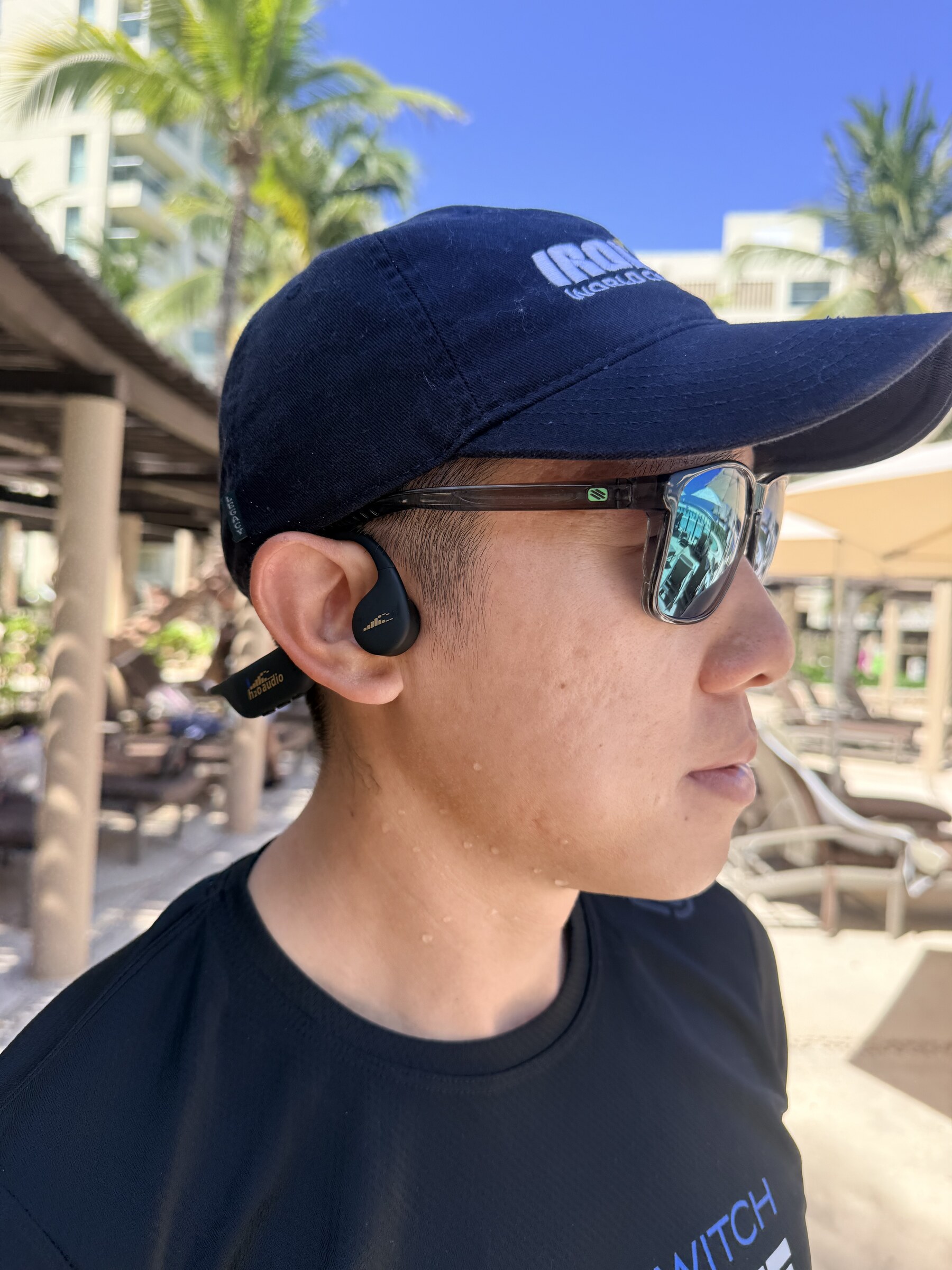
A quick word on where I’m coming from before we get into it. I’m a tech editor here at Slowtwitch, and just as relevant for this one, I’m an athlete who trains across all three disciplines year-round. They accompanied me while ocean swimming, riding and out on some long runs. H2O Audio sent over two of its newest models and, and after putting them through lots of sweat, I came away with a pretty clear sense of who each one is for.
The Quick Take
If your training week includes a swim (e.g. masters set, open water, pool laps), the H2O Audio TRI 2 PRO ($199) is the one to buy. If you’re a pure runner, cyclist, rower or hiker, the TRI Run ($99.99) gives you the same on-land audio experience for half the money. Both share IPX8 waterproofing, Bluetooth 5.3 and H2O’s latest open-ear drivers. The whole decision comes down to one question: do you need music while your head is underwater?
Why Bone Conduction Belongs in Endurance Training
We’ve all made the tradeoff: block out the world to hear your music, or stay aware of your surroundings and lose the soundtrack that gets you through hour three of a long ride. Open-ear bone conduction fixes that. By sending vibrations through your cheekbones to the inner ear, it leaves your ear canals completely open, so you hear the rider on your left, the car behind you, your coach on deck and your music, all at once. For anyone training outdoors or sharing a pool deck, that’s not a gimmick. It’s a safety feature I’ve come to rely on.
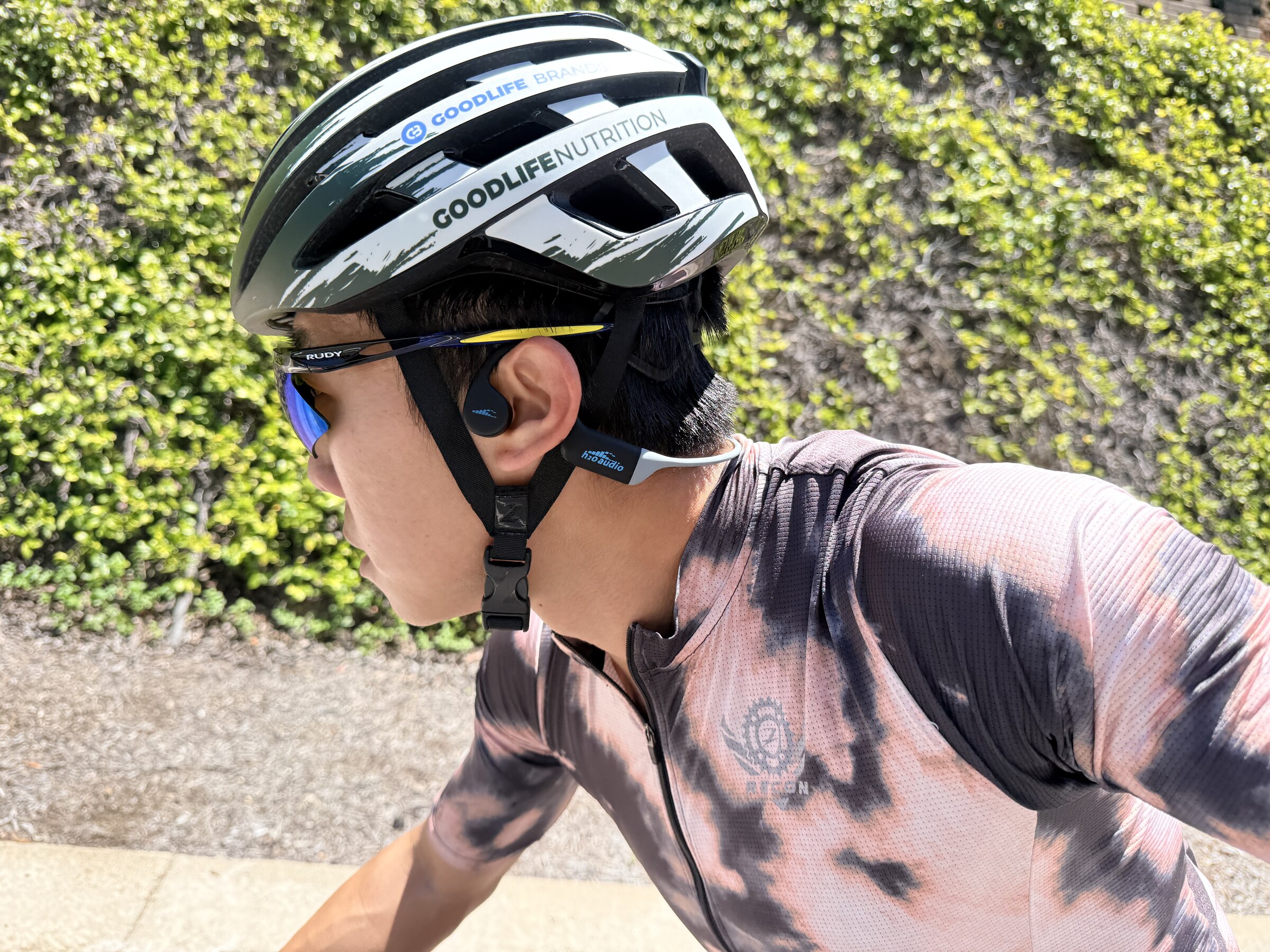
H2O Audio has been refining waterproof audio longer than most of its competitors have existed (we looked at the company’s RIPT Ultra and Lite headphones not long ago), and these two releases split the lineup cleanly. One does everything. The other does the land work for a lot less. For those of us whose training crosses disciplines, that clarity is welcome.
H2O Audio TRI 2 PRO Multi-Sport with Playlist+ ($199)
Built for: Triathletes, lap swimmers, open water swimmers, surfers, paddlers, anyone whose training crosses the air to in-water boundary.
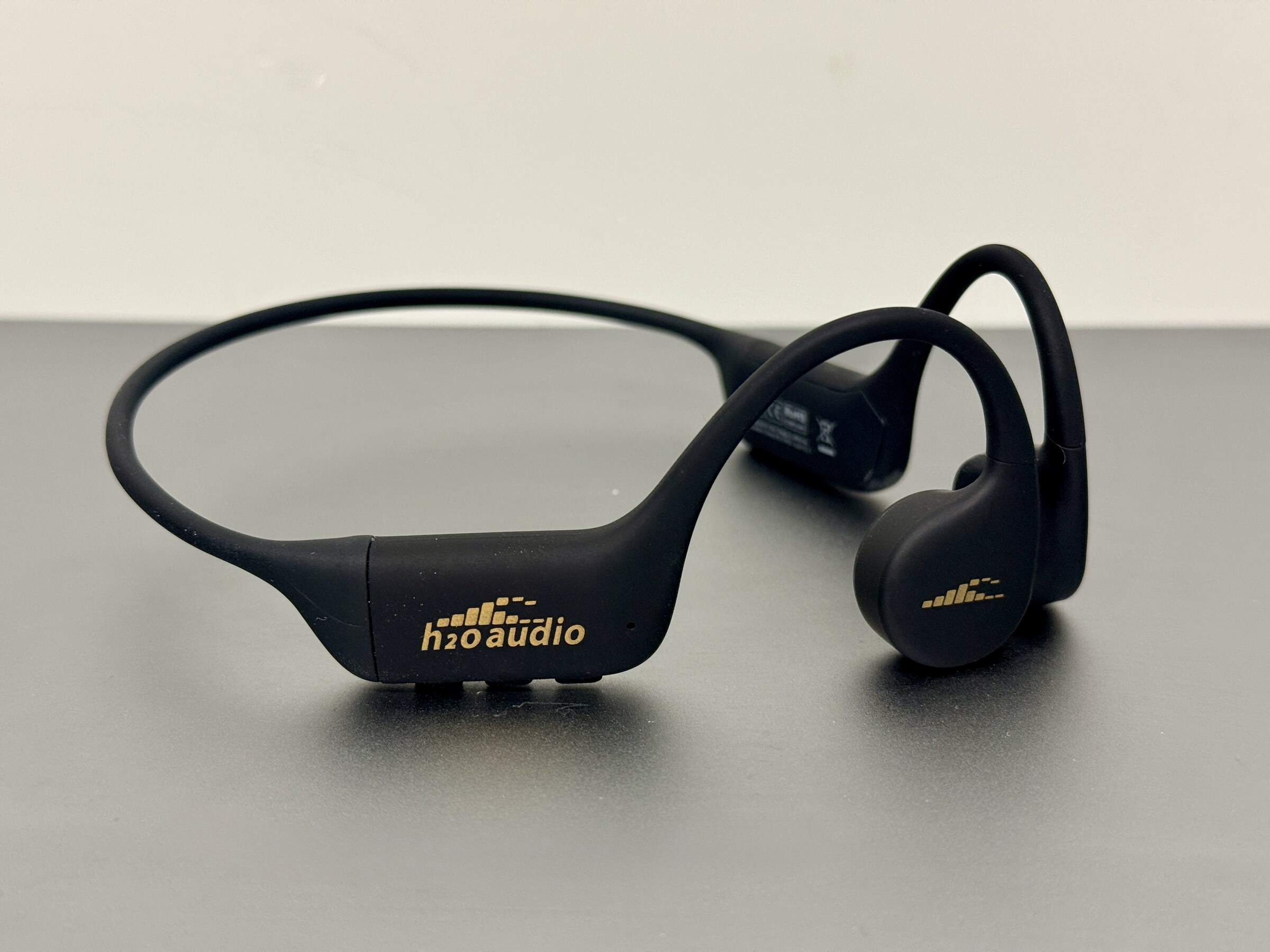
The TRI 2 PRO arrives with a hard-shell zippered case, a magnetic USB charging cable and foam earplugs for swimmers who want to quiet ambient water noise. The frame uses a soft silicone finish that grips skin without squeaking when wet, and the speakers sit 5 mm slimmer than the previous TRI generation, a small change that pays off the moment you pull a swim cap or an aero helmet over the top.
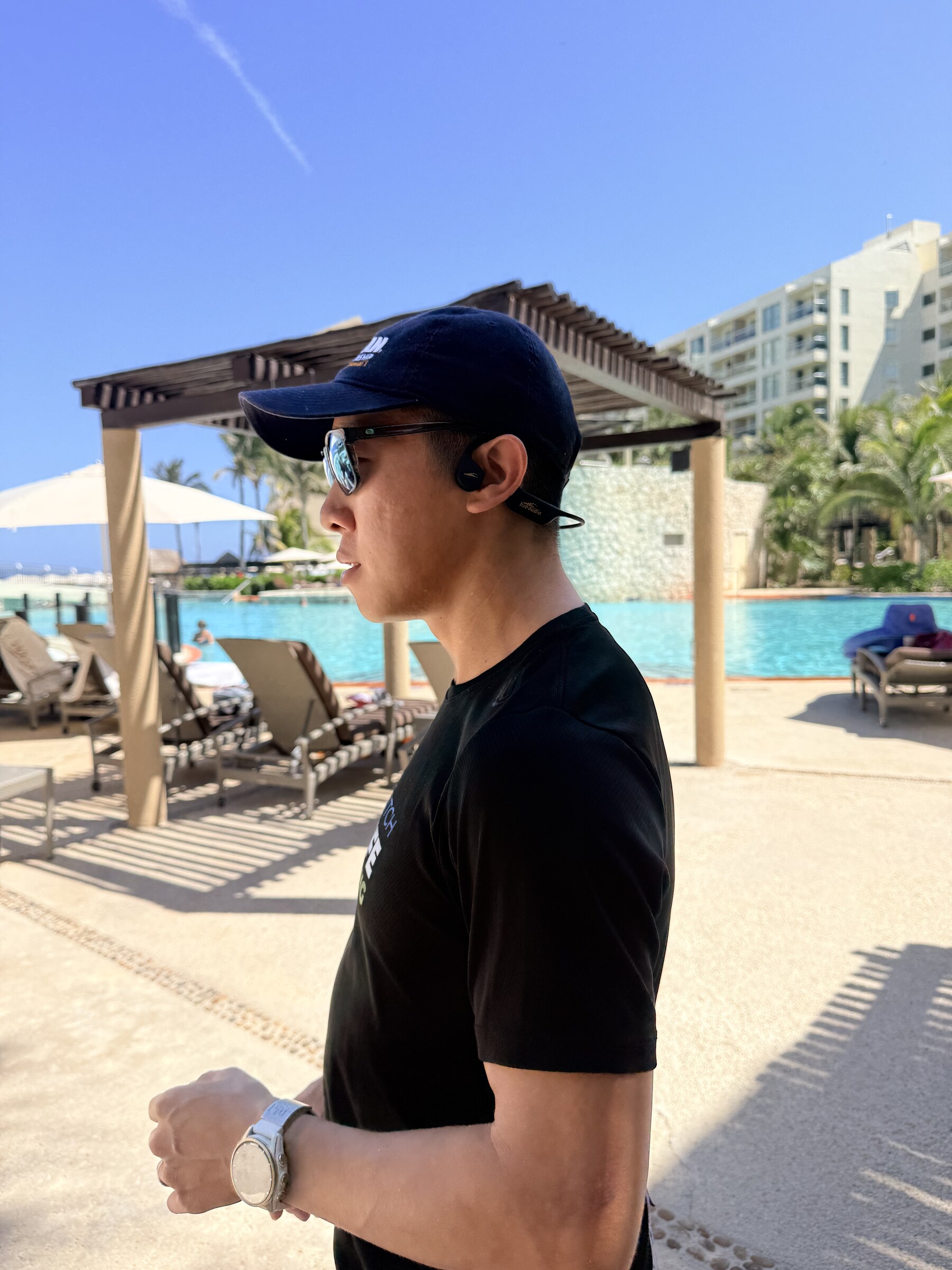
The specs that matter to your training:
- Waterproofing: IPX8, rated for unlimited submersion to 12 feet (3.6 m)
- Battery: Up to 9 hours on Bluetooth, ~6 hours in MP3 mode, enough for a long-course race or training day with charge to spare
- Storage: 8 GB onboard (~2,000 songs or 130 hours)
- Wireless: Bluetooth 5.3 with a waterproof mic
- Formats supported: MP3, M4A, WMA, FLAC, APE
Where it fits in a training week. For pool sets and open-water sessions, where you’re already fussing with a wetsuit and a start time, Bluetooth is a non-starter, because water kills the signal almost immediately. The onboard 8 GB MP3 mode does the job no streaming-only headphone can. For brick days, I pair to my phone or watch over Bluetooth on the bike and the run, then drop into MP3 mode for the swim without switching hardware. So you can bring your tunes with you in one headset!
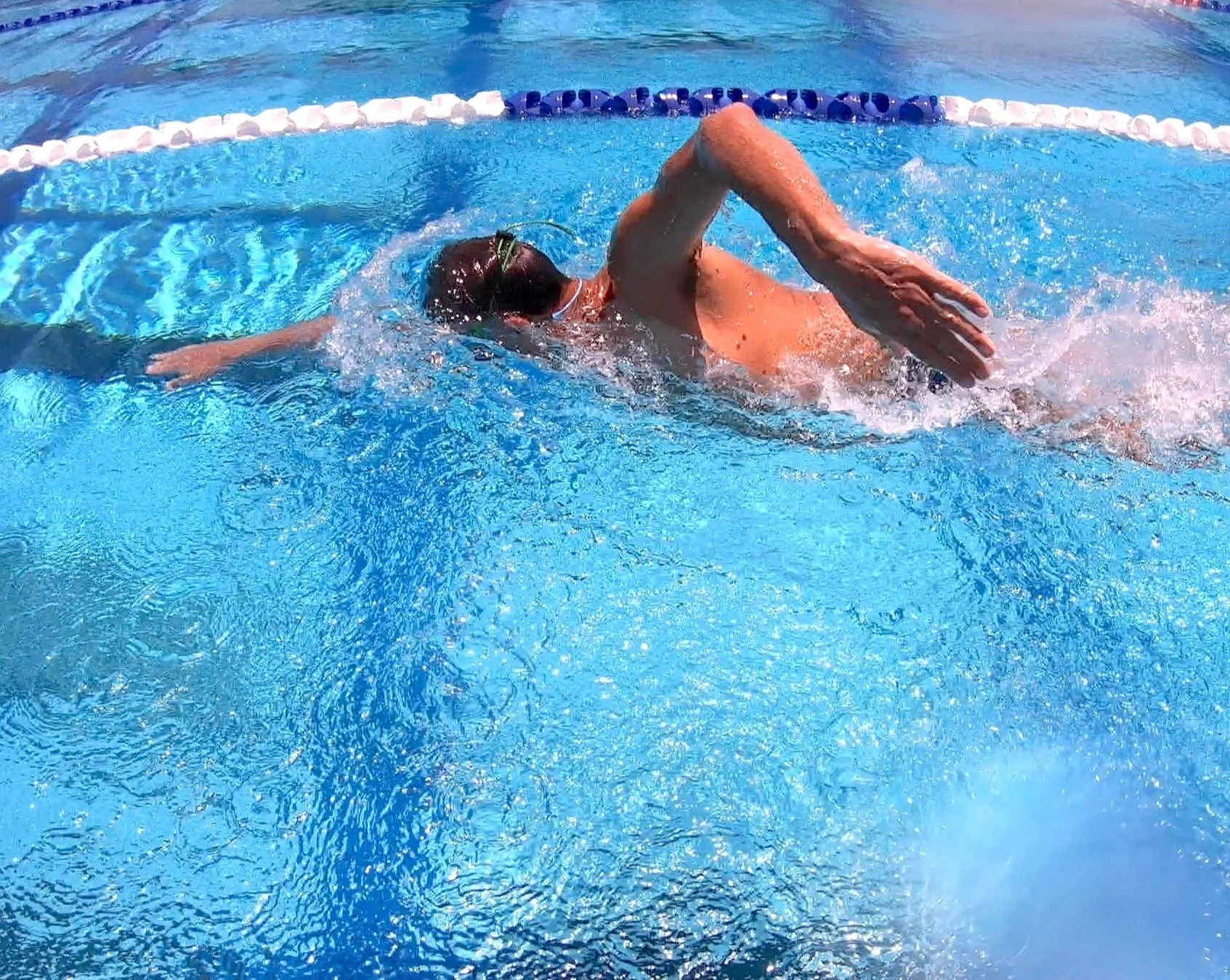
The killer feature. Playlist+ is H2O’s answer to the “Spotify doesn’t work underwater” problem. Double-press the “+” button while Bluetooth audio is playing and the headphones record the stream to onboard storage for offline playback. Pair it with the free H2O Audio app (iOS and Android) and you can sort captured audio into folders and set capture durations. It’s the cleanest workaround shipping at this price.
Sound quality. Above water, the TRI 2 PRO genuinely delivers. Bass is present without the cheekbone-buzz that used to plague open-ear designs, mids are clean and podcasts and audiobooks come through crisp. Underwater, with the earplugs in, the profile goes bass-heavy and the treble pulls back, but you can absolutely swim a set with usable music. That’s still a small miracle to me.
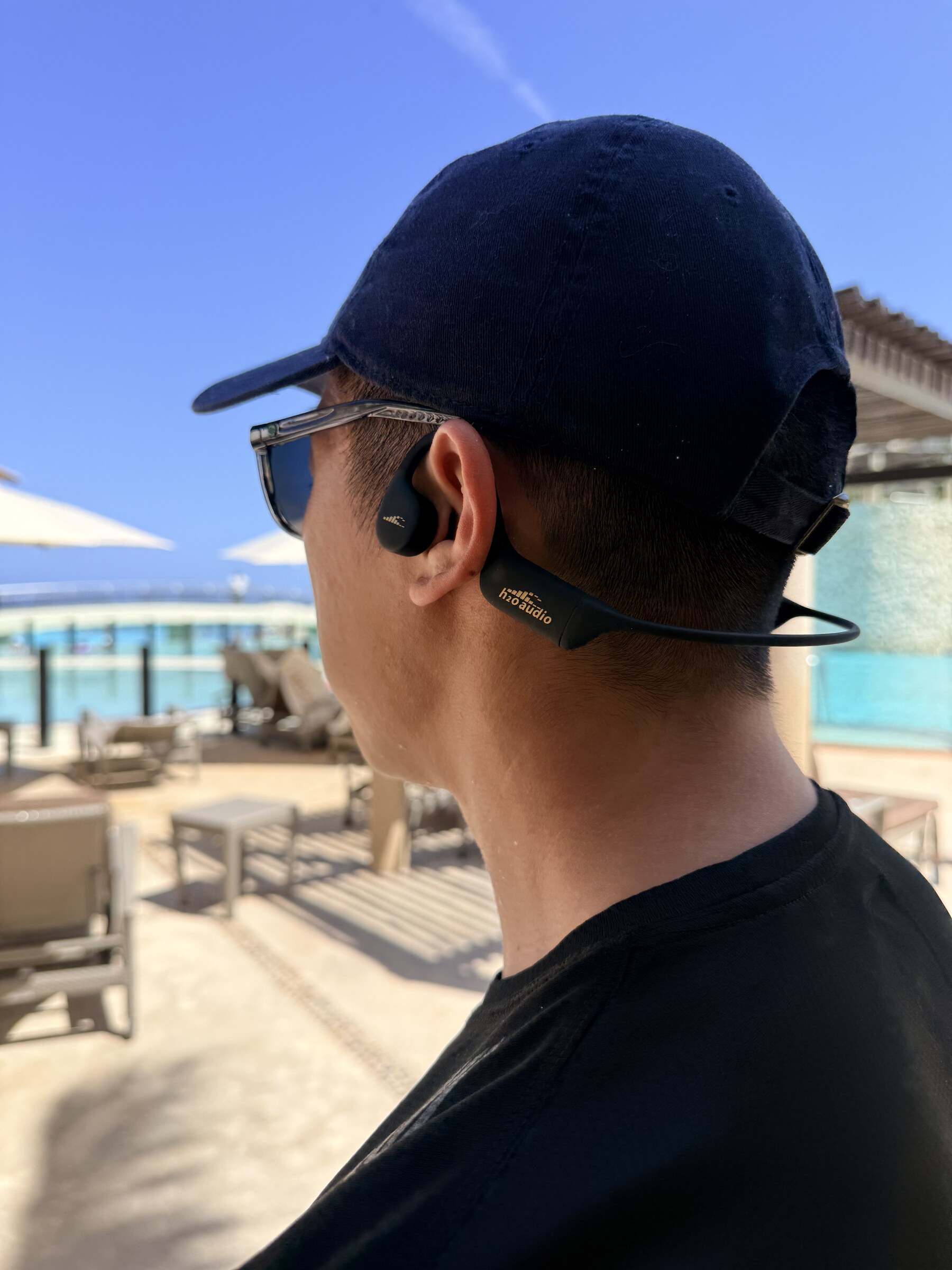
Worth knowing. The companion app is the weakest part of the package. It does what it needs to (folder sorting, capture durations), but it feels a generation behind the hardware it controls, and it’s the one piece here I’d want polished before I’d call the system finished. Loading music over USB-C is otherwise drag-and-drop simple; if you’re on a Mac, use a quality cable, because I’ve experienced a dropped connection mid-transfer. None of that touches the headphones themselves, which have been reliable out of the box.
H2O Audio TRI Run ($99.99)
Built for: Runners, cyclists, gravel riders, rowers, hikers, anyone whose training stays out of the water.
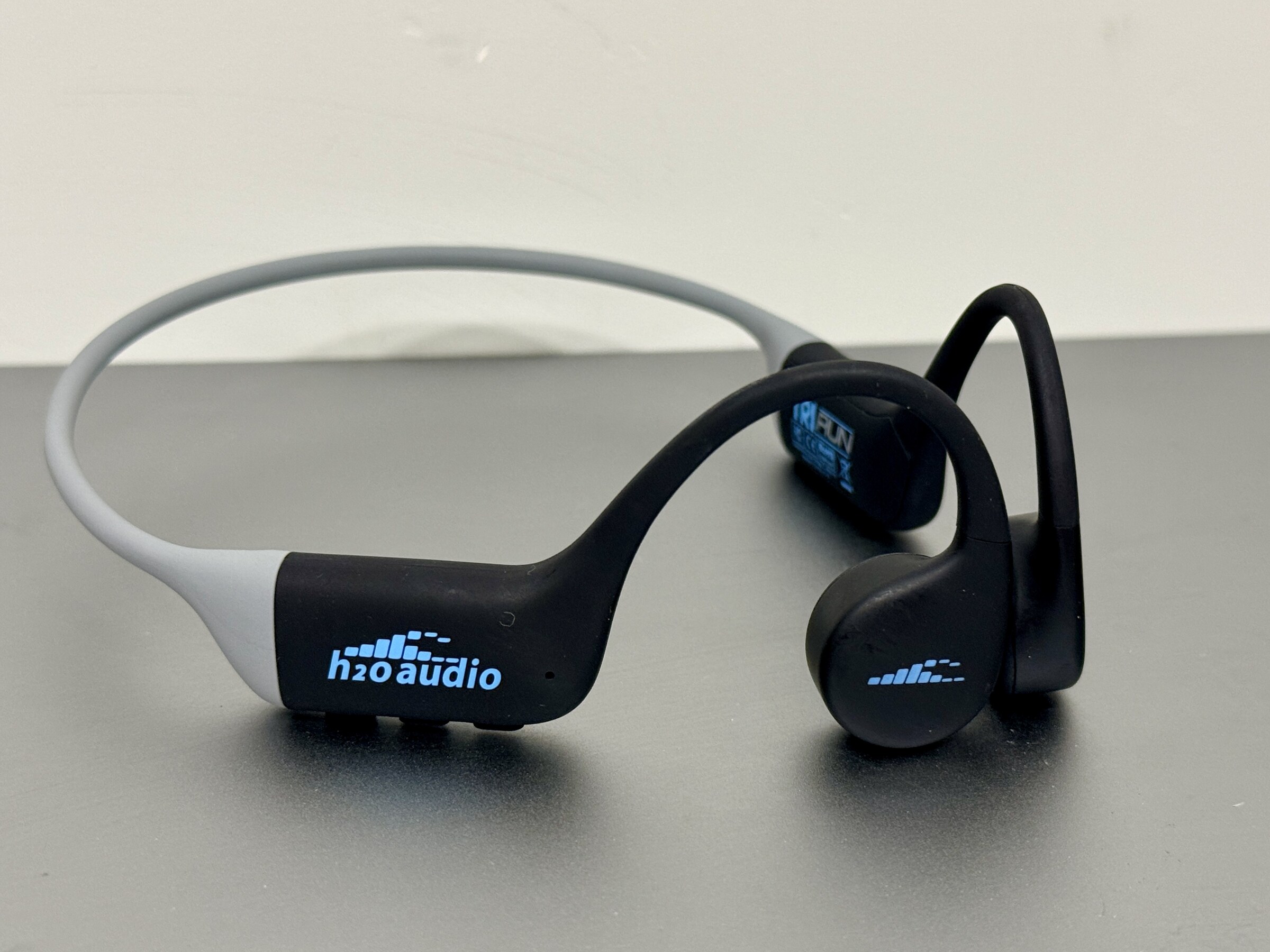
The TRI Run takes the same platform, strips out the swim hardware and prices accordingly. You get the same lightweight wraparound band, the same soft silicone frame, and well-placed physical buttons, minus the onboard storage and MP3 mode. An included safety leash adds confidence on harder efforts, and a magnetic 4-pin USB cable handles charging.
The specs:
- Waterproofing: IPX8, built for sweat, rain, and rough conditions
- Battery: Up to 6 hours
- Wireless: Bluetooth 5.3
- No onboard storage. No MP3 mode. No Playlist+.
Where it fits in a training week. Easy runs, long runs, threshold work, zone 2 rides, group rides where situational awareness matters, gravel, hikes, indoor erg sessions: anything where your phone or watch stays close enough to hold a Bluetooth connection. The wraparound design held its place for me through rougher road and higher cadence better than the over-ear hook designs I’ve used in the past.
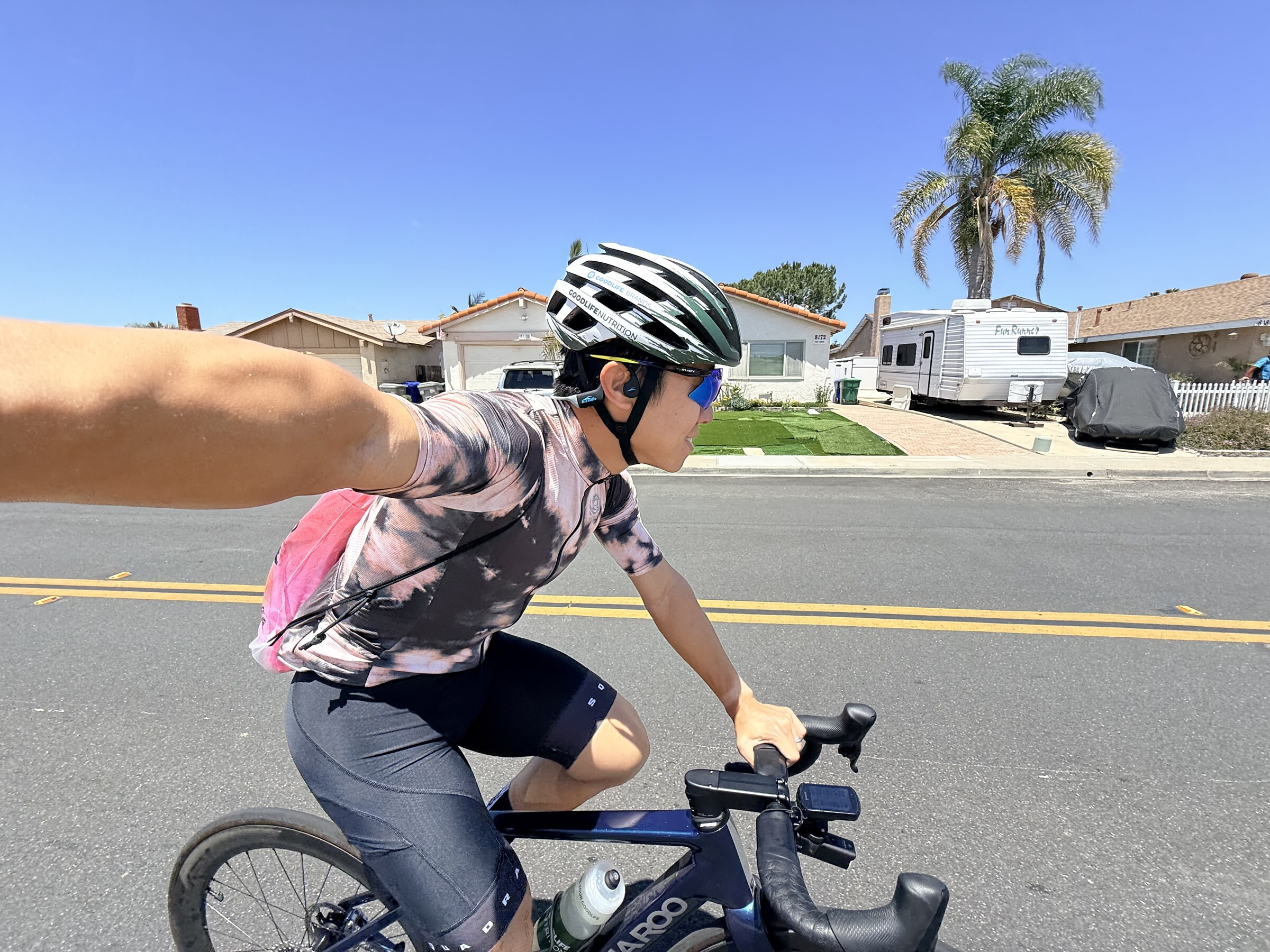
Sound quality. Over Bluetooth, I honestly can’t tell it apart from the TRI 2 PRO. So, at $99.99, it’s among the best-sounding in its class.
Worth knowing. No MP3 mode means no fallback. If your phone dies mid-ride or your watch connection drops, you’re riding in silence for the rest of the day. Unlikely, but not impossible. Also, the IPX8 rating invites a misread, because it will survive a dunk but it cannot play music while it’s under. For most land training, neither of those will matter.
Head to Head Comparison
| TRI 2 PRO | TRI Run | |
|---|---|---|
| Price | $199 | $99.99 |
| Bluetooth | 5.3 | 5.3 |
| Waterproof rating | IPX8 (submersible to 12 ft) | IPX8 (sweat/rain) |
| Onboard storage | 8 GB | None |
| Playlist+ recording | Yes | No |
| Battery (BT) | Up to 9 hrs | Up to 6 hrs |
| Underwater playback | Yes (MP3 + Playlist+) | No |
| Best for | Triathletes, swimmers, multisport | Runners, cyclists, land endurance |
The Bottom Line
H2O Audio made the right call splitting the line this way. Those of us who don’t swim shouldn’t have to pay for swim-grade hardware we’ll never use, and now we don’t. Meanwhile, the TRI 2 PRO has matured into the most capable underwater audio device you can buy without getting into exotic radio-transmitter territory. To me the decision is simple: if your race calendar includes a swim, the TRI 2 PRO is the better fit. If underwater submersion isn’t in your future, the TRI Run will do the job at half the price.
Disclosure: H2O Audio provided the TRI 2 PRO and TRI Run for review, and we are keeping them. The company had no editorial input into this piece, and the opinions here are our own.




Start the discussion at forum.slowtwitch.com