
Effortless Swimming Tips for Beginner Triathletes
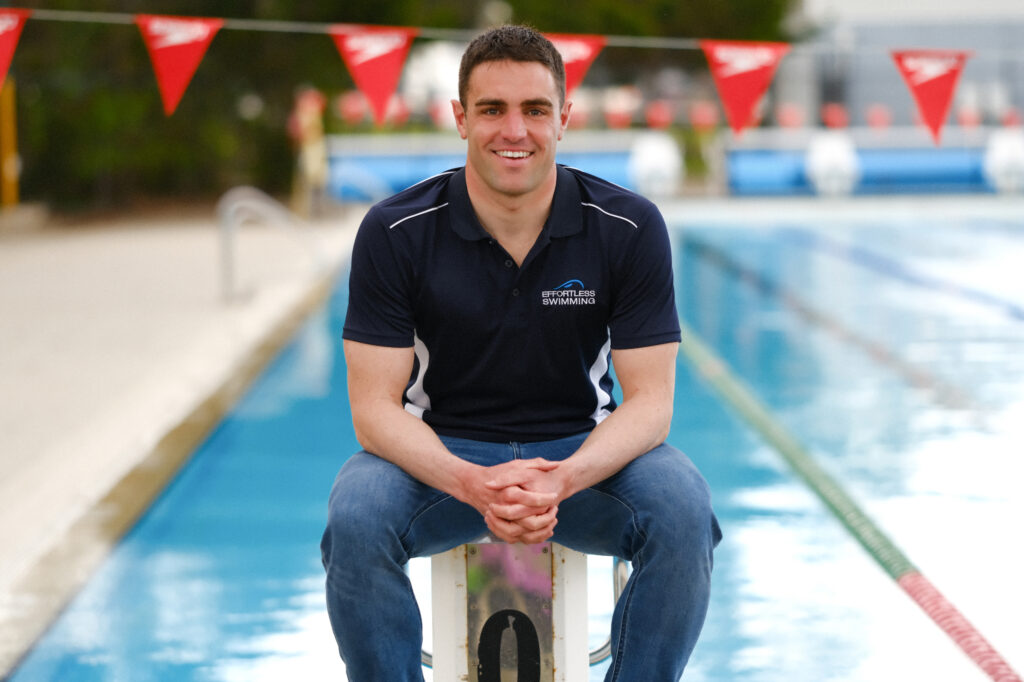
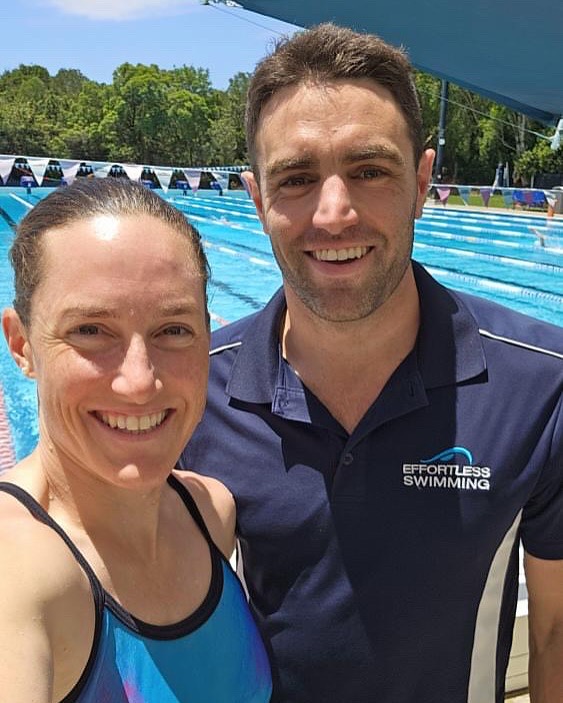
If you’ve spent any time scrolling triathlon-related social media, there are pretty good odds that you’ve seen the face of the man above. That’s Brenton Ford, an Australian swim coach who runs the online swim tips page Effortless Swimming. With more than 420,000 subscribers on YouTube and over 380,000 followers on Instagram, Ford is one of the most recognizable swim coaches in the business (even if you didn’t know his name until just now).
What makes Effortless Swimming so popular is Ford’s ability to, for lack of a better phrase, dumb things down for viewers. Whether you’re brand new to swimming or a seasoned vet of triathlon, Ford has videos that are easy to digest and understand that can elevate your technique to new levels. He was generous enough to take the time to Zoom in from his home in Melbourne to talk swim tips for beginners (as well as tips for more practiced swimmers, which will be released as a separate article in the coming days), and, like with his videos, if you put these to the test, you’ll see improvements in the pool in no time.
Starting Effortless Swimming
Ford developed a love of swimming long before he started his YouTube page. He was born into the sport, in a way, as his grandfather managed and coached at a local pool in his hometown, about two hours outside of Melbourne. Not only that, but Ford’s parents were both coaches as well, and he spent his childhood training and racing under the instruction of his father.
With two parents and a grandfather who all coached swimming, it may look like Ford was destined to follow in their footsteps. While he ultimately did just that, it wasn’t his plan.
“I never expected to get into coaching,” he says. “I just started doing it part-time at uni to earn some money.”
After that, Ford realized that he really enjoyed coaching, and two decades later, it’s still his passion and profession. He coached a masters swim team, Powerpoints Master Swimming in Melbourne, and led them to five Australian championships between 2009 and 2016. While he found tremendous success with in-person coaching, he felt an itch to help more than just the swimmers who could make it out to his pool in Melbourne, so he started Effortless Swimming on YouTube in 2009.
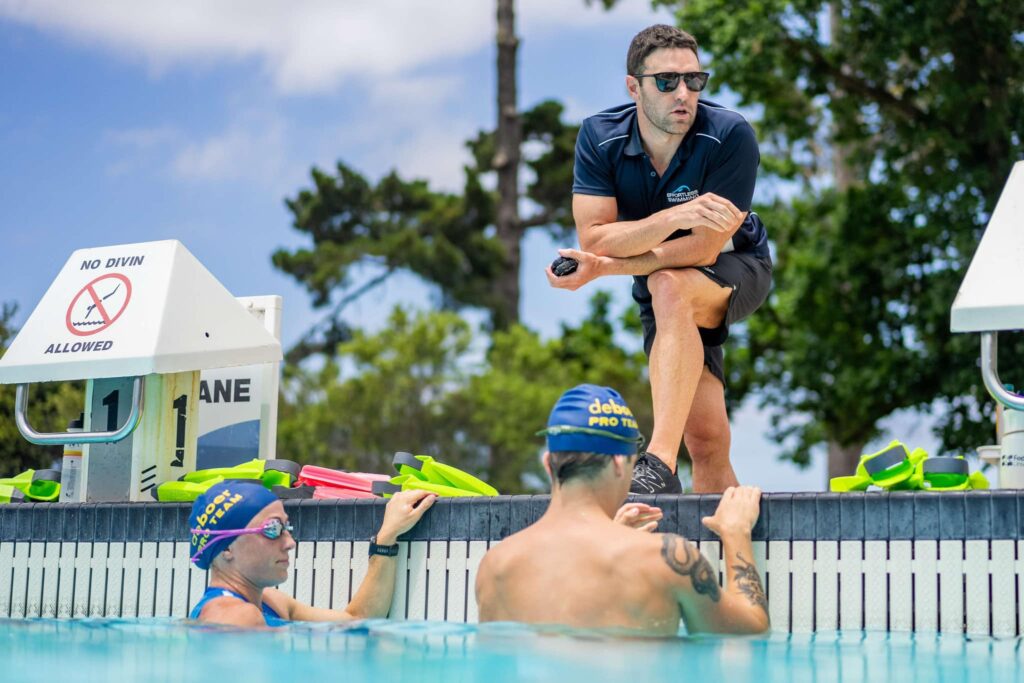
“I saw a lot of coaches explain things in a way that I didn’t understand,” Ford says, thinking back to his decision to start the YouTube channel. “I was like, ‘If I can’t understand that, how can someone who hasn’t been in the sport for 30 years understand it?'”
Simplicity was the key for Effortless Swimming. Ford wanted to create videos that swimmers could use to improve all on their own, and a decade and a half later, his following only continues to grow thanks to that commitment to clarity.
Effortless Swimming Beginner Tips
Ford works with a lot of people who are new to swimming, so he has a bunch of great ways to get beginners comfortable in the water. Even if you can swim, there is a big difference between being able to keep your head above the water and actually swimming laps in a pool. A major part of being a proficient swimmer is body position, so that is a main focus of Ford’s when he works with newer athletes.
“The first thing we want to do is build this frame of our body and this platform so it’s long, tall and taut,” he says. “We don’t want to be just like this wet noodle that moves through the water. Always remember tall and taut.”
He is not suggesting that you remain rigid and stiff in the water, but rather that you remember to extend yourself fully while swimming. Keeping that “tall and taut” note in mind, the next focus is rotation. This is going to be directly impacted by the first pointer — if you’re swimming like a “wet noodle,” as Ford says, you’ll be moving too much in the water, which will not only slow you down, but also tire you out quicker.
“The head stays still, but the body rotates around the spine 30 or 40 degrees,” Ford says. After that, he shifts focus to “the extremities” — mainly your arms.
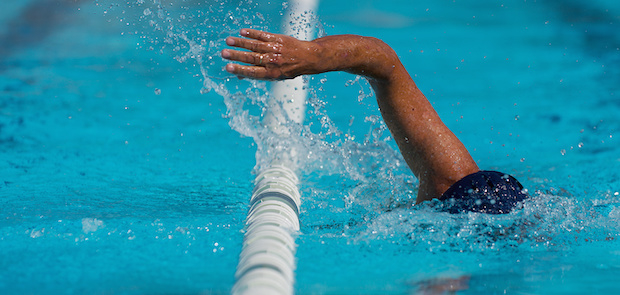
“Arms over the top of the water, the reach, the catch and the pull-through,” Ford says. As you might have noticed, these phases of the stroke will all be improved by Ford’s tall and taut cue. The reach as your hand enters the water should be stretched out before you — tall and extended rather than using a bent, and therefore shortened, arm. The catch is how you will propel yourself forward, which requires a taut arm to ensure you grab as much water as possible. The pull-through should, like the reach, extend fully (shortening it will only make your stroke less efficient).
Ford has countless videos on the basics of freestyle (and other strokes), and many will centre around perfecting these parts of the stroke.
Ford adds an important note — one that isn’t a specific tip, but something he hopes swimmers will keep in mind: if you improve your technique, you will get faster. That seems like an obvious statement, but he often sees beginners getting discouraged when they have so many aspects of their stroke to work on and don’t see results right away.
“I think it’s a big frustration for so many triathletes who get into swimming,” he says. “It’s frustrating for people and they don’t understand why they can’t get faster, but it can be solved for the most part. Everyone can improve and get better.”
Drills for Beginners
If you are truly brand new to swimming, Ford recommends some “really simple” drills. The first is what he calls sink-downs, which help with breathing regulation.
“Breathe in at the top and you just gradually exhale,” he says. “You might sink to the bottom or if you’ve got more buoyancy, you might stay near the surface. But just doing that 10 times, just getting used to breathing in and breathing out is good, because a lot of beginners tend to just hold their air too much and so they don’t breathe out properly.”
Next up is a ball float into an X float.
“Tuck into a ball and then you extend your arms out,” he says. This helps with body position and keeping “close to horizontal in the water for almost no effort.”
Ford says many new swimmers will kick “super hard” to stay up in the water, but he notes that that is “not only wasting effort, but it’s just not sustainable.”
The ball to X float will help you get a better feel for the water and improve your positioning so you can hold your body correctly with very little effort.
“In clinics, we’ll have beginners do a ball float into an X float, then we have them swim a super easy 25,” he says. “Most people tend to swim so much better through the water in that 25. They start to realize that they don’t need to force anything. It’s really simple, but it goes a long way for beginners.”
Try a Workout
Ford sent over a workout he recommends for beginner swimmers and triathletes. Try it out (along with the drills and tips mentioned above) and see how it feels. (Be sure to warm up and cool down properly with some easy swimming, some drills, some kicking.)
4 Rounds of 4 x 50m (20 seconds rest)
- 3 @ moderate pace
- 1 fast
Ford says a key focus for this workout is to count your strokes for each lap.
“Try to maintain the same count for the moderate efforts,” he says. “For the fast effort, only increase by four strokes.”
Paying attention to this rate will help you maintain your stroke length, Ford says, as many people “tend to spin the wheels” as they increase their effort and speed.
To learn more about Effortless Swimming, visit Ford’s website here.



His vdeos are pretty good.

I did the 8 week freestyle course over winter and my swim really has turned a corner. I wasn’t a very weak swimmer, but definitely had lots of room for improvement especially without anyone on deck to watch, and I’m seeing faster times for the same effort.
I’m planning on running through the course every winter for the foreseeable.