
Bikes, Bolts and No Sleep: Inside a Mechanic’s Race Week on the T100 World Tour
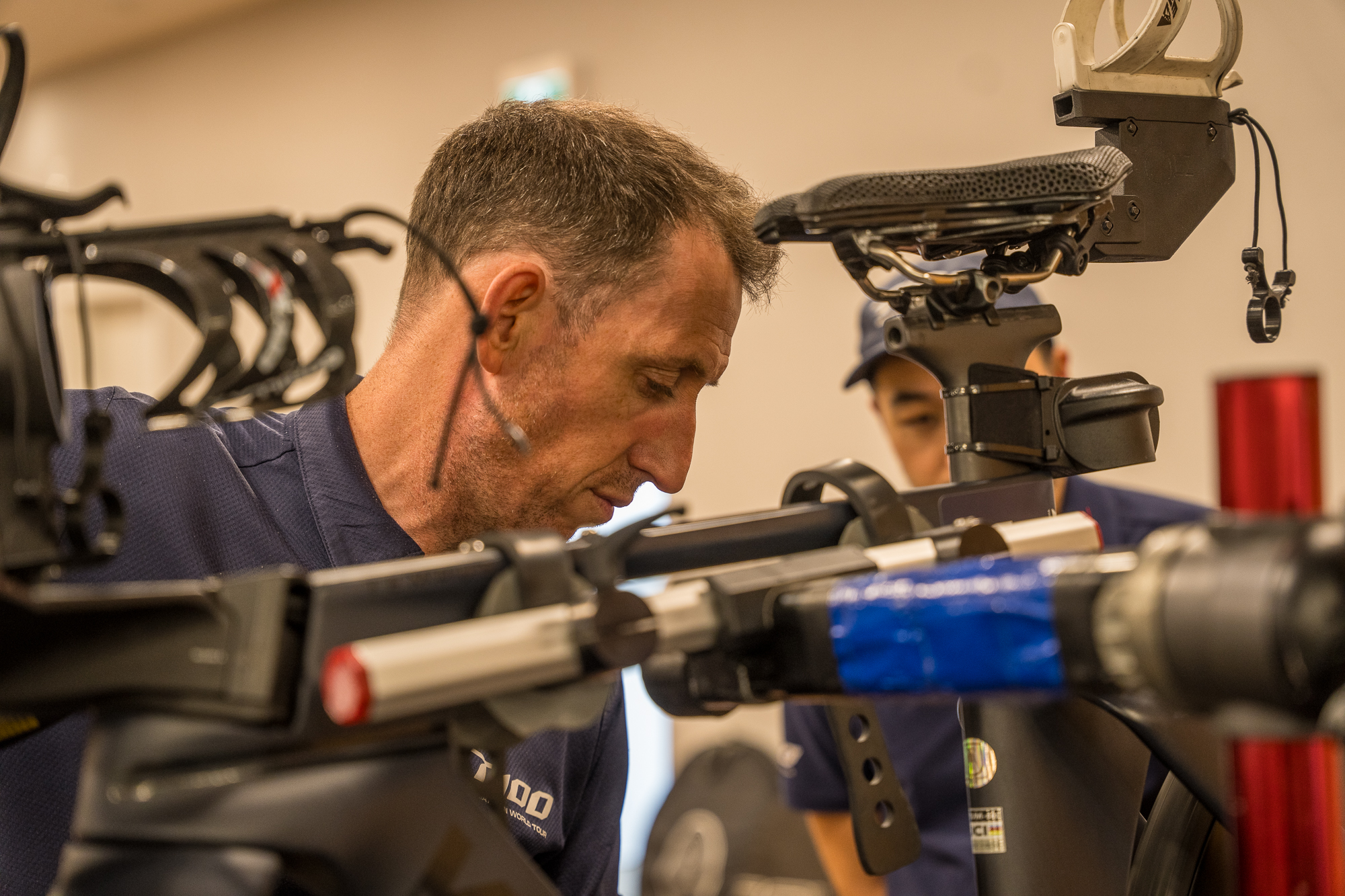
There’s a lot more to a successful race at a T100 World Tour event than a fast swim split or impressive watts per kilogram numbers. Tucked away in a room at the UBC residence the athletes were all staying at for last month’s T100 Vancouver, a room that looked more like a WorldTour cycling service centre than a regular triathlon bike stop, two mechanics were working hard to make sure that every athlete got to the start line with a bike that was working perfectly.
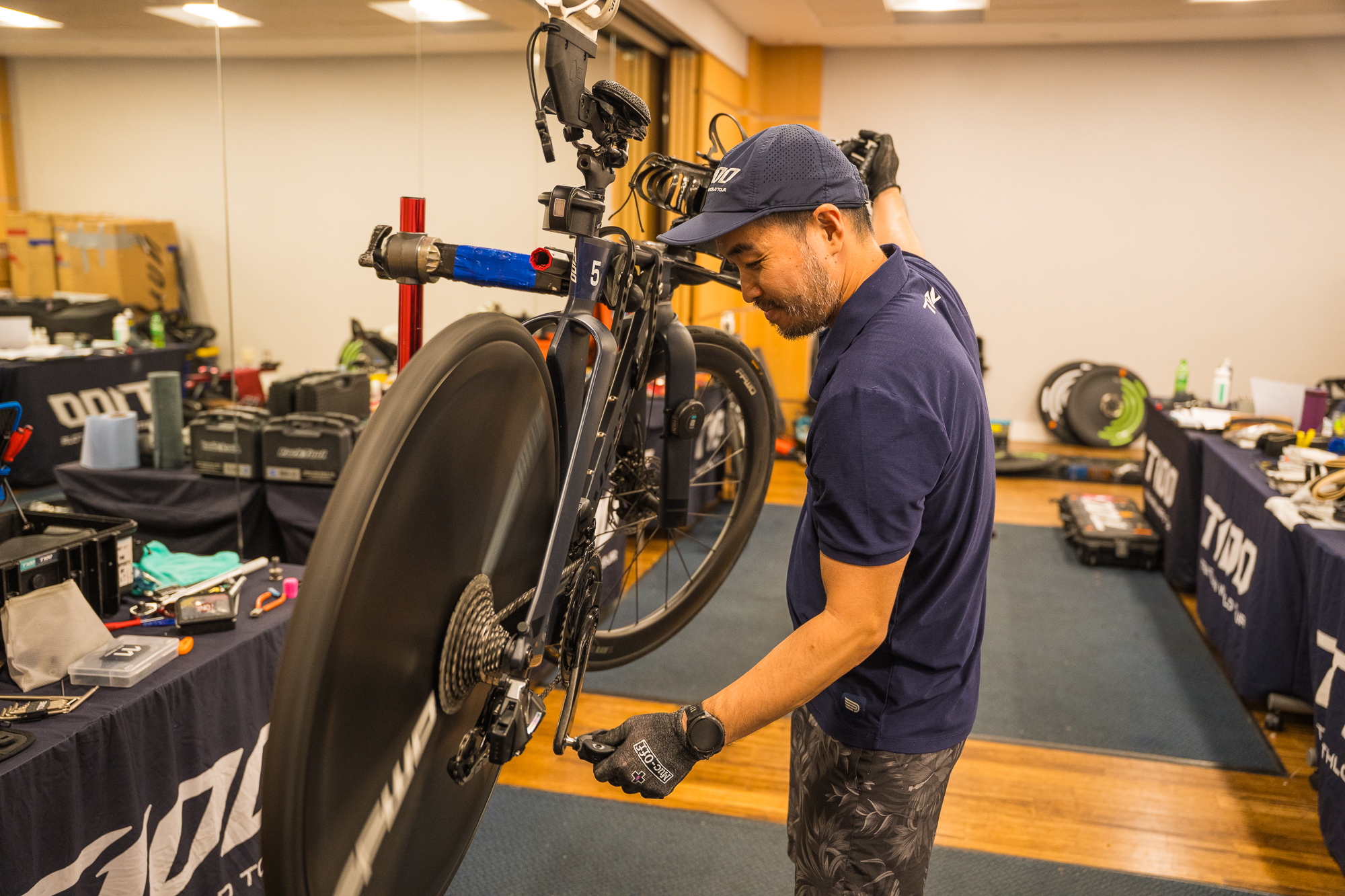
Anthony Foy and Yuki Yamamura are the lead mechanics for T100 – the Professional Triathletes Organisation’s (PTO) long-distance world tour, which brings some of the sport’s biggest names together to compete over a 2km swim, 80km bike and 18km run around the world. When the women rolled in for the T100 Vancouver stop at Jericho Beach, Foy and Yamamura had already been on site since Monday, days before the race.
“It’s been a busy week since Monday,” Foy said. “We’ve been helping the pro female athletes — building bikes, doing some of the changes for their performance gains, and optimizing them all for the race here in Vancouver. We’ve actually been doing a lot of work across the bikes: gears, wheels, cockpit changes, everything.”
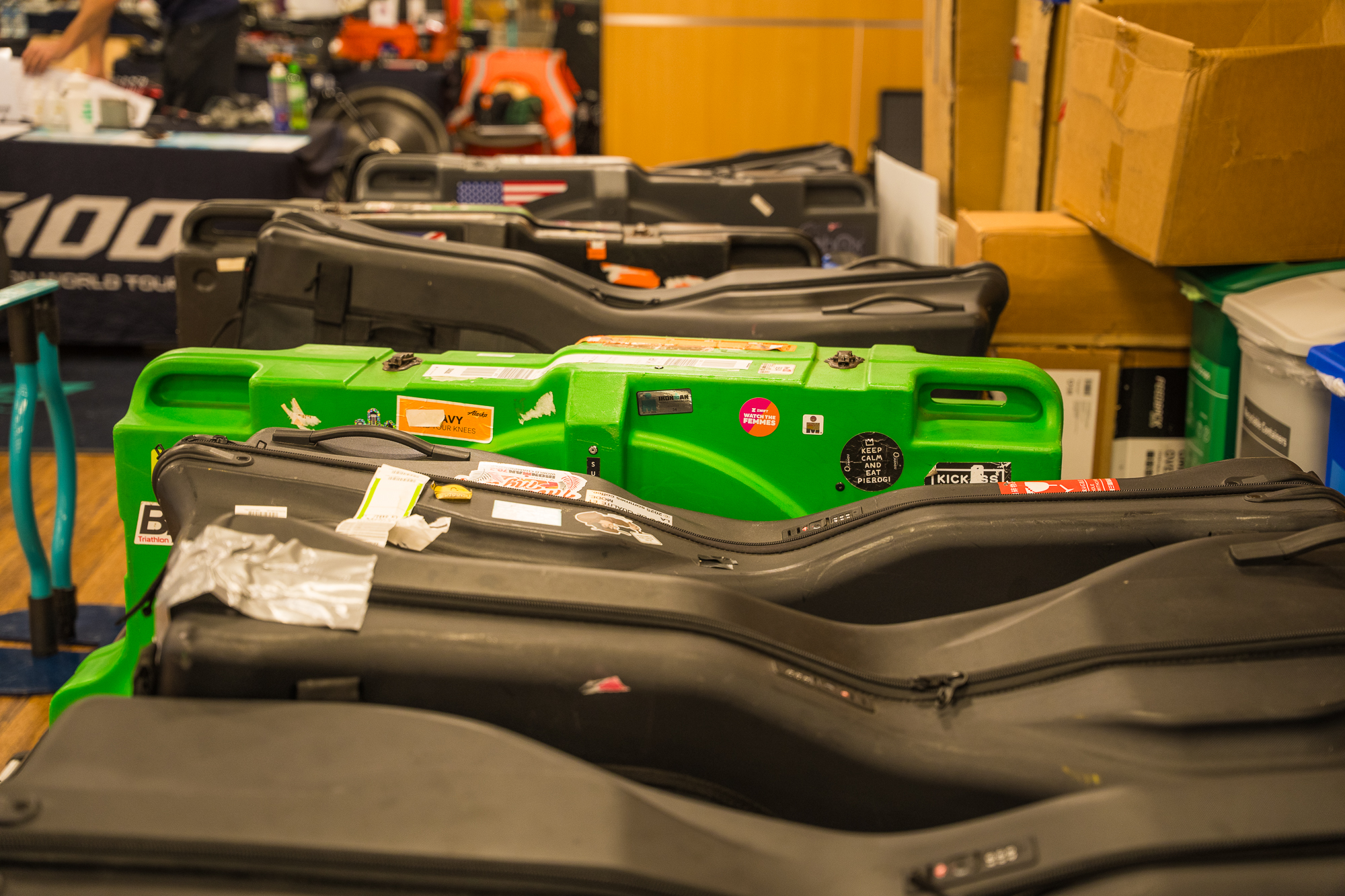
Their work starts as soon as the women arrive – the athletes fly in from around the world with their bikes in bike boxes, and Foy and Yamamura are available to help put the sleek racing machines together. Then they do everything they can to help fine tune the bikes to ensure the athletes will be at their best come race day. The goal is to build trust as much as it is to build bikes.
“We’re here as neutral support, and we’re here primarily for race day,” Foy said. “But we’re here all week to have that rapport with the athletes, and we come to all the races. We always set up this room more like a service course that you get in WorldTour racing. The level that we work at with the brands and things, we bring in a lot of materials so that the athletes can come to a T100 race and know we’re here to support them.”
“Our aim is to have 20 bikes start, and our aim is to have 20 bikes finish every T100 pro race,” Foy continued. “So we’ve done that now every race — in the men’s and women’s, and when they race together.”
The room Foy and Yamamura work in serves as much more than just a bike shop. Trainers line one side of the room that athletes can book to get some extra training done, and also doubles as space for athlete briefings before the race.
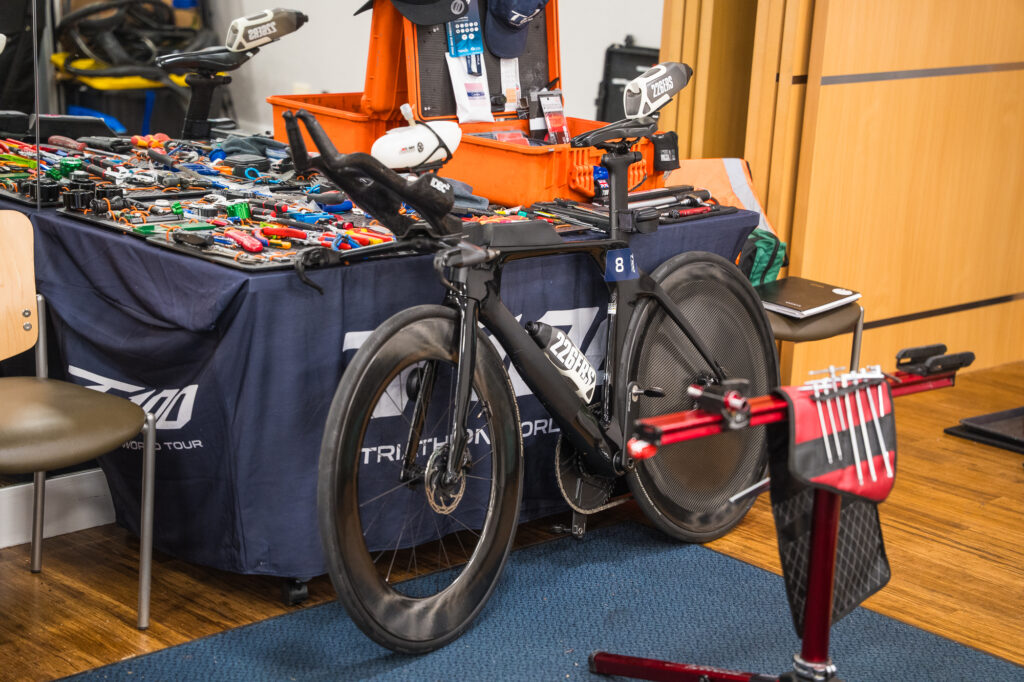
Once all the wrenching is done, there are always lots of tweaks to be made to the bikes. But Foy and Yamamura also find time to compile a full list of every component on every pro athletes bike. That becomes the blueprint for the race day support needs.
“That will then help us for the service that we’ll offer on race day,” Foy said. “We’re speccing out wheels — our spare wheels and parts — that we’ll bring down to transition.”
The afternoon before the race the room turns into space for World Triathlon officials to perform all the equipment checks required of the racers. Every bike is measured and inspected, along with running shoes, trisuits and wetsuits to ensure everything meets World Triathlon regulations.
When it comes to race day, Foy always hopes that his day will be boring.
“On race day, no one really wants to see us,” Foy said. “We don’t want to be doing anything race day.”
The mechanics are around, though, especially in T1 as the athletes move from swimming to cycling as a last line of support for the athletes as they start the 80 km bike leg. With literally millions of dollars on the line for the competitors, there’s no room for a mechanical issue to sideline an athlete.
At T100 Vancouver Foy and Yamamura continued their streak – the only DNF on the bike came because the athlete dropped out, not because of a mechanical issue. This week? T100 French Riviera, where the pair will do it all again, this time with the men’s bikes.

Start the discussion at forum.slowtwitch.com