
KISS (Keep It Simple, Stupid!) Your Way To More Fun with Your Triathlon Training and Racing
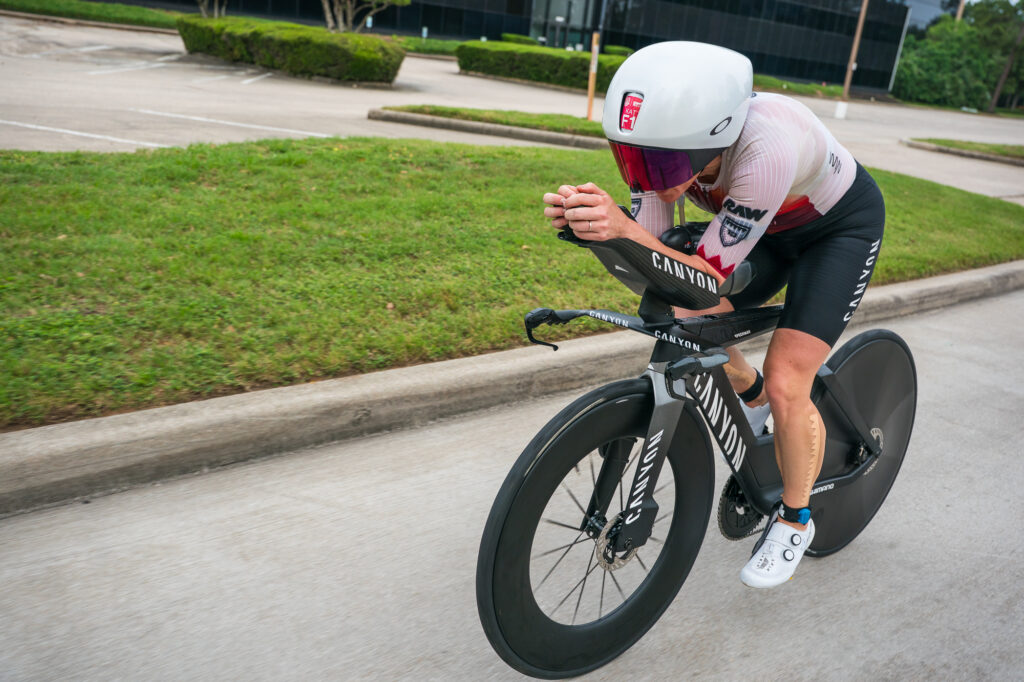
Triathlon is a sport with a lot of add-ons. There is always another piece of gear that you feel you need and always a different metric to chase. The thing is, the necessities of the sport are actually quite minimal. You need goggles and maybe a wetsuit, a bike (any old ride will do), a helmet and some running shoes. Find some money for a race entry fee and you’re ready to do a triathlon.
It can be easy to fall into the trap of excess in this sport. If you do, you may find that it isn’t as fun as the days when you were just getting started and riding that cheap bike and wearing the simple shoes. You don’t have to go all the way back to the basics, but it is possible that making things simpler in training and racing could lead to you having more fun.
Train by Feel
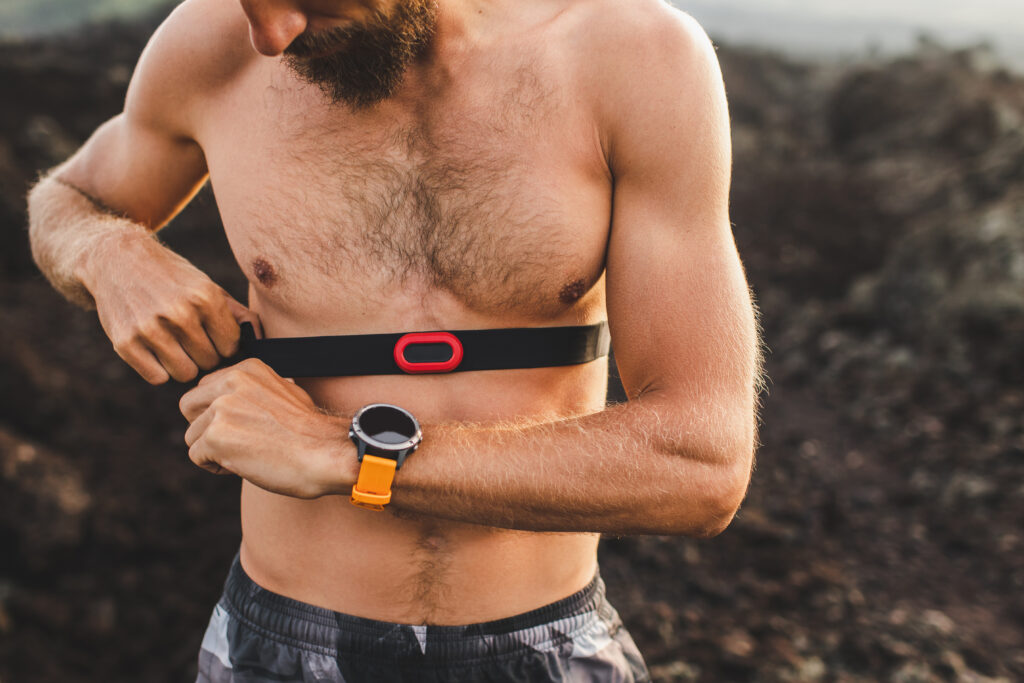
You probably have some sort of device that tracks multiple data points for you in training. Your watch records your speed, heart rate and more. Your power meter tells you just how hard you’re pushing on the bike. You can even get goggles that project your pace in real time on the lens.
While these metrics are nice to have and can be very helpful in training, you don’t actually need them. In fact, if you rely too heavily on your watch, power meter or any other device, you may not know how to adjust if any of them stops working on race day.
Training based on feel, however, can help you perform at your best even if all of your tech conks out. Instead of focusing on all of the numbers on your multiple devices, you can swim, ride and run as fast as you feel capable of going.
Yes, there will be days when you get home and realize you could have pushed harder. There will also be moments when you blow up after going too hard. If you train based on feel enough, you’ll work out those kinks and become more in tune with your body, giving you a great shot at competing to the best of your abilities on race day.
You don’t have to ditch all of your devices, but even tossing in one or two feel-only training days every week can go a long way in helping you develop this skill.
Save Your Money
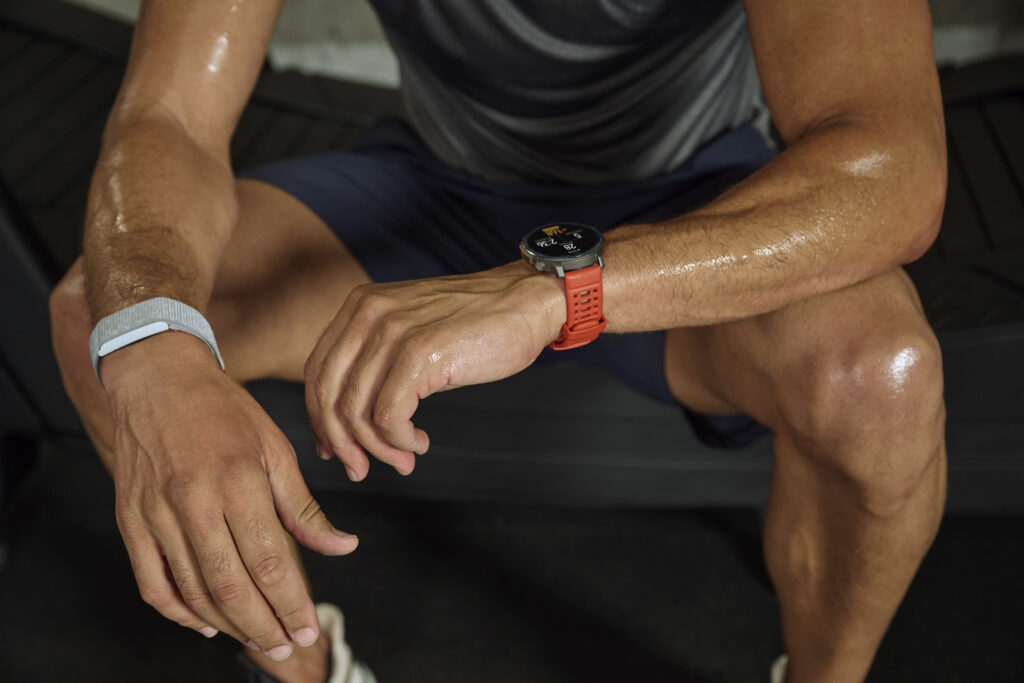
The one metric you’ll need when training by feel is time, as you still want to know how long you’re going for in any given session. The great thing about time is that it’s pretty affordable. You can get a reliable digital wristwatch for under $15. It won’t tell you anything more than the seconds, minutes and hours you’ve been moving, but it will save you hundreds compared to the GPS and smartwatches that many triathletes wear.
Similarly, you can save hundreds of dollars if you opt for a basic wind trainer or rollers instead of a smart trainer for your indoor workouts. Sure, these basic setups won’t allow you to use Zwift or other training apps, but you can get the same workout done no matter what option you use. Plus, you can always listen to music or watch TV to take your mind off of the task at hand to replace those online riding platforms.
It’s the same with bikes. There are certainly benefits to the most expensive rides on the market — they’re extremely light, they have power shifting, they’re remarkably aerodynamic — but you can save thousands of dollars by opting for a still-fast ride.
There are so many ways to spend your money in the sport of triathlon, but for every wildly pricey product, there is a cheaper option that won’t obliterate your bank account.
Disconnect from Strava
Strava is a great app and it can be a wonderful motivator, but it can also create a lot of issues for athletes. Some people get very jealous looking at others on Strava, or they see their friends and rivals posting amazing workouts that leave them feeling inadequate. Other people get Strava anxiety and don’t want to post what they view as lacklustre sessions for fear of being judged by their followers.
Disconnecting from Strava can be a great and game-changing move. No longer feeling the need to share every workout you do can be liberating, and it can lead to you regaining some joy in training. When you stop comparing your bad results to other people’s best ones and your easy days to their PBs, you’ll rediscover the fun of triathlon.
Don’t Go for Flash
There are undeniably cool pieces of triathlon gear. There are tri-suits that attract everyone’s attention, bikes that turn heads when they roll by, shoes that stand out among the crowd. Just like in high school, it is fun to have the outfit or item that makes everyone else jealous, but that doesn’t mean it’s the right gear for you as a triathlete.
Take goggles as an example. You can buy the most expensive, most popular and most sought-after pair that all of the world’s top pros use, but that doesn’t mean they’ll fit your face well. You could drop a lot of money on goggles that leak and fog up simply because the dimensions of your face are not ideal for that product.
On the other hand, you may find that a cheap and objectively ugly and uncool pair works perfectly for you. Now, you could try to force the popular goggles to work out. You could jam them to your face in an attempt to get suction, but that probably won’t work. Triathlon isn’t about being cool, it’s about challenging yourself and trying to go as quickly as possible from A to B to C. Go for the gear that works for you, not the gear that you think will impress people.
Getting Rid of Structure
After a while in triathlon, you’ll find a rhythm in training that becomes second nature. Week in and week out, you’ll perform the same or similar workouts on the same days. For a while — or even a long time — this can work perfectly. Eventually, though, you may experience some training fatigue. Not physical fatigue, but mental.
A way to fix this is to actually break out of that structure. Not entirely — it’s important to have regularly scheduled programming for physical success — but even just shaking things up a bit can work wonders for the mental side of things.
Be sure to toss some fun workouts into the mix every week. Go for trail runs. Join friends for a group ride. Add Fartlek training to your swims, bikes and runs. It can be fun to chase perfection, but not if you do it every day of your life. Every now and then, try to get back to workouts that remind you why you fell in love with triathlon in the first place.




My thoughts exactly and actually you don’t even have to have goggles. Goggles did not become standard swim gear until around 1975-ish, i.e. those of us who grew up swimming before then swam w/o them. Sure all the lights had rings around them after swim practice but AFAIK it did no long term damage. If you look at the old pics of Spitz winning his 7 golds in ‘72, you will see no goggles.
Also, the train by feel concept is really what we all end up doing in reality anyway, e.g., there will always be days you can’t go as fast as you would like, so you just do what you can.
I noticed “the fun in training” starting to disappear in 2003 when the coaches and “coaching squads” started to appear and control the lives of their customers.
I always thought that was just me, as I’ve been pretty close to legally blind most of my life LOL
I adopted something similar to this a couple of years ago. First, a little background. I started triathlon in 2001. From then until 2022, I never used a coach. I couldn’t afford one. I took a break from 2019-2021. When I started back in 2022, I got a coach and I enjoyed it. But after a while, it seemed a little wasteful. I have always enjoyed figuring out my workouts, coaching myself, setting goals in the sport then achieving them on my own. I’m not particularly fast or decorated but I’ve had fun. About 18 months ago, I dropped my coach and I started setting my own schedule again. I put together a loose framework of a plan then I did what I wanted to do within that “plan.” There was very little structure and pressure, and as such, I enjoyed training more. I successfully completed an IM at age 53, my first since 2005, and had a blast along the way. I don’t do Strava (even though I have an account). I recently canceled TrainingPeaks. I don’t have a powermeter, study training zones, download training data, or really even keep much of a training log. I wear a Garmin watch but my primary piece of technology is my trusty Timex Ironman watch, the same kind I’ve been wearing for most of my adult life. It is fun. It is simple. And I don’t feel shackled to training. I’ve always thought that triathlon (or any other hobby) should add to your life not subtract. Training this way very much to my enjoyment of the sport.
At the same time, I ride rim brakes, mechanical shifting, and I just spent two evenings gluing up 22mm tubulars. So there’s that . . .
RP