


Running Injury? From Water Running to AlterG, Here’s How to Get Back to Running Faster
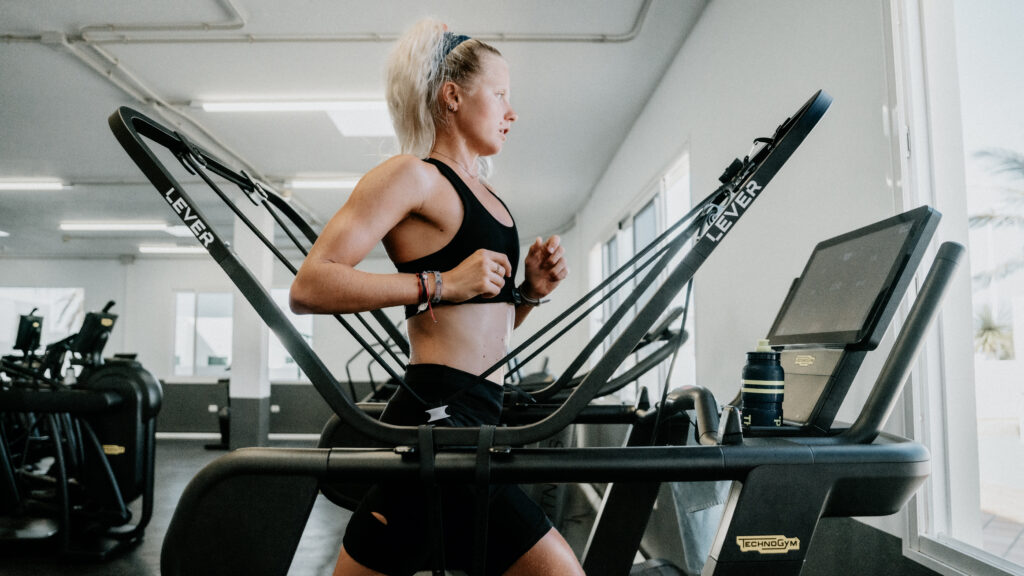
So you’re injured from running? Join the masses. The statistics show that over half of all runners experience injury, most of which is from overuse. As triathletes, it’s easy to switch sports and swim or bike instead of running, but, when you’re on the rehab road, the baby steps to rest, recover and rebuild the injury area are important. Once you have sought medical care and advice, you might be presented with several options to return to running. Which one you use will depend on your injury, what you have available and how your body handles the stress of adding body weight (load). So, which method should you use, when should you use it and what exactly should you do?
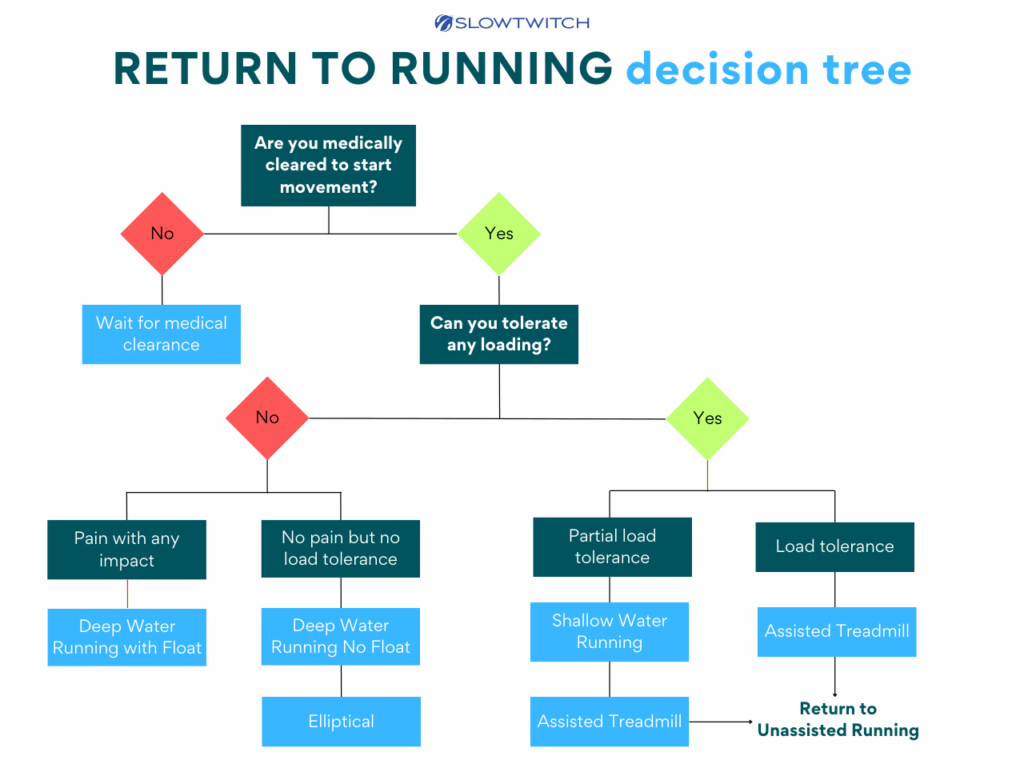
Return to Running Rehab Options
- Deep Water Running with Floatation
- Deep Water Running without Floatation
- Shallow Water Running
- Elliptical/Arc Trainer
- Assisted Treadmill–AlterG or Lever
After being hit by a car and needing two surgeries around my hip, along with general running injuries, I’ve personally used everything on this list to get back to running at one point or another. I’m the proud owner of a water running belt and a Lever and they are two tools I go back to time and time again. The one thing not on this list that is also highly recommended, however, is expert guidance. Understanding the tools available, and how to use them, is helpful, but having an expert— a coach, doctor, or physiotherapist— assist you making smart, objective decisions will help you recover faster and more safely. Never run through pain, and remember the fastest way back is to prioritize health.
Deep Water Running — With Flotation Aid
Deep water running with a float (like an aquafit belt) is your first port of call to return to running. Since it eliminates all weighted impact and load on the body, it’s the safest way to “run” when you’re recovering from an injury. While it’s a bit far removed from actual running, it still activates the hip flexion pattern of running–you’re literally going through the motions–and can still provide some aerobic work.
When to use it: Choose it when you can’t tolerate any loading on the injury site. Start slowly with the goal of mobility and range of motion before moving onto anything that resembles “cardio.”
What to do: To tolerance and adhering to any medical advice, start slowly with 10 to 20 minutes and experiment with cadence, core control and effort. Start to add intensity with short 10- to 20-second bursts, gradually building up to efforts of several minutes over a 30- to 60-minute session.
Deep Water Running — Without Flotation Aid
An obvious next step is to deep water run without any flotation aids. There is higher demand for hip and core stability since you have to keep yourself afloat, so it’s a safe progression that still keeps all weight and impact off the injury. You can also do a combination of deep water running with, and without, a float to gradually add challenge (and keep things interesting).
When to use it: A progression from deep water running with a float when you can handle the necessary core control and want more aerobic load, but still can’t tolerate impact.
What to do: Start by adding in unassisted time to your sessions with a float. For example, do all of your efforts without a floatation aid and gradually build up to fully unassisted sessions.
Shallow Water Running
If you can tolerate partial weight-bearing, shallow water running (or an underwater treadmill) is a great way to introduce some load. You’ll be able to run more normally than deep water running since you’ll be striking the ground and activating a more usual mechanic pattern. Depending on the water situation, you can control the amount of weight by controlling your depth. Run shoulder-deep in water and you’ll have less load than running hip-deep. It can also be combined with some deep water running so you can progress in a controlled and safe fashion.
Even if you are running on land, shallow water running can also be used to off-load training stress, especially when you’re building back up from an injury or if you’re chronically injured.
When to use it: Before running on land or after deep water running to introduce impact in a controlled progression.
What to do: Similar to starting deep water running, start adding ground contact time and load gradually, for example 8 x 15-20 seconds at shoulder-depth with 2 minutes of deep water running in between. Build up ground contact before adding load with less depth.
Elliptical / Arc Trainer
If you can’t tolerate impact but can handle the motion of running, an elliptical or arc trainer is a great option. While it still has lower specificity than actual land running, it does feel closer to running than being in the water and provides aerobic stimulus without the risk of impact.
When to use it: Before running on land or after water running, or later in conjunction with both later in the recovery progression to control loading.
What to do: Start slow and to tolerance, building up from 10 to 20 minutes to up to an hour. Gradually bring in some intensity for aerobic stimulus, starting with, for example, 8 x 1 minute at higher effort with 90 seconds easy in between. If your gym has both ellipticals and treadmills, you can toggle between them to load and off-load when you start adding full-weight impact.
Assisted Treadmill Running
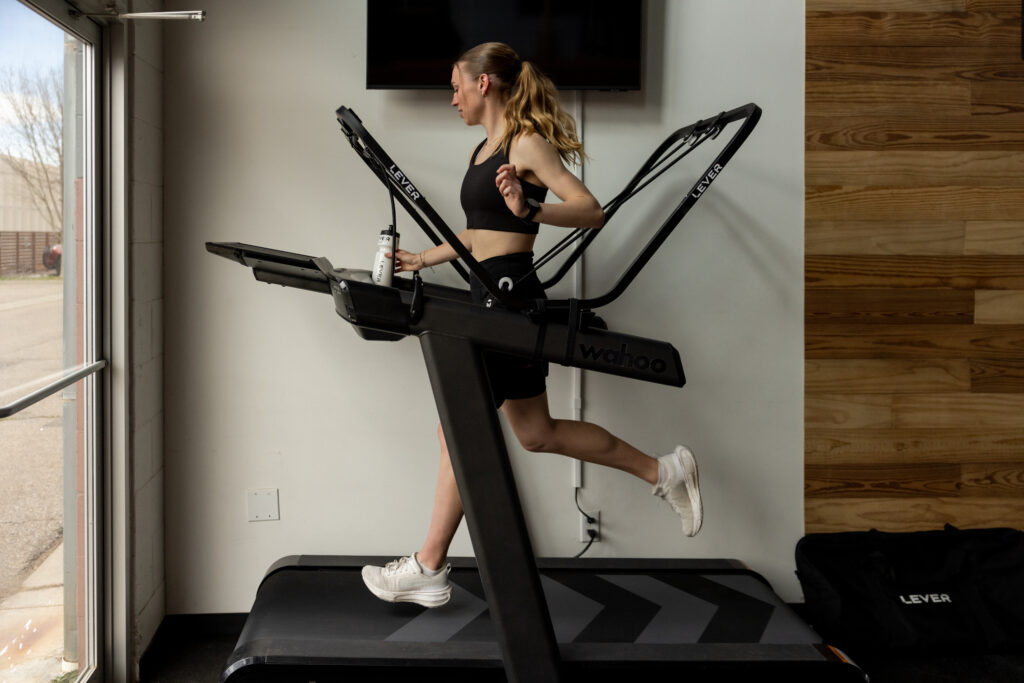
If you’re ready to start the return-to-run phase with ground loading, assisted treadmill running is a luxury option, but well used by the pros for good reason. Assisted treadmill running allows you to run normally, but with reduced weight to alleviate load on the injured area. It’s a safer way to return to running than just heading back outside and, since the mechanics are basically the same, it can also alleviate some mental stress associated with injury–you’ll feel like you’re running, even if it’s at 50% of your body weight.
The big problem with assisted treadmill running is cost and access. AlterG’s are hard to come by and can cost about $50 a session. A Lever running harness is much cheaper, in the long run, but a significant investment upfront–and you still need a treadmill. But, setting this aside, both are fantastic recovery modalities.
When do do it: When you can tolerate some loading and normal running mechanics and are ready to build back up to unassisted running. Can also be used for injury prevention/load control in regular training.
What to do: Start with the maximum weight off to test tolerance. Gradually introduce load with timed intervals, such as 6 x 30 seconds of partial load with 2 minutes full assist or walk in between, and progress slowly. Always aim to completely not feel your injury.
Lever
If you’ve never heard of or seen a Lever, it’s a running harness for a treadmill. It kind of looks like a baby jolly jumper but for adults–and it’s an incredible piece of equipment (that in my opinion feels pretty close to an AlterG). The metal frame easily attaches to any treadmill and then a heavy-duty elastic rope connected to the frame is threaded through loops on a pair of special shorts worn by the runner. The elastic is then reattached to the frame through a one-way carabiner where you can control the amount of support by how much rope you pull through. You can take up to 45 lbs (24 kg) off your body weight and work your way back up to full weight. It’s also a great tool to use even if you aren’t injured to help manage the stress on your body and prevent injury, something Flora Duffy, Laura Philipp, Marjolaine Pierré and Paula Findlay all do.
The basic model costs about $1,000 so it’s a significant investment, but if you’re a life-long runner, you’ll always be glad you have it when niggles or injuries pop up. While it’s less precise than an AlterG, it’s far cheaper in the long term and more accessible. It packs up relatively small and it’s even light enough to travel with.
AlterG
Designed by NASA, the AlterG is an anti-gravity treadmill that can take off 100% body weight while you run. A plastic “bubble” encapsulates the treadmill and the runner from waist-down to make a pressurized chamber where body weight can be taken off in 1% increments.
Since an AlterG costs $35,000 or more, access is found through rehabilitation or performance centres for a fee, but are often simply unavailable.
Return to Run–Not a Get Out of Jail Free
Using some or a combination of the options above will get you running outside sooner, but it’s imperative to understand that you will still need to progress into fully loaded running with care. Just because you can run 30 minutes pain free on the Lever at 90% body weight doesn’t mean you can do that outside right away. You can put yourself in the best possible position but, no matter what, natural running will hit your body differently; so, proceed with care and a structured return to run program.




I’ve used the Alter G to return to running after my last two ankle surgeries. In my opinion, it was definitely useful, but I had to go to my physical therapist to have access
I can give an enthusiastic endorsement for the Lever System; I bought one for my home treadmill for use about 30 days post Achilles surgery. Despite being pretty low-tech, I’ve found its design to be completely effective as a bridge to getting back to running again. I could go on but the shorthand version is, if you don’t have access to an Alter-G, it’s the next best thing. 90 days on, I’m using the Lever/treadmill for about half my weekly running volume.
I fear I’m headed that direction with another stress fracture in my foot, but maybe I’m just being paranoid.
My max pool depth is 4’6” so definitely no deep water or even your definition of shallow water. I do have access to an elliptical so I guess that would be my other option.
I’ve tried aqua jogging with/without a belt before, but I felt more like I was doggie paddling than running. I will definitely be looking into a lever in the future to help with my ongoing struggle with rheumatoid arthritis. Thanks!
Yeah same here- at least at my old gym which had a pool; the one I go to now, does not
But then again, I’m no longer ‘triathlete-ing’ so that’s no worry for me; neither am I injured (at the moment)
Good luck rehabbing and returning, all