


Opinion: L.A. Marathon Organizers Made a Joke of Their Race
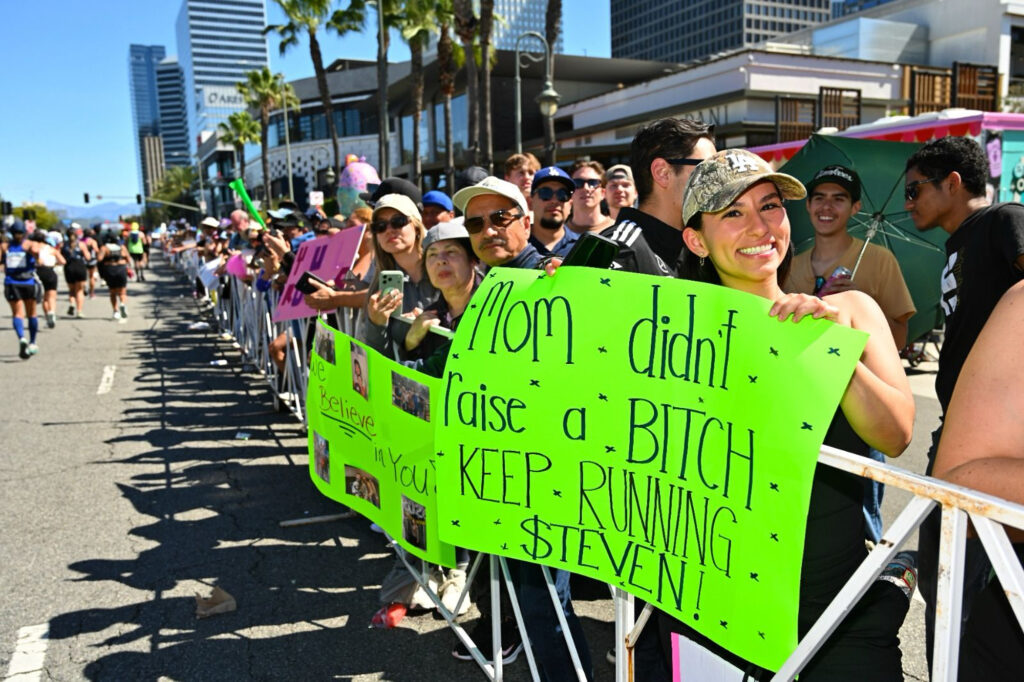
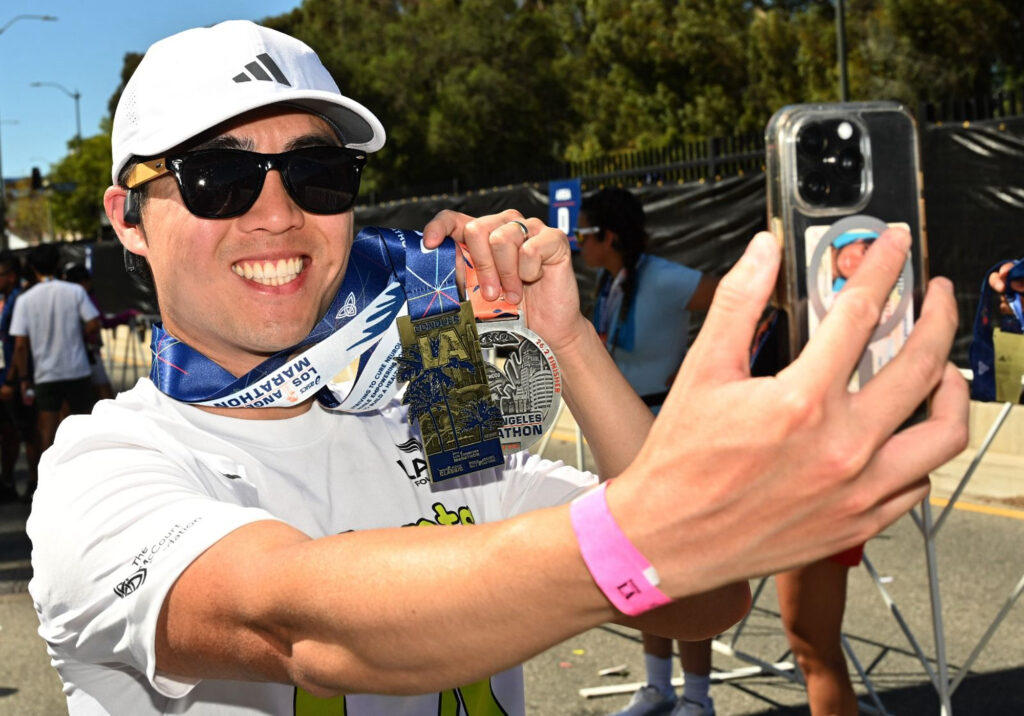
The Los Angeles Marathon took place on Sunday, but with a twist: due to expected high temperatures, instead of requiring athletes to run all 26.2 miles of the race course to get a medal, organizers told runners they could tap out at mile 18 if they were “having a tough day.” I totally understand wanting to put an emphasis on athlete safety, but I’m not alone in thinking that awarding medals to people withdrawing after 18 miles was the wrong way to go about it. The issue with this ruling is that it left runners who called it a day early with the same medals as those who pushed through for the final eight miles to the real finish line. Is this where we are at when it comes to achieving hard things? This is unheard of in marathon running, and it has turned the race into a bit of a joke on running and non-running social media alike ever since the news broke.
(We reached out to the L.A. Marathon race organizers and didn’t receive comment. We will update it with any further information if provided.)
Justice for Kamau
The two pro races were thrilling, but for different reasons. In the women’s race, spectators got to see American Priscah Cherono lay down a tremendous solo effort as she ran alone right from the gun, extending her lead all race long until she eventually took the win in 2:25:20, more than two minutes ahead of second place. In the men’s race, it was a much closer battle, with Kenya’s Michael Kimani Kamau leading by close to two minutes before hitting the wall hard and ultimately being passed by American Nathan Martin at the line.
While Kamau was caught at the 26.2-mile finish line, I believe he should make a formal dispute with race officials, because he earned the win fair and square. You may be wondering how that’s possible if he was beaten to the tape, but you clearly don’t know about Kamau’s mile 18 split. When he reached this section of the race — the first of two official finish lines — he was well and clear of Martin, a whopping 100 seconds up the road from the American. It was only over the final three to four miles that Kamau started to fade, but — again — that was far past that 18-mile cut-off.
In addition to claiming himself to be the race winner, maybe Kamau should now pronounce that he is the new marathon world record holder. His exact 18-mile split isn’t available online, but he passed through 30K (18.6 miles) in 1:31:54. Even with the extra 0.6 miles of running, what would have been his finishing split if he had opted out of the race at that point was more than 28 minutes faster than the current world record of 2:00:35.
I know Kamau chose not to take the turn to run down the early finishing chute, but does he have a case that he won the race? It’s not his fault that temperatures were unseasonably warm in L.A. on Sunday, so he should have had the chance to take advantage of the mile 18 finish just like the rest of the runners who struggled in the elements.
The Point of Racing

That take is of course a joke, but in all seriousness, the decision by race organizers to give runners an out at 18 miles is laughable. The point of racing a marathon — or a 5K, 10K, triathlon or any type of endurance race — is not to finish, but rather to try to finish. The point is the challenge, not the accomplishment, and sometimes people fail at these challenges.
Sure, the goal for each athlete who lines up at the start line on race day is to finish, but it is also to reach the finish after pushing through the many challenges they will face from mile 1 to mile 26. Crossing the finish line of a marathon is so sweet because you put in months of hard work to be able to run that distance and overcome those challenges.
Every athlete who starts a race knows they may not make it to the finish line for any number of reasons. It’s that uncertainty — that possibility that you may not finish — that makes the race a worthy challenge. If you entered a race knowing that there was the option to tap out early, it would cheapen the entire affair.
Athlete Safety

It is especially ridiculous, in my opinion, to allow people to call themselves finishers after 18 miles. This is generally where everyone says the race truly begins. It’s right around 18 to 22 miles when athletes start hitting the wall and when the race goes from more of a physical battle to primarily a mental one. Yes, race organizers gave athletes this option in the name of safety, and while that is incredibly important, it still diminishes what it meant to be a finisher of the L.A. Marathon in 2026.
Organizers likely looked to past marathons where heat has been a real factor. Take the 2007 Chicago Marathon. That day saw extremely high temperatures, leading to athletes drinking far more water than anticipated and running the aid stations dry well before the last runners were finishing up. Because of this and the brutal heat, more than 300 people were hospitalized and race officials were forced to come up with a mid-race cut-off point on the spot, stopping athletes and telling them their day of racing was over earlier than planned.
That was a catastrophe, and no doubt one that every race since has wanted to avoid. If they expected to run out of water or thought that they would have dozens or hundreds of athletes collapsing after mile 18 of the run, there were better routes to take than gifting people finishers’ medals eight miles early.
This is not to say running all 26.2 miles trumps athlete safety. It would have been fair and wise to encourage athletes to take an early exit at mile 18, but it’s backwards to offer them a finishers’ medal for doing so. There were other options that could have been taken instead.
What Other Options?
There are hot races all over the world. Some have early start times well before the sun rises to get athletes off the course before the highest temperatures hit. Other events will shorten the course if it’s deemed too dangerous to allow athletes to tackle the entire thing. In 2021, for example, Minnesota’s Grandma’s Marathon was shortened to 18 miles due to heat issues. In triathlon, swims are cancelled or shortened quite often, whether it’s due to low water temperatures or rough conditions.
The difference between these calls and the one made by L.A. organizers is that the other examples are all-encompassing and impact every athlete the same. Everyone starts the Bangkok Marathon in Thailand at 12:30 a.m. to avoid the heat of the sun. Everybody had to skip the swim at IRONMAN 70.3 Melbourne last November. (Even though it was likely too late for L.A. organizers to change the start time so it was earlier in the morning, there was always the option to shorten the race for everyone to ensure all athletes were out of the sun before it reached peak heat.)
Are people perhaps annoyed with a midnight start for a marathon or a triathlon that turns into a bike-run race? Yes, of course. But at least these calls take athlete safety into account while ensuring that everyone who receives a medal at these events will have accomplished the same thing by reaching the same finish line under the same conditions.
The L.A. Marathon website says, “There is no shame in making a smart decision for your body,” and that’s true. No one should feel bad about throwing in the towel early in a race. I personally think there is at least a bit of shame, however, in taking a marathon medal after running only 18 miles, and there is definitely shame in offering that option to athletes at your race.
Tags:
OpinionrunRelated Articles:



Continue the discussion at forum.slowtwitch.com
65 more replies



And for context, extreme high temperatures for Los Angeles = Kona race morning LOW temps.
All relative I guess.
You missed this part, unless you meant to hit only the “18 mile finish” bullet
Maybe I’m not reading well but it looks like your only issue with it is that they get a finisher medal. But why do you care about it? Unless you’re a pro I assume you just do it for fun. Someone elses medal doesn’t take anything away from your own achievement.
Hear, hear!
Key part must be mentioned in the article!
Yes never mind the nonsense of the winner pulling off at mile 18 and winning, how about them sending him off course just before the finish which actually cost him the “actual” win?? That’s the part of the story you left out, kind an important one too..
Agree with you 100%. I am only one person and I am sure LA Marathon couldn’t care less, but gotta vote my wallet. Won’t do the race. Plus the boilerplate corporate pablum “athlete safety is our number one priority, blah blah blah.’
If someone wants to call themselves a finisher with 18 miles and get a medal I dont care. Go for it, it doesnt effect the competitive ag or pro racing in the slightest. I’m especially all for people finishing at 18 doing the additional 8.2 would have injured them.
It kinda tells you who’s more interested in the medal, and who’s more interested in the finish
I’d be interested to see exactly how many people took the “Early Retirement Package” if that’s trackable/traceable?
Solution would have been to give half marathon medal, which they also had a charity jalf
I see where you’re coming from but unfortunately, the race only has so many half marathon medals. They can’t know in advance how many to purchase to give out to people who decide to quit after a mile 18 of the marathon.
I run a race every year that currently runs a half a full and an ultra 50 K. People from the fall and ultra often times will drop down, but the race has to award them of medal which they registered for to ensure all the half people get one.
This sounds like a job for Marathon Investigation
If there’s a timing mat that these people missed, it would be trivially easy.
Clearly these are people who require immediate physical satisfaction
How about this “if you decide to drop at mile 18, you will be credited for only your HM time. A Los Angeles Half Marathon Finisher medal will be delivered to you at a later date. In lieu of HM Finisher medal, you may elect that a donation of $ be made to < insert charity name here >”
I don’t know; no matter what, some people will drop out, and get pissy to the Race Organization about it
Your post is an interesting combination of ignorance, arrogance, insecurity and naivety.
Risk management is a huge priority for race organizers. People will do some stupid things for a cheap medal and blaming organizers for recognizing reality isn’t something we should condemn.
before unloading on them, did you check with their insurance carrier to see if made stipulations on coverage based on temperature? Did you talk to an attorney to assess what liability they would be exposing themselves to if they made no attempt to mitigate potential harm?
Nah, who has time to consider the reality of the situation. We’ve go a race to cancel, where’s my pitchfork!