
Nike is Betting Big on Trail With a Revamped ACG
It is safe to say that trail running, as a business, is enjoying some time in the sunshine at the moment. You don’t need to look much further than the massive celebration that was the UTMB World Series Finals in Chamonix, France late last month, with over 10,000 athletes covering eight different distances across the week. Races are selling out faster than race producers can pop them up. Since 2023, the U.S. trail running segment has grown by over three million participants, to over 17.2 million entries.
Where there are runners, there must also be products. Globally, trail running is worth just under $10 billion USD, with almost two-thirds of that market in North America. That makes trail shoes about a sixth of the overall running shoe marketplace globally – and a category where runners increasingly expect the same level of innovation they’ve come to rely on for the road.
That’s exactly where Nike is turning its attention. Nike has long led the performance road footwear category, especially with its innovative line-up of racing shoes, and now the brand is bringing that same approach back to the trails. It’s a fitting return, given how pivotal Nike’s ACG (All Conditions Gear) line was to making the brand successful in the first place.
The History of ACG: Founding and Crossover Appeal
ACG had a long gestation period at Nike. The idea was sparked in 1978 by a trip by two American climbers to K2. Rick Ridgeway and John Roskelley hiked the 110-mile long approach to base camp that year, and they each used a pair of Nike’s Long Distance Vector (LDV) — it essentially the evolution of the famous Waffle Racer. Though the shoes were absolutely not meant for the type of terrain that the pair put them through on their way to K2 base camp, Ridgeway and Roskelley found that the LDV was far more comfortable and breathable than traditional hiking boots.
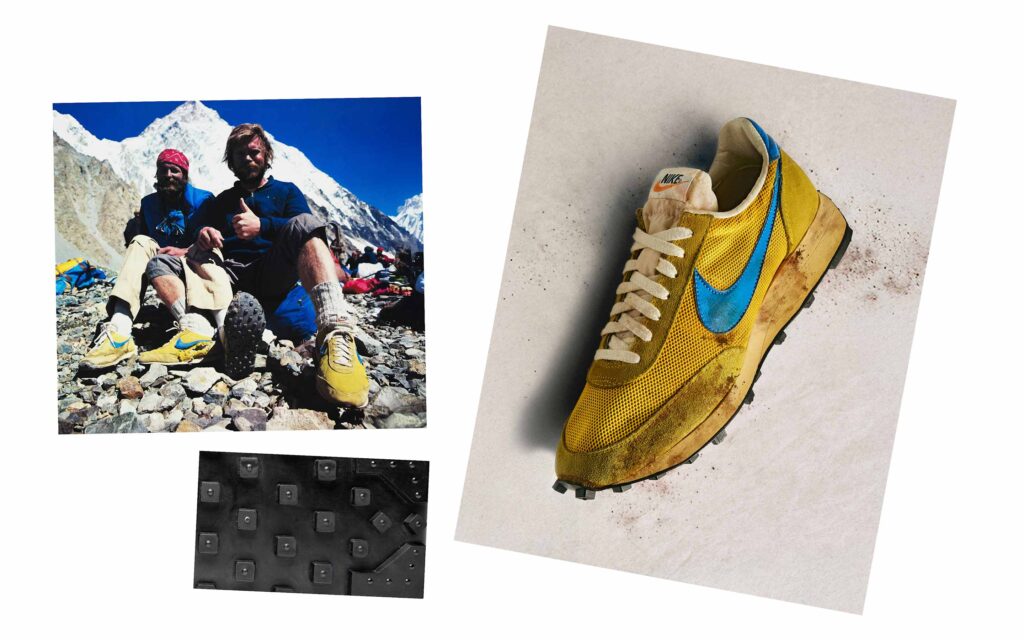
Following their trip, they mailed their shoes back to Nike with a list of feature requests. Chief among them: a grippier, tougher outsole and a more rugged upper that retained the lighter weight, flexibility, and breathability that the LDV’s had to offer. To Nike’s credit, rather than rebuffing the feedback, they took the notes as a challenge to reimagine their road shoes for the unpaved. Nike began dripping out hiking shoes over the next couple of years, and in 1984, Nike introduced the Escape trail running shoe. The person in charge of that launch? Future chief executive officer Mark Parker.
In 1989, all of these various projects came under one roof: ACG. And ACG wasn’t just footwear. It was a fully integrated product line of footwear, apparel, and accessories. It took Nike’s core principles at the time of performance and technical excellence and applied them to the trails. And through the early 1990s, it worked: Nike captured swaths of market share with products that were tough enough for the mountains, yet still maintained a classic Nike aesthetic.
That aesthetic has meant that sometimes, ACG has moved from the mountains to the runways, too. There’s been collaborations with Supreme multiple times over the years. This year, ACG tied up with Cactus Plant Flea Market for a collection of apparel. Online hype grew with Travis Scott, Drake, Lil Yachty, and Yeat all wearing the collection pre-release.
ACG Heads Back to the Mountains: New Shoes and New Elite Team
The first signal that Nike was readying itself to make ACG lean back into its old marketing slogan of “all conditions means all conditions” came this spring with the release of the ACG Ultrafly 2.
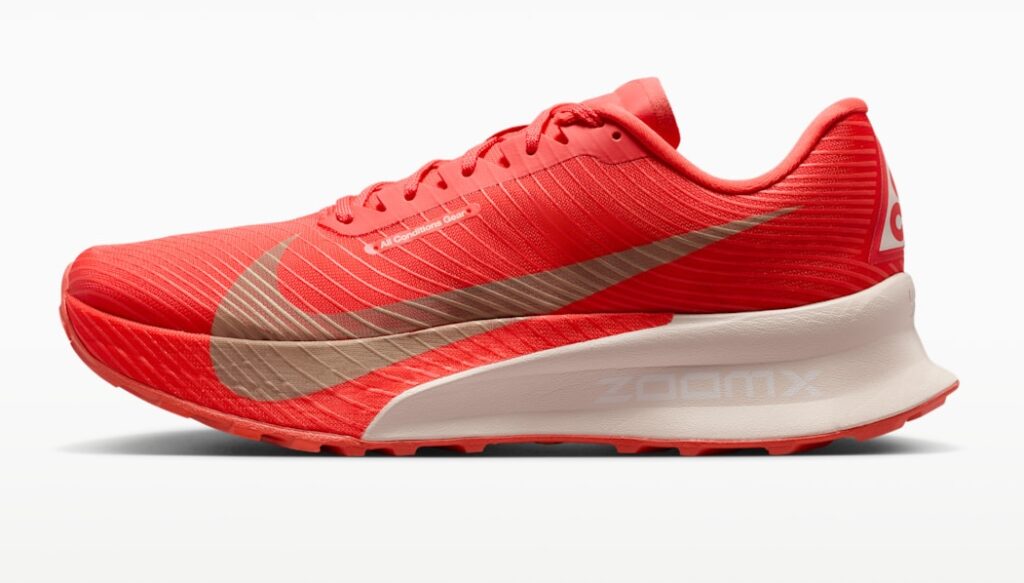
As you can probably guess by the name, it’s the trail carbon-plated racer akin to the Alphafly and Vaporfly for the road. It takes ZoomX foam and pairs it with a specifically constructed plate that is less rigid than the road counterparts — critical for being able to head uphill in these shoes. It also gets a full-contact Vibram outsole, adding plenty of platform stability. As you’d expect from a carbon racer, it’s not cheap — $260 USD.
But it’s not just a racing shoe line-up. There’s ACG footwear for just about everybody. There’s a trail specific version of the Pegasus road shoe, the long-running Wildhorse has seen updates, and a brand new Zegama Trail. The Zegama is Nike’s take on the maximal cushioning side of trail efforts. If you think of it as a max-cushion cruiser built for the trail, you’re in the right ballpark. There’s a higher ankle cuff, a Vibram outsole, and a boatload of midsole foam. It’s not super light — but it’s also not trying to be. (Interesting note: Nike is now publishing weights for a US men’s size 10, which is anywhere from a half to a full size larger than typical sample size published weights.)
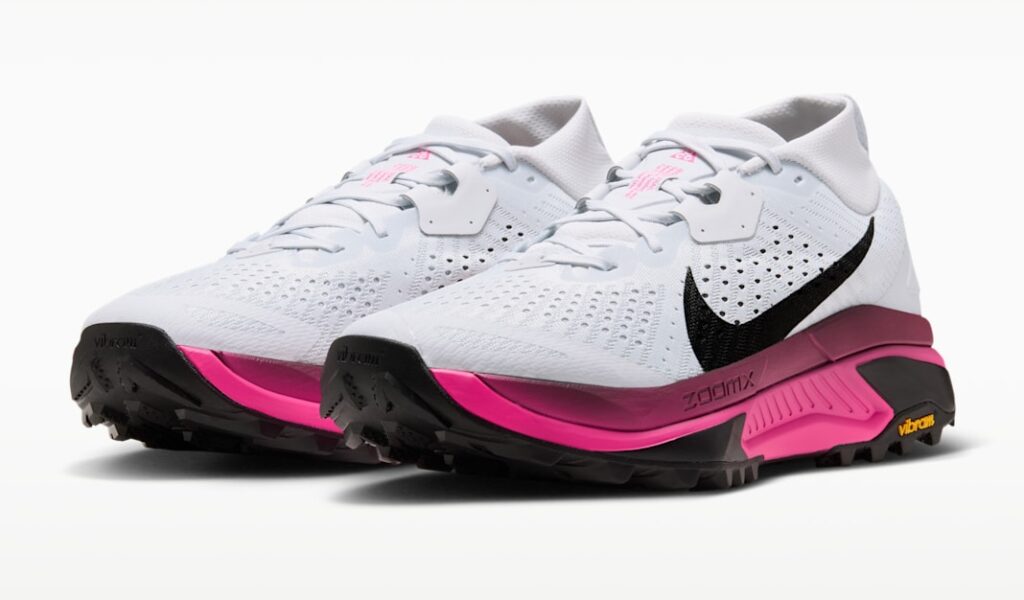
Nike has also teased a forthcoming super shoe for the trail called Picklejus, which will release in late 2027. Announced during the UTMB World Series, the company says that the PIcklejus “represents a complete mountain-running system, including the first co-molded, dual-density supercritical foam platform for trail running” and is “developed to balance uphill efficiency, downhill protection and all-condition confidence.” It’s the first ACG shoe to have been developed through Nike’s Sport Research Lab — where some of Nike’s greatest innovations over the last two decades have come out of. There’s no plate — the firmer perimeter stability ring acts as the plate instead, allowing the two densities of foam to act as an integrated platform while allowing for the flexibility uphill running demands.
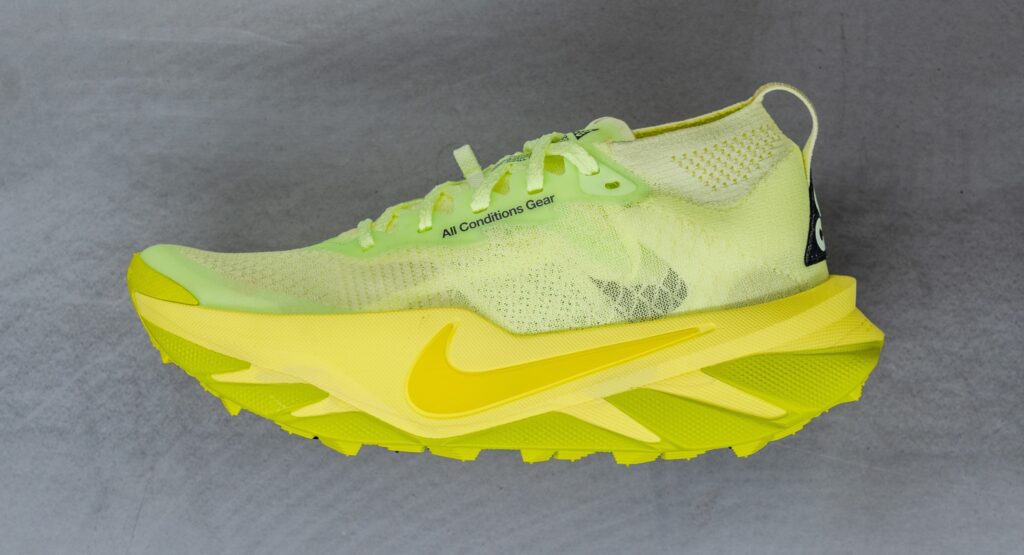
True to its heritage, though, the ACG line isn’t just about shoes. There’s a full assortment of apparel and accessories that go along with it. And by full, I mean full: there are tops that are full of ventilation, those with UV protection, and waterproof ones for wet days. Shorts, tights, and pants? Check, check, and check. There are also running packs, sunglasses, and hats to meet whatever terrain and weather you might find out on the trails.
Nike has also gone deep on its racing roster with the All Conditions Racing Department. Nike has 33 athletes within its trail running racing stable. Featured names include 2025 Western States champion and 2026 UTMB Mont-Blanc bronze medalist Caleb Olson and 2026 UTMB OCC race winner Lauren Gregory. It’s a roster that has won races all over the globe, and gives ACG the opportunity to put new product to the test before hitting the marketplace.
For instance, on Picklejus, All Conditions Racing Department team member Shea Aquilano was instrumental to development and said of the end result, “The thing I love most about Picklejus is that it’s one less thing to think about. I know my feet and legs are taken care of, which frees me up to focus on my race, the terrain and the challenge in front of me.”
ACG is Critical to Nike’s Turnaround Strategy
The sub-brand is part of Nike’s overall re-focus on its performance footwear and re-establishing critical retail relationships. The Nike of the late 2010s and early 2020s became overly focused on direct-to-consumer channels and relying on its extensive retro catalog. That’s only effective to a point. But Nike has slowly ceded ground to start-ups across the retail network, and it has effectively reversed course.
ACG is one area where Nike is going back to its roots — focusing on performance above all else, and ensuring that it meets the demands of its athletes. It’s also investing on supporting specialty retail channel partners. Those channels, and that word of mouth, is what helped turn Nike into the global giant it is today. Time will tell just how successful ACG was to Nike’s efforts to bring it back to the forefront.
Tags:
Caleb OlsonNikeRun ShoesTrail RunningRelated Articles:
Continue the discussion at forum.slowtwitch.com
6 more replies





You have me on “Ignore?”
J/K
And French Politicians want to significantly reduce the volume of athletes and number of races UTMB is saddling Chamonix with. Apparently it is not just Ironman Brand wearing out its welcome…yes I know, UTMB is partnered with Ironman.
“Welcome” is being generous
From what I’ve read & seen online (I wasn’t there, of course) 2026 was the year when “where the fuck did all these fucking people come from?!!!” hit the tipping point in Chamonix
And those NIKE ACG AirFlow shirts owe a nod to Punk Rock icons
Mayor was quoted before UTMB, so it was before this year in his mind.
How in the world was the Radical Airflow line not brought up when it is the single hottest product line in trail running right now?
Because 2025 called and it wants its hottest product back.
No, seriously, Radical Airflow peaked in sales last year and wasn’t part of the ACG core relaunch that got put out this fall.
I mean it launched in 2026…
Nike has put it on Demi Vollering and Jannik Sinner so they seem to think it is relevant, but you are entitled to disagree.
FA25 launch. But I digress.
1980s Football Jerseys want their moment as Trailrunning tops.
They might not pair well with basketball shorts*
… but, I see where you’re coming from, yes!
as my Mom would say “let’s try it and see what happens”
.* we all say “Courtney’s basketball shorts,” but they actually look more like boardshorts, if you think about it
going back to its roots for sure.
the waffle is legendary
Dating myself - I had a few pairs of the original Nike LD - 1000’s back in the late 1970’s as my daily training shoes when I was running in High School. They were the next big iteration from the original Nike Waffle Trainers. They used that picture from the K2 Base Camp on some Nike Print advertising of the day! https://www.overkillshop.com/blogs/news/sneaker-history-nike-ld-1000
Indeed - Trail/Ultra is going through MASSIVE growth. I had the opportunity of interacting with a number of Industry Leaders including some key people from Nike/ACG, when I was Emceeing the main Speakers Stage at TrailCon - https://trailconference.com/ It’s really blowing up right now!
I saw a billboard a couple of weeks ago from REI that read
It’s not running
It’s trail running
< didn’t get a pic, sorry >
On track for over 20 million entries in 2026. Huge swath of participation.
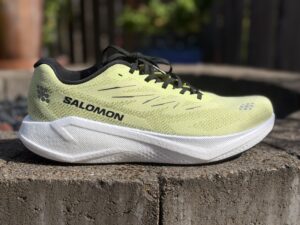
That’s why IMO the two most important product lines are ACG and the Salomon “gravel” shoes. They’re the ones most likely to convert someone dabbling in off-road into actually trying trail seriously. And then they might bridge elsewhere to other product lines, or they build big brand loyalty to these two lines.