
Diadora’s Gara Carbon 3 is an Almost Perfect IRONMAN Racing Shoe
As I sit down to write this, I just received an email from IRONMAN’s customer marketing team, reminding me that it’s been nine years since I finished my first IRONMAN Lake Placid. It’s been fifteen years since I’ve been racing triathlon. And though my batting average at these things is atrocious, I’m giving it another go this season because, well, it’s part of who I am.
But I came into the sport through running. Really, I came into the sport via retail. This year marks 20 years since I entered the sporting goods industry, walking into City Sports on Commonwealth Avenue by Boston University as a way to pay for books and beer while at Emerson College. It didn’t take long before I was hooked. I loved how products evolved, how it meant you needed to learn something different each month, how that might mean something different for one customer or another.
That job eventually paved the road to me being here at Slowtwitch. And my first love will always be running. When given a choice, I’d rather try to get a run in than anything else. I always enjoy reviewing shoes. And I’m fascinated by the research on where things are headed with what is now being dubbed by the medical industry as “advanced footwear technology” — otherwise known as the carbon-plated racing market.
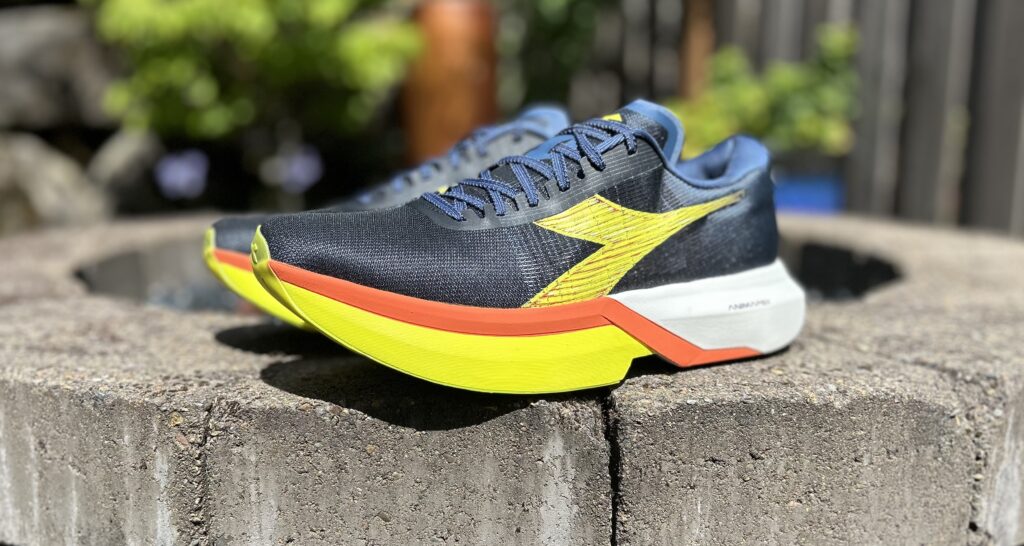
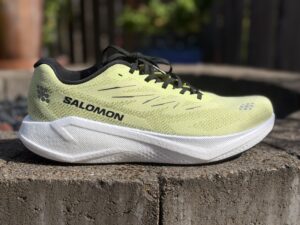
It’s into that market that Diadora has released the third generation version of its racing shoe — the Gara Carbon 3. It’s an awfully compelling package for a carbon-racer, with all of the ingredients there to make a fast, fun shoe. And it gets almost all of the ingredients right to make it almost perfect for triathlon racing.
Almost.
The Tech Stuff
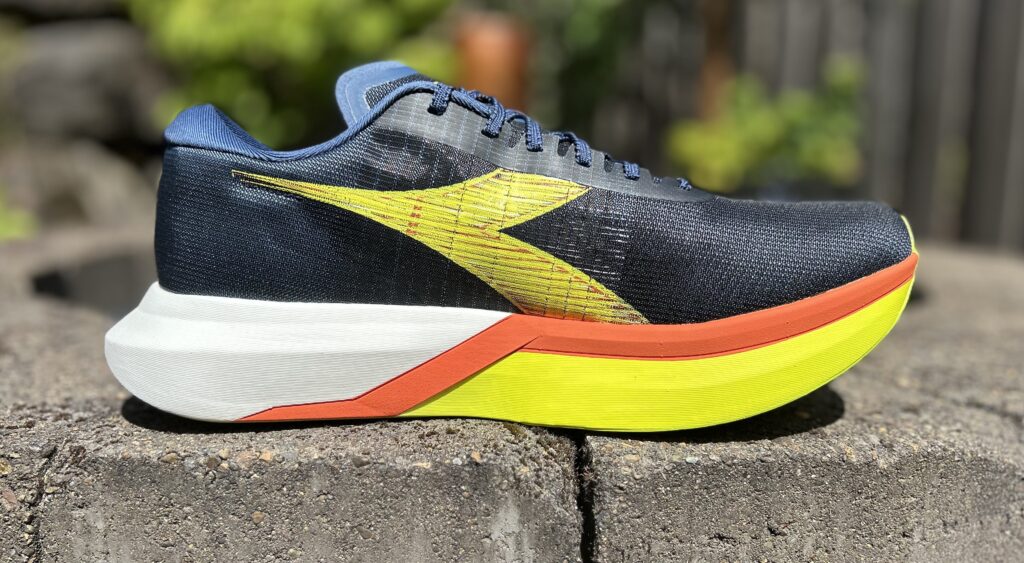
By now, you should probably have it down pat as to what key ingredients are necessary for advanced footwear technology. You need a carbon-fiber plate. You need a lightweight and responsive foam. And you need to sit under the 40 millimeter maximum stack height permitted by World Athletics, because what on earth is the point of having one of these shoes if it’s then technically not legal to race in?
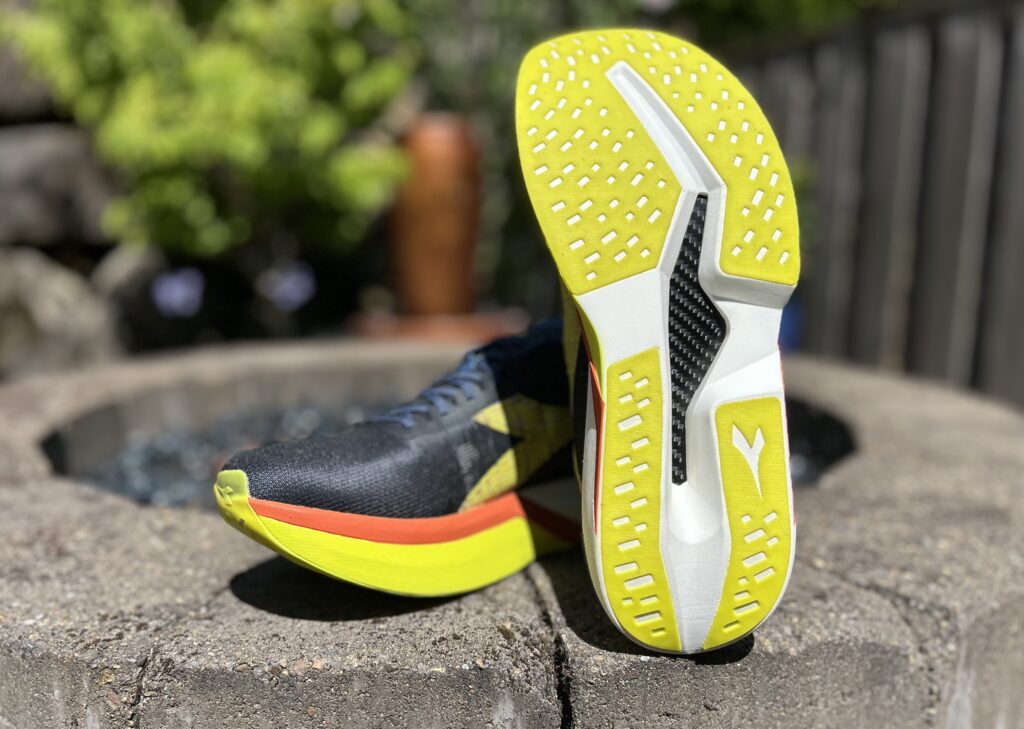
The carbon part of the Gara Carbon 3’s name comes from its LEVA Carbon plate. It runs the full length of the shoe, though it’s difficult to see that anywhere on the shoe minus in the mid foot cut-out on the outsole. The biggest change that Diadora made in this generation of shoe comes in that carbon plate. Instead of being flat throughout its geometry, the new version has curvature directly underneath the metatarsophalangeal (MTP) joints in the foot. That’s where the long metatarsal bones meet up with your toes, essentially acting like the knuckles. Putting curvature here means that the shoe should be easier to flex and get to toe-off.
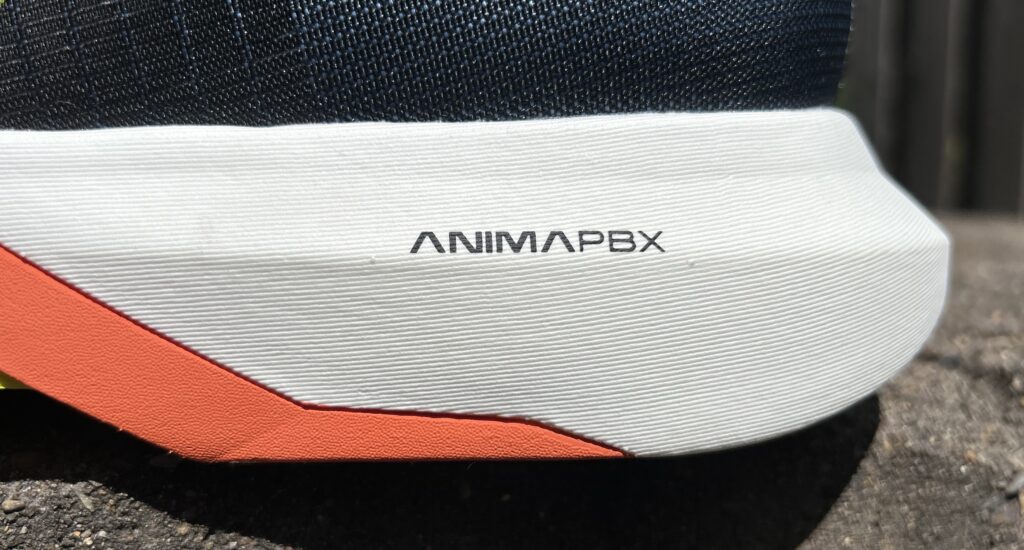
The theoretical drawback is that you wouldn’t get as much pop from the plate. To counteract that, Diadora also revised the midsole foam for the Gara Carbon 3. The ANIMA PBX midsole is Diadora’s take on supercritical foam, and it has gotten lighter over the prior generation, allegedly 40% lighter than before. According to Diadora, it’s also been engineered to provide 55% more energy return than before.
Some other changes come with the outsole. Diadora eschews traditional construction here. There’s not rubber, but instead TPU stamped into a tread pattern. It basically paints the perimeter of the sole, leaving a little exposed midsole in the center. There’s also a sizable gap in the midsole to the midfoot, which both saves some weight and also gives the shoe some room to deform laterally when running, theoretically improving cushioning.
Believe it or not, there’s also carbon in the upper. Diadora calls the upper on the Gara Carbon Matrix. It’s engineered to have zones of structured support in the midfoot, which is where it uses those carbon strands. Then there’s lightweight, relatively open mesh in other places, like the forefoot. It’s much more open and thinner to the touch than the prior iteration.
All of these changes add up, as a men’s size 10 weighs 7.2 ounces / 205 grams, a full ounce lighter than the prior generation of the shoe. My size 13’s appear to track to that, and feel much lighter than the Carbon 2.
Running in the Gara Carbon 3
The short version: there’s an awful lot to like here.
Let’s get one of the negatives out of the way: this is not a shoe that immediately feels like it should retail for $320 USD. The upper materials remind me a little bit of the original generation Nike Flyknit releases; they aren’t smooth. I don’t really foresee this shoe being worn sockless, if only because those carbon strands in the upper will probably rub your foot.
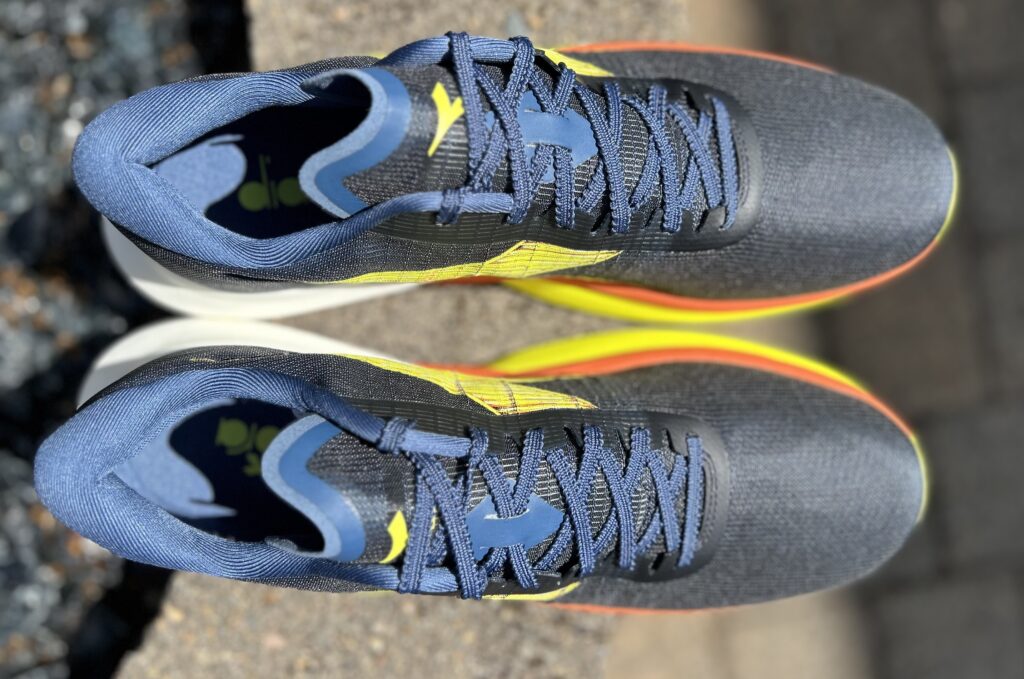
But, assuming that you’ve put a great pair of socks on, you’re treated to a pretty plush cushioning experience. You can feel that large cavity under the foot giving the shoe plenty of room to deform and then rebound. It’s a shoe that pretty adequately locks you into place once laced up. And it does feel quick.
That translates pretty quickly into the running experience. Unlike some other models in the marketplace, the Gara Carbon 3 is the odd racing shoe that is comfortable at any pace. It’s not like, say, a HOKA Cielo X1 that you have to be pushing the pace on for it to make sense. The Gara Carbon 3 is plenty happy just eating some miles up as it is when you ask it for more.
And, oh, what a good shoe when you start trying to activate that carbon plate with some speed. It is simultaneously smooth in transition and powerful. It’s bouncy without feeling like you’re trying to run on a trampoline. It’s a shoe that just wants you to please, keep moving forward, and stay right on this pace. That new geometry on the carbon fiber plate means that a shoe that was already good at running uphill is now even better at it, and it encourages a speedy turnover without resorting to some other strange geometric gimmicks to get the job done.
This shoe is also shockingly stable. It’s not a particularly wide platform underfoot; in fact, it probably skews a little on the narrow side overall. But because of how much midsole deformation that you get due to that cavernous carveout, it stays very well planted. It’s also a 5 millimeter offset shoe, so not a particularly aggressive ramp. Factored together, and it winds up being a shoe that feels lower slung than it actually is, all with plenty of cushioning for the miles you’ll tackle together.
Given that it’s so good at holding a variety of paces comfortably, and that it holds up well across whatever terrain you can throw at it, I think that makes it a pretty compelling IRONMAN racing shoe, barring one key issue: the traction stinks in the wet. It is far less grippy than the prior iteration of this shoe. When it’s wet, this gets squirrelly. So depending on the weather or just how many crushed wax cups are underfoot, I might be leaning in a slightly different direction.
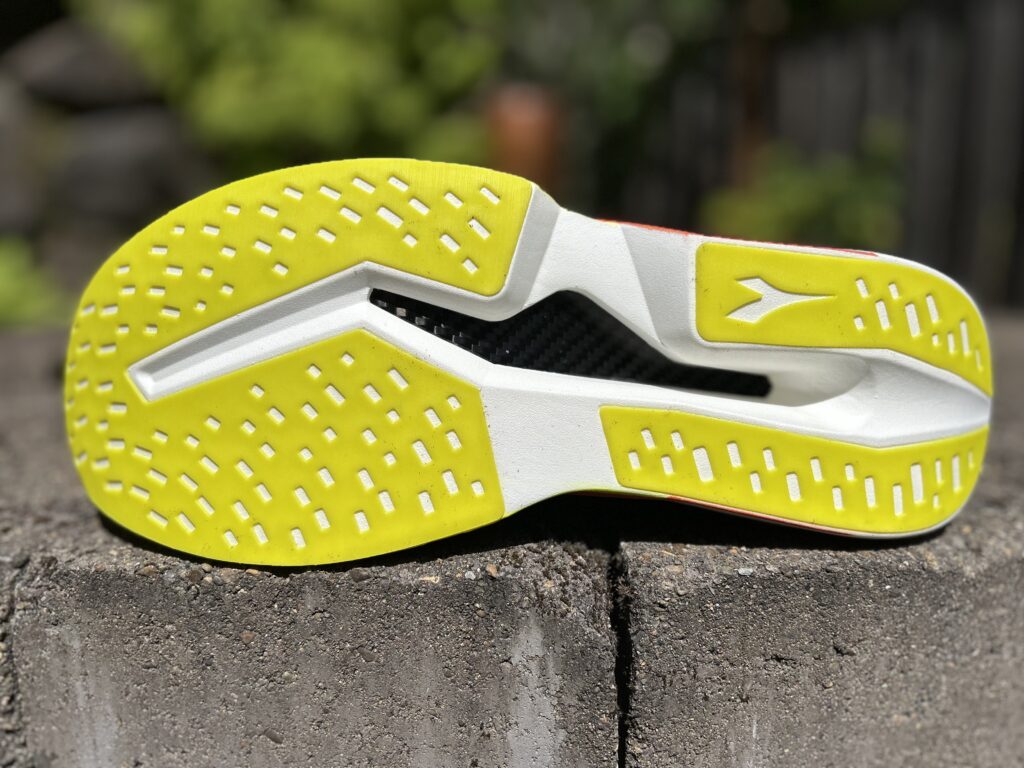
For example: I’ll probably use this shoe in October in California, as the turns there will likely be slow, and it’s also likely to be quite dry. But I wouldn’t, say, do this for a 70.3 run with a lot of curves in it, or if it looked like it was going to be wet that day. It’s a big drawback for a shoe that otherwise handles so much of what IRONMAN and 70.3 racing asks out of us.
And at $320, that’s a hard bargain to drive. Not when you have the Saucony Endorphin Pro at $240, or the HOKA Rocket X3 at $250. But those shoes come with their own compromises, too; the Endorphin Pro is higher offset and not as well cushioned, whereas the Rocket X3 is not as compliant in the forefoot. I just don’t know if it’s worth the $70-$80 premium for the Gara Carbon 3, unless you know the exact conditions your run will be in.
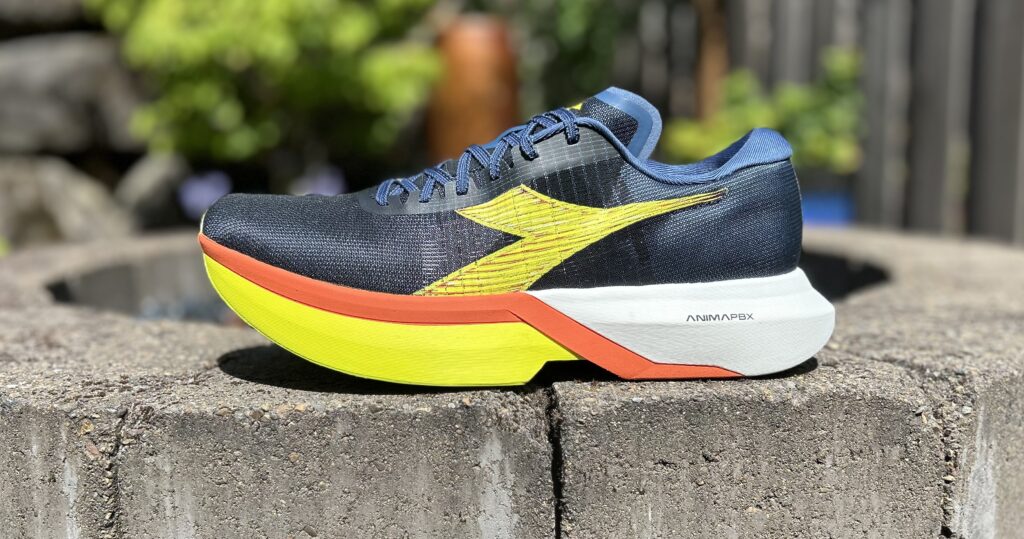
Diadora Gara Carbon 3
Price: $320 USD
Availability: Now
Unisex Sizing – Shop Here




320 USD for a shoe with no pronation support and a sole that does not work in the wet? If people buy this crap, inflation is earned.
The times, when a stability trainer like the Brooks Racer ST5 was 100 USD, held for 600K and did not give you an injury might be over, but here shittyfication has gone too far.
To be fair, I don’t think a shoe should be disqualified for being neutral.
But it would appear we are currently in a “damn the torpedoes, full speed ahead” weight chase for carbon shoes, which means compromises in certain places.
This shoe is, in my opinion, light years ahead of that old ST5, or the Saucony Fastwitch I wore in Boston in 2012 that the rubber bubbled away on the outsole because it was so hot. But it’s definitely limiting, which is a shame, as it’s so good at everything else. Ran in it again today (dry, just kinda “there” mileage) and it’s just silly fast. I respond well to carbon plated shoes, but this is up with the MetaSpeed series as some of the easiest “free” speed on the market.
Light years ahead for whom? The majority of customers (not sponsored athletes) number one priority should be injury prevention. The majority of athletes pronate. The majority of athletes pays for their shoes.
So speed, injury prevention and price are three factors most relevant. This shoe might nail one of these factors, so it is a fail for me.
We have tripled the price of running shoes while removing the number one feature (from 99% of shoes) that actually makes sense for most athletes, which is pronation support.
I thought this misconception died over a decade ago. If pronation doesn’t cause injury or other symptoms, it’s not an issue. Most people mildly pronate and don’t need stability shoes.
am I the only person that saw the price tag and is now more interested in giving this shoe a try?
No kidding. My first spendy running shoes the store did their fancy test and informed me I needed the stability shoes. It didn’t occur to me that’s possibly why I had some minor knee injury a few months later.
2005 called. It wants its take on pronation control devices back.
Here’s where this conversation has evolved to at this point: we have many shoes that feature a lot more platform stability than we did before, through a combination of overall ground contact patch, lower offset / ramps, deformation of foams on impact, etc. where traditional stability devices (e.g., dual density EVA posting) no longer make much sense. HOKA, for instance, is about as famous for having a shoe that’s “neutral” that is probably about as equivalent to running with guardrails on due to how far down in the shoe you sit.
The Gara Carbon might be neutral, but it’s plenty stable in the dry. Wide contact patch, 5mm drop. Far more friendly than, say, the MetaSpeed Sky Tokyo’s I have.
FWIW, if we’re just on the inflation number, a $100 shoe in 2012 would sit at $145 today. The most analogous shoe in Brooks line-up to that old ST5 racer would likely be the standard old Hyperion which retails for…$140.
Probably?
In all seriousness, it occupies a really weird space all by itself; it out-prices most of the shoes in the “mere mortal racing category” without getting to the absurd expense of the $500 Adidas. If it fits the best of the racers, wear it, but there’s some other really compelling options that will cost almost $100 less.
And I’d buy them in a heart best if I could get them.
The dirty little not so secret of running shoes is mfgs have figured out for a subset of buyers, if the shoe can actually deliver the time savings, an extra a couple hundred bucks is meaningless the context of a marathon build, trip costs to one of the majors. Plus it’s fun to run faster. Until something breaks…
I find the whole price elasticity of the Triathlon market fascinating. I have been in the sport a bit over 15 years and, like you, I started as a runner. For a long time price increases in running shoes were gradual and very seldom would you see a crazy increase in price that would be taken seriously by runners. But then the carbon plated shoes came out and runners started behaving like triathletes.
For some reason triathletes, as a community have always been very price elastic. They are wiling to pay top dollar for the new shiny thing. It still cracks me up every time I would be going up Snow Canyon on IMSTG (Full and 70.3, I did 7 in total) and I would pass guys and gals on bikes that were riding bikes that were at least $5K more expensive than mine. Almost always these guys would be significantly younger than me! All I could do is shake my head and cringe at what our fellow tri bros and sisters are willing to give up for the latest shiny thing.
I think that’s where we are with carbon shoes except that this crazy mentality has now infected runners. The performance difference between an Endorphin Elite 3, a Cielo X1 3.0 and these Diadora shoes for the average person is likely negligible but it’s amazing how many people are willing to pay $35-$50 more just for the promise of a “more stable ride” or a “high end, plush ride”.
You also see this clearly in the idiotic prices that are charged for gear at IM expos. Why are we so unaffected by price gouging? I don’t think it is simply that the average triathlete makes a lot of money. Most of the people in my club make average or even low wages but they fork out the money like crazy. Why are we, as a community, so (I wanted to say “gullible” but I’m not sure that is the correct word) unaffected by unreasonable pricing practices?
So, a couple of things here:
I think the introduction of the Vaporfly, and the very real time savings associated with it, launched the $250 racing shoe market. And, I mean, honestly? For good reason. They very much are an engineering marvel to get what we do out of them.
Most other shoes on the market, outside of the carbon plated racing sphere, have pretty much seen pricing tied to inflation. $100 shoes in 2012 are $140-$145 today, which is almost exactly the rate of inflation. We’ve only gotten dumb in the places it makes sense to be dumb.
Triathlon has almost always, from a purchasing perspective, been a front of the bellcurve demographic. Triathletes are typically less brand loyal and more likely to try new brands than anyone else. You can trace from the founding of QR to all of the bike brands (and wheel brands) to Newton shoes and HOKA and everything in between…we’ve almost always been towards the front of that.
I really like the Diadora’s. But I don’t think, if I were trying stuff on in a store, I’d have picked it knowing the price tag. Everyone’s mileage may vary on that.
If you went through 10+ pairs of ST5 and 2 pairs of Hyperions, you would not claim, that they are even remotely similar.Yes, they are in the same marketing category, but the are so different in actual running feel.
For my feet - and there are many runners like me - the ST5 was our chance at light and fast shoes. I can’t run the Hyperions, I can’t run carbon shoes, I can’t run neutral shoes. Because I get injured. As is btw. explained by the most successful triathlon coach in history.
So a few years ago Brooks offered me a top-shelve Kona winning super shoe for less than 100 USD. And boy, did I buy them. Now everybody offers neutral shoes and claims things, that can’t be replicated in the real world, at least not by me. Good for chiropractors. Good for the industry.
Never mind, I got slower anyway, I am back to stability trainers, I still pay less than 100 USD and the hold up even longer than the ST5.
And you buy your 300+ USD super shoes. No problem at all …Funny enough, the lack of pronation support seems to be more a function of money, if you have less than 150 USD to spend, there are still many, many stability shoes.So money and perceived speed seem to actually change the structure of the feet.