
Diadora’s Cellula 2 is a Throwback, No BS Training Shoe That Will Eat Up Mile After Mile
In an age of constant innovation and technological advancement in nearly every aspect of our lives, there’s a counter pull to more analog, “real” things. We’ve seen upticks in physical media forms like records and books; we saw the great push into outdoor recreation during COVID that had us all on Zoom meetings for days. It’s likely in part thanks to nostalgia, as we collectively yearn for a so-called simpler time (even though that simpler time was an evolution of whatever came before it).
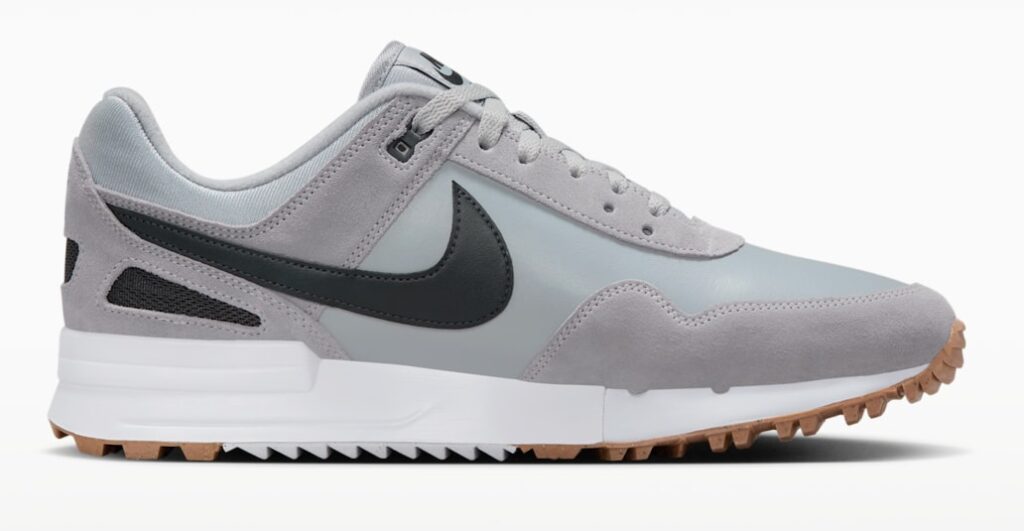
At any rate, we see this with the products we use for training and racing, too. There’s entire product ecosystems for vintage bikes, for instance. (We’ll leave aside the Great Wheel and Tire Battle as its own can of worms.) Nike is perhaps the greatest example for this, with retro versions of classic running shoes permeating across categories from lifestyle to golf.
It shouldn’t come as a surprise that we’re probably starting to see that pushback with the traditional running shoe market (as opposed to just the retro side). We have so many shoes with plates out there, whether carbon or nylon. We will soon have shoes that are actively measuring impact and load to then give coaching advice. It’s becoming a lot. Overwhelming, in some cases, if I’m being honest. And I do this for a living!
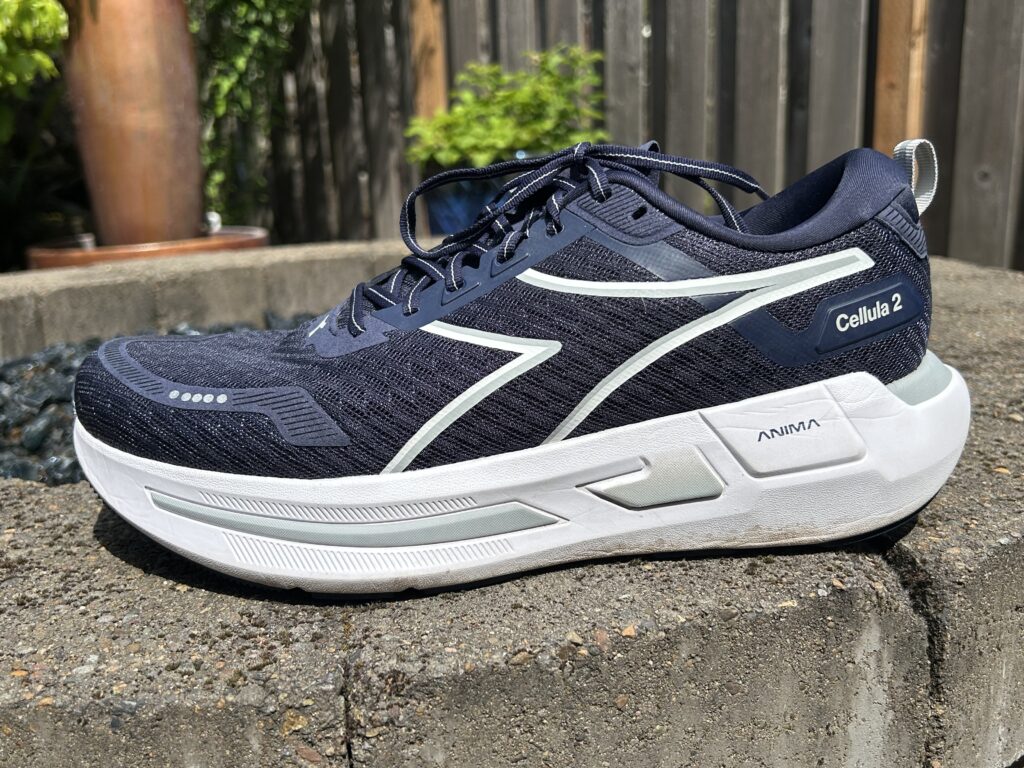
It’s in that context that I’ve had a pair of Diadora Cellula 2 shoes in the wear testing rotation. There is no plate. There’s nothing magical about the foam that’s going to suddenly make you faster, and the real promise in the marketing materials on the shoe is focused on comfort and fatigue instead of speed. It’s a no bullshit, somewhat simple (at least in modern times) running shoe that’s meant to be used for lots of miles.
But is it special? Yes. And no.
The Tech Stuff: Proprietary Foam, Of Course
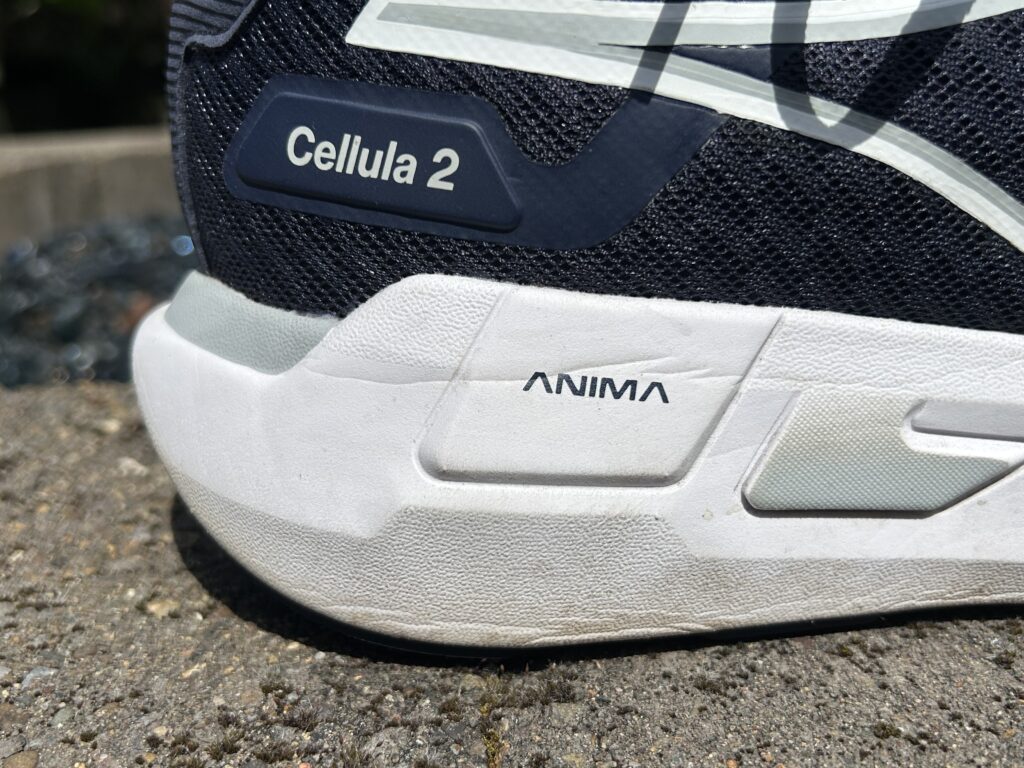
If you’re going to have a somewhat simple shoe, you’ve got to give people something to talk about. For Diadora and the Cellula 2, that pretty much comes down to two versions of their Anima proprietary foam. Anima is an ethylene-vinyl acetate (EVA) foam, which has been used in most running shoes for the last 40 years. Diadora’s spin on this foam is a claimed 20% lighter than your standard offering EVA midsole. They also claim that Anima increases responsiveness by 30%.
For the Cellula 2, that’s what is pretty much stacked from outsole to insole, and coming in north of 40 millimeters worth of stack. That, along with the shoe not appearing on the approved World Athletics list, would mean that it’s not a shoe that you’d probably wear on race day for a triathlon. That midsole also features just 5 millimeters worth of drop from heel to toe, so it’s on the low side of the equation.
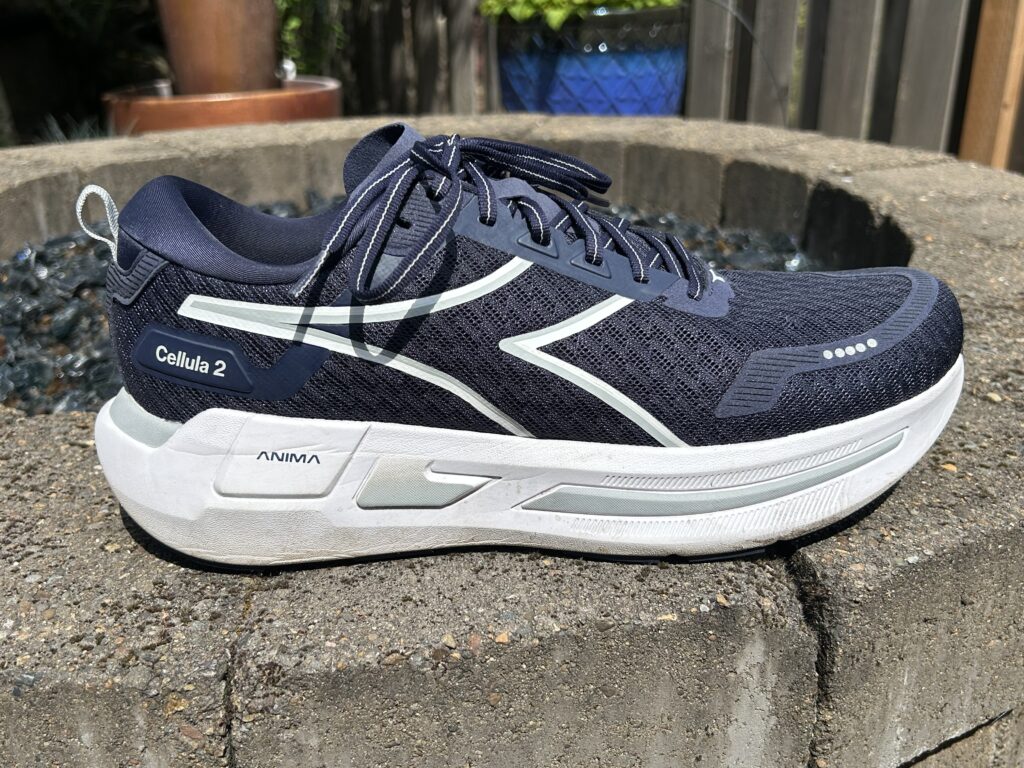
I say “pretty much” above as, of course, there’s a couple of points where Anima N2 fits in. As you’d probably guess, it’s lighter and more responsive than even standard Anima is — 40% in each category, according to Diadora. You find Anima N2 concentrated in the forefoot of the Cellula 2, and intended to boost rebound and thrust, per the spec sheet.
Otherwise, the marketing material is focused on comfort:
“Cellula 2. The same performance, with an updated design to improve overall bounce and reduce muscle fatigue. Cellula is the neutral running shoe for everyday training and long-distance runs. Whether you’re a beginner or a more experienced athlete, the Cellula 2 will adapt to your pace and your goals, supporting different training sessions. A wide sole ensures superior comfort, while the introduction of Anima N2 improves bounce and propulsion when the foot strikes the ground.”
The claimed weight on a pair of Cellula 2 is 305 grams for a sample size, or just under 10.8 ounces. Me wearing my size 13 boats, it is a shoe that feels lighter than I would expect given that sample size weigh-in. Your mileage, as always, may vary.
On the Run: Speaking of Mileage
The thing the makes the Cellula 2 special is the fact that it’s just so damned simple. It’s a bunch of foam, a lightweight upper, and a somewhat grippy outsole. Lace it up and go.
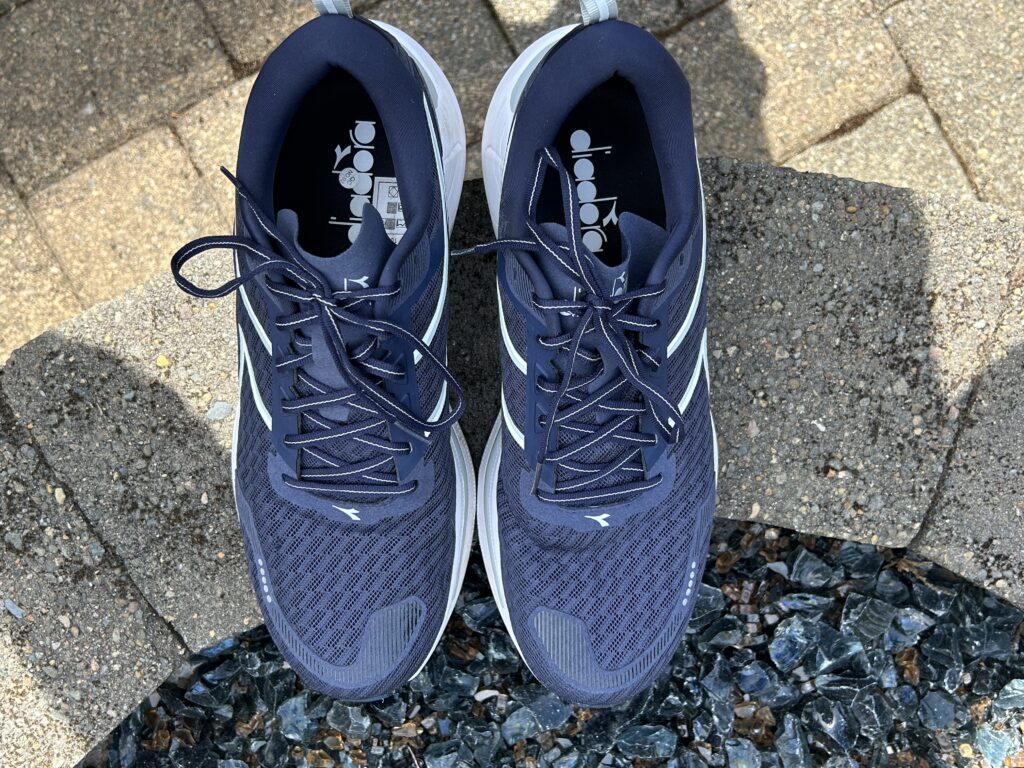
Putting the shoe on brings up two things for me: first, Diadora has taken the Goldilocks approach to insole height. It’s not too high, not too low. For me, it’s most similar to slipping on a pair of Saucony’s. And then there’s the upper, which is a standout. The sockliner and mesh scream premium, in my mind. I would certainly hope so, as the shoe retails for nearly $200. But it’s a shoe that does not look out of place being worn with a pair of jeans before being laced up for a run after work.
Running in the Cellula 2, and it’s apparent that there’s some element of truth to the Anima descriptions from Diadora. This isn’t a shoe that is going to give you free speed; you need to go out there and do the work. But it’s also not like most traditional trainers, which actively feel like they’re trying to soften every mile to the point where it gives you the sensation of running in marshmallow fluff. There’s bounce. There’s plushness. It’s what you want for mile after mile on training runs.
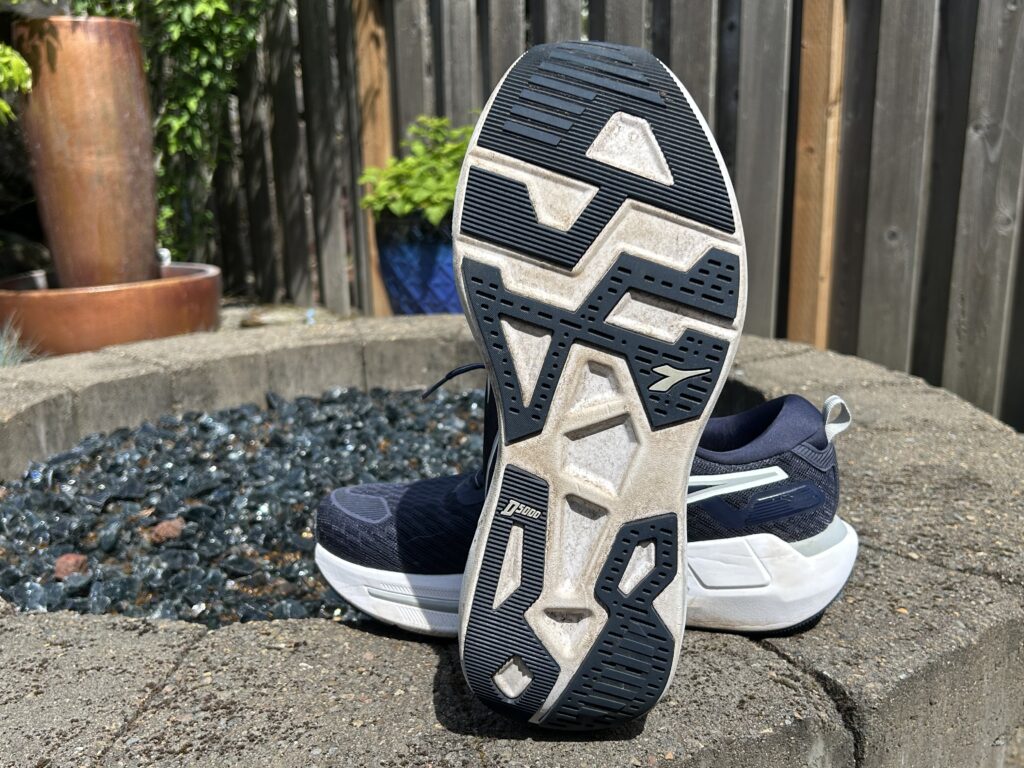
And that’s what this shoe has done most effectively: just eaten up miles. It’s a shoe I don’t really need to think about what type of run I’m doing, or how far I’m going. I just know it’ll be good for whatever I throw at it. In that case, it’s a lot more like some older, responsive shoes that could dabble in speed, like a classic Mizuno Wave Rider. You’re going to get out of the Cellula 2 whatever you put into it.
The biggest nod to modernity? The price tag. At $185, it’s a lot to ask for a shoe that doesn’t have the kinds of bells and whistles that you see on some other footwear. Personally? I’d love to see this shoe at $160-$175, where it either undercuts or matches the premium trainer from other brands. But I also don’t think Diadora’s interested in playing anybody else’s game; they’re going to do things a little differently.
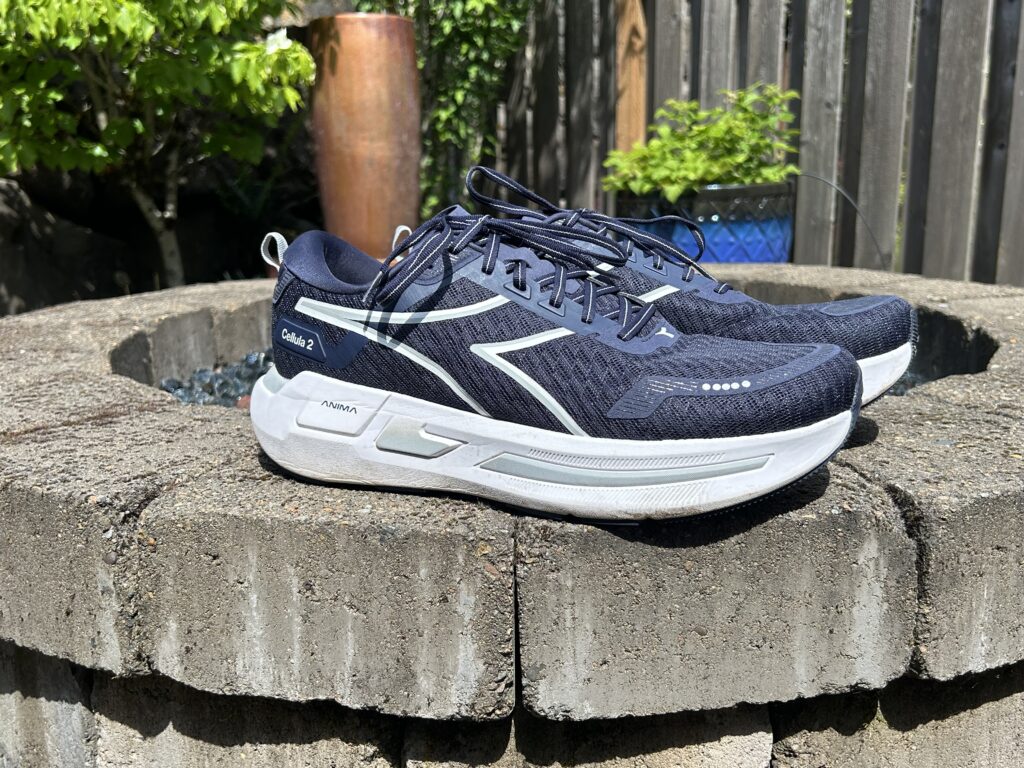
Diadora Cellula 2
Price: $185.00
Available: Now
Shop Men’s | Shop Women’s



Way too expensive for a ‘mid’ shoe with no special purpose or features. Shoes like Nike Zoom Fly are at $120 now which will almost certainly outperform this shoe in all areas, at all speeds, as are many other name-brand well-known shoes in the $100-$125 range.
The ZF6 at initiation was offered at $170-180, and the Vomero Plus (with the more analogous stack figures) holds firm at $180. Saying the ZF can be had for $120 is selective considering this applies to sizes / colorways. Lucky ($120), more likely around $145-$150 and if your lazy up to $180.
To be honest, the fact that there’s no “special purpose or features” feels more like a feature, not a bug.
It’s more akin, IMO, to certain HOKA shoes that completely rely on their foam composition to give a specific ride characteristic. The old HOKA Conquest comes to mind, though this is lighter and does a better job balancing the ride v/ responsiveness spectrum.
That said, as mentioned in the article, would absolutely love this to be $20-$30 less, but inflation / tariff / insert reason here makes that unlikely.
True, but the ZF6 is no longer in initiation, and thus its price has now been lowered across the board. To remain competitive, this new shoe has to bring more to the table if you can get ZF6 and many similar-tier shoes for $<125.