


The New Canyon Endurance CFR
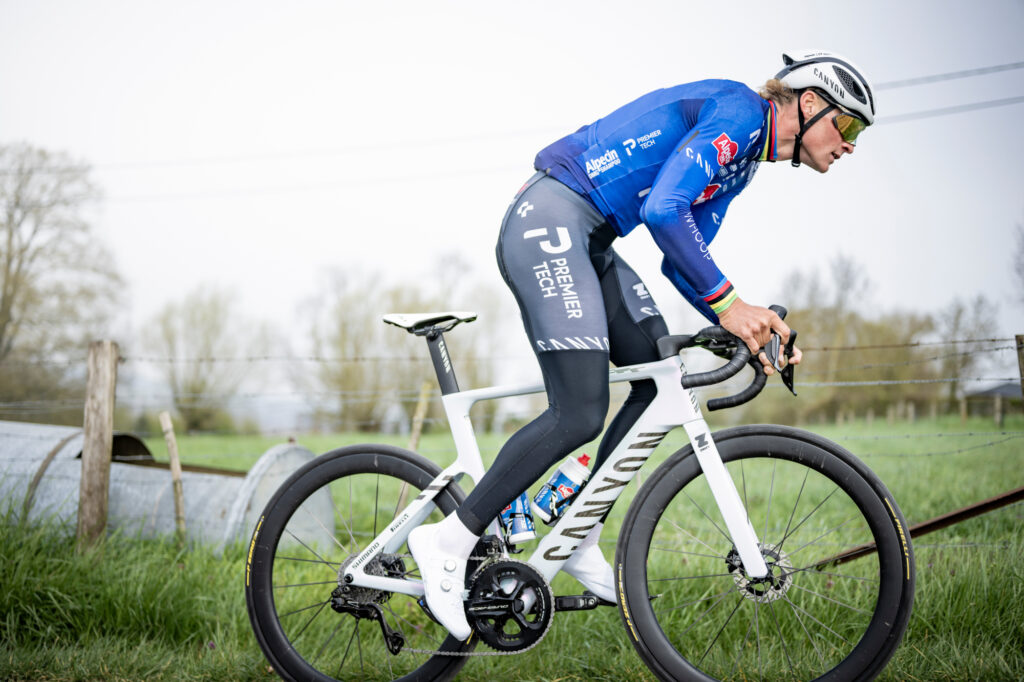
Canyon’s flagship endurance bike gets a ground-up overhaul — new geometry, new carbon, new cockpit, new seatpost, new philosophy. We break down what changed, what the numbers say and why this matters for the all-road category.
The Canyon Endurace has been one of the most popular endurance road bikes on the market since it launched back in 2014. It’s been the bike that a lot of people — from first-time road cyclists to seasoned Gran Fondo riders — with a price range from $1,499 — to now $10,499 it offered consumers a lot of options. Canyon updated the top-end Endurace frames in 2023, adding the CFR designation for the first time, bumping tire clearance to 35mm and introducing the aero-influenced cockpit system. It was a solid update. And It worked.
But the endurance category has moved fast since then and we as consumers are starting to settle in to what we really want and need. Canyon clearly felt the pressure — not just from Trek, Specialized and Cervélo, but from the broader shift in what a “road bike” even means in 2026. Because the line between “endurance road” and “all-road” has gotten blurry. Canyon is now leaning into that.
The Overall Philosophical Shift
This is what is important to start to look at right now in the industry, because it cant always be about grams or watts: Canyon moved the Endurace CFR from their endurance-focused Sport Geometry to their race-oriented Sport Pro Geometry — the same geometry used on the Aeroad CFR and Ultimate. That’s a significant departure. The old Endurace CFR was deliberately more relaxed than Canyon’s race bikes. The new one mirrors them.
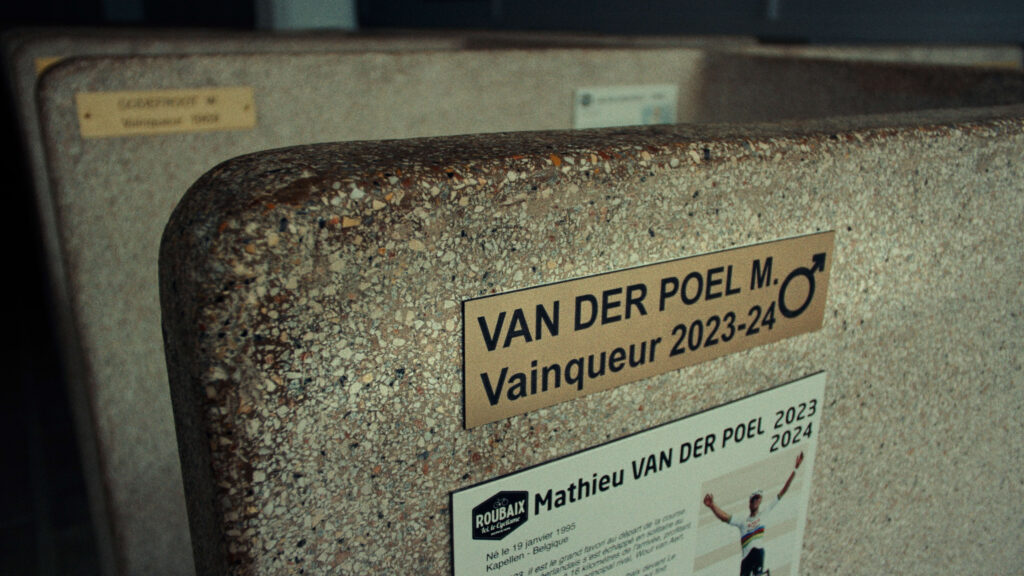
Canyon’s pitch is that they developed this bike in collaboration with Alpecin–Premier Tech specifically to win Paris–Roubaix. Mathieu van der Poel, and team boss Christoph Roodhooft, apparently were pushing the engineering team from day one. Whether that kind of pro-team involvement actually changes the end product, versus being good marketing copy, is always debatable, but the geometry numbers don’t lie — this is a race bike now. Canyon is calling it “the world’s fastest all-road race bike,” which is a mouthful, but the wind tunnel data they’re publishing backs up at least part of that claim. ( we get into that below )
Quick Side by Sides
| Spec | Previous Endurace CFR (2023) | New Endurace CFR (2026) |
|---|---|---|
| Frame weight (M) | 930g | 930g |
| Carbon fibre | Toray T1100 + T800 | T1100 + T800 + YS80 pitch-based fibres |
| Head tube stiffness | NA | 115 N/° (vs. Aeroad CFR’s 103 N/°) |
| Geometry | Sport Geometry | Sport Pro Geometry (Aeroad/Ultimate) |
| System drag at 45 km/h | NA | 205 W (Aeroad CFR: 204 W) |
| Max tire clearance | 35mm | 35mm (now with 4mm+ ISO mud clearance) |
| Stock tires | 30mm front / 32mm rear | Pirelli P Zero RS 35mm (matched) |
| Cockpit | CP0018 Aerocockpit (40mm width adjust) | CP0048 PACE Bar (50mm width + 20mm height) |
| Seatpost | S15 VCLS 2.0 (leaf spring) | SP0093 VCLS Aero (aero shape, 25% more compliant) |
| Crank length (M) | 172.5mm | 165mm |
| Sizes | 8 (3XS–2XL, 650B on smallest) | 6 (2XS–XL, all 700c) |
| Complete weight | ~7.2 kg | 7.5 kg |
| Price | ~€8,499 | €8,999 (provisional) |
| U.S. availability | Yes (Di2 build) | Yes (Di2 only) |
Like we are seeing in a lot new frames these days the frame weight didn’t change — still 930 grams. But the carbon did. Canyon added YS80 pitch-based fibres to the existing T1100 and T800 layup. Pitch-based carbon is significantly stiffer than PAN-based fibers, but also more brittle, so it’s typically used selectively in high-load areas. The result is a head tube stiffness of 115 N/° — about 12% stiffer than the Aeroad CFR. The Alpecin–Premier Tech team specifically asked for a stiffer frame than the Aeroad for the demands of cobbled classics.
Aero: Within One Watt of the Aeroad
Canyon claims is the Endurance CFR produces 205 watts of system drag at 45 km/h in the wind tunnel — within a single watt of the Aeroad CFR’s 204 watts. When it comes to wind tunnel testing claims from brands I just don’t get all that excited anymore. While watt savings do matter a GREAT deal, they are so dependent on what goes on the the thing that is aero tested. What I personally care about is consistency.
Canyon tests at the GST Wind Tunnel in Immenstadt, Germany — a former aerospace facility. They use a carbon mobile leg dummy called “Ferdi” to replicate pedaling motion across a ±20° yaw angle sweep. They’ve been using this protocol for over a decade, which at least gives the consistency in their year-over-year comparisons, even if wind tunnel numbers are always hard to compare across brands.
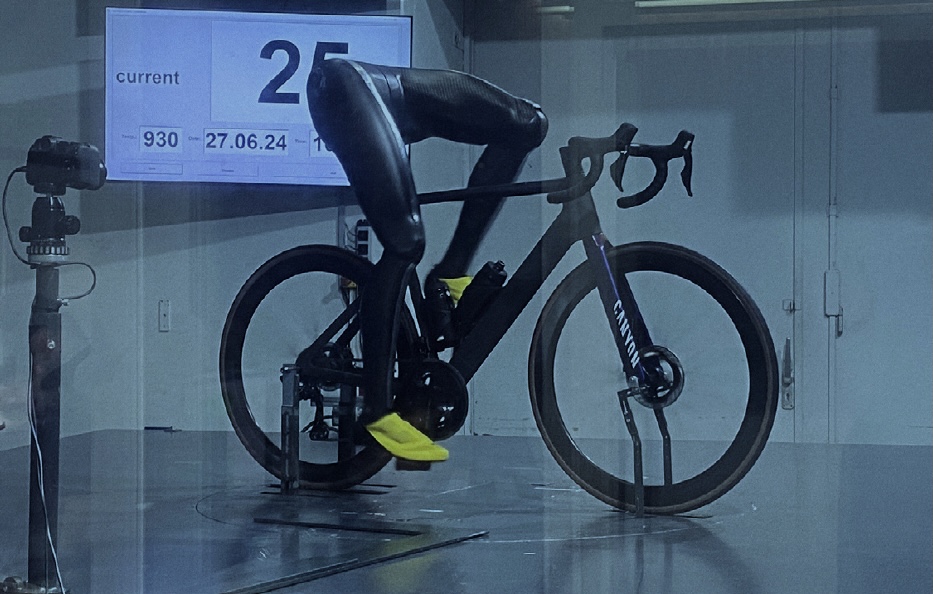
The key design element is the head tube. Canyon says the minimal head tube profile on the CFR is the primary driver of its aero performance, and that achieving this without compromising front-end stiffness and strength was the biggest engineering challenge. Like I said above, while it’s an impressive claim, the real test will be how it performs on actual roads with actual riders.
Canyon is highlighting some small-but-telling details on the CFR that speak to the Paris–Roubaix development story. Corrosion-resistant titanium cockpit screws manufactured in Germany. Double-sealed ceramic hybrid headset bearings. These are the kinds of things that matter when you’re asking a bike to survive six hours on Belgian cobblestones in the rain, and they’re the kinds of things that trickle down nicely to a consumer who just wants their bike to work reliably for years. Especially since most consumers really don’t take care of their bikes.
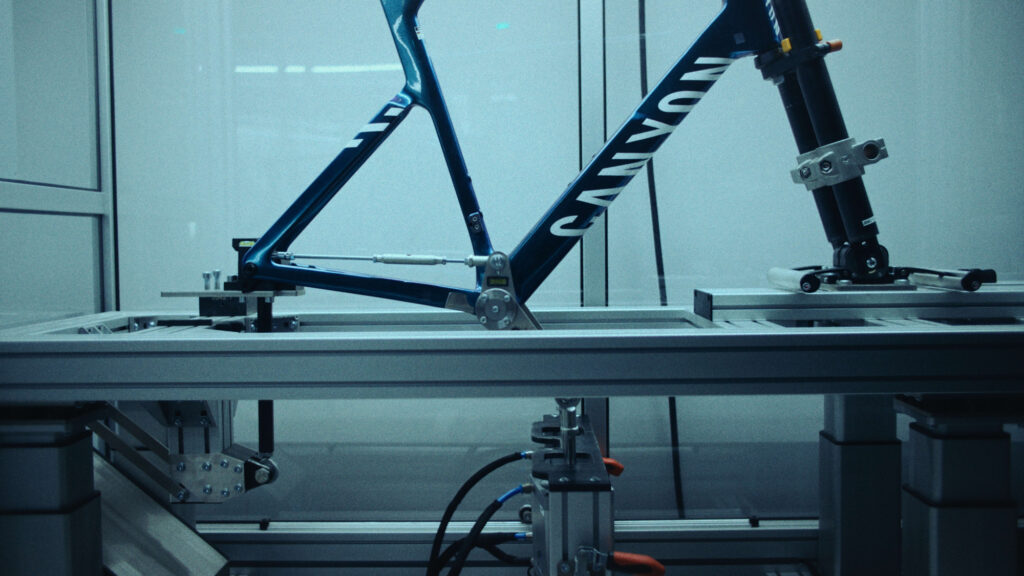
Canyon also says the Endurace CFR is tested beyond standard industry road bike testing protocols — impact loads on the rear axle, increased falling mass impacts on front wheel and fork, seat tube overloading — all designed to replicate what the cobbles do to a bike in competition.
The Cockpit: PACE Bar / RACE Bar
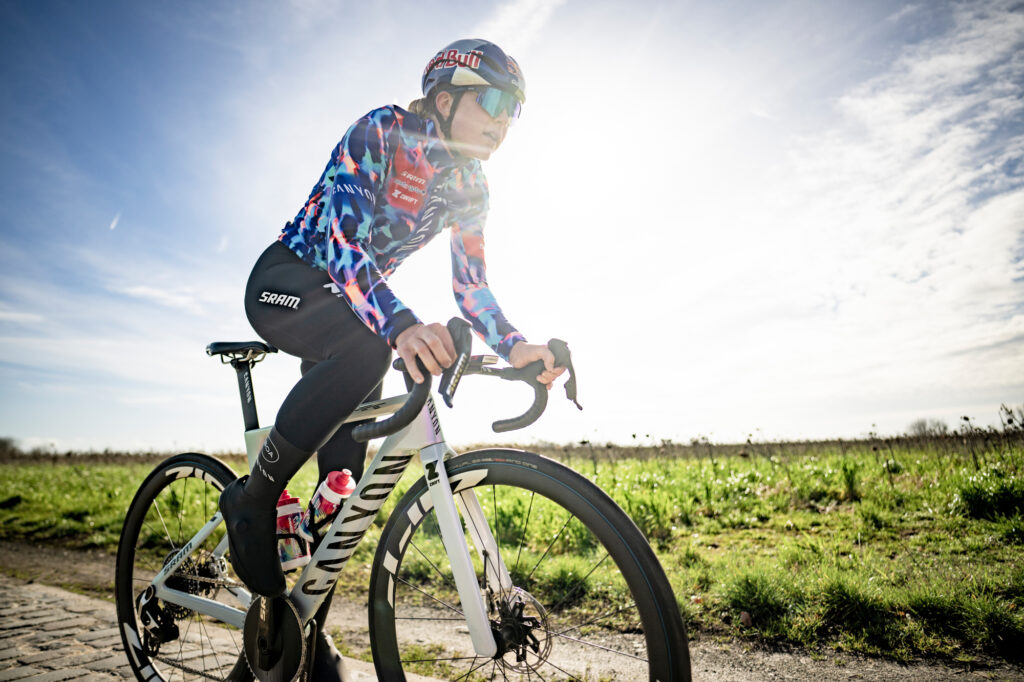
If you’ve been following Canyon’s recent launches — the Aeroad, the Ultimate — you already know the PACE Bar. But, for the Endurace CFR, this is new territory. The previous CFR used the CP0018 Aerocockpit, which had 40mm of width adjustment, but no height adjustment without fiddling with spacers and steerer cuts. It was also a “love it or leave it” situation — you couldn’t easily change the drop shape.
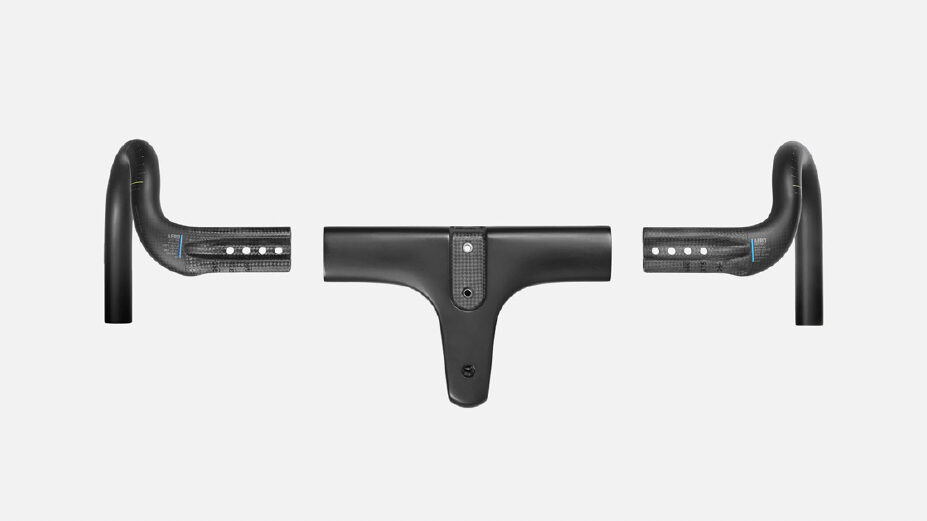
The CP0048 PACE Bar fixes all of that. You get 50mm of width adjustment and 20mm of height adjustment, totaling 15 distinct fit configurations, all adjustable with a single TX25 tool. No steerer cuts. No brake bleeds. No spacer stacks. That’s a significant practical improvement, especially for anyone who’s ever paid for a professional bike fit, and then realized their integrated cockpit couldn’t actually get to the position the fitter recommended.
In a smart add on, Canyon is now offering three interchangeable drop shapes.
| Drop Style | Width Settings | Drop | Reach Effect | Flare |
|---|---|---|---|---|
| Classic Drops (standard on CFR) | 370/395/420mm | 130mm | Baseline | 0° |
| Race Drops | 350/375/400mm | 116mm | +10mm longer | 14° |
| Compact Drops | 390/415/440mm | 108mm | -10mm shorter | 8° |
That gives you ±10mm of effective reach adjustment on top of the PACE Bar’s built-in adjustability.
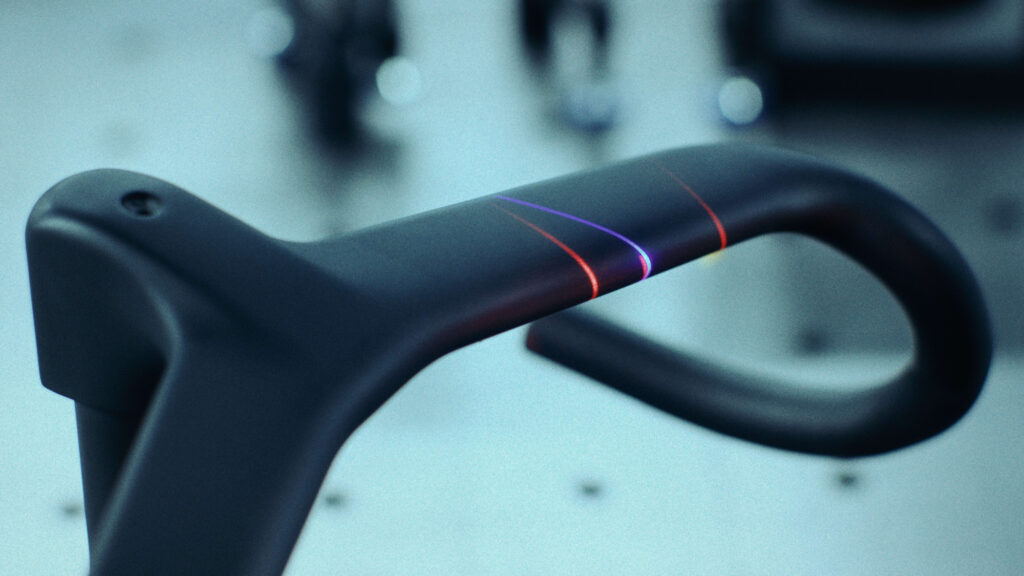
There’s also the CP0053 RACE Bar, available as a MyCanyon customization option. This is the one the pros will use. It’s a V-shape monocoque design wieghing 350 grams — 120 grams lighter than the PACE Bar — and Canyon claims it saves 2 watts at 45 km/h in the wind tunnel. In a track test comparing an out-of-the-box PACE Bar (395mm width, 20mm spacers) versus the RACE Bar (350mm width, 20mm spacers), one rider recorded a 25 watt drag reduction in an aero position. (Which goes back to my point about what happens after a wind tunnel )
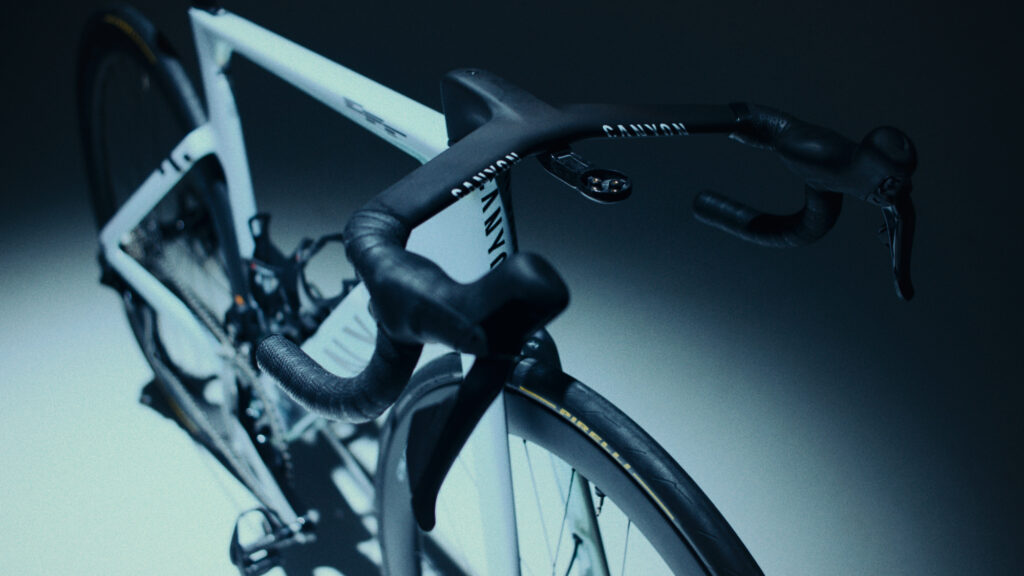
Cranks: Canyon Goes Short
This is worth calling out because it’s a trend we’re finally seeing across the industry. The new Endurace CFR is part of Canyon’s first road product family to make the full shift to shorter cranks across all sizes.
| Frame Size | Previous Crank | New Crank |
|---|---|---|
| 2XS | 165mm | 160mm |
| XS | 170mm | 160mm |
| S | 170mm | 165mm |
| M | 172.5mm | 165mm |
| L | 175.5mm | 170mm |
| XL | 175mm | 170mm |
A size M goes from 172.5mm to 165mm. That’s a 7.5mm reduction. Canyon says it opens the hip angle, reduces joint stress and makes it easier to spin at higher cadence without negative impact on power output. (Yea we know … we’ve been telling you that for years.)
Frame Sizes
The size range shrinks from eight sizes (3XS–2XL with 650B on the smallest frames) down to six (2XS–XL, all on 700c). That means Canyon’s smallest and tallest riders lose coverage on the CFR. (Maybe.) They do, 100%, loose 650 wheels.
But here’s the thing — going from eight sizes to six isn’t just about cutting coverage. It’s about inventory management, and it’s a trend we’re seeing across the board with manufacturers right now. Brands are finally learning that if you build enough adjustability into the cockpit and seatpost — which is exactly what the PACE Bar’s 50mm of width, 20mm of height and three interchangeable drop shapes deliver — you can cover the same effective fit range with fewer frame sizes. Fewer SKUs means less warehousing, less dead stock, better production planning and lower costs that ideally get passed along to the consumer (or at least keep prices from climbing even higher). Canyon isn’t the only one figuring this out, but the PACE Bar ecosystem makes the case more convincingly than most. When your cockpit can hit 15 distinct configurations before you even swap drop shapes, the argument for eight frame sizes gets a lot weaker. These are all really positive things we are seeing.
The geo comparison is hard to gauge at this point because the 2026 numbers use Canyon’s new “effective” stack and reach (measured to hands on hoods, including cockpit), while the 2023 numbers use traditional stack and reach (measured to top of head tube), so while I did see this bike in person a couple of weeks ago, I will need to get the old measuring tape out in a couple of weeks when I get to ride one.
The Build Options
While you get a lot of options for seat and hand position right from the start, build specs are pretty much … “Here you go, friend.”
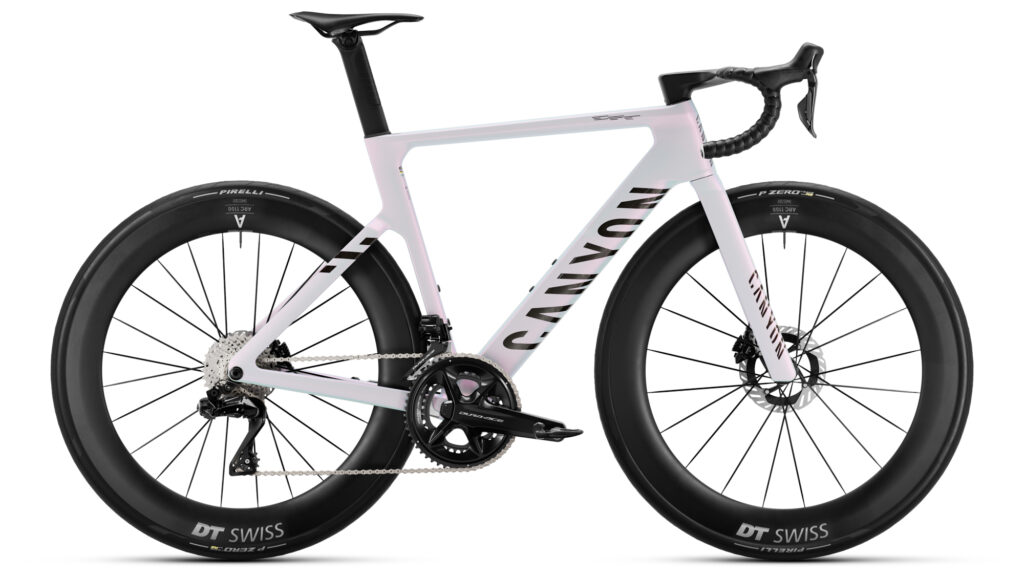
| Parts | Endurace CFR Di2 | Endurace CFR AXS |
|---|---|---|
| Groupset | Shimano Dura-Ace Di2 w/ power meter | SRAM Red AXS w/ power meter |
| Chainrings | 52/36 | 50/37 |
| Cassette | 11-30 | 10-33 |
| Wheels | DT Swiss ARC 1100, 65mm | DT Swiss ARC 1100, 65mm |
| Tires | Pirelli P Zero RS, 35mm | Pirelli P Zero RS, 35mm |
| Cockpit | CP0048 PACE Bar w/ Classic Drops | CP0048 PACE Bar w/ Classic Drops |
| Seatpost | SP0093 VCLS Aero | SP0093 VCLS Aero |
| Saddle | Selle Italia SLR | Selle Italia SLR |
| Weight | 7.5 kg | 7.5 kg |
| Price | €8,999 | €8,999 |
| Price US | $10,499 | |
| Colorways | Pro Black, Paradigm Shift | Pro Black, Paradigm Shift |
| MyCanyon Customization | Yes ( Bars ) | Yes ( Bars ) |
| Available in U.S. | Yes | No |
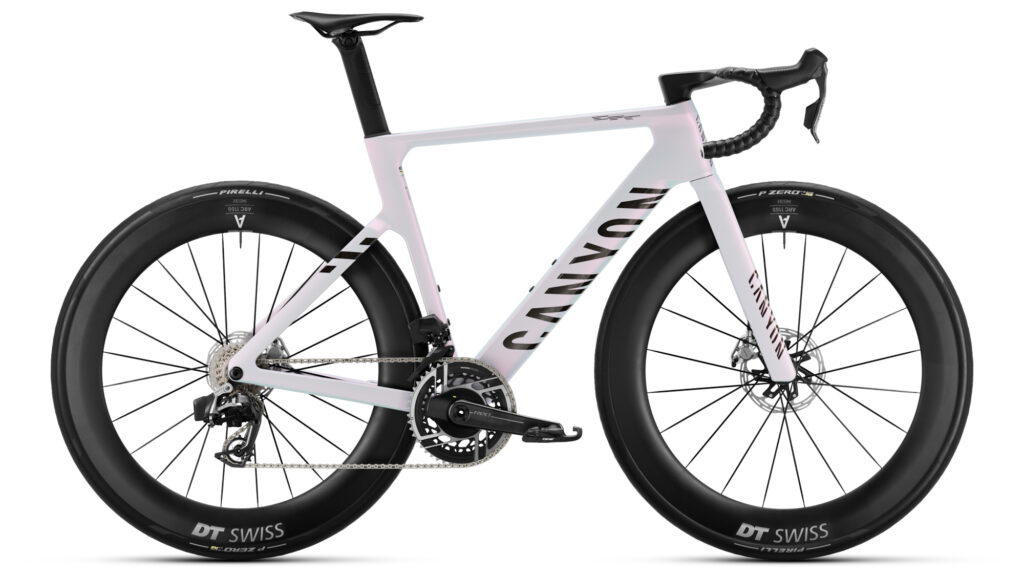
Both builds include power meters as standard — that’s been a Canyon move for a while now, and it’s still appreciated. The DT Swiss ARC 1100 at 65mm deep is a serious race wheel. This is a bike that shows up ready to race, not one that needs a wheel upgrade to reach its potential. (Although I do wonder if this will change in the future to help with consumer pricing as that is a pretty aggressive wheel set for someone in the XS size range.)
The complete bike weighs in at 7.5 kg versus the previous generation’s lightest build at roughly 7.2 kg. Some of that comes from the deeper 65mm DT Swiss ARC 1100 wheels (replacing the ERC 1100) and the larger 35mm tires spec’d as standard. The frame weight didn’t change, so the delta is all in the build spec.
And the price goes up by roughly €500, from approximately €8,499 to €8,999 provisional. That €8,999 / gets you either a Shimano Dura-Ace Di2 build or a SRAM Red AXS build — but note that at this time only the Di2 $10,499 version is available in the U.S.
I would like to point out that the My Custom Canyon is for bars only at this point.
The Bigger Picture as I see it
Canyon is simplifying, as is a lot of the industry. More integration means less sizes needed – less handle bars to stock, and probably one less bike in the catalog over all. The old Endurace was an endurance bike with some race tendencies. The new CFR is a race bike with endurance capabilities. That’s a meaningful philosophical flip, and it positions the Endurace CFR less as a competitor to the Trek Domane and Specialized Roubaix and more as an alternative to bikes like the Cervélo Caledonia, the BMC Roadmachine, or even aero road bikes like Canyon’s own Aeroad for riders who want a bit more comfort and tire clearance. These are sort of the moves the bike industry needs to continue to make to get back from under the front of its own skis. If really well thought out, “less” is “more,” and “more” is really what we need more of.
Pricing is provisional and subject to change. All specifications provided from Canyon’s 2026 press kit.


Start the discussion at forum.slowtwitch.com