
Pro vs. Practical Bike Setups for Age Groupers
In any sport, the world’s top athletes dictate the trends. It’s the same in triathlon. Many fans follow the leads of the stars of the sport, whether that comes down to what gear to buy, what nutrition to use on race day or how to approach training. This copycat mentality can work well for a lot of things, but it could be a less than ideal way to operate when it comes to your bike setup. You want to be as fast as possible, but you may not achieve that if you duplicate what Kristian Blummenfelt, Taylor Knibb or any other pros are doing on their bikes.
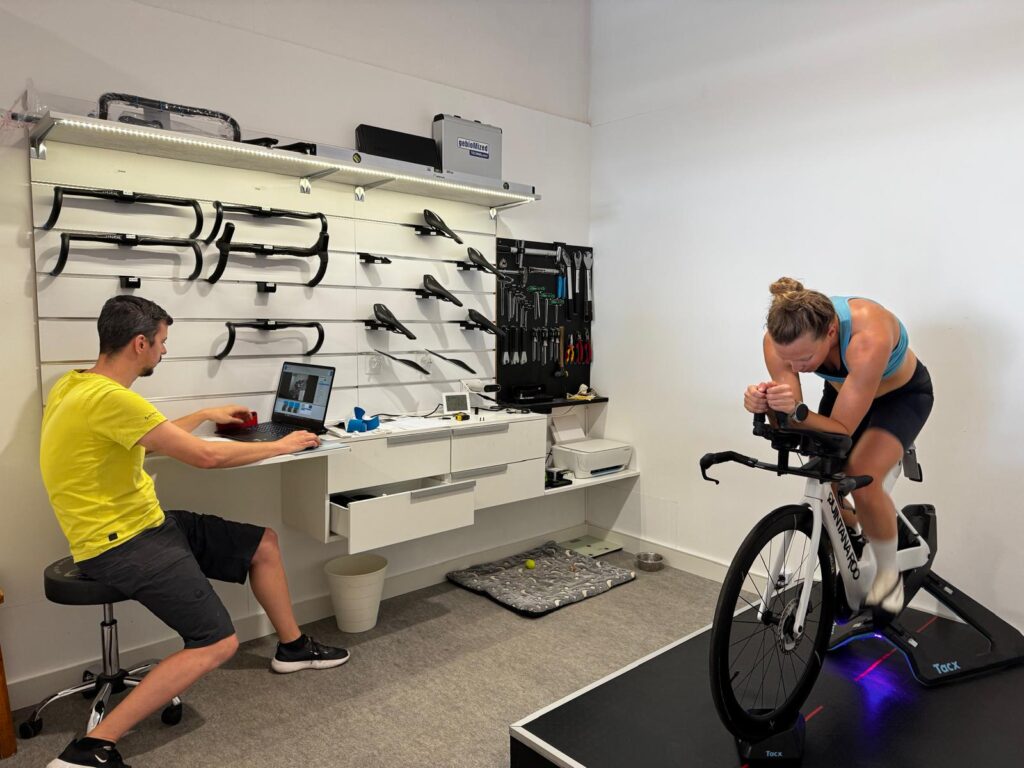
To find out why this is the case and how to approach your next bike setup, Slowtwitch spoke with Heath Cockburn. Cockburn is the owner of The 11 Inc., a bike shop in Toronto where, in addition to selling many premium rides, he performs a lot of bike fits. In fact, he says he does upwards of a thousand fits a year, which is why he is one of the best people to talk to on the matter.
Do You Really Need a Fit?
If you’ve never gotten a bike fit before, you may think they’re not necessary. As Cockburn points out, however, “You don’t know what you don’t know,” which is why so many people may go years without getting their bikes properly fitted.
“Oftentimes, people will say to me things like, ‘My butt hurts after a couple of hours of riding and my hands fall asleep after 60 kilometres, but I think my bike fits me pretty good,'” Cockburn says. “My response is always to tell them that that stuff bothers them right away, it’s just that they can deal with it for a couple of hours until it becomes unbearable.”
Cockburn says many people have “preconceived ideas” when it comes to riding a bike.
“They think their butt has to hurt at some point and that they’ll feel other discomfort in their back or neck eventually, too, like it’s just part of riding,” he says. “I disagree with that.”
A bike fit will, as the name suggests, fit the bike to you and your needs. This is how you can avoid unnecessary discomfort and, in effect, ride longer and more efficiently.
Every Fit is Different
There may be only a handful of bike sizes, but there are countless possible fits for a bike. Each cyclist’s needs are going to differ from anyone else’s, which is why Cockburn says he loves doing bike fits.
“Every one is a new challenge,” he says. “The circumstances are different for everyone. I like the problem-solving of bike fitting.”
A former pro cyclist (he competed all around the world before an accident took him out of international racing for good in 2002), Cockburn says he likes to use “a bike racer’s perspective” when looking at someone’s setup.

“I love aero bikes, time trial setups, tri setups,” he says. “They’re a chance to really optimize the bike fits.”
He also points to individual ailments that he sees in athletes that he has to consider for different fits, from “fused backs” to “leg discrepancies” and anything else physical that can, and will, impact one’s abilities, comfort and enjoyment on a bike. There are so many things to take into account when performing a bike fit, which is why it’s so important for every cyclist to avoid stock setups and instead find the right one for them.
Getting Faster
The two main purposes of a bike fit are to be comfortable while riding and to be fast. With a good fitter, you’ll work out a setup that delivers on both of these fronts.
“You need to find an aero position that you can stay in for a while,” Cockburn says. He continues, saying a rider can lose “15 seconds at a minimum” every time they get out of their aero bars, which of course adds up, no matter what distance of triathlon you’re racing.
When working with a cyclist to find the right fit for them, he says he looks for an aero position that they can ride in “comfortably, consistently and with confidence.”
The comfort (being able to hold the position for an extended period of time without needing to stretch or shake out any sore spots), and the confidence (knowing you have found a position that suits your level of bike-handling skills) both feed into the consistency. That is what will allow you to maintain that position for during a race.
“There are probably half a dozen things that you have to get used to, and overcome, to ride in the aero bars properly,” Cockburn says. “Once you’re there, once your aero bars are at home, it’s like, ‘OK, so now let’s go and see how we can make this position
faster. Let’s find out how to give you a win without you having to train harder.'”
Pro vs. Age Group Setups
You may still be wondering why you can’t steal from the Blummenfelts and Knibbs of the world. Yes, every bike fit is unique, but surely you can copy the bulk of their setups, right? Cockburn says there are certainly some age groupers who can get away with the more aggressive aero positions you’ll see pros riding, but, for the most part, those won’t work well in the long run. A lot of this comes down to the lives of pros compared to those of age groupers. A pro’s day-to-day is designed to optimize his or her ability to swim, bike and run as quickly and as efficiently as possible. Age groupers, on the other hand, have to find a way to fit their training into their busy schedules.
“It makes a big difference when you can get regular massages, when you have time to stretch and to work on your mobility every day, when you can train around the world and never have to ride indoors during winter if you don’t want to,” he says. “It’s very different than someone who has a family and a job and a pain cave. You know, when you’re on a trainer at five in the morning before you get the kids ready for school or before you go to work.”
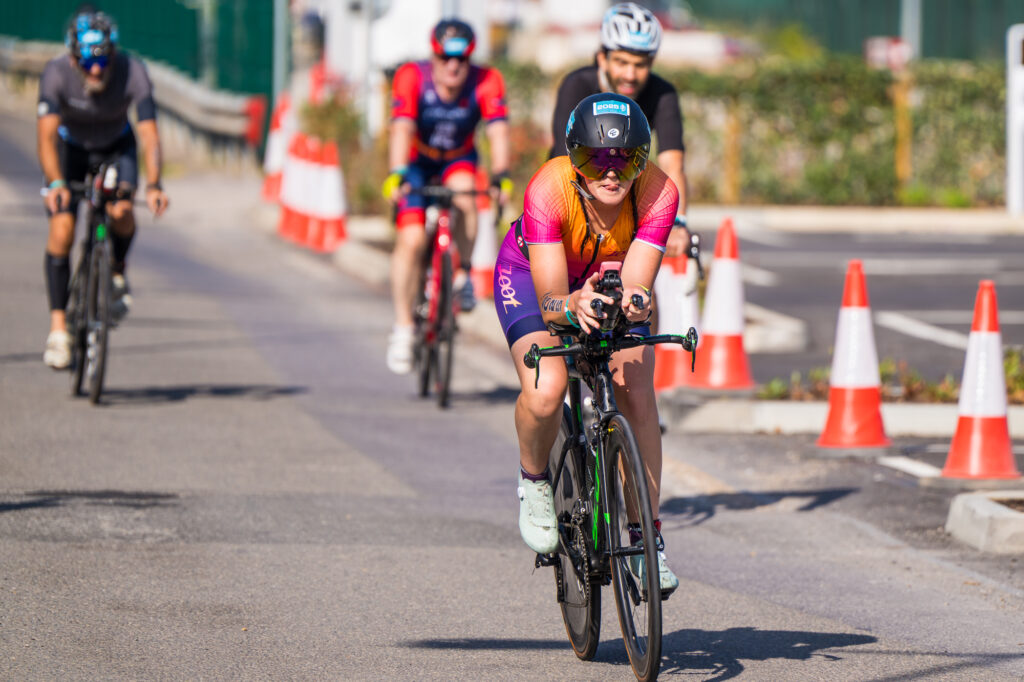
Cockburn says all of these factors contribute to pros being able to train in, get used to, and eventually hold such aggressive and intense positions. These are undoubtedly the fastest positions, but for many age groupers it’s “just not practical to try to emulate these 20-year-olds” and their bike setups when no other part of their everyday routines match up with the pro lifestyle.
“You should be doing something that’s just better suited for you and your circumstances,” he says. He points to how much pro bike fits have changed in just the past decade, noting “how high and how long the front end is,” the shorter cranks many athletes have adopted, their “really open hip angles” and, finally, the way pros have mastered the art of “compacting all these hydration systems” into fairings. (A fairing is something an athlete adds to their bike that can reduce drag and shape airflow around their body.)
“The purpose of these fairings is to give you an aerodynamic advantage,” Cockburn says. “With an age grouper, that might not be the optimal thing to do. There could be some consequences going these routes, so you might opt for a bit more comfort or a bit better handling.”
Cockburn does admit that “those principles used by pros” could help certain age groupers, but it all depends on each specific athlete.
“That’s why I like bike fits so much,” he says. “It’s about the individual. You meet them, find out who they are and then you can figure out what to do and what’s going to be best for them.”
The whole goal in triathlon is to go as quickly as possible from Point A to Point B. Every pro triathlete is trying to find the best, most aerodynamic setup with their bike to help them achieve that goal. But, even in the pro ranks, the importance of comfort eclipses that of pure speed. There is a position that is objectively the fastest option, but an athlete needs to be able to hold it for the duration of the race.
Pros will sacrifice some aerodynamics in the name of comfort, because that will ultimately help them to be more efficient and to therefore go faster throughout the ride and when they get onto the run. If you copy anything from a pro’s approach to their bike setup, let it be that mindset — don’t go for the fastest position, but rather seek out the point where comfort and speed meet. That is how you’ll get your best results. You may not ride as quickly as the pros, but the right bike fit can get you to the point where your efficiency rivals anyone else’s on the race course.
To learn more about Cockburn and his work at The 11 Inc. in Toronto, click here.

Start the discussion at forum.slowtwitch.com