


Giant Propel & Liv EnviLiv: Fourth Generation Aero, Two Philosophies
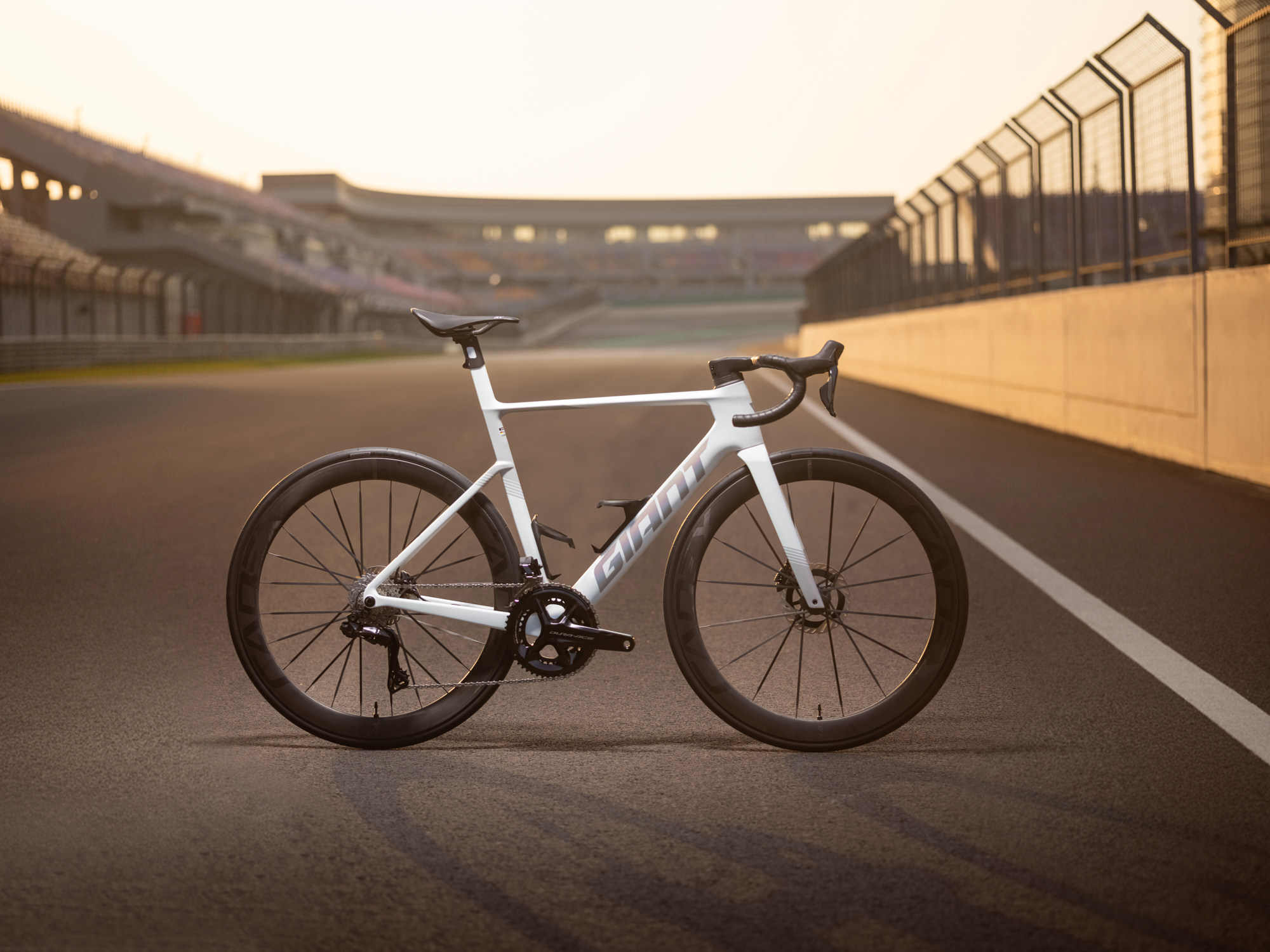
Before I get into this review, I wanted to take a moment to celebrate the life of Giant Group founder, King Liu, who passed away peacefully on February, 16, 2026, at the age of 93. You can learn more about this amazing human and the positive impact he has had in all of our cycling lives here.

The Fastest Propel and EnviLiv Ever Built Share Almost Everything — Except Who They’re Built For
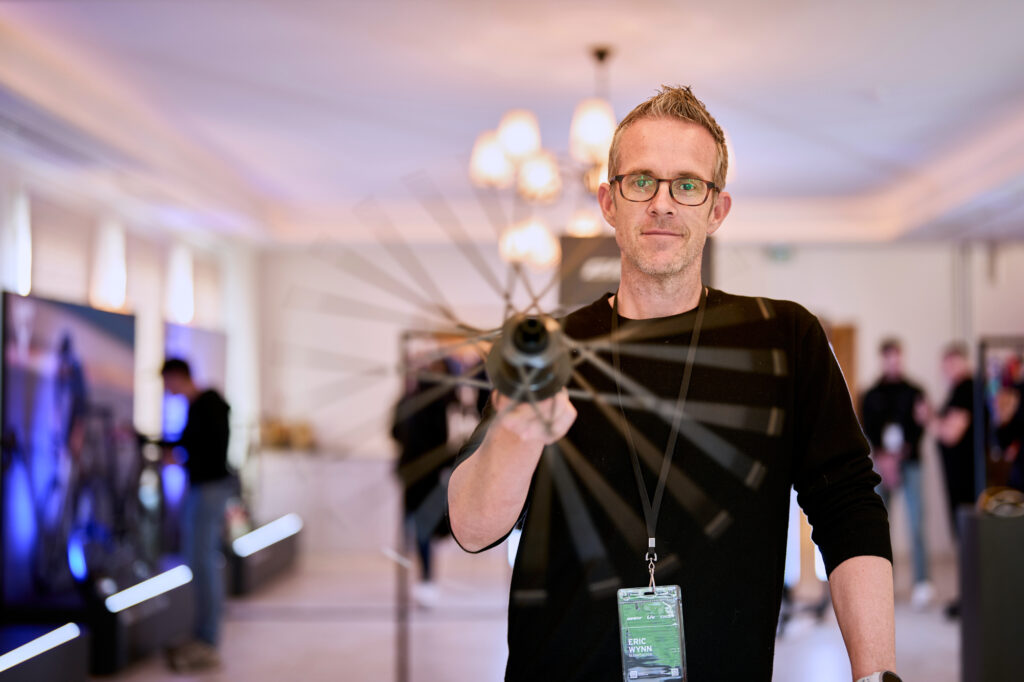
I just spent 3 days in Nice, France with Giant for the launch of these two bikes, the fourth-generation Propel and the EnviLiv. This launch also coincides with the new CADEX 50 Max, CADEX Aero Tires, some helmets and sunglasses. It was big event — so big that it was the largest media event that I have ever been to where I was media instead of a photographer for the event.
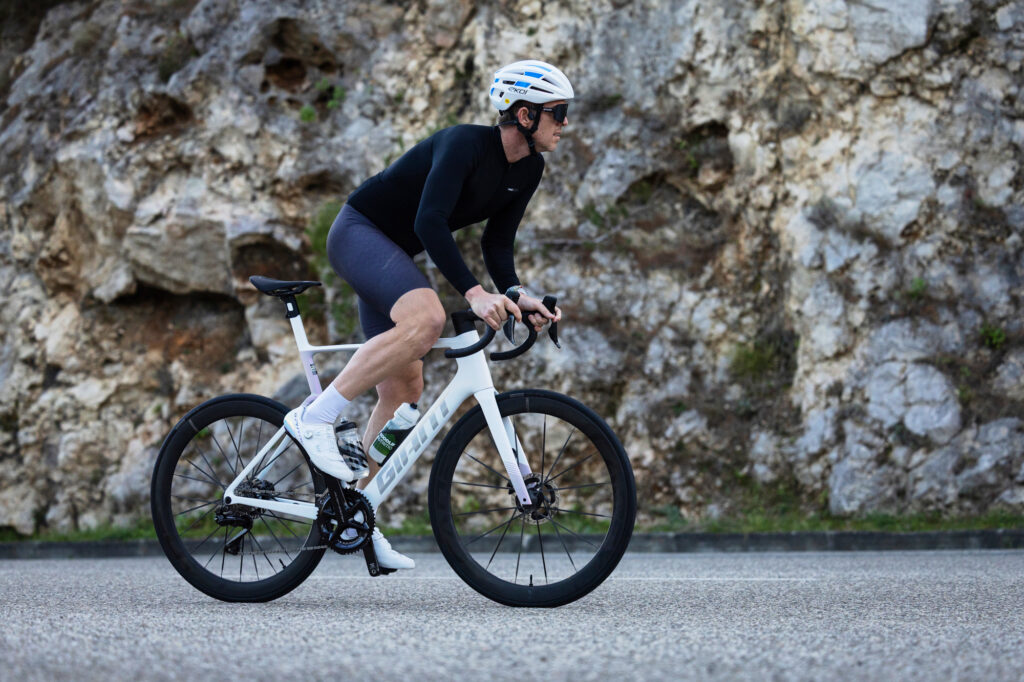
We were all in d’Azur for a proper introduction to the bikes: bike fitting sessions, technical deep-dives, and two days of real riding through the hills above Nice. No death-by-PowerPoint— we logged some good miles on serious roads. Our routes traced the IRONMAN World Championship bike course and it was fun to ride parts of the course I had only known by the back of a moto months earlier. Day one was a 27-mile shakeout through Vence, Saint-Jeannet, Gattières, and Carros — 1,700 feet of climbing at a social pace to get a feel for handling and comfort. Day two was a 54.5 miles covering 5,430 feet.
Over the 3 days of meetings and riding it became clear that Giant was bringing a system to the table — not just a frame, and wheels. We see it a lot these days in the wind tunnels. When you take a good rider into a tunnel, in order to make a difference, you’re doing to do it by finding little things here and there — a watt here, two watts there. It’s only when you add up those small differences is when you start to see something decent to talk about. And I think that is the same with bikes these days. It’s really hard to make big improvements with just one thing. So let’s dive into the systems and what Giant has come up with.
The Giant Propel Advanced SL
18.44 Watts Faster. 355 Grams Lighter. The Most Efficient Propel Ever.
The Propel has been Giant’s aero weapon since 2013, when Marcel Kittel sprinted to a Tour de France stage win on the original version. Four generations in, it’s evolved from a pure sprinter’s bike into a complete aero race machine — lighter, stiffer, more comfortable, and significantly faster than the bike Groenewegen and Matthews rode to TdF stage wins in 2022. This version is claiming to be the “one bike that rules them all” for the big riders of Team Jayco in 2026.
What’s New
The headline claim: Keep in mind its the “Whole System” that we are taking about. 18.44 watts of total resistance saved over the outgoing Propel at 40 kph. That’s roughly 72 seconds over 40 kilometers. The savings break down to 12.42 watts from the frame’s reduced aero drag, 0.42 watts from the new CADEX Max 50 wheels’ lower rotational drag, and 5.6 watts from the CADEX Aero 28c tires’ reduced rolling resistance.
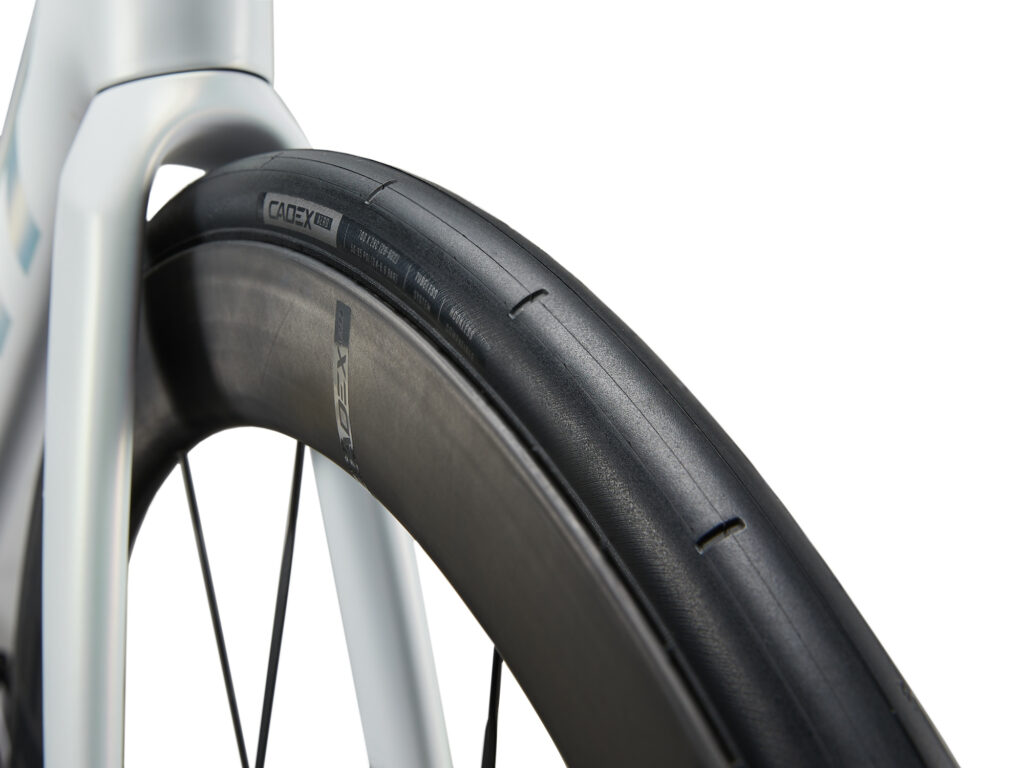
The frame drops 45 grams (800g vs. 845g, size M unpainted), but the system tells the bigger story. New one-piece integrated cockpit saves 77g. CADEX Max 50 wheels save 100g over the Ultra 50s. The wider 28c tires are actually 140g lighter than the old 25c versions. Total system savings: 355 grams on the Advanced SL 0 build.
How’d they get there? When it comes to the frame it’s a new one-piece monocoque construction using a single bladder for the entire front triangle (previously three bladders). Cold-blade cutting replaces laser cutting for the carbon swatches — no heat deformation, fewer and more precise pieces. Combine that with CNT resin and thinline painting, and you’ve got the lightest Propel frame ever without giving up stiffness.
Stiffer Where It Counts
Every stiffness number went up. Frame pedaling: +2.4% (82 to 84 N/mm). Torsional: +3.3% (120 to 124 Nm/°). Fork: +3.4% (58 to 60 N/mm). Frameset stiffness-to-weight improved 5.7%.
At the system level — frame, cockpit, and wheels together — pedaling efficiency jumped 14.8% and handling efficiency climbed 14.2%. The integrated cockpit and stiffer wheelset amplify the frame gains significantly.
More Comfortable Than You’d Expect
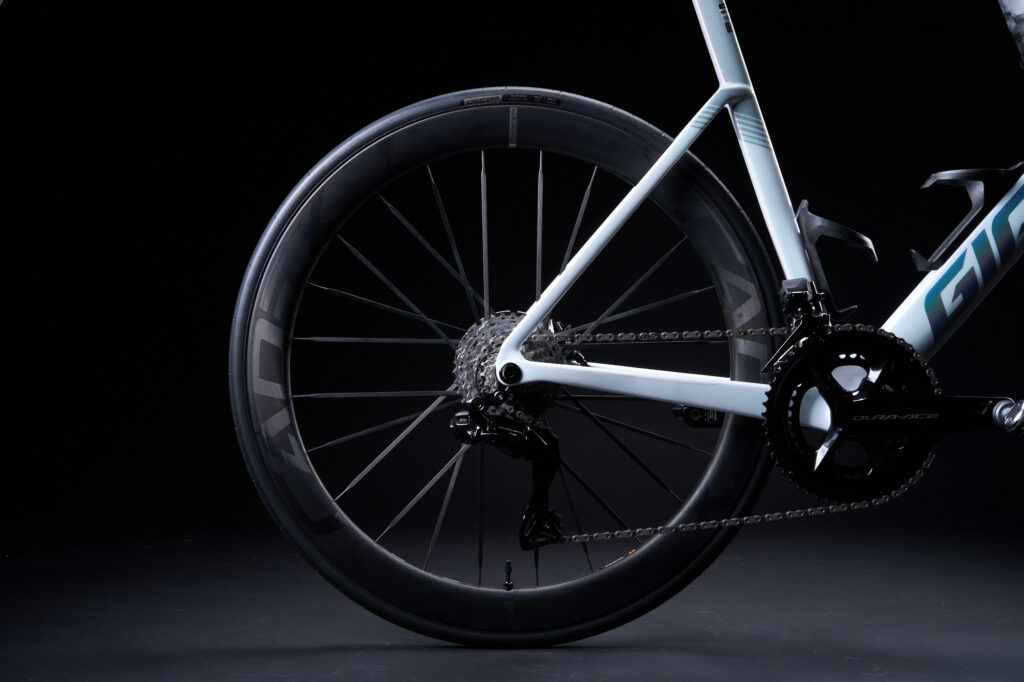
This is a genuine character shift for the Propel. Reengineered seat tube, chainstays, and ISP deliver up to 25% more rear vertical compliance. The front end provides 12.8% more compliance as a unified system. Tire clearance jumped from 28mm to 32mm, and the default tire moved from 25c to 28c. The crosswind behavior is also improved — the wheel-and-tire integration creates a more predictable torque curve that reduces the “fighting the wind” fatigue.
The Cockpit
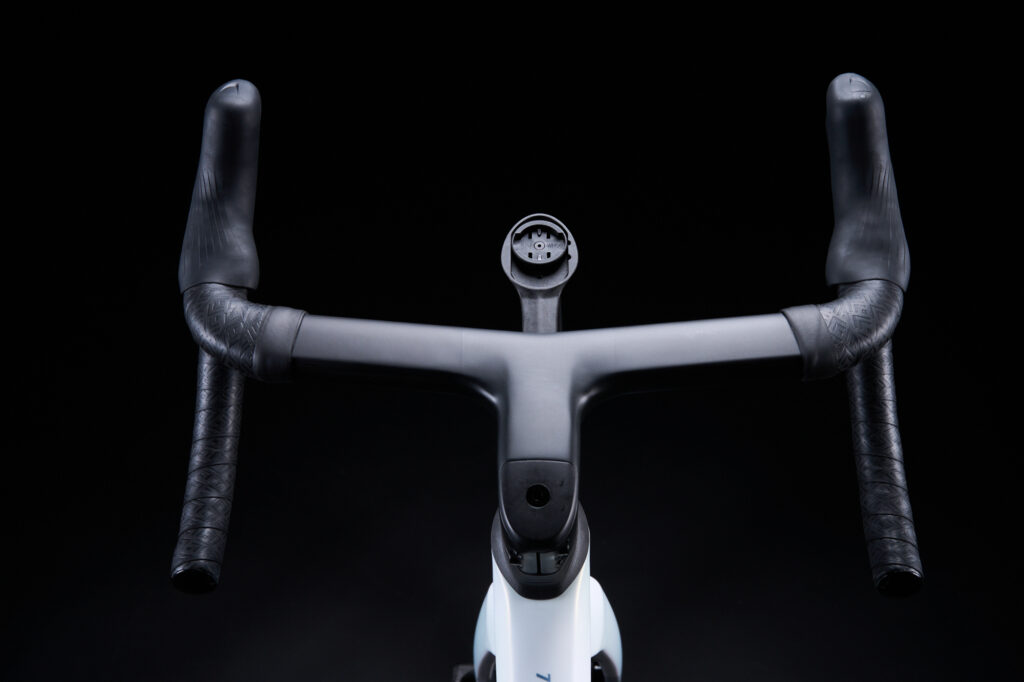
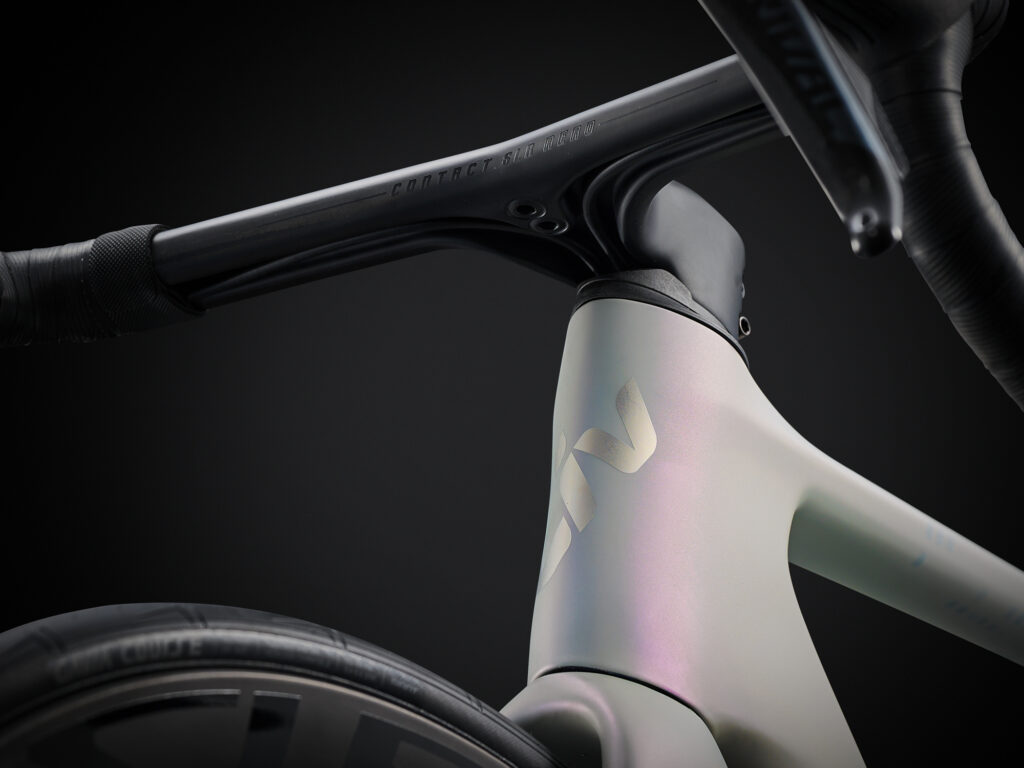
The new Contact SLR Aero is a one-piece composite handlebar/stem replacing the previous two-piece setup. Flat tops with raised edges for aero positioning, reduced width at tops and drops (400/370mm flare at size M). Cable routing through the stem and head tube — Giant says this makes adjustments easier than most integrated designs, and I can confirm that checked out during our fitting sessions in Nice.
Wind Tunnel: Grischa 2.0
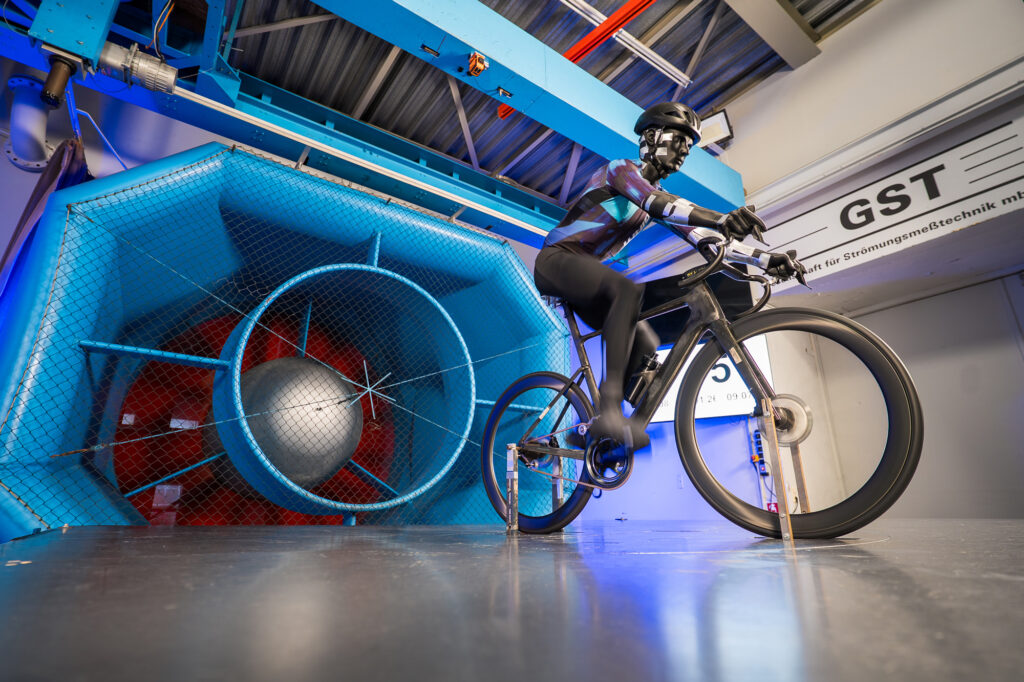
Giant built a completely new 3D-printed dynamic mannequin for this generation. More accurate leg/thigh/foot replication than the old carbon-molded version, interchangeable head with adjustable neck for helmet testing, modular body for swapping kits. Better mannequin means better data, which means better bikes. Simple as that.
On the Road in Nice
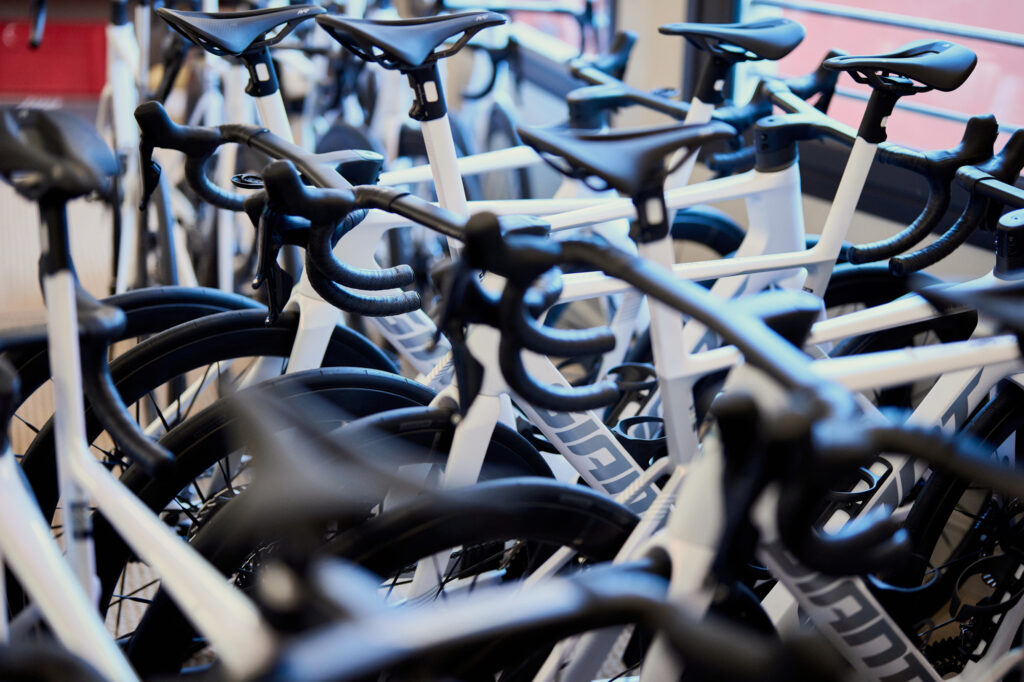
Watching them cut the carbon fiber seat post is almost a bit nerve racking. It truly is a moment where you measure twice, cut once, all while you squeeze your cheeks together a bit. But once done it only took me five minutes to dial in the rest of the bike. I think what helped me most was that I have done plenty of riding on the AMP saddle so getting that set was easy. While I would have preferred a slightly shorter stem, the one provided was very workable.
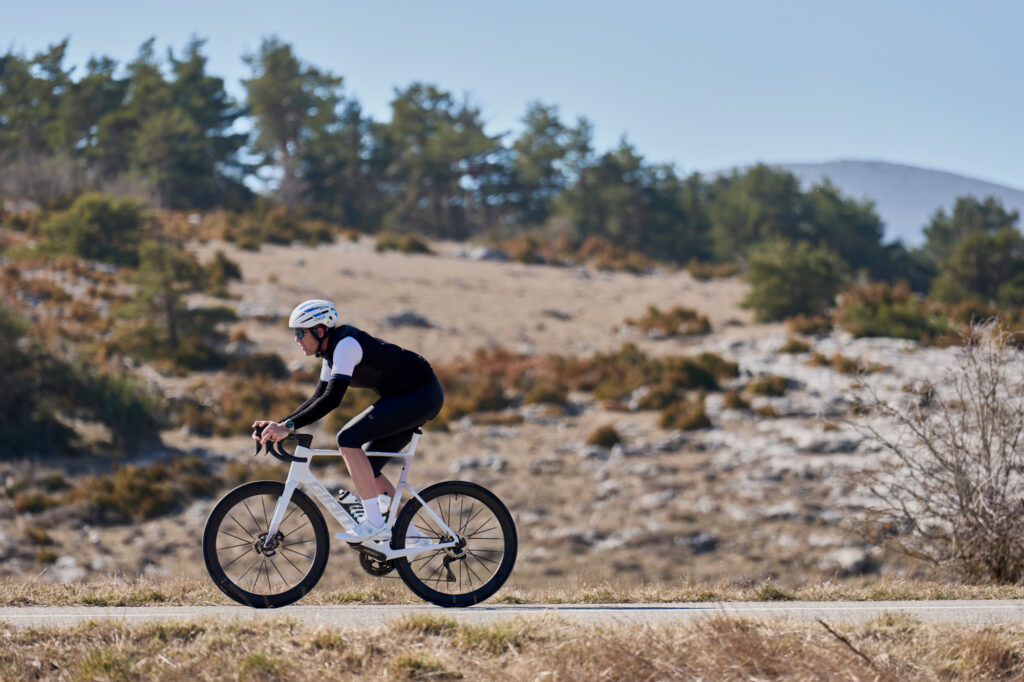
Day one through Vence and the villages — and lots of stops for photos. The bike felt smooth and precise on the descents. I think what I noticed the most was how much I liked the tires compared to the older ones. Everything was fine and going into a bigger climbing day was no longer a big deal.
Day two on the IRONMAN World Championship course was just fun. The bike snapped out of corners exactly like the stiffness numbers promise. We were in a big group of riders and it was fun to switch around and talk to other editors through out the day I was able to follow Ronan from Escape Collective down the decent at the top. That dude can ride a bike. Not that I’m a pro rider at all, but I can see how the Tour team could use this bike in almost every stage instead of switching between the Propel and the TCR Advanced.
The Propel Range
There are three tiers of builds, all sharing identical geometry from XS through XL:
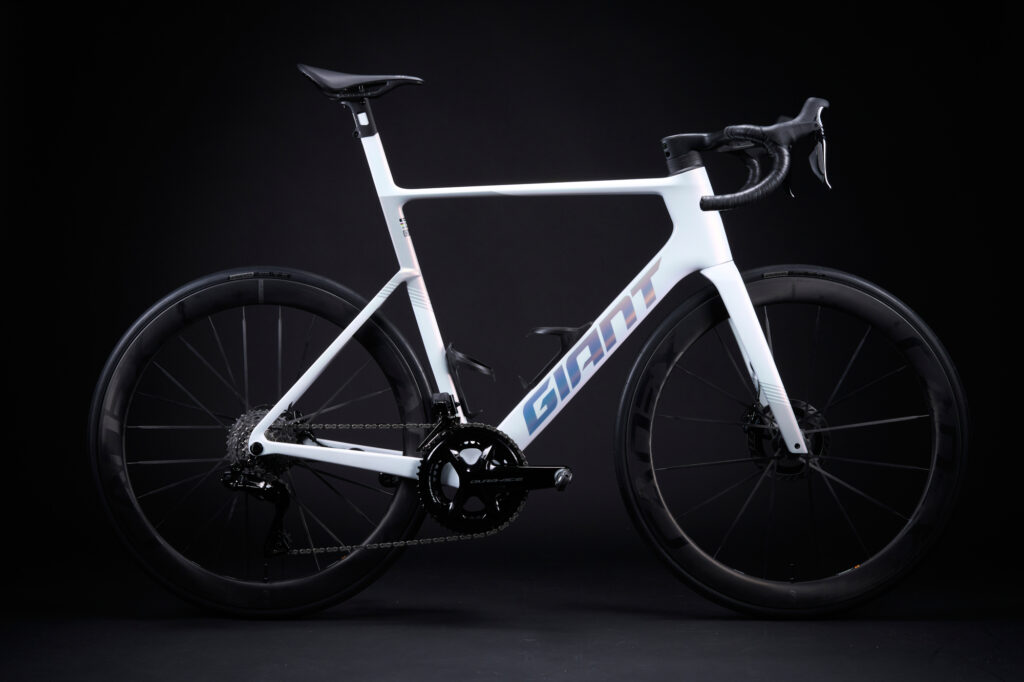
Propel Advanced SL — Top tier. Advanced SL composite, one-piece mold, CNT resin, cold-blade cutting, thinline painting, ISP, CADEX Max 50 wheels. The SL 0 with SRAM RED AXS runs $13,000.
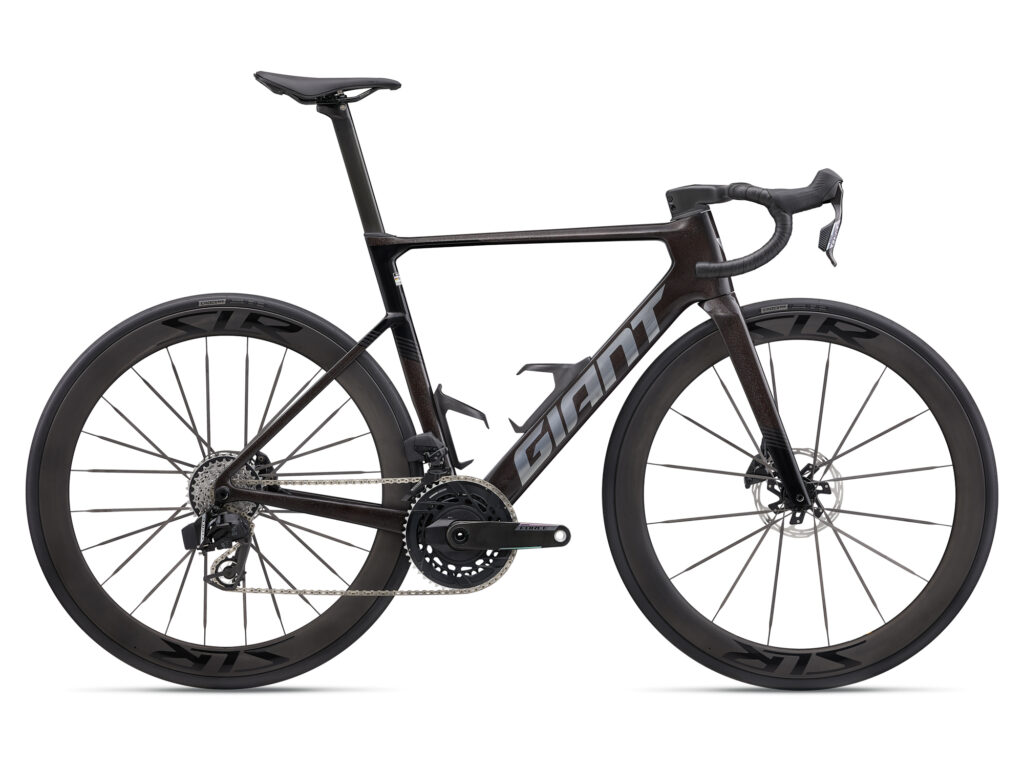
Propel Advanced Pro — Advanced-grade frame, Modified Monocoque Construction, Advanced SL fork, Vector adjustable seatpost. The no-ISP option.
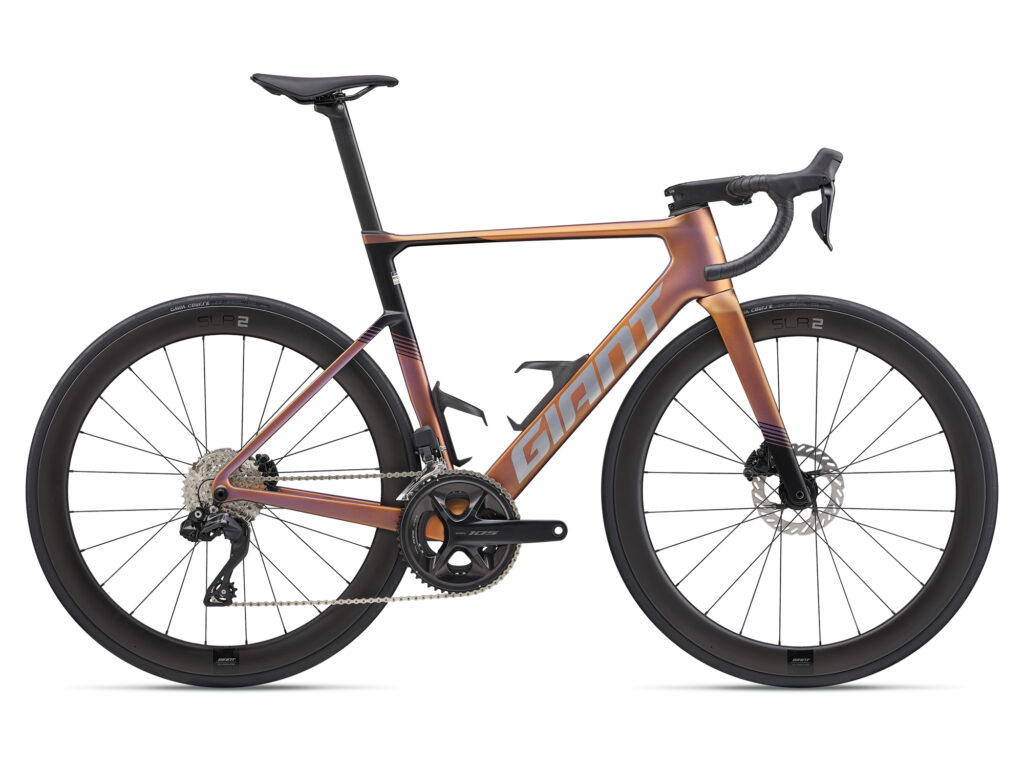
Propel Advanced — Advanced-grade throughout, Vector seatpost, Giant-branded wheels and tires. Most accessible entry to the platform.
The Wheels and Tires: CADEX Max 50 & CADEX Aero
Both the Propel and EnviLiv Advanced SL roll on the same rubber and carbon — the new CADEX Max 50 WheelSystem and redesigned CADEX Aero tubeless tires. These aren’t afterthought spec choices. They account for roughly half the total watt savings on both platforms.
CADEX Max 50 WheelSystem
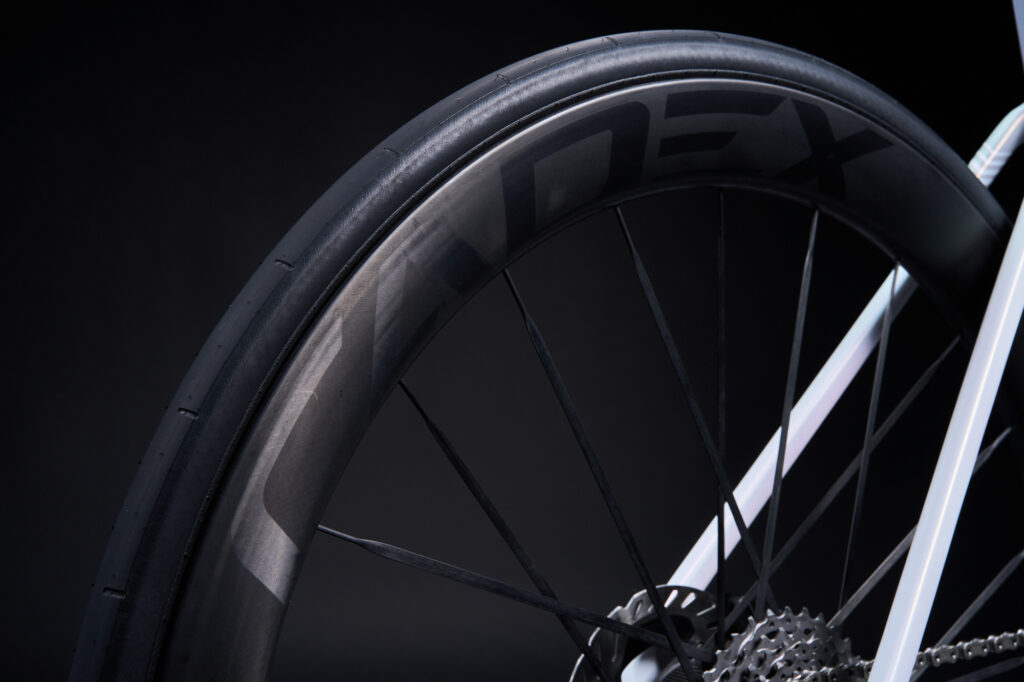
If you’ve been following our CADEX coverage on Slowtwitch, you already know this platform. We first covered the Max 40 when it launched in 2024 — the ultralight climbing wheel at 1,249g that Team Jayco AlUla races in the WorldTour. I noted then that CADEX was going after the bladed-spoke market with 30%+ more lateral stiffness-to-weight at half the price of the top competitors. More recently, we took a deep dive into the Ultra 40 and Ultra 50 — the non-integrated spoke wheels that have been the CADEX workhorse since 2022. I put a couple hundred miles on those and came away impressed, though I noted the Ultra 50’s rear hub could use the upgraded 48-tooth ratchet the Ultra 40 got.
The Max 50 fixes that and then some. Same integrated hub-and-spoke architecture as the Max 40 — R3-C48 hub with 48-tooth ratchet, Dynamic Balanced Lacing, 22.4mm hookless inner width — now in a deeper 50mm aero profile. Just 41 grams heavier than the Max 40 at 1,290g with valve and tape. And yes, you can still true the wheel independently, which I appreciated about the Max 40 and which other integrated spoke systems have historically lacked.
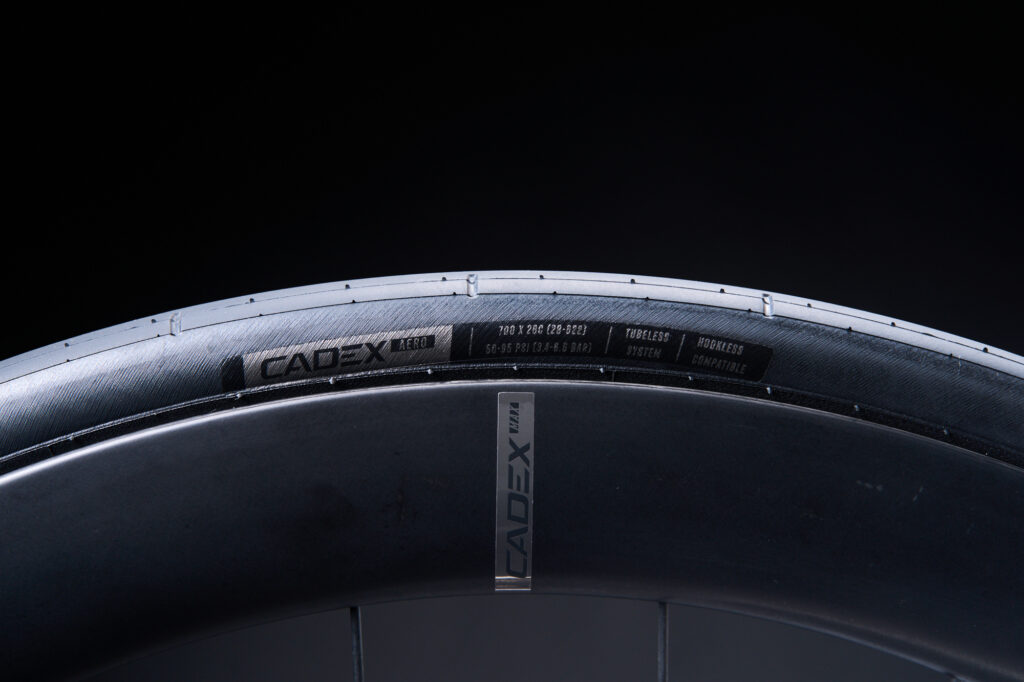
The numbers vs. the outgoing Ultra 50: 2.18 watts less aero drag per wheelset at 40 kph, 5.4% more transmission stiffness (96.08 vs. 91.16 N/mm), 3.2% better lateral stiffness-to-weight, and 14.3% better rear transmission stiffness-to-weight. Fifty-nine grams lighter too (1,290g vs. 1,349g). And the other key specs: 50mm depth, 30mm outer / 22.4mm inner width, hookless, 16H front / 24H rear DBL, R3-C48 aero hub with wave spring, ceramic bearings, Shimano / SRAM XDR / Campagnolo N3W compatible. Lifetime warranty for registered owners with 5-year incident replacement.
On the road in Nice, the Max 50s felt snappy out of corners and stable in the crosswinds whipping through the valleys above Vence. The 48-tooth engagement is immediate — you feel it the instant you put power down after coasting into a turn.
CADEX Aero Tire: Wider, Lighter, Faster
OK, this genuinely surprised me. Going from 25c to 28c usually means adding weight and more rolling resistance as a trade-off for comfort. CADEX flipped that entirely. And, of note — the industry is continuing to move away from the ETRTO recommendation on hookless of 72 PSI.
The new 28c CADEX Aero is 55 grams lighter per tire than the outgoing 25c — 220g vs. roughly 275g — thanks to a re-engineered 240 TPI Supple Race Casing. That’s 110 grams saved across both tires by going wider. Rolling resistance dropped 2.8 watts per wheel (13.7W to 10.9W), for 5.6 watts total savings. On top of that, the taller, wider aero profile with 64 microgroove shoulder tread cuts 0.76 watts of aero drag per wheel at the tire-to-rim interface.
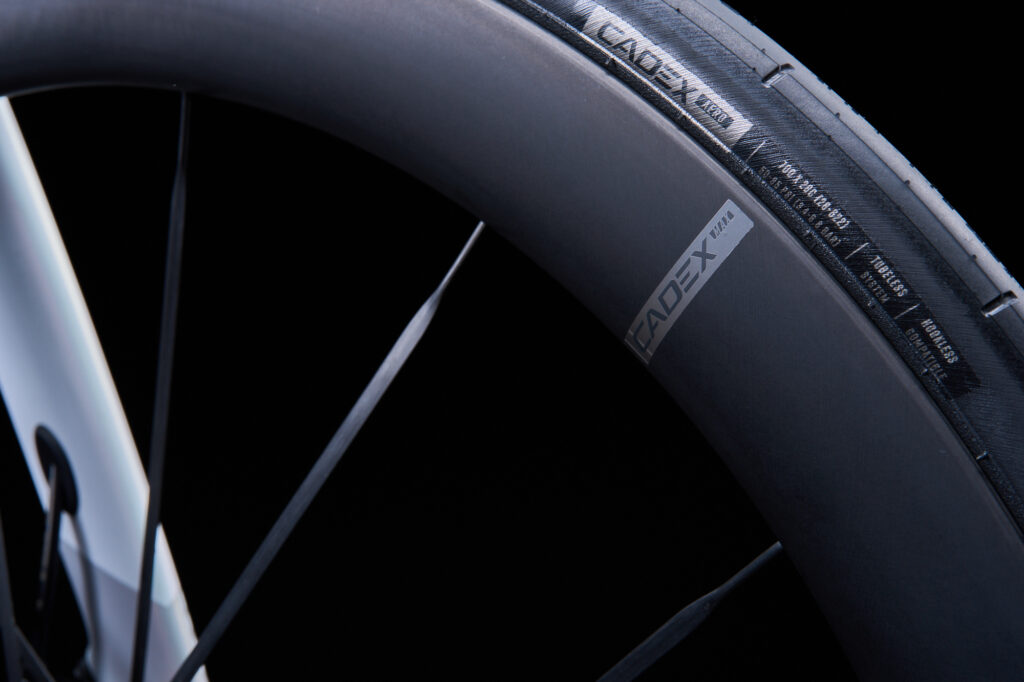
As our readers know from the Ultra WheelSystem piece, we’ve been tracking CADEX tire development closely and comparing against the top rubber via Bicycle Rolling Resistance data. The previous CADEX Aero Cotton was a solid all-rounder but wasn’t competing with the fastest race-day tires. This new Aero 28c with the RR-A compound and 240 TPI casing is a different animal. Puncture protection comes from Race Shield — ultra-lightweight Kevlar center patch. Available in 28c (220g, max 95 PSI) and 30c (280g, max 85 PSI), tubeless with CADEX sealant. It’s not the fastest tire compared to some of the paper thin ones on the market but for how sturdy it feels it’s rated pretty fast.
Real-world: on day two’s 54.5 miles with 5,430 feet of climbing on varied surfaces, the 28c Aeros felt supple and quick with noticeably less road buzz than you’d expect from a tire this aero-focused. Grip through tight, sometimes gravelly switchbacks above Carros was confidence-inspiring. Zero puncture issues across both days for all 38 riders. I rode at a 65psi and loved every minute of it.
Add it up the claims: the Max 50 saves 2.18 watts aero and the Aero tires save 5.6 watts rolling resistance plus additional aero savings — roughly 8 watts of the Propel’s 18.44-watt improvement from the wheel-and-tire system alone. That’s nearly half the total gain from bolt-on components. CADEX isn’t just a brand slapped on Giant’s high-end stuff — they’re doing real engineering that moves the needle. As I said in our Max 40 coverage, this brand is here to stay and they aren’t going away from hookless either.
Bridging the Gap: Propel vs. EnviLiv Geometry
Before we get into the EnviLiv, let’s look at how these two bikes differ where it matters most for fit. Both share the same chainstay length (405mm), similar proportions, and the same OverDrive Aero head tube. But the details reveal two different fit philosophies on the same engineering foundation.
The Giant Group has been the only company that has never backed off the women’s specific geometry program they have long supported. It means Liv can focus exclusively on women and women in cycling, and they have an amazing group of women at the helm and it was super awesome to be able to sit down and meet with them. I liked the fact that they were doing this launch together with Giant, instead of two separate events.
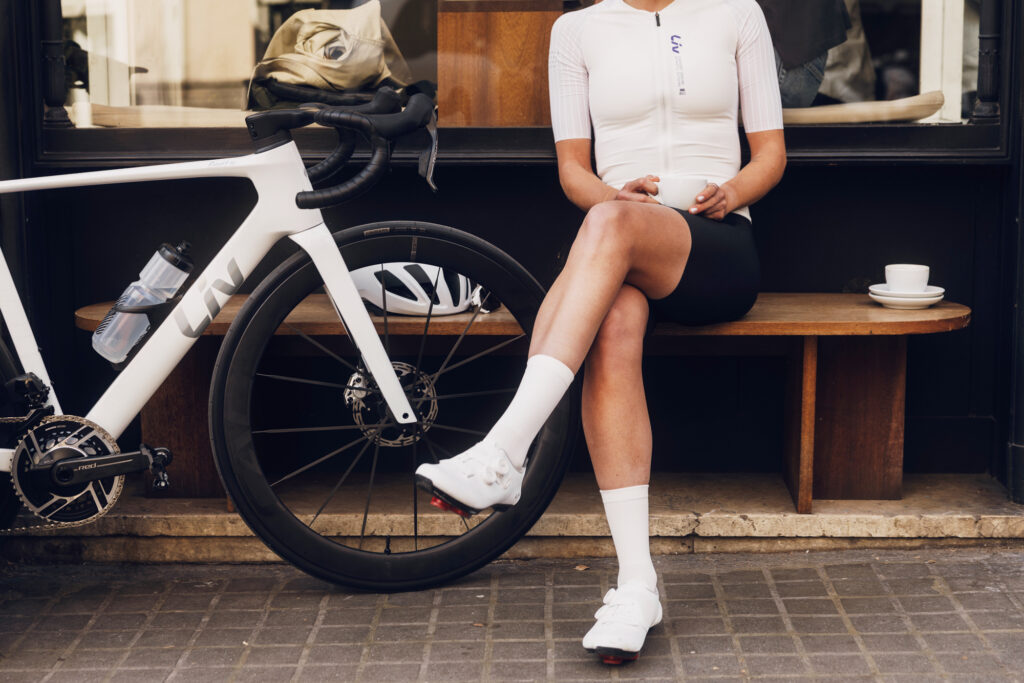
What stands out to me is that with the EnviLiv is they didn’t just follow the “shrink it and pink it” philosophy and taken a Propel medium frame, painted it pink, label it a small, and claim that it’s a women’s bike. They actually took the time and put the money into making it different where it actually maters and you can tell in the geometry.
Meet Georgia
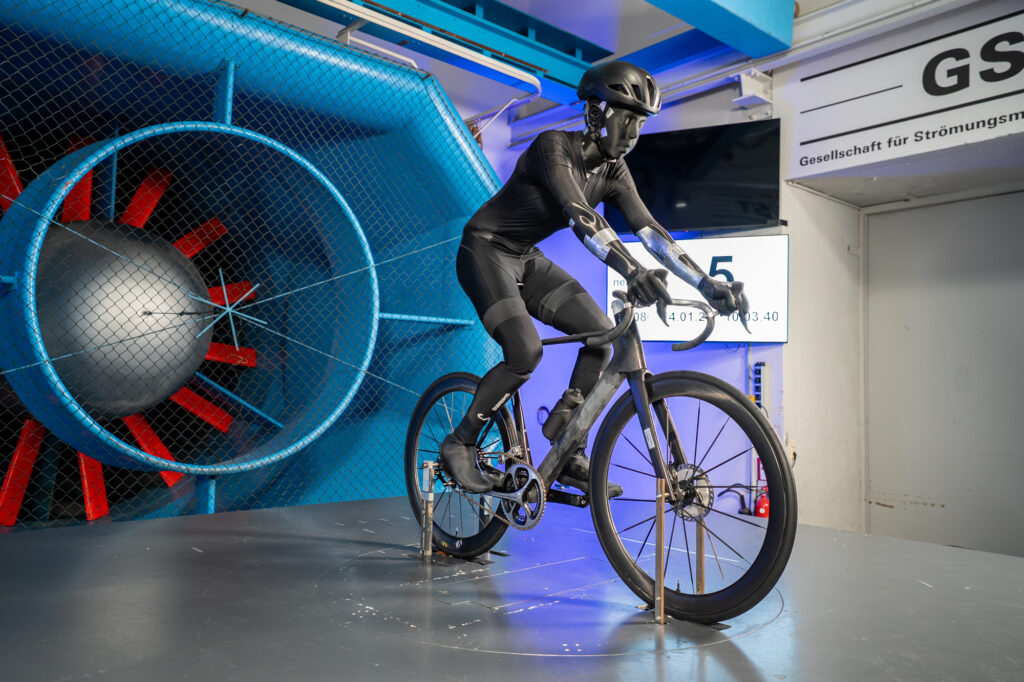
This is where the EnviLiv story diverges most meaningfully. While Giant used Grischa 2.0 — a male-reference mannequin — Liv developed the EnviLiv using Georgia, a 3D-printed female-reference mannequin modeled on Georgia Baker from LIV AlUla Jayco.
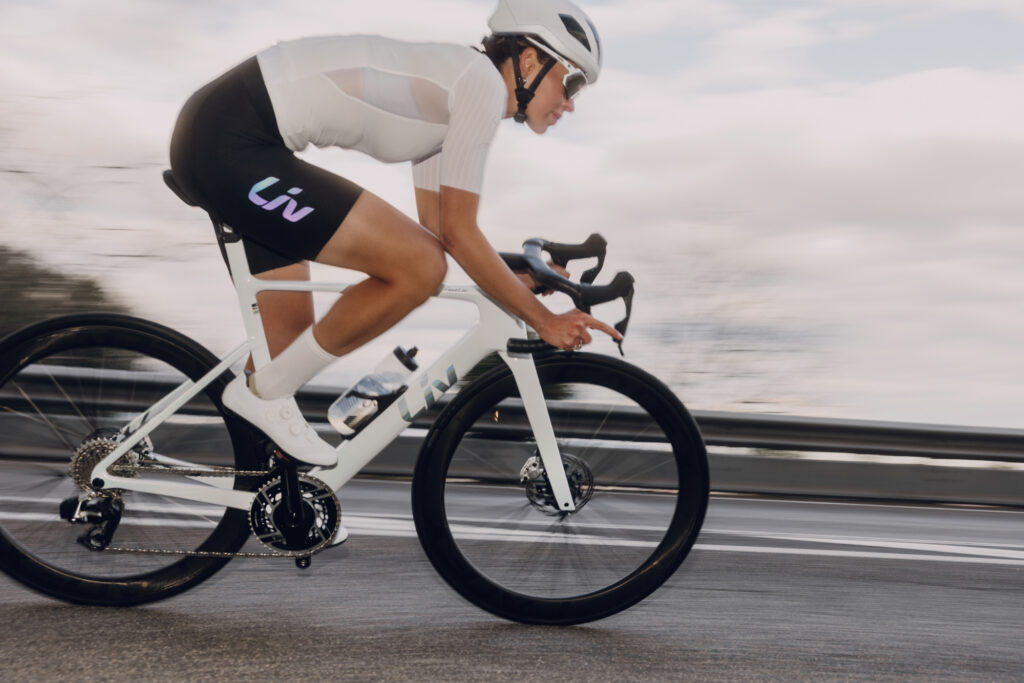
Georgia incorporates realistic female body geometry: upper-torso form including chest anatomy, refined leg and thigh proportions, and the foot-and-shoe interface. Interchangeable head for helmet testing, thermal sensors for heat dissipation measurement — same tech as Grischa, different body.
Why it matters: airflow around the torso, inner thighs, and shoulders follows different paths on differently shaped bodies. Tube profiles optimized for a male mannequin won’t necessarily deliver optimal results for a female rider. Liv developed the EnviLiv’s entire aero package around the body that will actually be riding it.
The EnviLiv’s total system resistance of 262.24W is higher than the Propel’s 249.32W — but those numbers come from different mannequins on differently shaped frames. Comparing them directly is like comparing two bikes tested in different tunnels. What matters is each bike was optimized for its intended rider.
Key differences at size M:
- Fork rake: 45mm (Propel) vs. 49mm (EnviLiv). Four more mm of rake on the EnviLiv at every size — slightly less trail, quicker steering feel.
- Reach: EnviLiv shorter at every shared size — 383mm vs. 388.3mm at M. More compact position without extreme stem adjustments.
- Seat tube angle: Steeper on the EnviLiv (74° vs. 73.5° at M), positioning the rider more forward over the BB — a women-specific geometry adjustment for different average hip angle.
- Handlebar width: 30mm narrower on the EnviLiv at M (370mm vs. 400mm). Less frontal area, matching narrower shoulders. This is something I have heard a lot of female riders talk about when it comes to stock bars on bikes
- Sizing: Propel offers XS through XL (six sizes). EnviLiv offers XXS through L (five sizes). The EnviLiv drops ML and XL, adds XXS with a 366mm reach and 494mm stack — serving smaller riders who’ve historically been forced to compromise.
These aren’t random. They’re the result of designing around women’s proportional tendencies — shorter torso relative to legs, narrower shoulders, different hip angle — rather than scaling a unisex design down.
The Liv EnviLiv Advanced SL
8.62 Watts Faster. 121 Grams Lighter. Women-First Aero, Redefined.
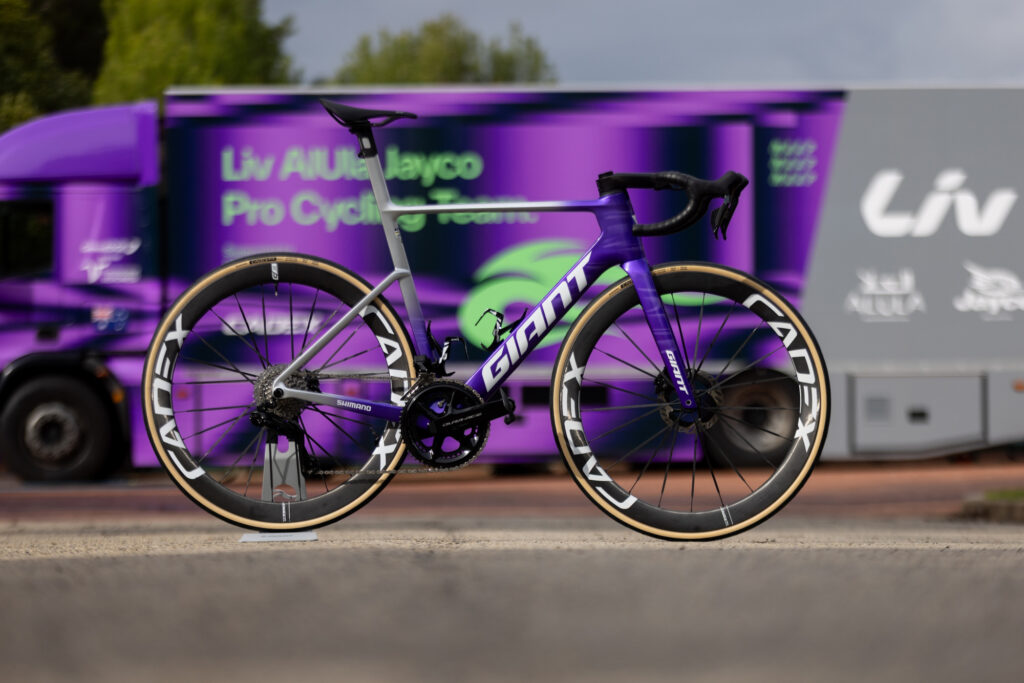
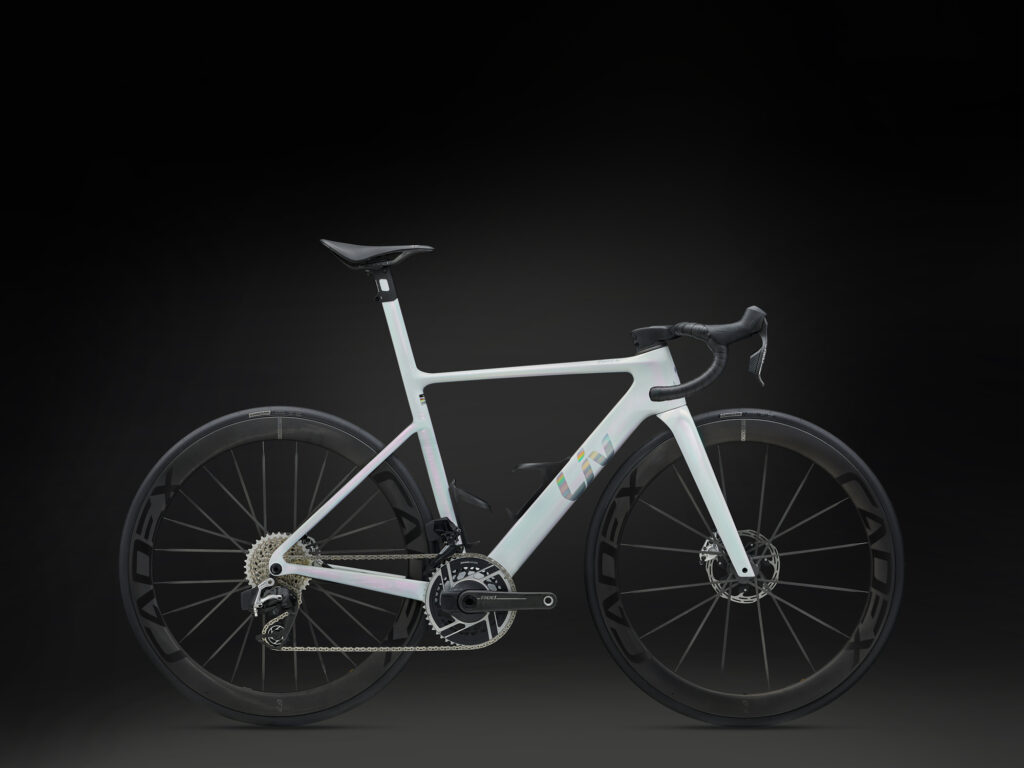
The EnviLiv has its own origin story. In 2013, Liv launched the Envie — the world’s first aero road bike designed from the ground up for women. Marianne Vos rode it to the UCI Road World Championship that year. Four generations later, the EnviLiv Advanced SL is the most advanced expression of that women-first philosophy: not a smaller Propel with different paint, but a bike developed around a female body in the wind tunnel with geometry tuned for women’s proportional differences.
What’s New
The fourth-gen EnviLiv saves 8.62 watts of total system resistance over its predecessor at 40 kph. That’s a meaningful gain considering the third-gen was already a relatively recent platform with less headroom. The breakdown: 2.6 watts from reduced frame aero drag, 0.42 watts from wheel rotational drag, 5.6 watts from the new CADEX Aero 28c tires.
The frameset sheds 120.93 grams (7.7% reduction) — the lightest EnviLiv ever. Frame drops from 861g to 805g. Transmission system savings total 411 grams (10.5%). Same manufacturing tech as the Propel: one-piece monocoque, cold-blade cutting, CNT resin, thinline painting. The big news for the EnviLiv specifically is the integrated seatpost — first time ISP has appeared on this platform, saving 64 grams over the Vector post while adding compliance.
Stiffer Than Its Predecessor — By a Lot
This is the impressive one. Pedaling stiffness jumped from 75 to 86 N/mm — a 14.7% improvement in a single generation. Torsional stiffness holds at 120 Nm/°, fork stiffness up 3.5% to 59 N/mm. Frameset stiffness-to-weight surged 19.1%.
Here’s what’s interesting: the EnviLiv actually beats the Propel in pedaling stiffness (86 vs. 84 N/mm) and frameset stiffness-to-weight (100.47 vs. 99.8). The Propel leads in torsional stiffness (124 vs. 120 Nm/°) and system controlling stiffness (8.3 vs. 7.7 N/mm). Different tuning priorities — the EnviLiv favors power transfer, the Propel favors steering precision. Both are elite-level.
The Cockpit
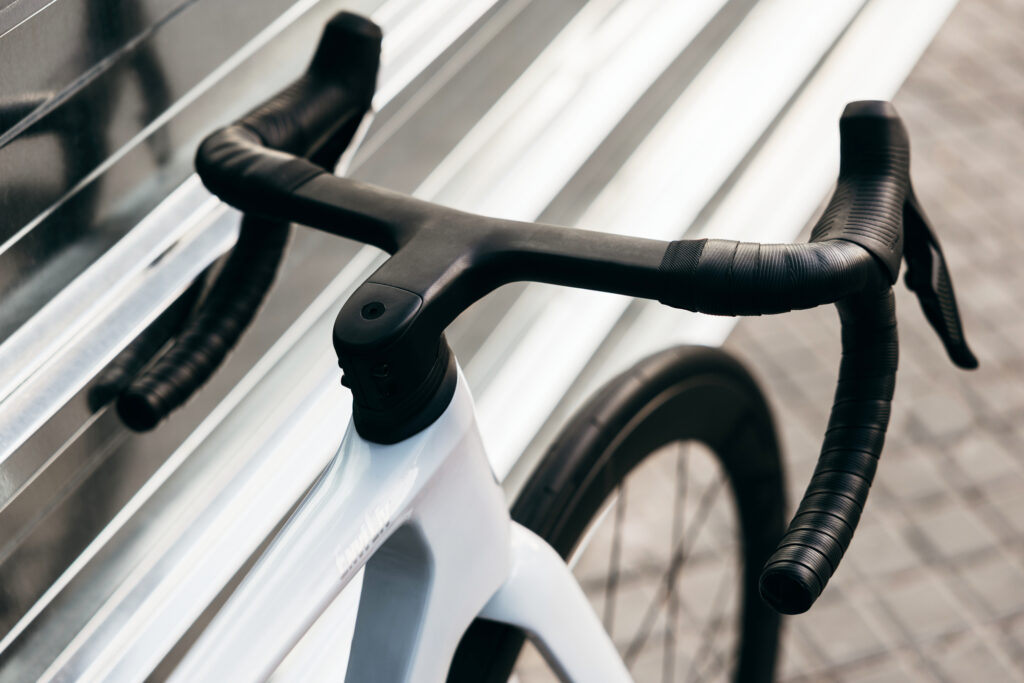
Same one-piece integrated concept as the Propel — the Liv Contact SLR Aero. Flat tops, raised edges, internal cable routing. The key difference: handlebar widths run 20–30mm narrower at every size (370mm at M vs. 400mm on the Propel), matching narrower shoulders and reducing frontal area.
Race Proven
Lisa Tertsch won the World Triathlon Championship on the previous EnviLiv and will debut a custom World Champion edition this season. L AlUla Jayco riders claimed elite and U23 national titles at the Australian Road and Criterium Championships. The bike is the official aero platform for both the WorldTeam (Strade Bianche, Tour de France Femmes avec Zwift) and Liv Racing Collective’s privateer network across road and triathlon.
The EnviLiv Range
Three tiers, identical geometry from XXS through L:
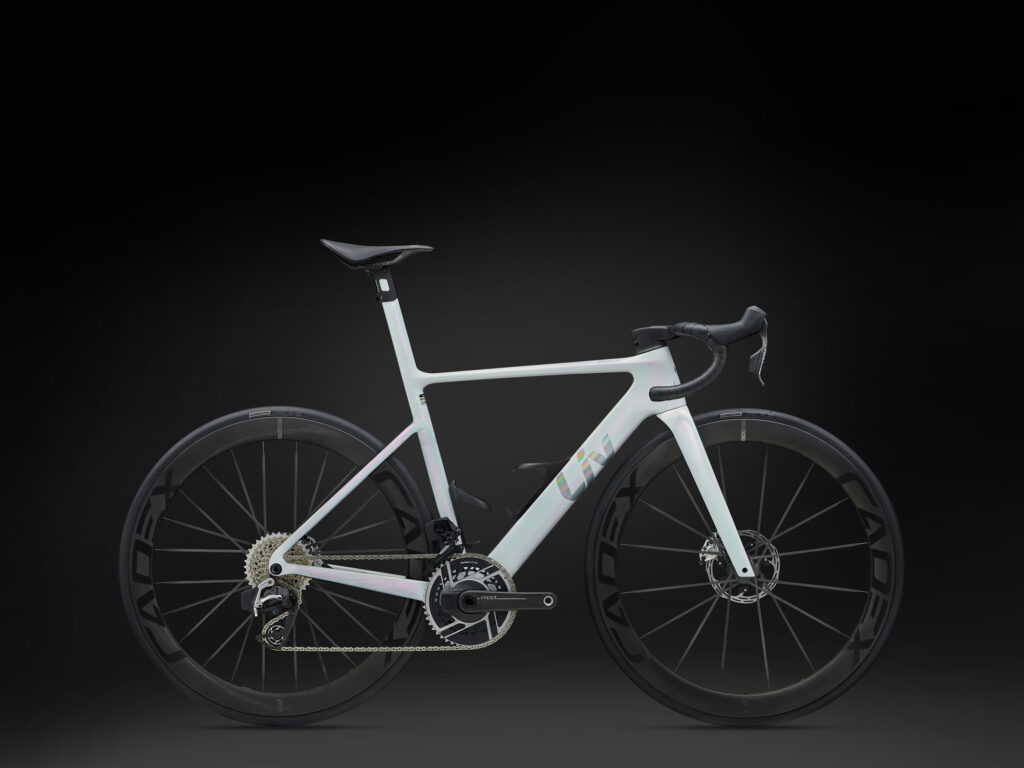
EnviLiv Advanced SL — Top tier. Advanced SL composite, one-piece mold, CNT resin, ISP, CADEX Max 50 wheels, CADEX Aero tires. SL 0 in Prism Pearl, SL 1 in Raw Carbon, frameset in Nitro Purple.
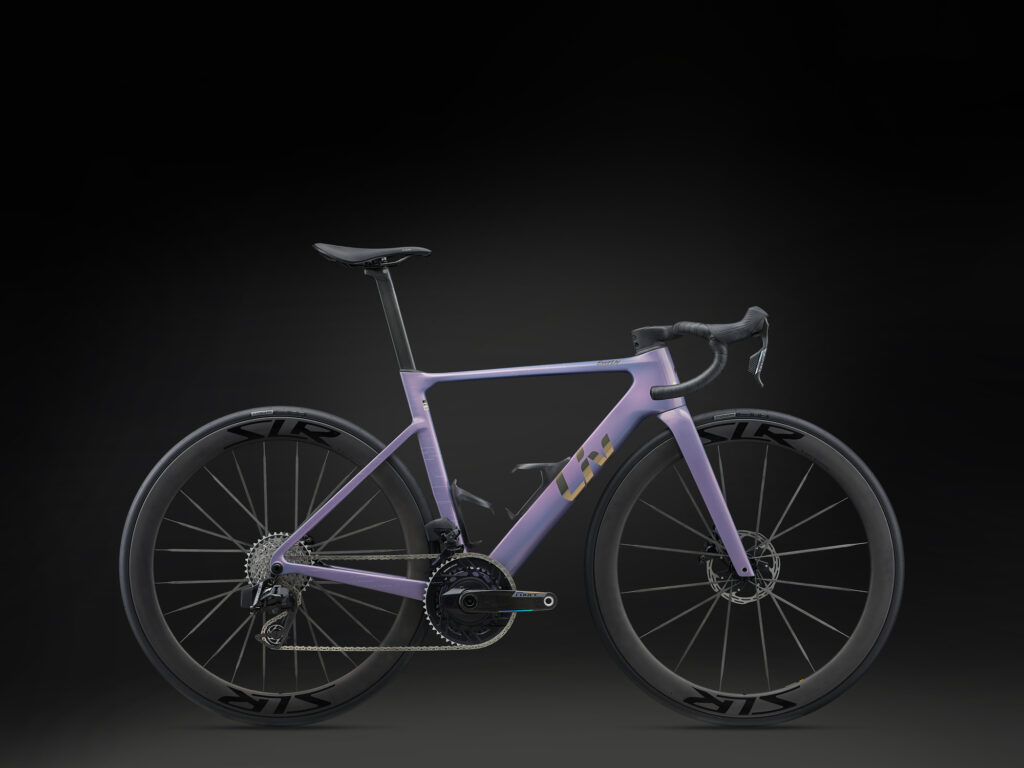
EnviLiv Advanced Pro — Advanced-grade frame, Advanced SL fork, Vector seatpost, Giant 50mm wheels. 74 N/mm pedaling stiffness (−14% vs. SL), 108 Nm/° torsional (−10%). 1,585g frameset. Ember Violet and Supernova Grey.
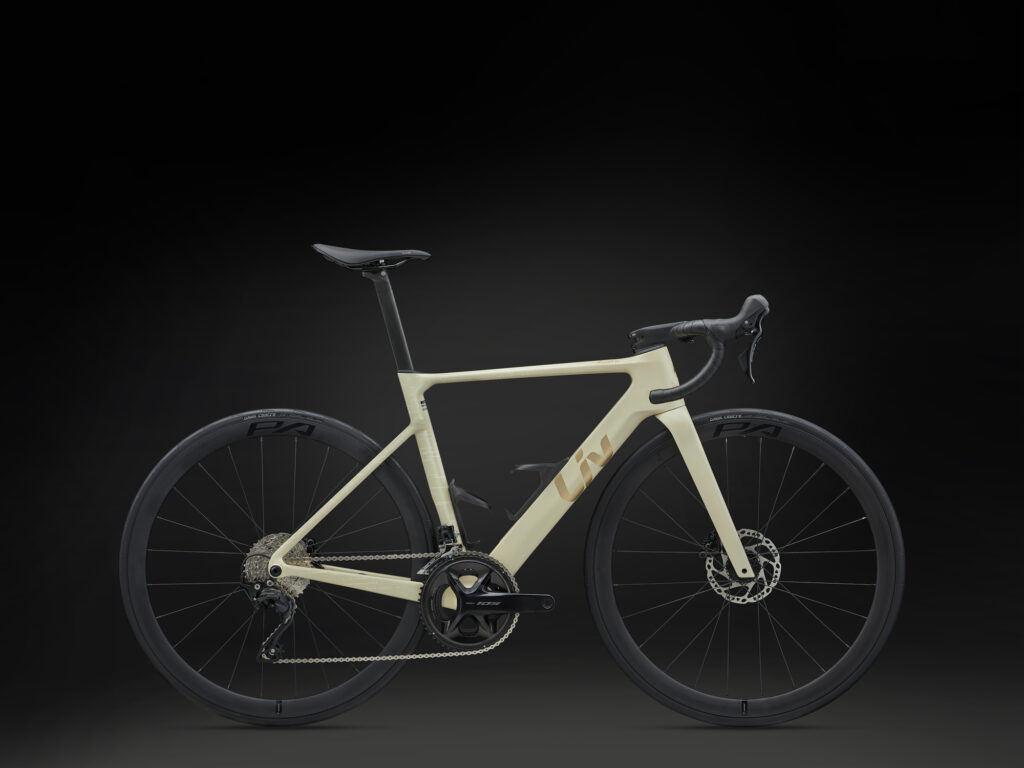
EnviLiv Advanced — Advanced-grade throughout, Vector seatpost, Giant wheels, Giant Gavia Course tires. 1,643g frameset. Cryo Silver, Neo-Gold, Null White, Desert Pearl, Midnight Pine.
Same Ambition, Different Execution
What’s remarkable about this launch is just how much these bikes share at the engineering level — and how deliberately they diverge at the design level. Identical frameset weight. Same wheels, tires, manufacturing technologies. Near-identical stiffness-to-weight. But different tube profiles shaped by different mannequins, different geometry tuned for different bodies, different sizing ranges serving different populations.
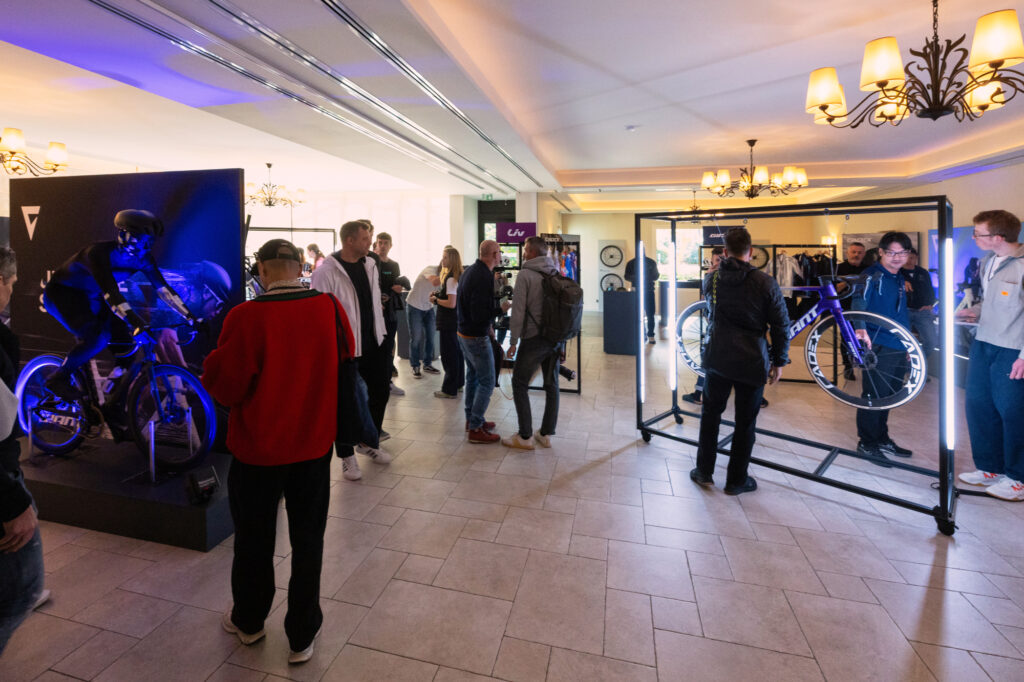
Like I said before the EnviLiv isn’t a smaller Propel. It’s a bike shaped around Georgia, not Grischa — It’s design is around a woman’s body in motion, not a man’s. And for Giant and Liv, that distinction is the whole point.
The Giant Group started by KING LIU in 1972 produced 3,800 bikes with 38 employees within 1 factory. Today it has over 10,000 employees, 9 factories, and produced 3.95 million bikes in 2025. It consists of GIANT, LIV, MOMENTUM, and CADEX. It was great to spend time with department heads at the 3 major brands that were present. Thanks for having us and thanks for making bikes.



Really nice to hear the continued dedication to a product line built for different proportions. Nicely done, Giant! The bike looks sharp!
And here’s McDonald’s take on the launch etc
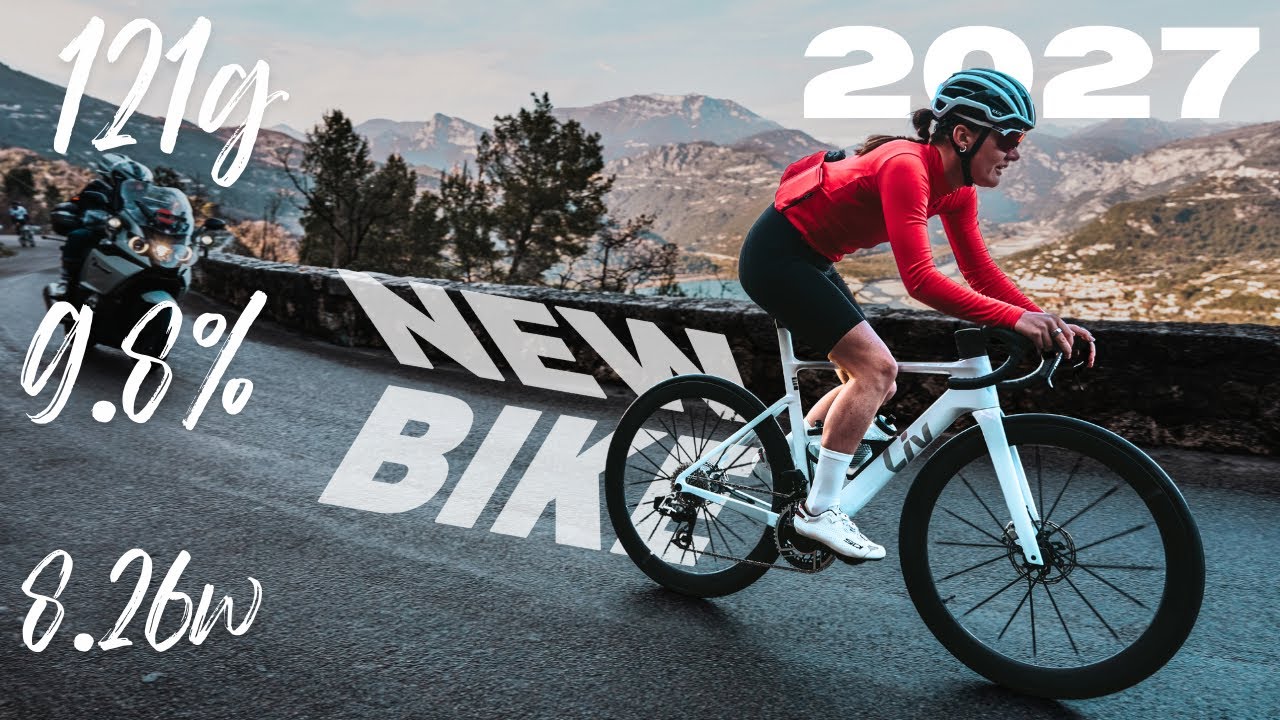
She’s super cool got to spend some time with her.
They are pretty random. Those changes are minor compared to intra-sex variation in body proportions. And the ANSUR databases do not show proportionally longer legs for females on average.
I’ve fitted 3 early teens female athletes recently - none of them can get anywhere near the Enviliv as they do have proportionally long legs (common for fast young triathletes as the sport favours runner body proportions). It would be far more useful to have low Propel and high Propel than Propel and slightly different Propel.
Yeah that money I would rather risk one of the other brands that DID try something rather different with their current frames and cockpits.
Like the Factor.
Mind you I am referring to the upper models, not the relatively bargain PA2 model at the bottom.
Otherwise yeah, similar formula. I still can see my 2016 PA2 in the DNA there.