
Can You Trust Suction Cup Technology? Allen’s Smart Suction Go Rack Might Change Your Mind
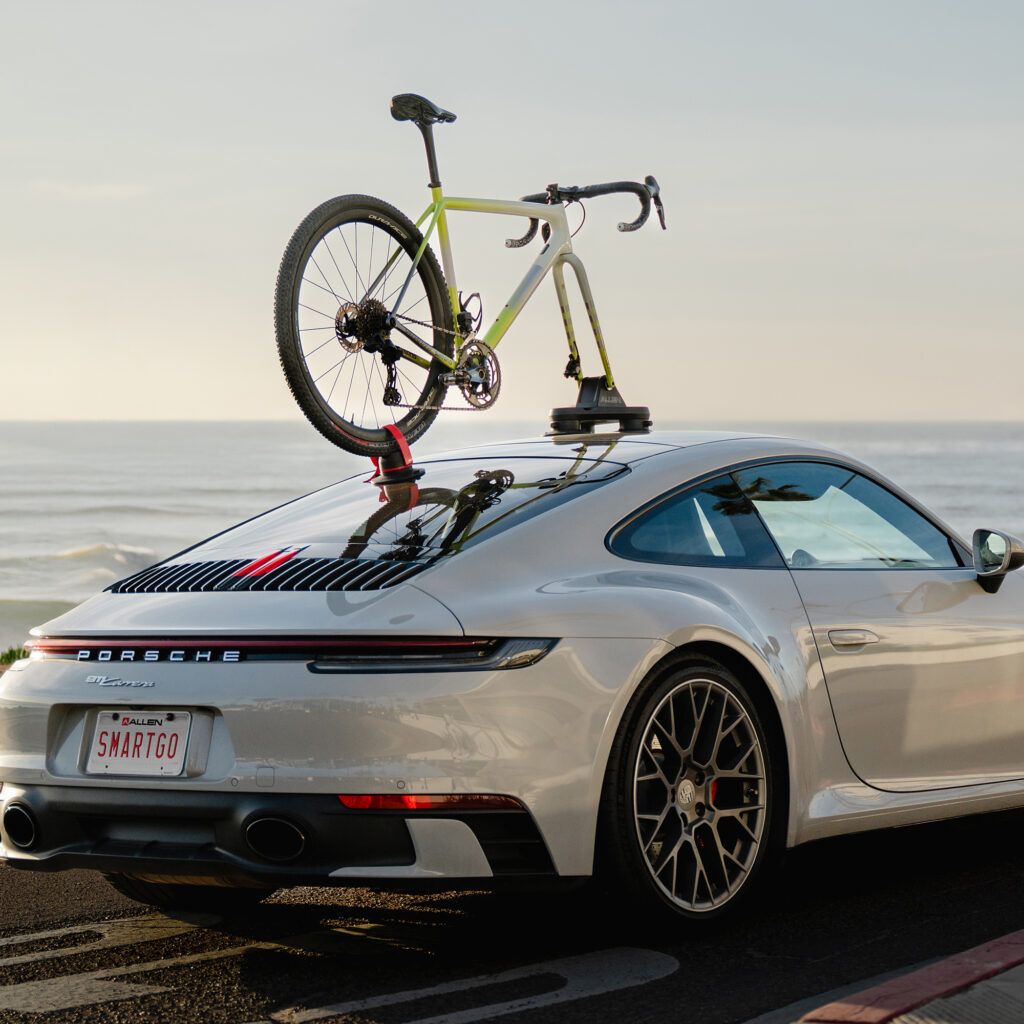
The technology has been around for a while, but it’s still not easy to trust your however-many-thousand-dollar bike on a suction-cup bike rack. But what if that rack came with an app that let you know if there was anything to worry about? When the folks from Allen reached out to me to see if I was interested in giving the new Smart Suction Go Compact 1-Bike Rack a try, I figured it was time to put my hesitations about the technology aside and put the rack to the test – especially once I heard that I would be forewarned if anything was going wrong before my bike disappeared off the top of my car.
For those who aren’t familiar with Allen bike racks, the company got its start way back in 1967 when Dick Allen, a Harvard physics graduate, was laid off from his job working on NASA’s Apollo program thanks to government budget cuts. Since he wanted to take his family on trips to Cape Cod and into the mountains with their bikes, and there weren’t affordable rack options available, he started drafting up bike rack designs and then building them in his garage. By 1971 he was selling Allen Bike Racks across the United States. Over the years the brand expanded beyond trunk racks to add hitch racks, spare tire racks, bike trailers and strollers to the mix.
Last year Allen added another innovative product to the line up – the Smart Suction Bike Rack, its first venture into the suction-cup rack world. What made the Smart Suction rack different were the bluetooth sensors that monitored the pressure and provided warnings if you needed to check on the rack. This year the company released the Smart Suction Go, which offers the same real-time monitoring, but in a more compact form factor than the original Smart Suction rack.
Easy Set Up and Installation
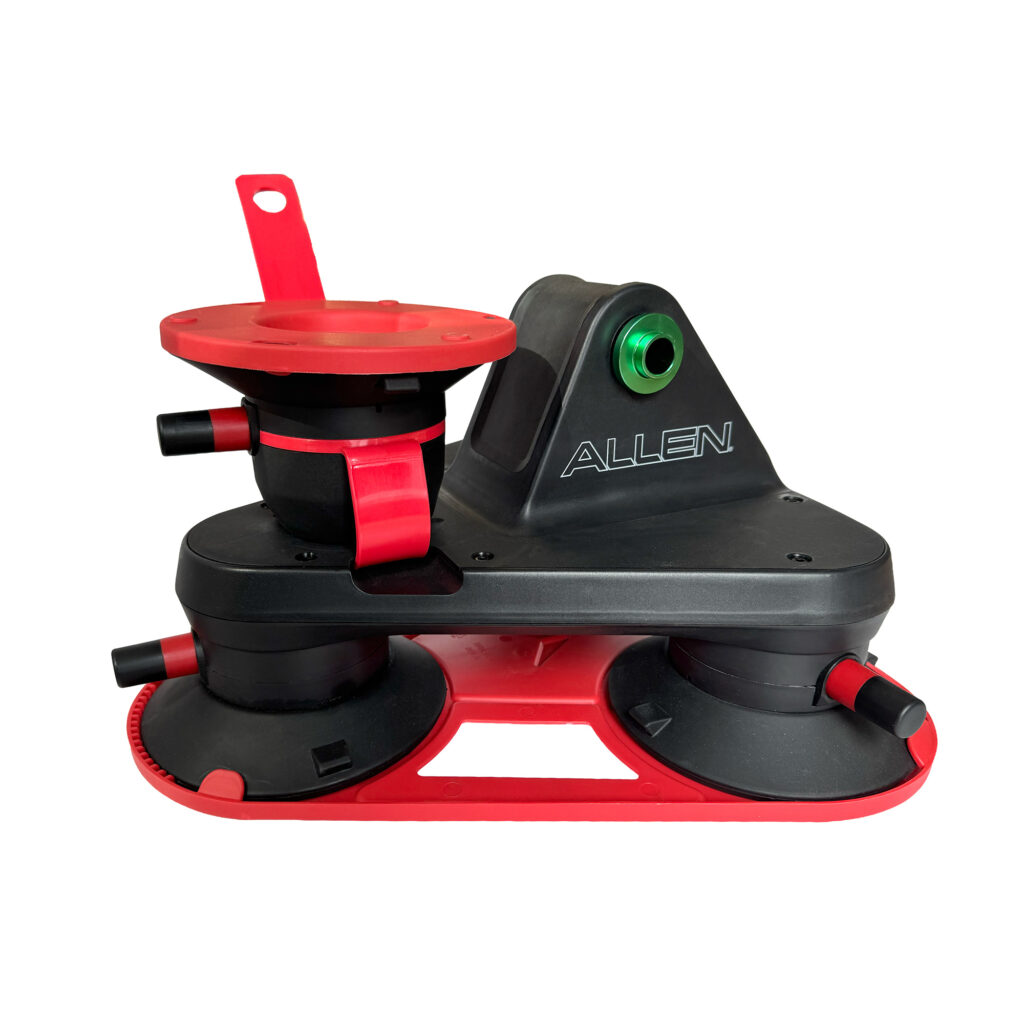
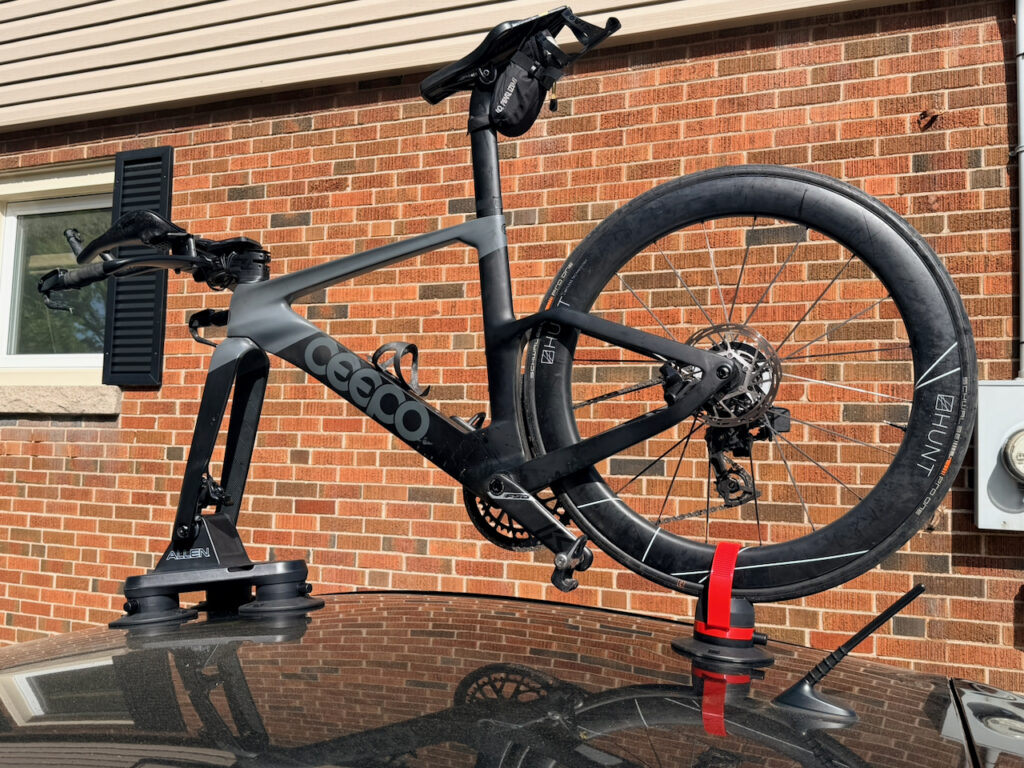
The folks at Allen are not joking when they talk about how compact this system is. Things are really easy to set up – you need to install four AA batteries into the front part of the rack. The system came set up for a quick release skewer, so, for me, the next step was to switch in the thru-axel that worked with my Ceepo frame. Once that was done, I was off to my car to get things set up.
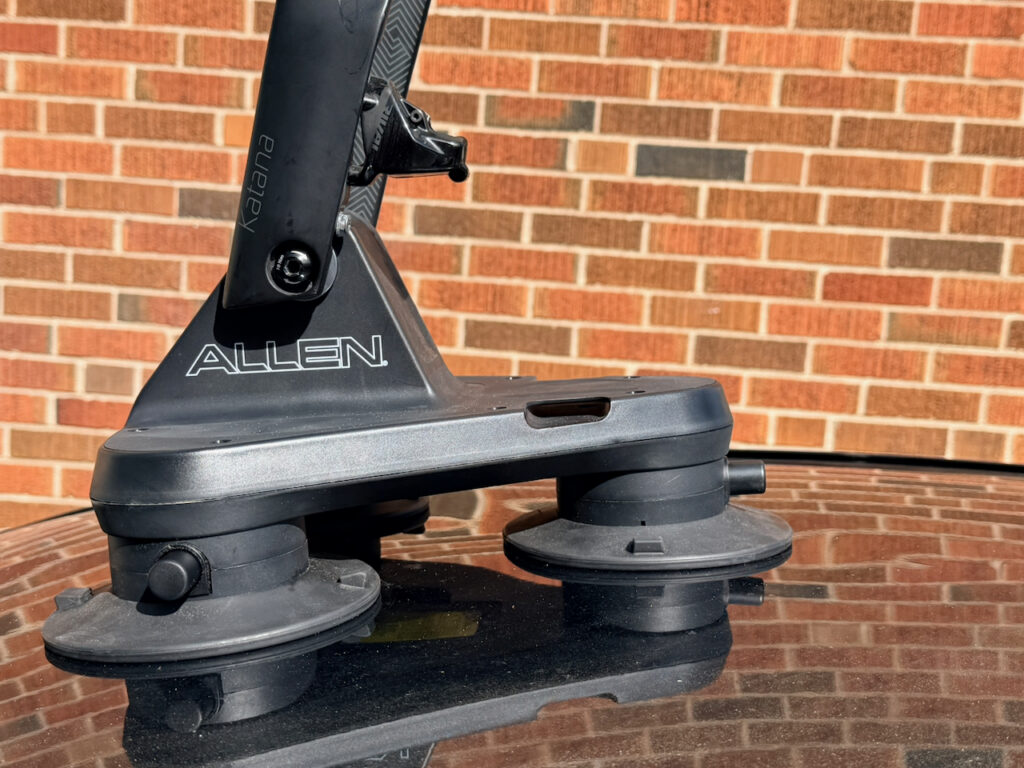
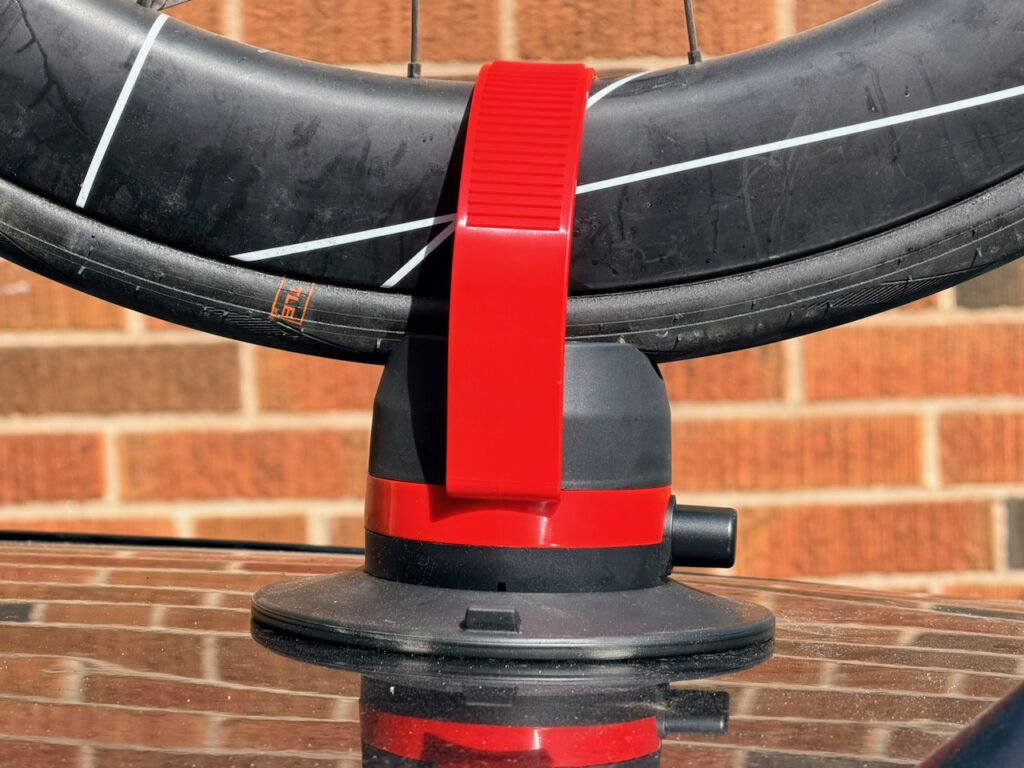
The system is incredibly versatile – I set things up on the roof of our Mazda 3 (yeah, I wish the Porsche in the featured photo was mine …), but depending on your vehicle, it can also go on the rear windshield. Once you’ve got things in place, there are buttons above each suction cup that you push to create the pressure that keeps the suction cups on the car – once all the red disappears (you can see the red and black button in the picture above) you’re good to go.
Bluetooth Connection
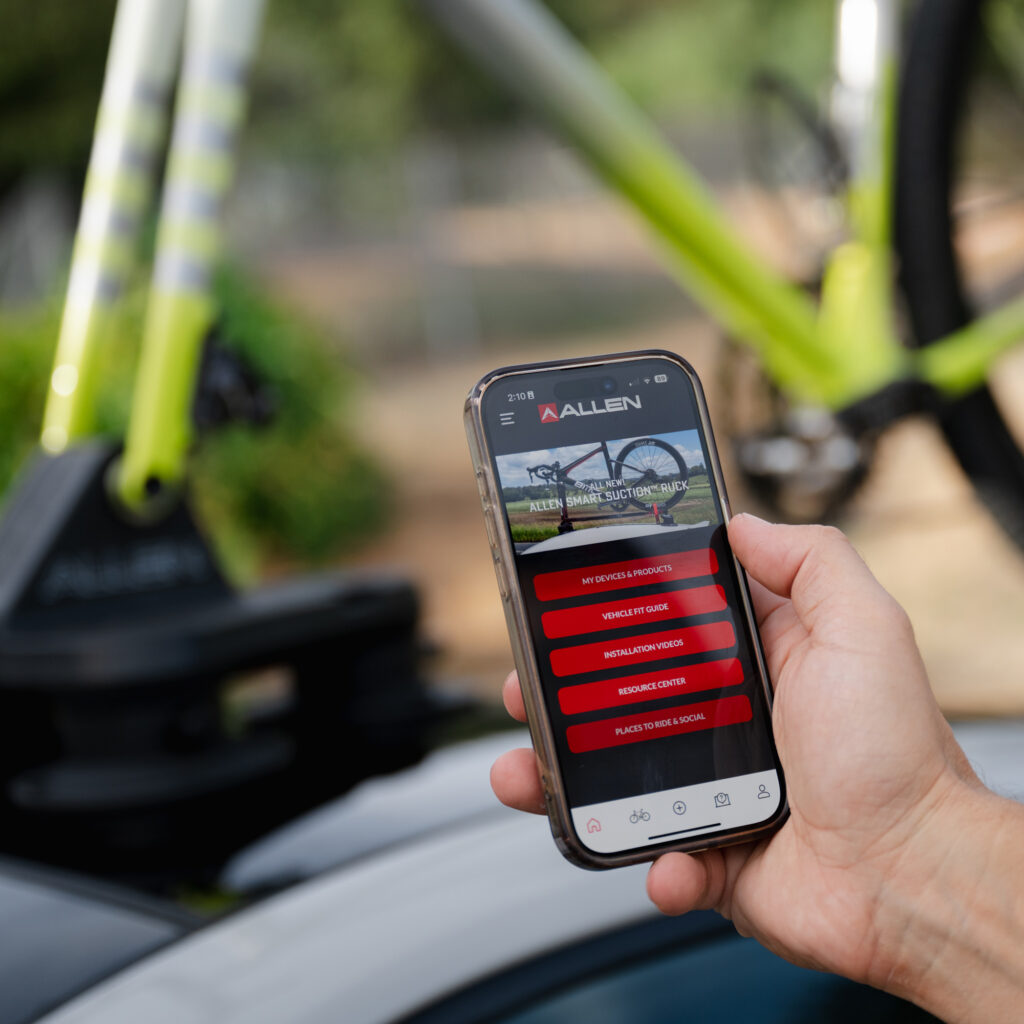
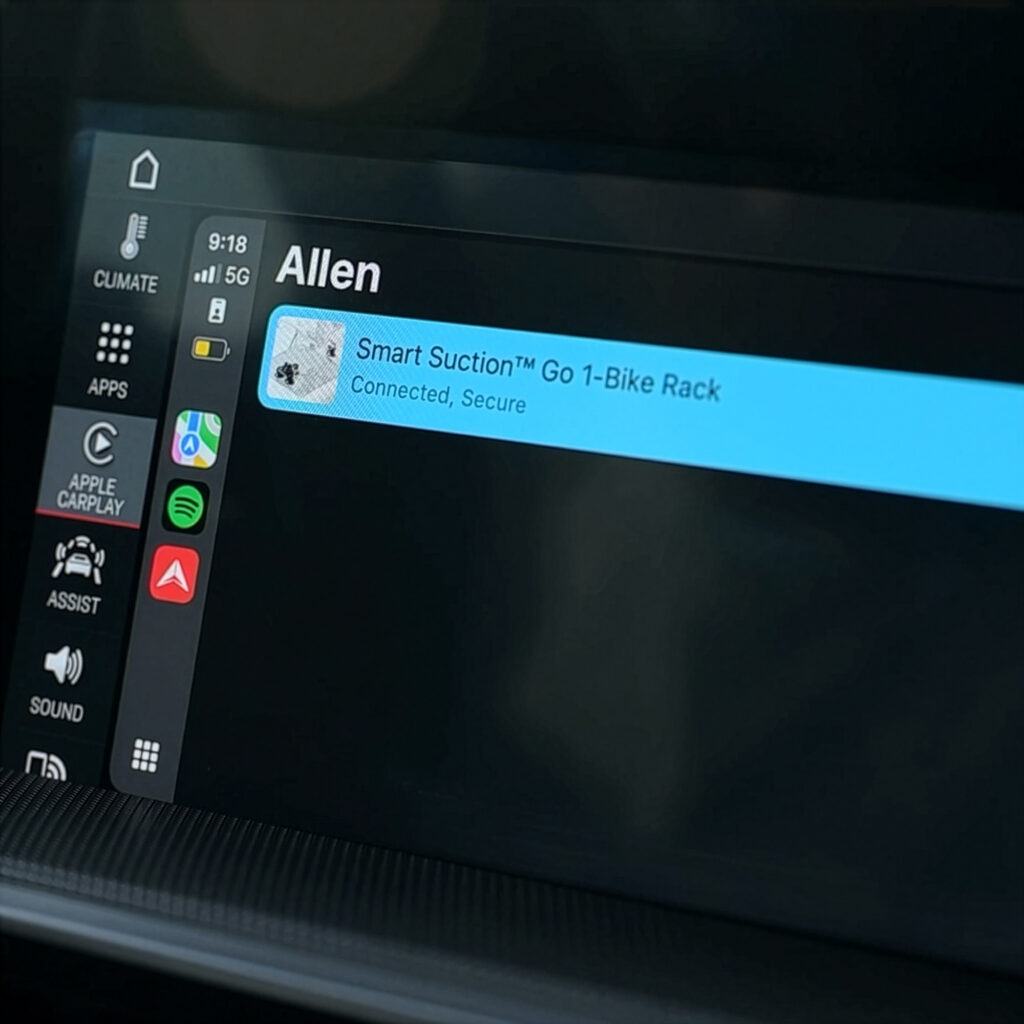
The only challenge I had with the system was the on and off button on the front unit, which I found to be a bit finicky. Once I figured out that a short, sharp push was the trick, things were easy. It was a breeze to connect the rack to my phone using the Allen app, which provided the reassuring message that there was “good suction.” That real-time reassurance is a game changer for this technology. While I happily never had any issues while driving, I was happy to see that the app warned me that there was an issue when I forgot to turn things off when I was taking the rack off.
While I haven’t tried the rack for any super-long trips, I have ventured on highways and done various other trips and had absolutely no issues. There isn’t the wind noise I’m used to hearing with mounted car racks, and the bike remained solidly in place for all my trips.
Pluses
- Bluetooth Monitoring: The reassurance of the app is, as mentioned, the true difference here. The suction-cup technology is likely very sound, but having that back up provides a lot of relief.
- Ease of use/ Portability: The system is really easy to use and carry around. It will fit on a variety of different cars – you could even easily use this on a rental car if need be. It’s really easy to store at home, too.
- Compatibility: There are lots of fork mount options – everything from quick release to thru-axles. It’s really easy to adjust the rear wheel tray to accommodate a variety of wheelbases.
- Price: At US$299, this is a relatively inexpensive roof mount option.
Minuses/ Limitations
- Weight: The rack will support a maximum of 35 lbs (16 kg). That’s probably more than enough for most high-end bikes, but those looking to travel with an e-bike could be out of luck here.
- Fork Mount: For me this isn’t a limitation, but for some people it could be a deal breaker. Having to remove the front wheel also means you will have to store it in the car. For those who like the ease of a tray mount that doesn’t require removing a wheel, this won’t be the rack for you.
- Security: This is a huge one – there’s no way to lock the rack to your car, and therefore to lock up your bike, either. So, once you get to your destination, you’re probably going to want to take the rack off and leave it in your car while you’re riding. Since it’s really easy to install, that’s not a huge deal, but it might be annoying to some.
- Batteries: I haven’t had any issues with the batteries running low, but I did make sure to put some extras in the car just in case.
- Vehicle restrictions: This rack won’t fit on convertibles or pick up trucks.
Final Thoughts
If you are looking for a highly portable rack for occasional use that’s really easy to install, this is definitely worth a look. The app monitoring relieves the stress associated with using a suction-cup rack, and it’s extremely versatile and will fit on a wide variety of cars. Not being able to lock the bike up is an issue, for sure, but if you can work around that on any longer trips you’ll be more than happy with Allen’s new rack.





Good of you to clarify that. Because having to put a bike rack on a >€130k sports car sounds like the end of a long chain of questionable financial spending decisions
Don’t make the mistake I did and stick those back wheel suction cups on the plastic part of your bumper or it’ll rip those clips right out.