
Behind the Scenes at Canyon HQ
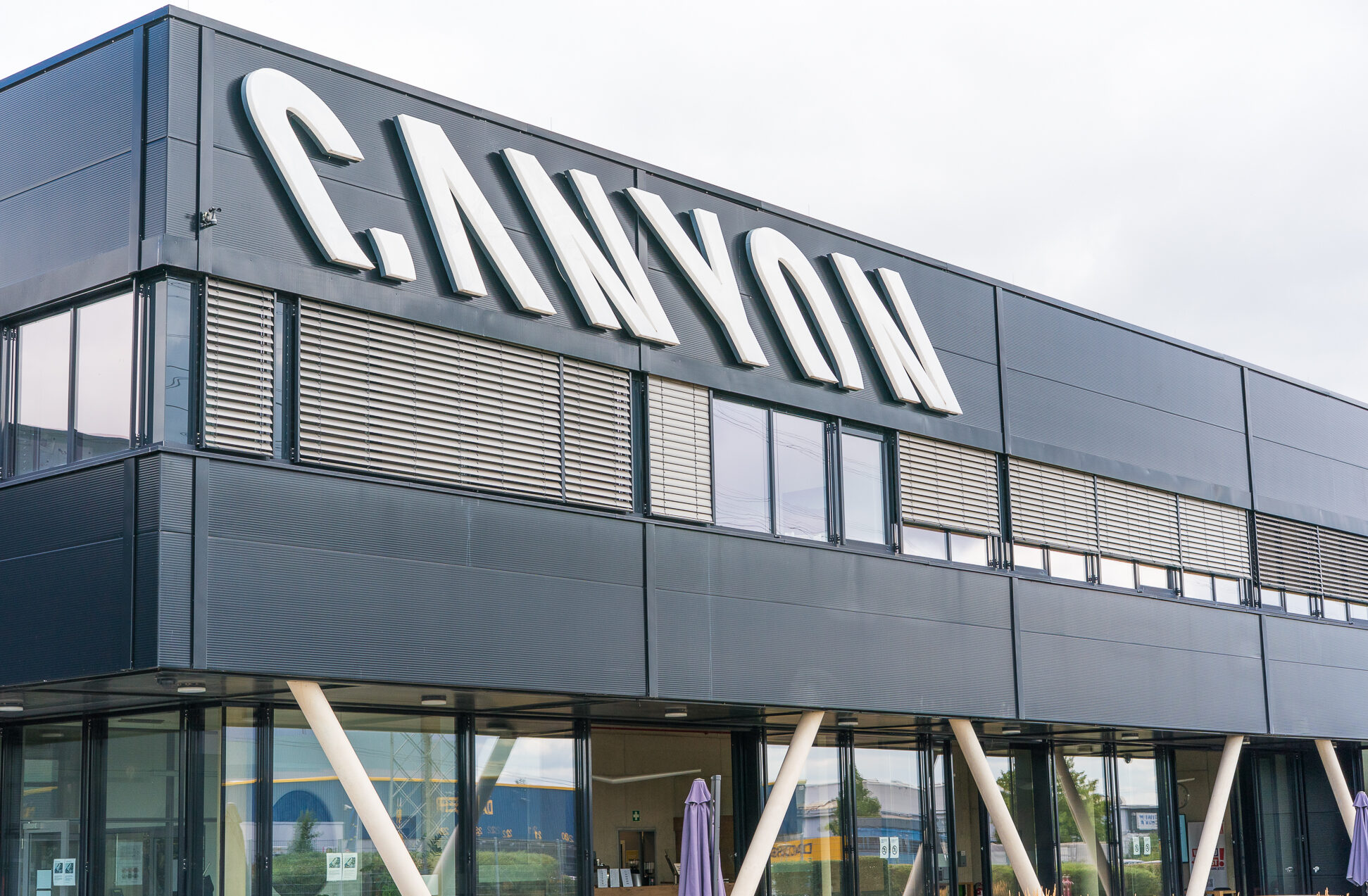
Every Canyon bike gets it start from a click. Somewhere around the world a rider picks a frame size, color and groupset on a website, which wakes up a warehouse system. The warehouse is just outside of Koblenz, a short drive from Canyon’s headquarters in Koblenz, Germany.
Even though the carbon frames and forks are produced in Asia, the bikes are deemed “Made in Germany” because of all the work that’s done in Koblenz before the bike ends up in a box on the way to its new owner – inspection, assembly, testing and packing.
The parts arrive at the Koblenz warehouse in huge containers – thousands of group sets, frames, forks, wheels and cockpits go through the loading bays, are scanned, catalogued and filed into automatic storage. Thanks to the codes on every component, the system knows exactly where every component lives. When an order is ready to be built, the parts are pulled and sent to the assembly hall.
Over the years the testing and scanning process has been refined to do everything possible to identify issues long before bikes get to the road. Some frames and forks go through a CT scanner to ensure there are no issues that the eye can’t see – wrinkles, voids, poorly bonded joints in a seat tube. Back at headquarters, prototypes and production samples are punished well beyond regular safety standards. Rigs also measure bottom-bracket, head-tube, fork and even derailleur-hanger stiffness (a metric Canyon says it learned was important based on feedback from pro teams).
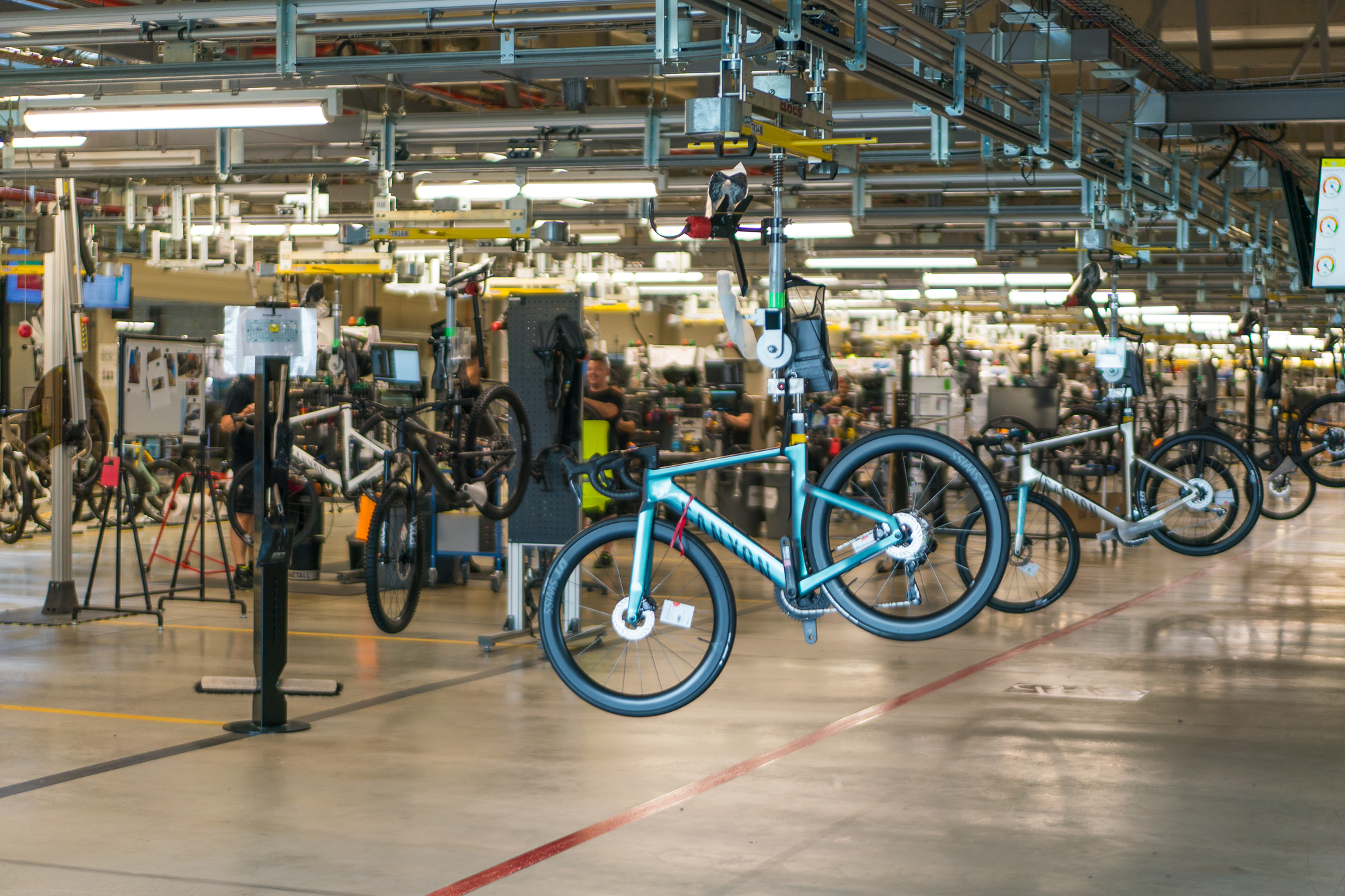
Once all the parts are gathered, the bikes move through the U-shaped assembly line through the hall. The first jobs are the unglamorous ones – preparing internal cable routing, fitting frame bolts, greasing different areas and pressing in the headset. Wheels get prepared in parallel – tires mounted, wheels checked, etc. – so they meet the frame at the correct time. Speaking of time, the bike travels from station to station on a clock, with a mechanic responsible for one stage of the build. Some bikes do break the rhythm, though – a Speedmax triathlon frame with hidden cockpit routing and integrated storage can add some time at different stations.
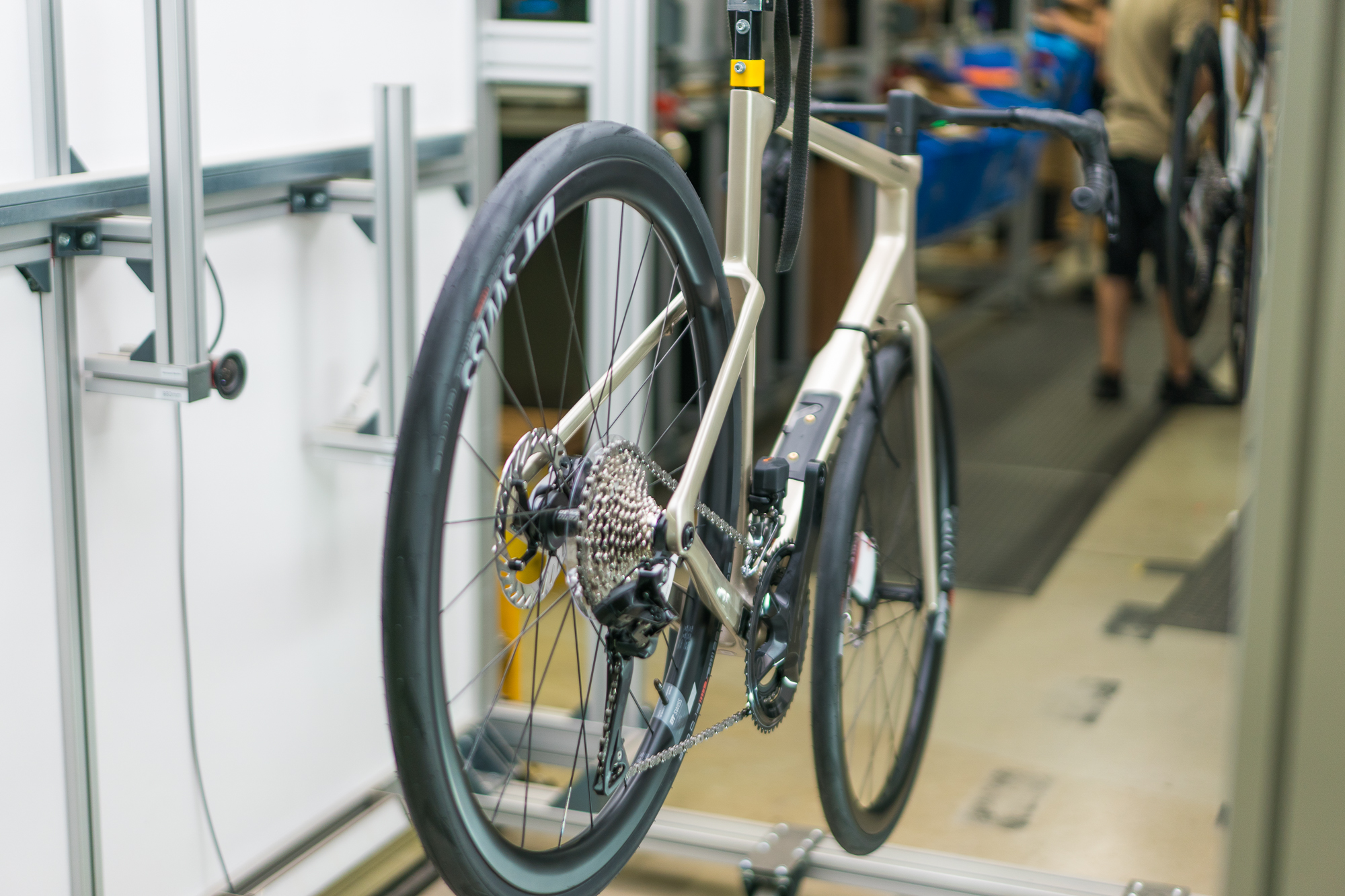
Once the bike is finished, everything is tested before the final step that defines the direct-to-consumer model that Canyon is famous for – taking the bike partly apart so it can fit into a box. The front wheel, handlebars and saddle come off and the bike goes into a box.
A Long Way From Radsport Arnold
Canyon can do all this up to 400 times a day at its Koblenz facility – a massive growth from the company’s beginnings when Roman Arnold and his brother started selling Italian bike parts from a trailer at races. (The trailer still sits on display at the company headquarters.) Eventually Radsport Arnold was formed in 1985, with the Canyon name introduced in 1996. In 2001 the business transitioned from a retailer and supplier to a full manufacturer, pioneering an online-only, direct-to-consumer sales model. In 2017 the company officially expanded its direct shipping market to the United States, and in 2022 NBA star LeBron James invested $30 million to help the company expand its global footprint. (The company recently built a custom 32″ Grizl CF bike for the basketball star.)
More from the Koblenz HQ
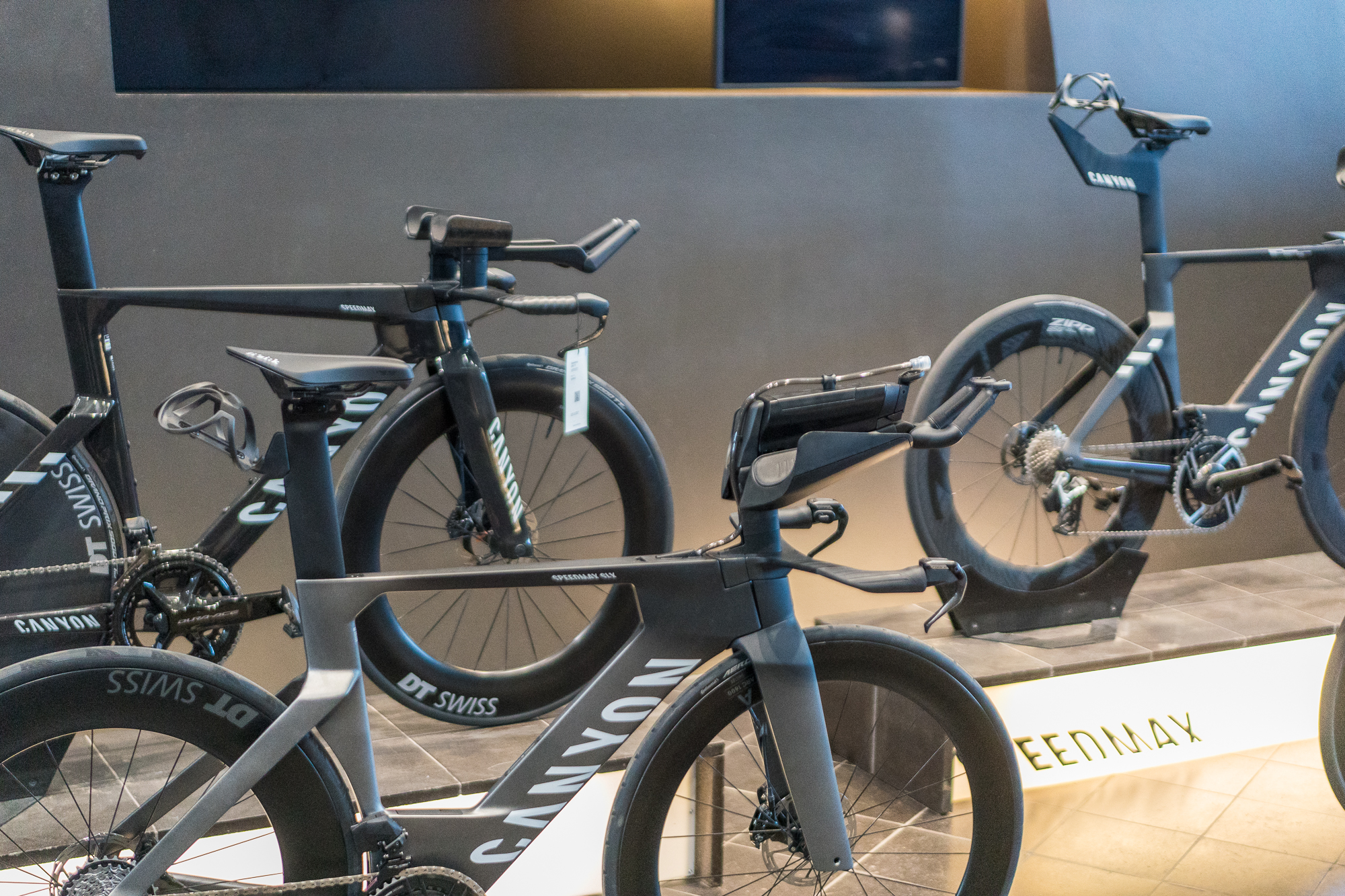
The assembly hall is only half of Canyon’s Koblenz footprint. Back in the city sits the Canyon Campus – part office block, part shop, part workshop and the closest thing a direct-to-consumer brand has to a front door.
The public face is the Canyon Store, the flagship showroom where riders can get advice, take a test ride and either order a bike, or, if their size is in stock, take one home. The store carries race and the non-electric bikes, while e-bikes have their own space, the E-Performance Center. There’s a bistro that serves up excellent coffee (in my opinion, anyway), a bike fitting area and a museum of bikes (and jerseys) that made history over the years.
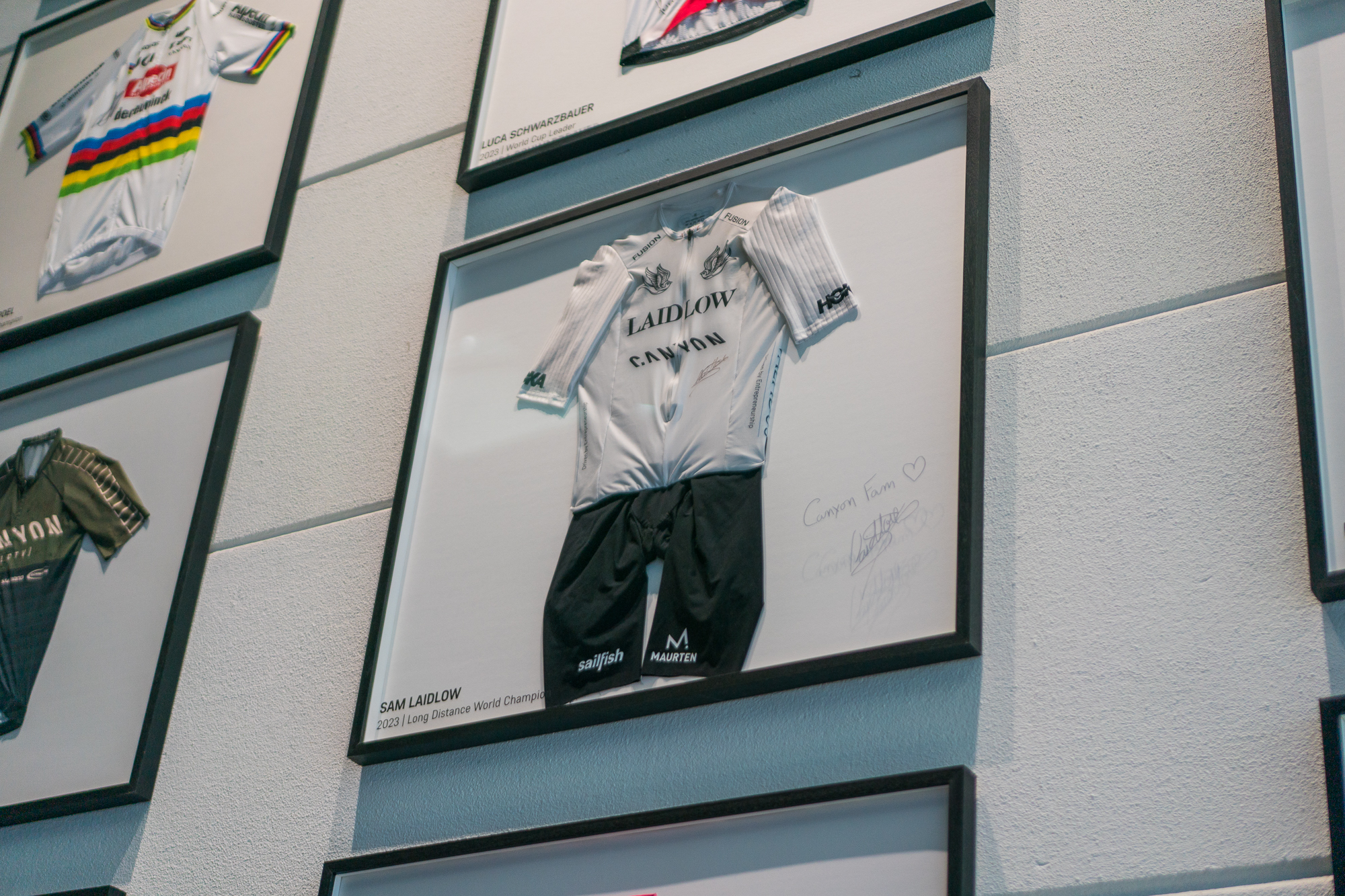
The Factory Service workshop is home to a group of mechanics who handle everything from quick fixes to full services.
The store served as the precursor to Canyon’s first store outside of Koblenz – in 2025 the company opened a store in Munich. In the US the company has a showroom in Carlsbad, California, where riders can be sized and try test bikes.
Riding the New Speedmax
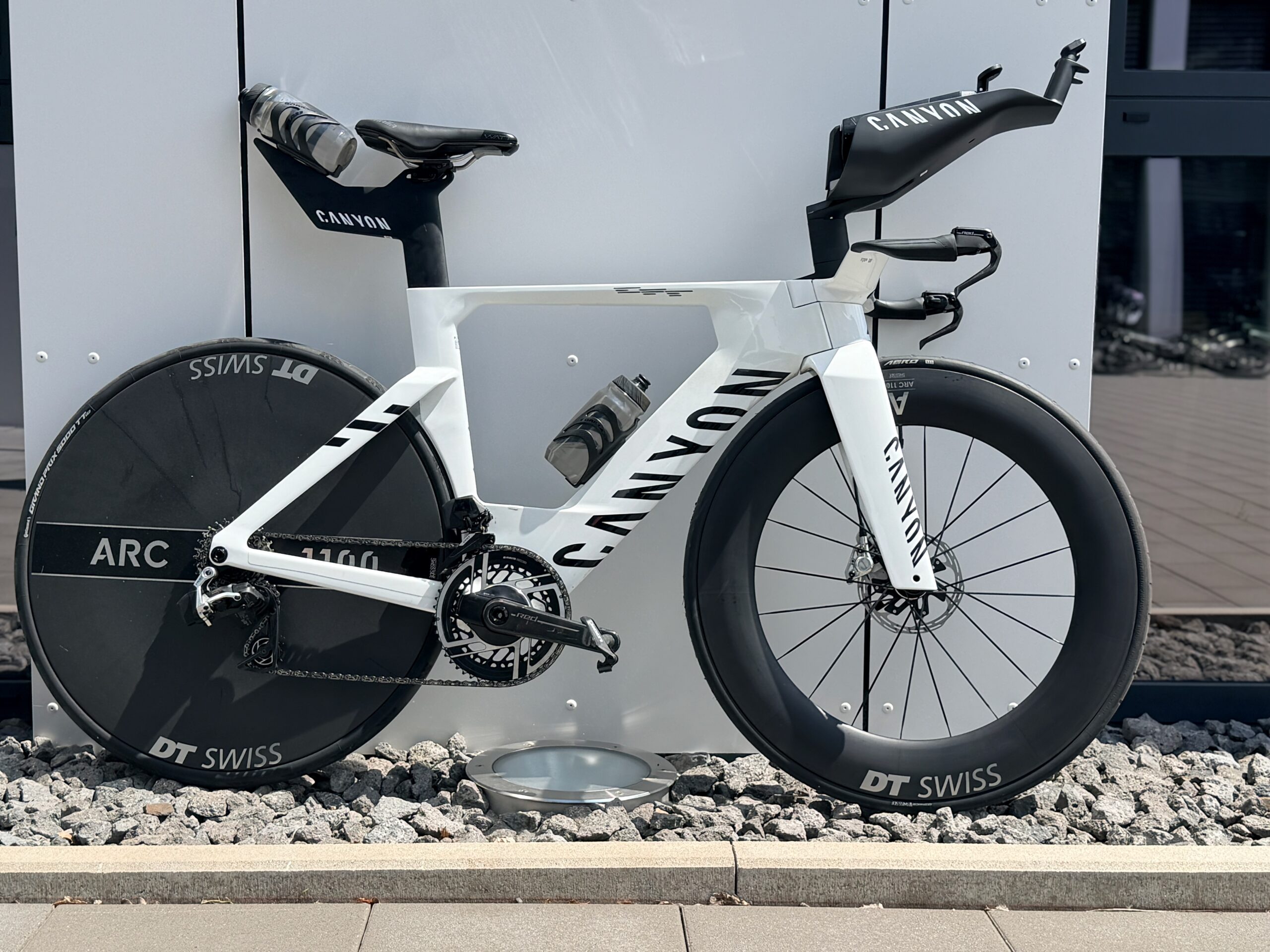
My trip to the Koblenz headquarters came just a few days after the official announcement of the new Speedmax, which I got to see at Challenge Roth, but wasn’t able to ride.
I did get a chance to put the new Speedmax through its paces through the beautiful countryside around Koblenz, enjoying a speedy stretch along the Moselle River before hitting the hills to see how the new Speedmax fared when it was time to climb. (You can read Eric Wynn’s review below.)
I was more than a little impressed with the new bike, as I was with pretty much everything I saw in Koblenz. Throughout my two days visiting the HQ, it became very clear why Canyon has become such a successful brand. Attention to detail is the name of the game in everything the company does – whether it is building bikes, sprucing up the store, or hosting journalists, no stone is left unturned. That’s not an accident – to build 400 bikes a day and keep consumers happy with a bike that arrives in a box, they need to have to process dialled in. From that initial click on.




It really is amazing what this company has become. I was friends with Roman and his brother back in those early 80’s, they even partnered with Jurgen Zack in their first distribution company. They bought him out at some point, they really had a vision and work ethic to build something the bike industry had never seen..The scale is just mind blowing..
It is indeed amazing what this company achieved, but even more amazing -or maybe not- that it still hasn’t become profitable. Year over year the losses are up in the multi-millions.
It means that despite of all great things they do something is really off in their business model.
Last year I was trying really hard to buy a Speedmax. Despite maximum effort, I couldn’t. I’m quite happy with my Speed Concept now. Part of me feels like that may have something to do with their profitability issues?
Yes, it sometimes it is really hard. I fitted a client today, he wanted at fitst a CF but on the small he was downright at the lowest possible armpad stack because with the new bar, compared to the V21 stem, riders lost 25 mm of stack to play with downward.
So he decided he could pull the trigger to the ‘cheapest’ CF SLX but that option is not to chose. It only says come back later:-)
Chose the 8.5K model and you cannot chose all bars……
And even worse, if you are a customer you cannot still see where your position is in the range of a certain size riser for the cockpit.
Already had customers coming in with the new bike that needed a different riser but so far they could not change it.
That said, the bike it self is very nice, there are few points that need to be addressed like the cover on the storage for your spare parts. That comes loose on every little bump.
But travel or adjustments on the cockpit are very easy
‘m not privy to their books, but when you see the operation there and just how big, how many people are involved, and the scale of the operation from top to bottom, one does have to wonder how do they make a buck? But when you hear that 400 bikes “A DAY” can go out of there, perhaps it is that scale that at least has gotten them to this point. That and some angle investors to cover those losses. I imagine there is a plan to make money at some point, but perhaps like Amazon they first want to spend all their money to grow and grab market share.
For sure, but year over year revenues are 6-7% down and profits even much more.
So it is not working. I heard a rumor that GBL, the major share holder has their part for sale, not sure if that is true but they duid drop the value of the shares by 43% or in that range in the summer of ‘25.
But agree, that office, the warehouse all look amazing but still even with 400 bikes a day it means costs are still way too high compared to what comes in.
It reminds me of the Old TriSports shop in AZ. Biggest retailer in the world for Tri, grew exponentially every year, and the tremendous cash flow allowed for all sorts of things to be bought that should not be in a business like that. It worked for a long time, but eventually when sales taper off and there is this come to Jesus moment, the reckoning rears its head. There are only so many “new” investors that can keep bailing out a bad business plan, and then it has to fly on its own. I imagine there are a lot of departments at Canyon that are either unnecessary, or obsolete. Its just that when things get so big, its hard to turn the cruise ship sharp enough to keep it from tipping over..
One thing I’m seeing is supply chain issues. Be it bike stock in the USA, or parts. Inconsistency of what is available to US buyers. As a Canyon owner (bought in Canada), flew up got it & flew it to the USA (due to availability lacking here), their warranty rules are terrible. The fact that if anything went wrong with my Canyon I’d have to literally fly up to Canada to ship it back to Canyon, because US HQ doesn’t warranty anything but US stuff. Ridiculous. A Canyon brand should be warrantied by any Canyon location anywhere–that’s the reason I won’t buy another. You either stand behind your brand or you don’t. It seems Canyon has some very odd “USA only” rules. No other country can ship a Canyon to the USA either…I tried.
Roman was interviewed in the FT last January. Here is a summary of the article (by Claude) as presuming it won’t allow me to republish…
Canyon founder Roman Arnold has returned as chief executive of the German direct-to-consumer bike brand. He replaced former Nike executive Nicolas de Ros Wallace, who had led the company since Belgian investor GBL bought a majority stake in 2020 at an €800mn valuation. Arnold still owns 35 per cent.
Why he’s back: Sales have stagnated, and 2025 revenue is expected to fall about 5 per cent to just under €750mn. A costly e-bike recall hurt customer trust, and GBL has written down its stake by 43 per cent. Net losses rose from €14.4mn in 2023 to €37.8mn in 2024, and ebitda dropped a further 30 per cent in the first half of 2025. GBL blamed oversupply, heavy discounting and quality problems.
His diagnosis: Arnold rejects the idea that Canyon is in crisis. He says the company has lost its way culturally, becoming siloed and bureaucratic.
His plan:
Targets: He wants revenue of about €1bn by 2028, though he frames this as an aspiration behind “profitable growth” rather than a fixed goal. He also aims for ebitda margins of 10 per cent, back to pre-pandemic levels and above the industry average of about 8 per cent.
He says he doesn’t regret selling the majority stake and believes Canyon’s best years are still ahead.
https://www.ft.com/content/5b6e419e-cfd6-4950-9a1b-6337839c0cf2?syn-25a6b1a6=1