
Altra’s Vanish Tempo 2 is Making Me Question Everything I Know About Shoes
I started in the running industry two decades ago. Brief aside: that is a terrifying thing to put into print. At any rate, the footwear industry had largely settled upon the same basic framework for all of their shoes. There were primary cushioning systems, which were some type of blend of EVA. Then everybody had their magic sauce secondary cushioning system; ASICS with Gel, Nike with various Air units, Brooks with HydroFlow, Mizuno with the Wave, Saucony with Grid, and so on. Everybody had four key models, with two neutral shoes and two stability shoes, with one with a more plush cushioning experience and a price tag to match, and the other the workmanlike, more basic model.
Shoes would change a bit, but for those first few years, they largely stayed in the same silos.
And then minimalism, followed by maximalism, happened, and all hell broke loose. Saucony famously abandoned 12 millimeter drops altogether, proclaiming that it was too steep of a ramp. Brands came up with new cushioning materials and changed the fits of some of their classic models (and alienating long-time customers along the way). And HOKA taught us all what was possible when you paired up lightweight with a whole lot of cushioning and a platform wide enough to make it actually stable enough to run in.
Then, of course, came the carbon craze, kicked off by Nike. By now, we know the formula: pair your proprietary version of a supercritical foam up with a carbon plate of your own design and watch people run faster in them. Just about every brand on the planet has a racer like this in their portfolio, including the subject of today’s article, Altra. Heck, I proclaimed the Vanish Carbon 3 to be the unicorn IRONMAN shoe for everyone a couple of months ago, calling it “easily one of my favorite carbon racers I’ve ever worn.”
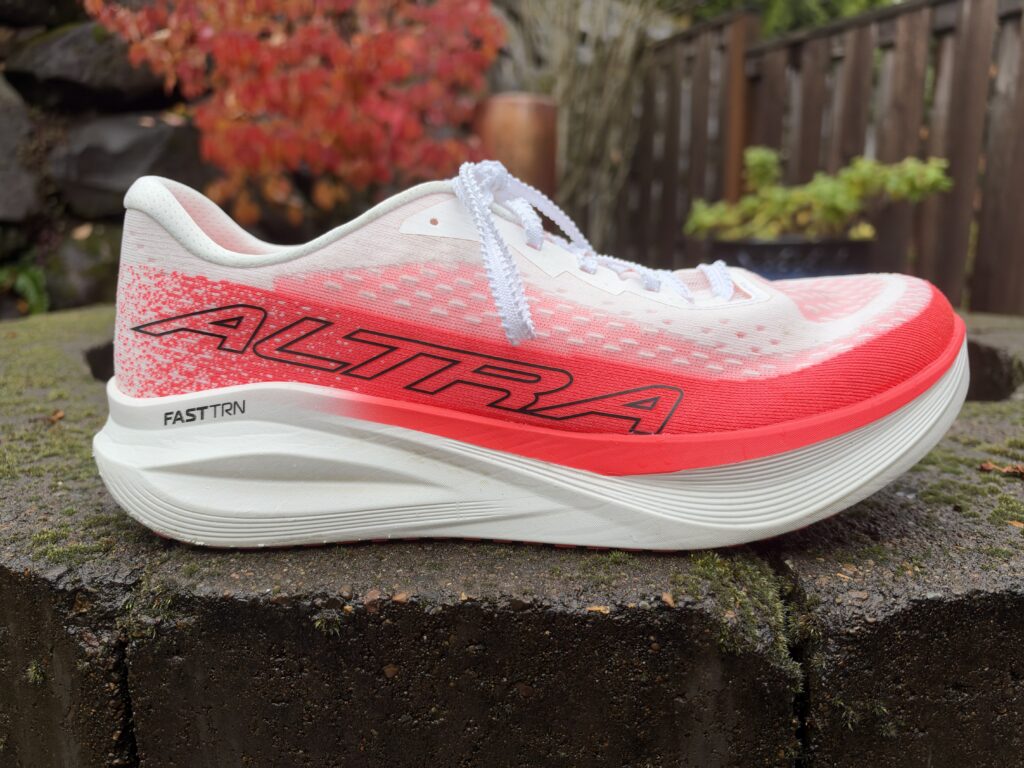
Right around the time that I was writing up my review on the Vanish Carbon 3, Altra representatives reached out asking if I would also like to try the Vanish Tempo 2. I quickly said yes. On paper, this is supposed to be the little brother shoe in the line of the Carbon 3. In actuality, I’ve been left wondering whether we’ve gotten the formula on what makes a carbon plated shoe so great completely wrong.
The Tech Stuff: FAST TRN Foam and a Completely Different Plate
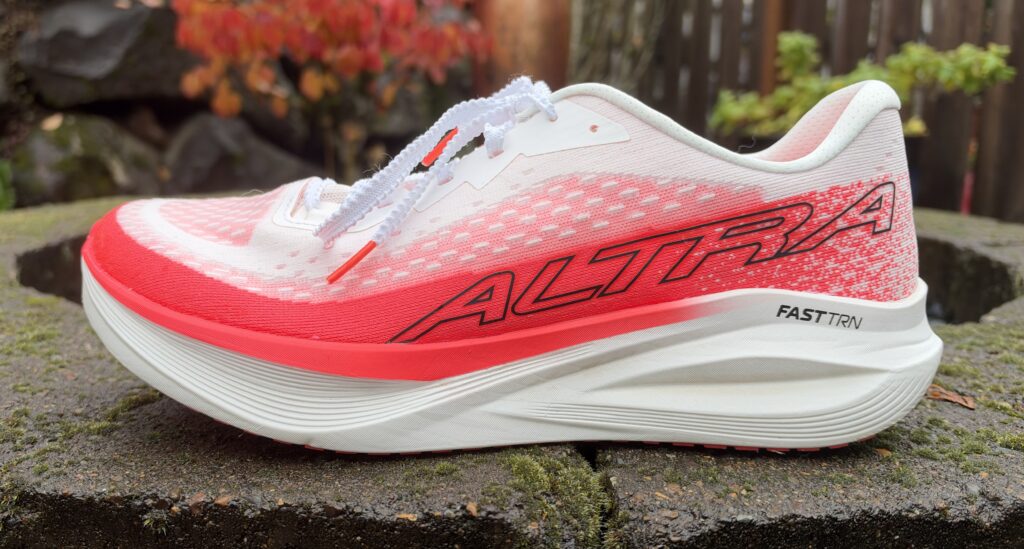
As you would probably expect for a shoe that shares the Vanish name, the Tempo shares a couple of characteristics with the big brother Carbon 3. Namely, this isn’t your traditional zero-drop Altra. Instead, you’ll find a shoe with a four millimeter offset. For some Altra loyalists, that’s basically like Nike removing Air units from all of their running shoes. For the rest of us, I’m going to borrow a phrase from an old running buddy: miles, not millimeters, matter.
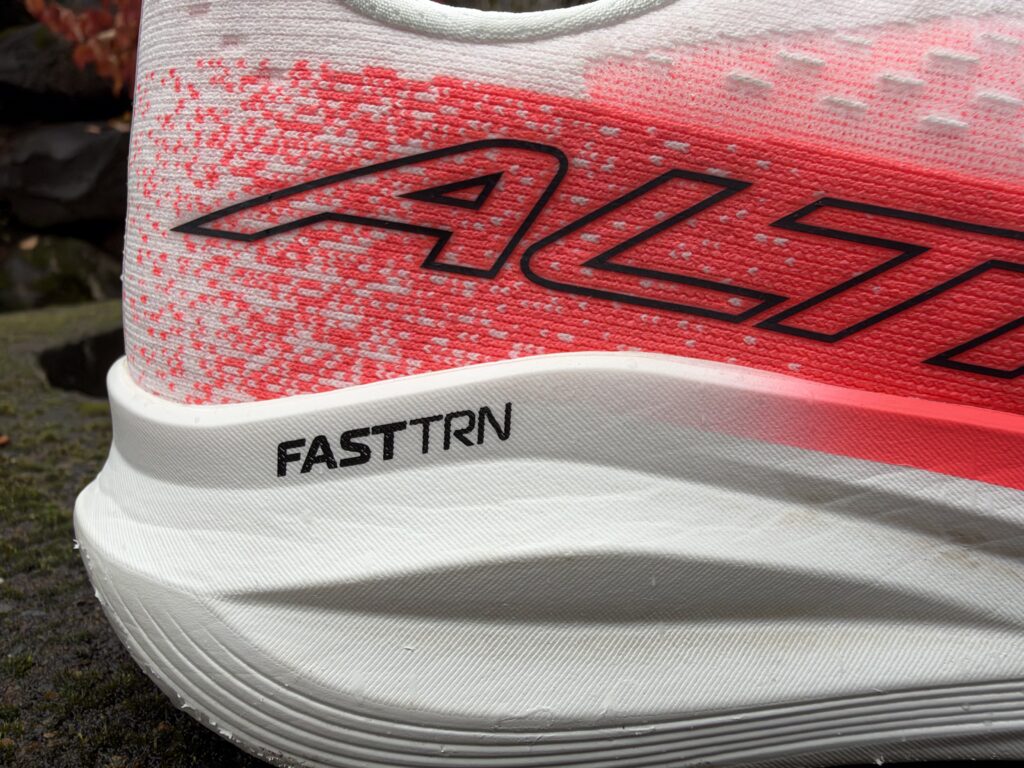
Also like the Carbon 3, you’ll find supercritical foam underfoot providing the cushioning. And just like the Carbon 3, there’s two different foam layers coming together. Decidedly unlike the Carbon 3, though, it’s a totally unique blend for the Tempo 2. Here you’ll find FAST TRN foam, as opposed to FAST RCE. Altra claims that this specific blend is “lightweight, responsive, smooth, and designed to deliver high rebound for long training miles.”
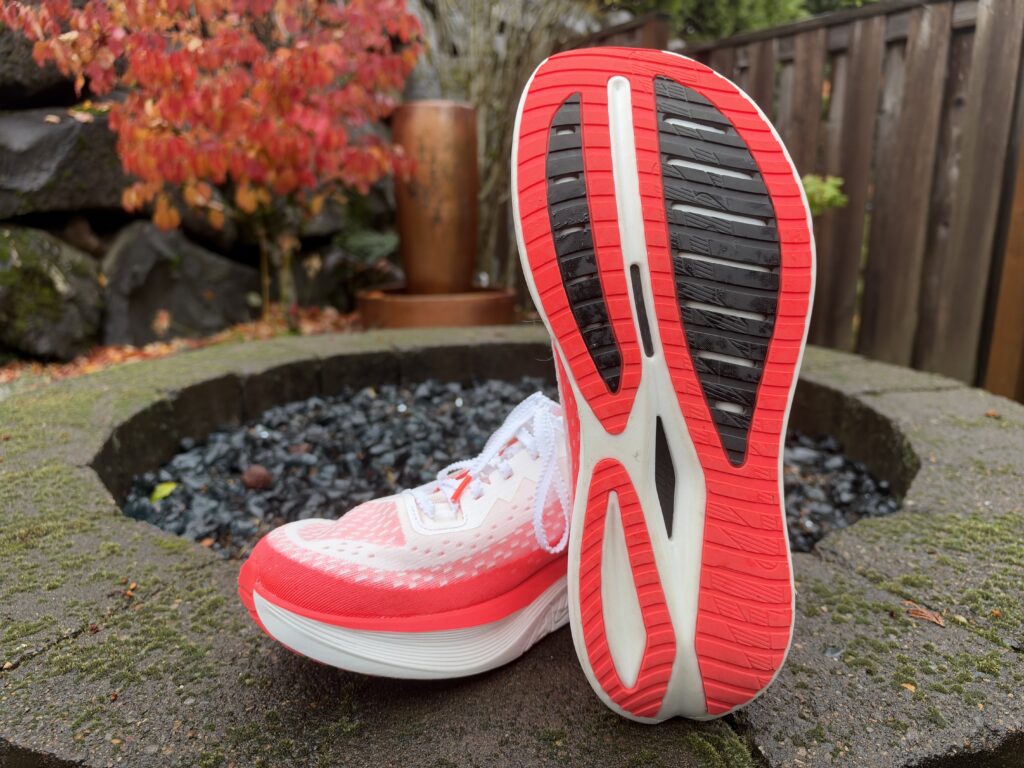
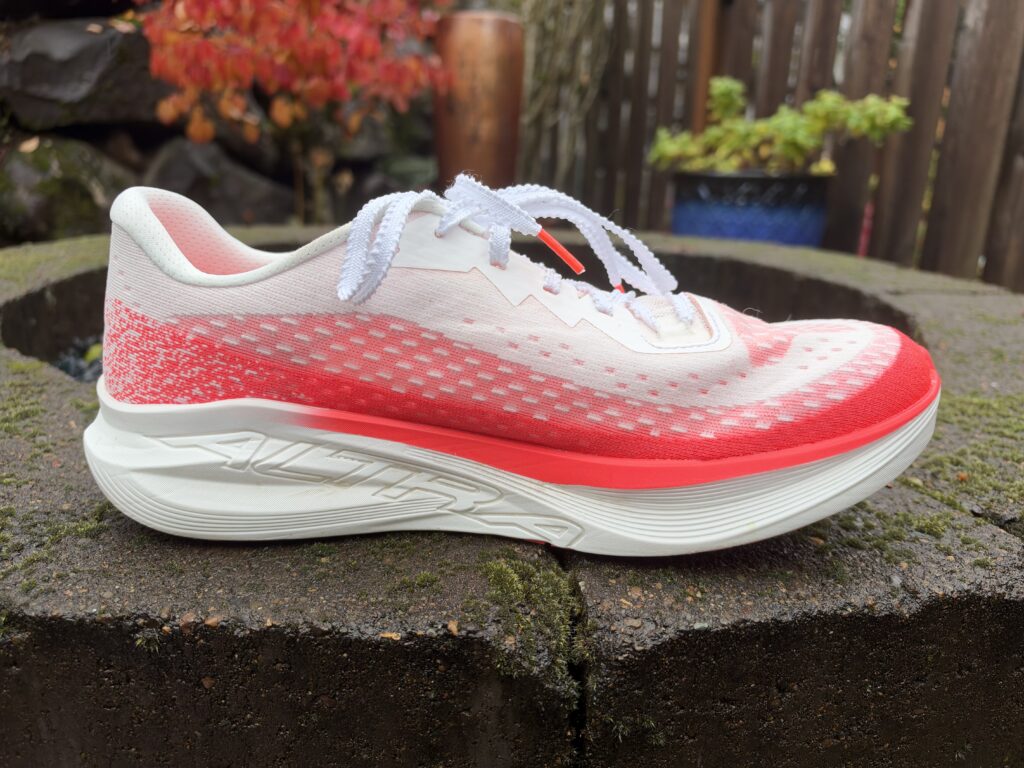
You’ll also find a plate in the Tempo 2. It, too, features a split geometry to it — one of the things that I thought made the Carbon 3 such a good running shoe in a variety of terrain. But, again, there are differences. Namely, the Tempo 2 does not get a carbon plate. Instead, the plate here is Pebax. If you’re wondering what in the blue hell Pebax is, it’s a high-performance thermoplastic elastomer that pairs rigid polyamide (nylon) blocks with flexible polyether blocks, giving it a balance of strength and springiness. There are many shoes that use a Pebax plate in them, instead of a carbon one, such as the dearly departed Nike Zoom Fly — effectively, the downmarket version of the Vaporfly. Currently, you can find a Pebax plate in the HOKA Mach X 2 and some of the Saucony Endorphin series.
Flipping the shoe over, and you’ll see exactly how the split-toe plate geometry follows that of the Carbon 3. But you’ll also see some additional rubber on that outsole, and a totally new tread pattern. As with most modern running footwear, it’s a pretty standard blown carbon rubber set-up that should prove to be plenty durable.
The upper is also different between the Carbon 3 and the Tempo 2. The Tempo’s mesh is engineered for durability and breathability, as opposed to looking to save as much weight as possible. There’s also a thicker tongue and heel pad, which help give the shoe a bit more substantial feel when trying it on. The overlay patterns and overall fit, though, do a pretty good job of mimicking that of the Carbon 3.
In all, these changes add up to make the Tempo 2 a published 0.8 ounces heavier than the Carbon 3. Of course, your mileage may vary based on what size shoe you’re wearing. In my size 13 boats, I’d say that the Carbon 3 felt like it scaled weight at a different rate than that of the Tempo 2; the Carbon 3 just seemed very light whereas the Tempo 2 seemed more substantial.
Running in the Vanish Tempo 2
And this, ladies and gentlemen, is where things got interesting.
Slipping into the Tempo 2 reveals a shoe that feels almost luxurious compared to the Carbon 3. There’s real substance and softness to the tongue and the heel. It makes the foot feel more locked onto the midsole and gives the shoe a surprising amount of stability. It’s also, as nearly every Altra is, a very wide platform underfoot. It’s not quite a HOKA bucket last, but it’s about as close to it as you’ll get barring actually buying some HOKAs (or Brooks, with their Guiderails in some shoes). If you didn’t know any better, I think you’d say just on try-on feel alone that the Tempo 2 was the more expensive shoe.
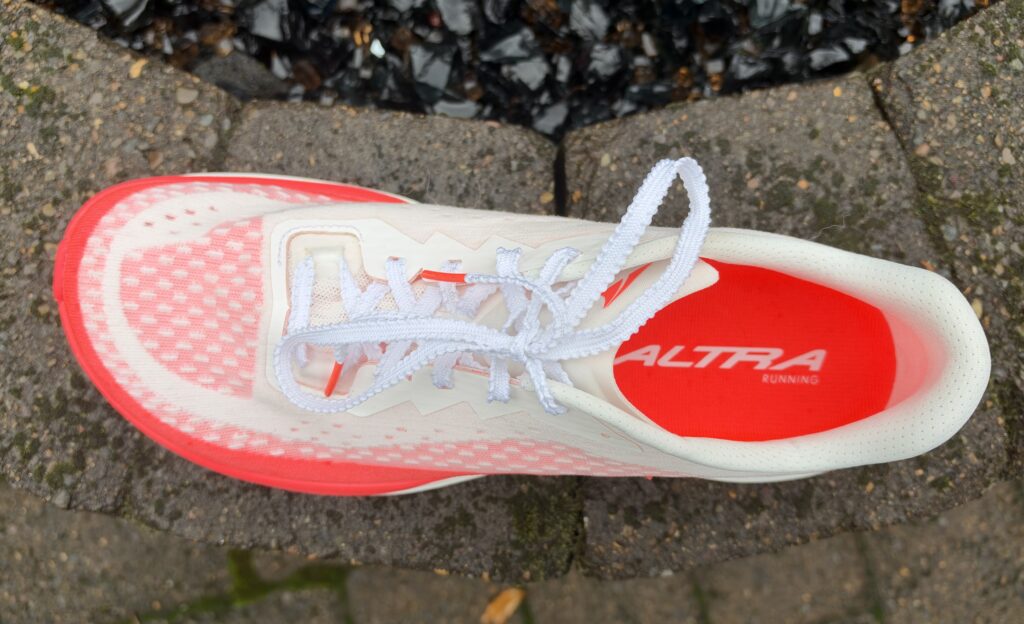
The first few strides in the Tempo 2 reveal a shoe that is plenty comfortable yet a completely different ride experience than the Carbon 3. Just about every modern racing shoe’s foam is tremendously soft. That durometer, though, is also one of the reasons modern racing shoes have extremely limited lifespans. The Tempo 2 is stiffer riding. It’s still soft, but it’s less like a sponge. That’s likely due to that combination of a thicker outsole rubber and the different formulation for the foam.
That combination, when you mash it together with the non-carbon plate, add up to a shoe that is happy pushing the pace. It’s not like our corgi, who is always asking to go faster; it’s more like a good running dog that is willing to go whatever pace that you choose to go with. In that regard, it’s a lot like the bigger brother Carbon 3. It’s versatile enough to run a variety of paces and remain comfortable at.
And, I suppose, that’s what led to my most shocking discovery of the whole thing; based on my varied testing, this shoe is just as fast as nearly all of the other carbon racers I’ve put to the test. And I’m somebody who responds extremely well to plated shoes. The Tempo 2 held up across nearly every category, save one — it isn’t quite as fast as the absolute speed demons downhill, like the HOKA Cielo’s. But it then more than makes up for that pace when the road starts tilting back up the hill, as the split-toe plate retains far more flexibility and makes the shoe feel far easier to charge up in.
In that regard, then, it’s really not just about the plate in the shoe. It’s all of the elements needing to come together — the right foam durometer being paired with the right plate geometry in order to produce speed. And, as the Tempo 2 proves out, I don’t even think that plate needs to be carbon in order for it to wind up being a truly fast shoe. What I find most interesting is that there’s not really a similar competitor on the market that marries its own foam blend to a non-carbon plate. The closest thing you can really find is the Saucony Endorphin Speed. But that shoe has a nylon plate and shares some of its foam blend with the big brother Endorphin Pro, and it doesn’t share the same speed characteristics. It doesn’t make the Endorphin Speed a bad shoe; it’s just a different riding and slower one than what Altra has cooked up.
Concluding Thoughts
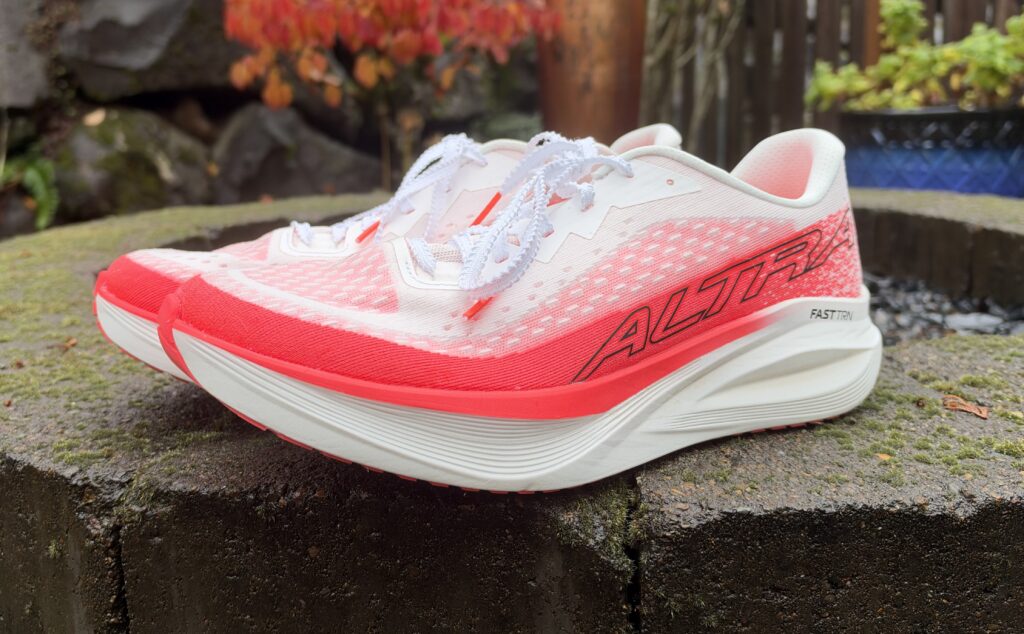
I am honestly shocked at the Vanish Tempo 2. What I thought would be a stripped down version of the Carbon 3 is instead a unique twist on the plated shoe marketplace. In some ways, I actually think it might be better than the Carbon 3 — and that’s coming from someone who adored that shoe, to the point where I was going to race it back in October over the marathon distance. Now I’m debating what I would choose to do again.
What I find most fascinating is that both shoes achieve similar pace outcomes despite different ride experiences. The Carbon 3 is softer, stripped down, and racier; the Tempo 2 is firmer riding, but feels slightly more substantial. Both shoes are great, they just do things differently. Perhaps the biggest problem Altra faces is on the price — at $200, the Tempo 2 looks like a better bargain against the big brother Carbon 3 at $240.
I don’t think I could pick one or the other, though. They’re two excellent shoes. I guess that’s the most shocking thing of all; Altra, of all brands, has really figured out plated footwear. Well played, Altra. Well played.
Altra Vanish Tempo 2
Price: $200 USD
Available: Now
Shop Men’s | Shop Women’s



Start the discussion at forum.slowtwitch.com