
A Triathlete’s Guide to Off-Season Run Training

The triathlon race season is slowing down for the year, which can mean a couple of things. You may be zeroing in on swim or cycling training or racing, perhaps you’re planning on, and training for, a fall marathon or other running race. Or, maybe you’re ready to take a break. When it comes to the running side of things at this stage in the year, there is a lot that you can do to set yourself up for success for your 2027 campaign.
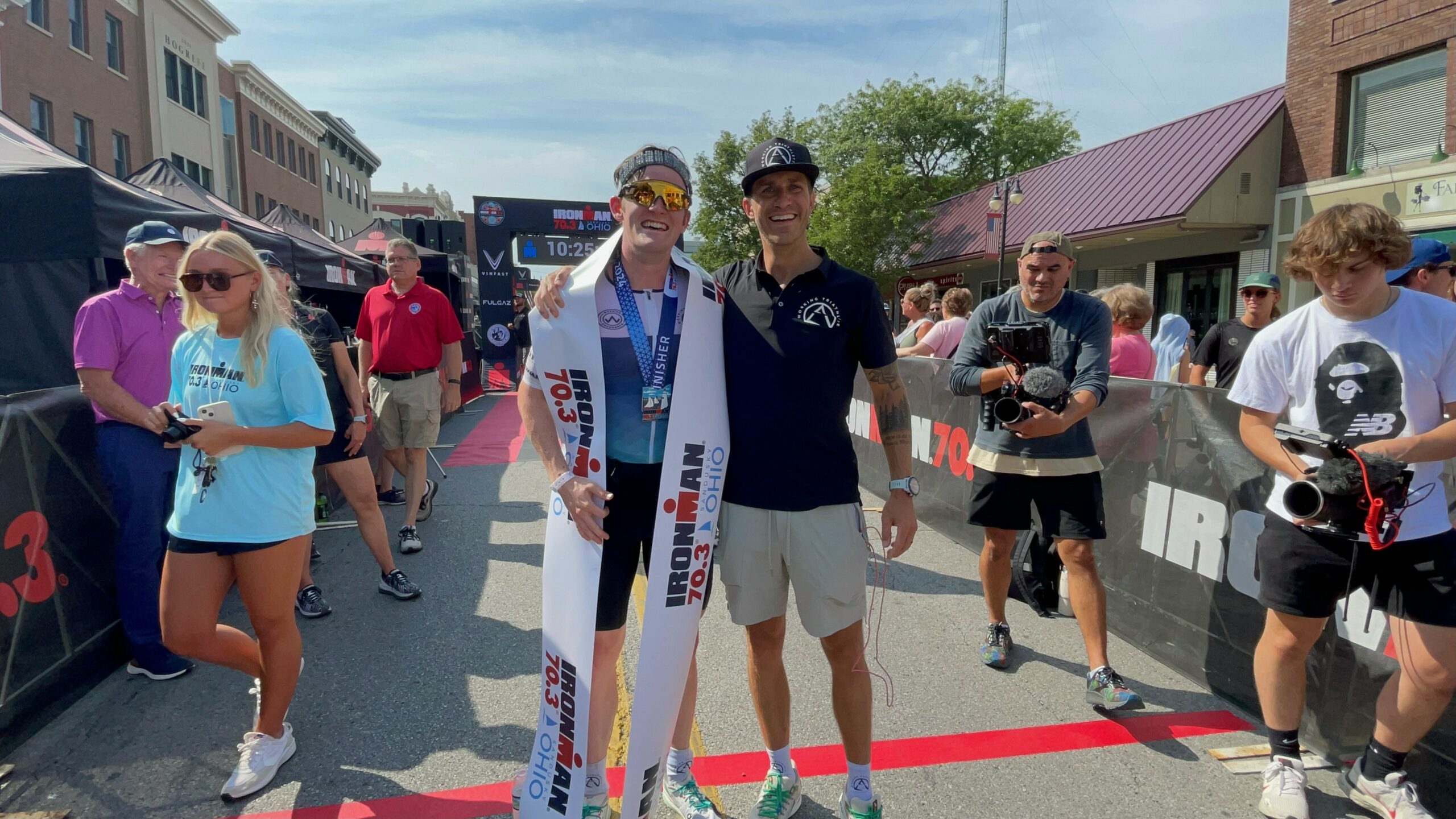
To find out how to best prepare for your run ahead of next season, Slowtwitch spoke with Derek Stone, a triathlon coach based just outside of Cleveland, Ohio, who is a team member at the multi-sport coaching service Working Triathlete. A former collegiate runner with a marathon PB of 2:22 and multiple triathlon wins on his resume, Stone uses years of experience in competition to help him shape his athletes’ training programs to lift them to new heights every season — just as he will do for you with these tips for running gains this fall and winter.
Enter A Running Race
The triathlon season may be coming to a close for 2026, but that doesn’t mean races are on hold until next year. Stone says the fall is a great time to shift your focus from multi-sport to solely run training.
“At this point in the year, you don’t need to be as balanced with the swimming and biking,” he says. “This is the opportunity to tackle a marathon, a half-marathon or even a shorter race, like a 5K.”
Stone says the running race window isn’t reserved only for the fall months, noting that any time until early spring is ideal to go for it without it “interfering too much with your triathlon” season.
“If you do a marathon, for example, you need the durability, so the run volume needs to go up,” he says “That’s going to take away from triathlon training, which is why now is the opportunity to build that resilience.”
There are plenty of big races going on around the world this time of year, but Stone adds that you don’t need to register for anything huge. Even a turkey trot race around Thanksgiving, or any other small local run, ww can give you “a carrot to chase,” as he says, that will keep you motivated to run in the late stages of the year or early into next season.
Take Time Off
Whenever you do officially wrap up your race schedule for 2026, it is important to take time away from training (or, at the very least, time off from any sort of intense sessions).
“It definitely depends on the athlete, but two weeks is kind of the baseline for how much time to take off at the end of the season,” Stone says. “That’s a good timeline to get your body recovered before building that base for the following season.”
While he says two weeks is “generally sufficient for a lot of people,” this number can be extended from athlete to athlete. If you have had a long and arduous season, there is no shame in taking more time away from training. Perhaps you’ve dealt with injuries in recent months and think your body needs more time, or maybe you’re mentally drained and a fortnight doesn’t feel long enough — do whatever feels right for you and rest for however long you think you need in order to come back to training with a full battery.
Stone adds that just because you return to training doesn’t mean you have to jump right back into the schedule you followed in the heat of race season.
“You may have more off days or your training may involve a lot of light-intensity sessions,” he says. “The idea is to create sustainability through the wintertime, so you need to do what’s best for you and your body.”
Don’t Fear the Treadmill
If you live in a colder climate, you have to deal with snowy and icy conditions throughout the winter. While Stone says he enjoys running on snow, the days with fresh powder can be few and far between. Instead, sidewalks and roads are often covered by ice, which is far from ideal for running. That’s why you need to embrace the treadmill.
“There’s value to the treadmill,” he says. “It’s in a fixed environment, you don’t have to worry about the weather, it’s lower impact. It can be very helpful.”
The treadmill may be a useful tool, but Stone does say that it can still be important for athletes to get outside for runs when possible.
“Getting that natural sunlight in the wintertime is super valuable,” he says. “You might not want to always stick inside and grind it out on the treadmill, but on days when you have to, it can be a great way to fit in your workouts.”

Remember Your Strength Work
Strength training is important all year, but Stone says the off-season is a chance to focus on it even more.
“Getting in the gym will help create that resilience ahead of the spring,” he says. “You can peel back the run volume a touch and focus on areas you need to strengthen.”
Stone referenced an athlete of his who is dealing with a nagging injury. Their plan for the off-season is to work closely with their physical therapist so they can “crack that issue” before ramping up their training once more. You may enjoy swim, bike and run training more than your time in the gym, but hitting the weights and other exercises can change the way you do the three sports of triathlon for the better.
How often should you be doing strength work in the off-season? Stone says this of course varies from athlete to athlete, but he does prescribe more frequent gym visits (or at-home strength sessions) for his athletes in the fall and winter months.
“The routines may shift a little, too, in this time,” he says. “You might want to lift a little bit heavier than you would during the race season, because you’ll have more time to recover from these strength workouts between key sessions for the bike and run.”
Consistency Is Key
“The consistency piece is the biggest aspect of all this,” Stone says. “The days are shorter in the winter, it’s darker earlier, so motivation can be lower. If people can stay consistent and get in that routine, that’s what’s going to create the opportunity for them to have a successful season.”
One way that Stone says he creates consistency for athletes without letting them get too bored during the monotony of the fall and winter is by working “developmental training blocks” into their schedules. This chat is of course about running, but that’s not the only block Stone puts in his athletes’ plans.
“We focus on one aspect at a time,” he says. “We’ll do a run block, a swimming block and a cycling one.”
Stone says these sections will each be around four weeks long, giving athletes the chance to be consistent with each discipline of the sport without getting too repetitive from the months of November through to March.
“It keeps that motivation and that engagement going during the off-season,” he says.
To learn more about Stone, his athletic history and his work with Working Triathlete, click here.





And thus we have the 100/100