
EKOÏ’s Tri Aero Helmet Breaks All the (UCI’s) Rules
Triathlon has traditionally marched to the beat of its own drummer when it comes to equipment. Although our sport generally will follow the rulebooks for the three sports that comprise the disciplines of triathlon, there’s always been exceptions. We wear wetsuits at different temperatures than most open-water swim competitions would allow, for instance. Triathlon also isn’t subject to the newer UCI restrictions on maximum wheel depth in what could theoretically be called a mass start event. And let’s not forget about the Great Water Bottle Fiasco (and our ongoing attempt to figure out what a fairing is).
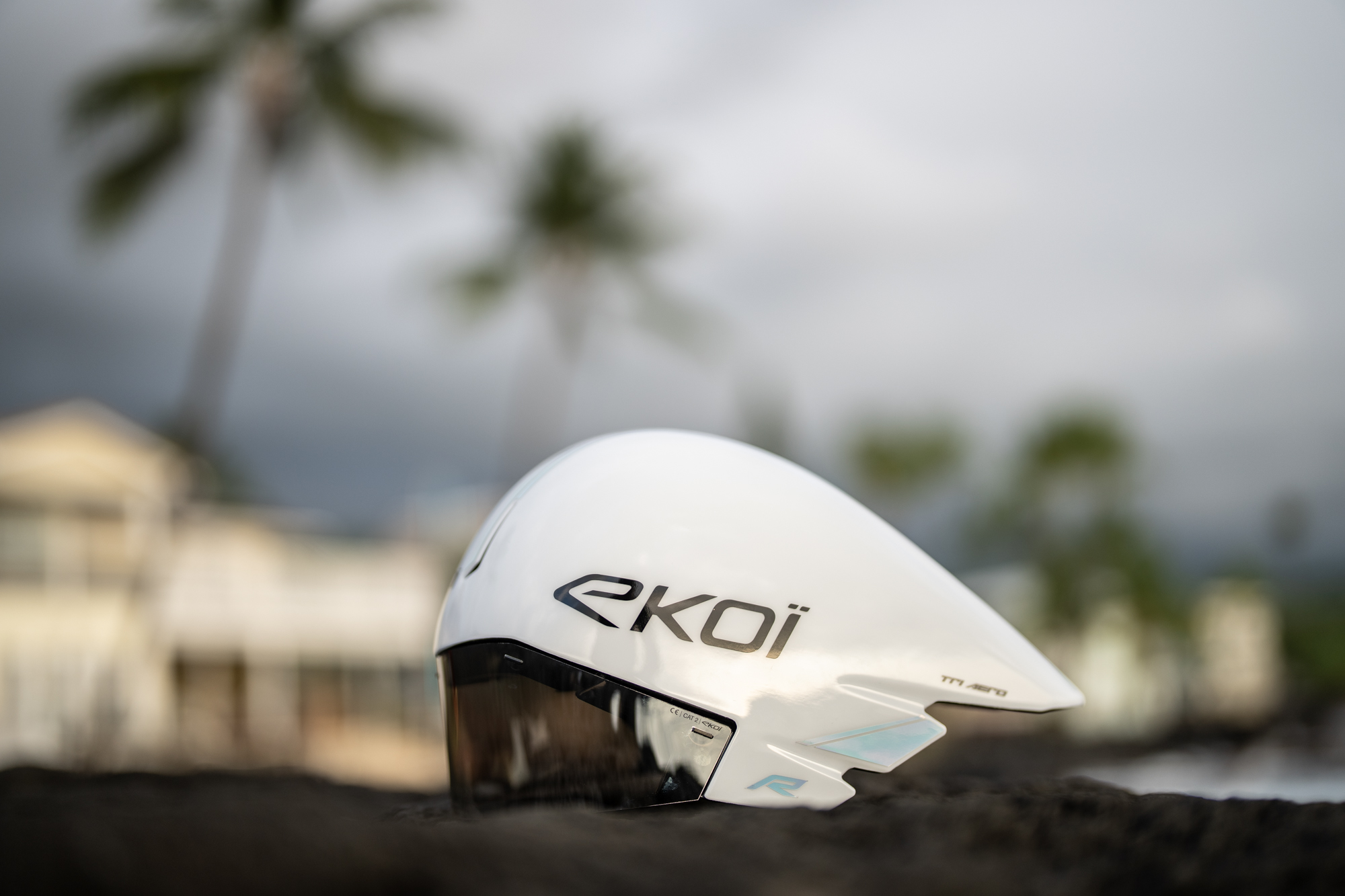
So it’s against this context that, as we head into the full swing of IRONMAN World Championship week, we see a new product that eschews the UCI rulebook entirely. It’s in an area that probably feels ripe for development given all the focus on the front end of bikes these days. And it’s a product that everybody is required to use on race day.
Yep. It’s a helmet. EKOÏ today launches the Tri Aero Helmet. And it’s coming with some pretty sizable claims attached to it.
If this helmet looks somewhat familiar to you as a fan of pro triathlon, you’re right. This helmet’s been around the block a few times. Early prototypes have been on athletes for a few months now. In fact, this is the helmet that Laidlow used on his way to win Challenge Roth over the summer.
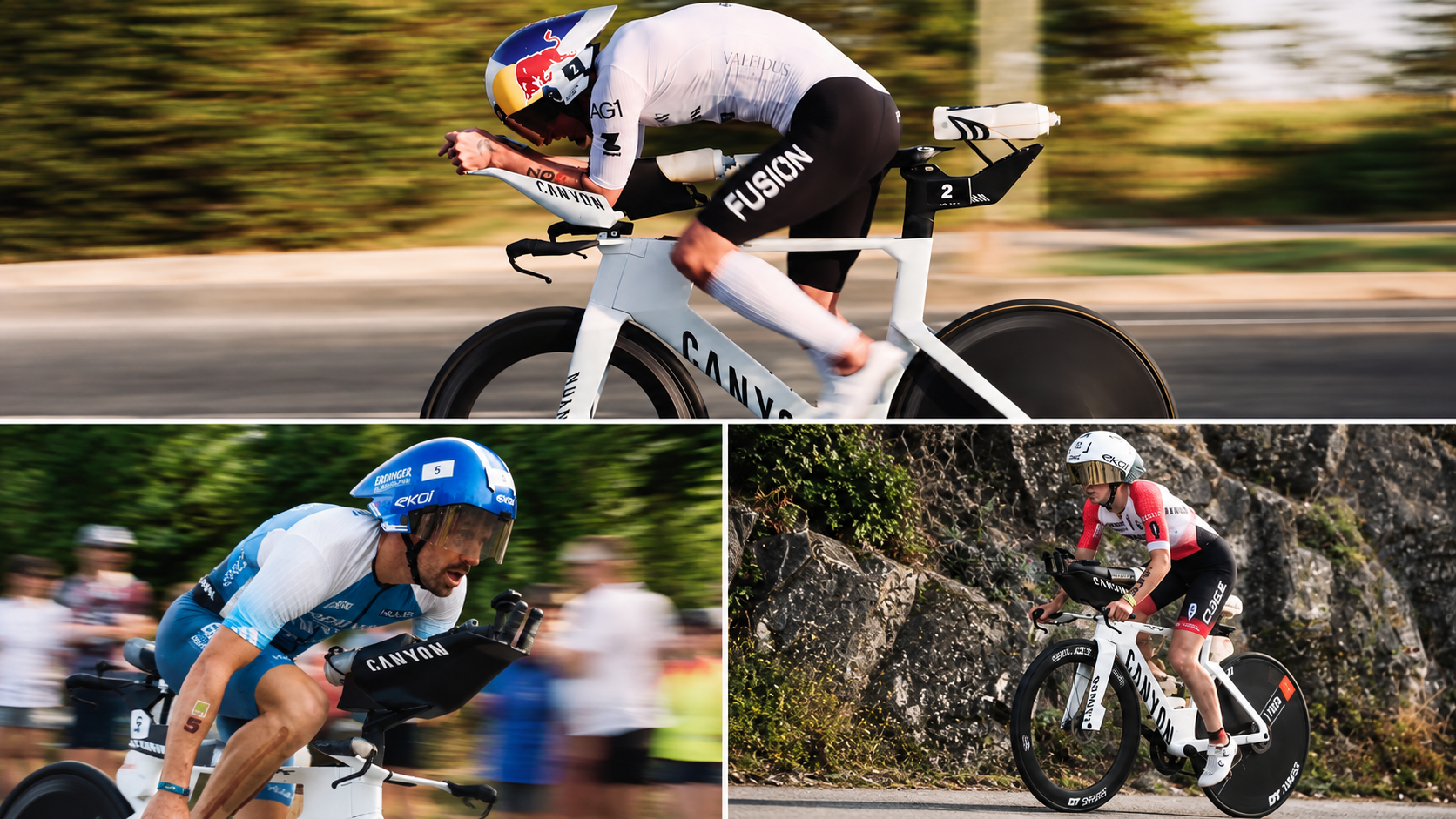
Other athletes you can expect to see wearing the helmet this week include Patrick Lange, Jelle Geens, Julie Derron and Rudy Von Berg.
Let’s back up a second and talk about the rules that EKOÏ has tossed aside to create this new helmet. In 2025, many professional teams had started dabbling with using either road aero or full-blown TT style helmets during certain stage races. Perhaps most famously, at the 2025 Giro d’Italia, Casper Van Uden and his entire leadout train from Team Picnic Post-NL used Lazer’s Victor time trial helmet, complete with its visor, taking a sprint victory in Stage 5.
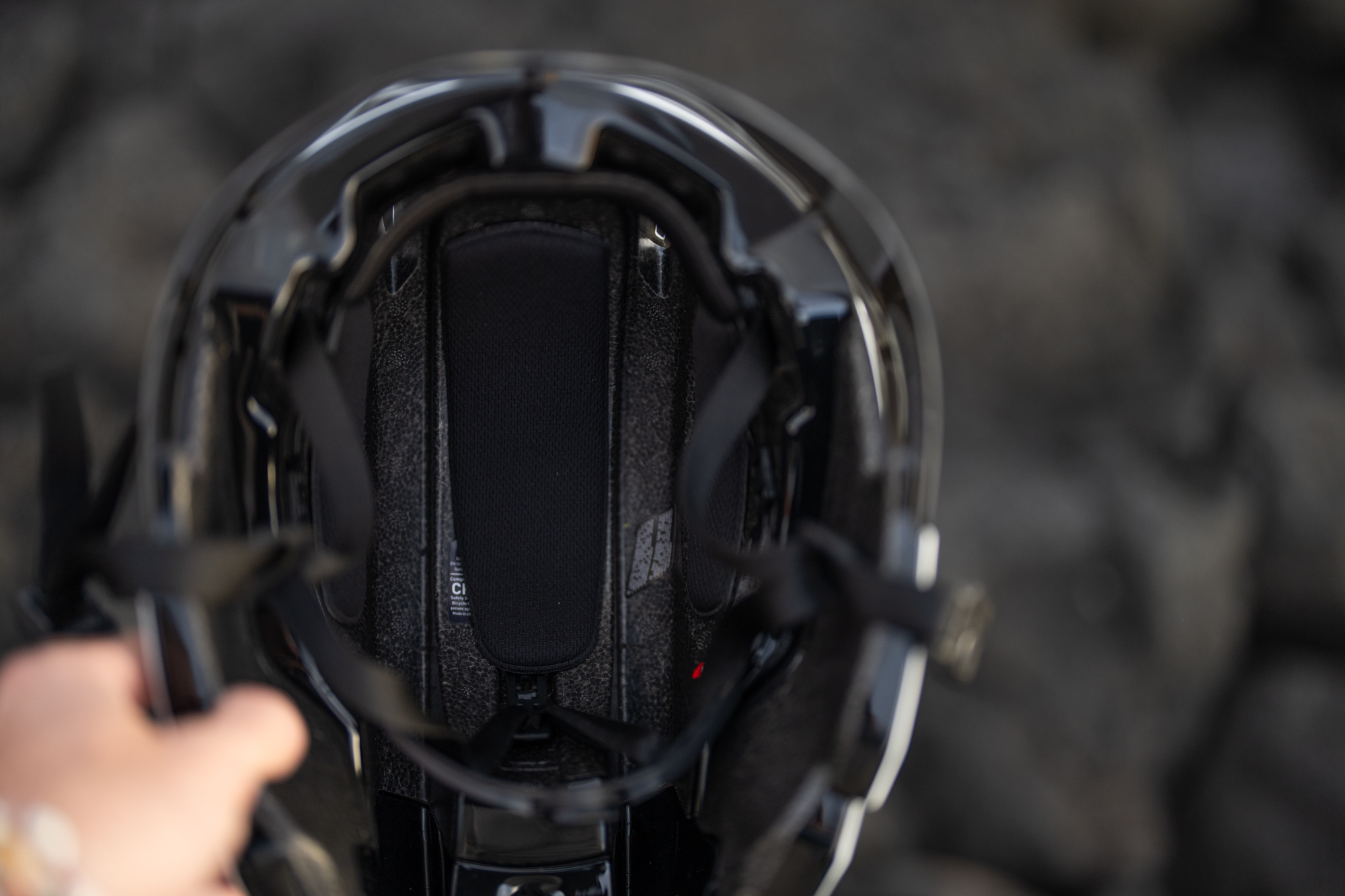
The UCI promptly split helmet categories up for 2026, similarly to how there are now separate wheel depth rules for time trials and mass start events. For mass start races, the UCI now dictates that helmets may not cover the ears, can’t have a visor, and have a minimum of three air events. For time trials, those three elements are unrestricted. However, the UCI has set forth a maximum dimension for helmets, requiring them to measure into a 450mm x 300mm x 210mm box.
It’s those dimensional regulations that EKOÏ’s designers decided to ignore as they started work on the Tri Aero Helmet. By breaking free of those dimensional constraints, the company says that the new helmet was developed with three pillars of focus:
- aerodynamics from both front and side angles;
- thermal comfort; and
- the biomechanics of the triathlete.
EKOÏ says that the result of that focus makes the Tri Aero Helmet up to 12 watts faster versus other leading helmets on the market.
How EKOÏ Attacked the Rules
The first rule of an aero helmet is that it better be aero. To that end, EKOÏ says that it went about testing their new helmet differently than other companies. According to EKOÏ, traditional helmet testing protocols focus on head-on wind performance. It’s there where EKOÏ first made modifications in the design protocol, testing for what it calls “real-world race conditions, where changes in direction and crosswinds are a constant factor.” And from that, there’s two new design features on the Tri Aero Helmet.
First is this serrated edge design on the ear flaps. EKOÏ says that this development helps to better manage airflow around the head, shoulders, and backs of athletes, particularly when experiencing crosswinds or higher yaw angles. There’s also the geometry of the extended tail, which is meant to help “extend the line of the back when the triathlete maintains an aerodynamic position.”
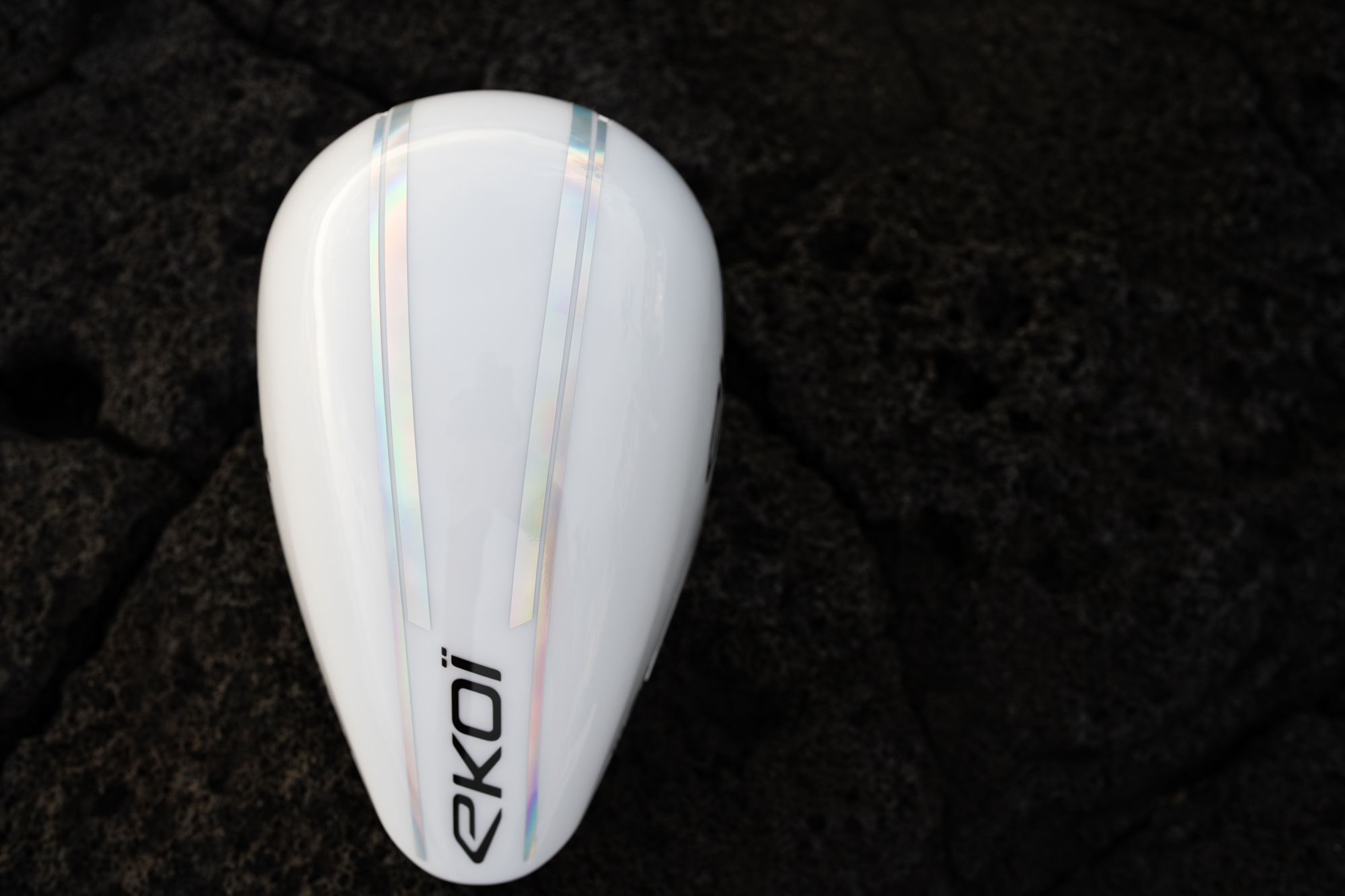
It’s between those two elements that EKOÏ claims the up to 12 watts worth of savings against the competition. And that testing was done in both the wind tunnel and track testing with world champions Sam Laidlow and Patrick Lange. Luca Viano, head of research and development at EKOÏ, mentioned how important working with elite athletes was to the development of the helmet: “Working continuously with athletes like Sam Laidlow, whose relentless pursuit of perfection pushes every detail further, allows us to keep taking performance to the next level.”
Being aero, though, is only half the battle. Especially in locations like Kona, staying cool and comfortable is also an imperative. Need we mention the meltdowns we saw just last year here in Hawaii?
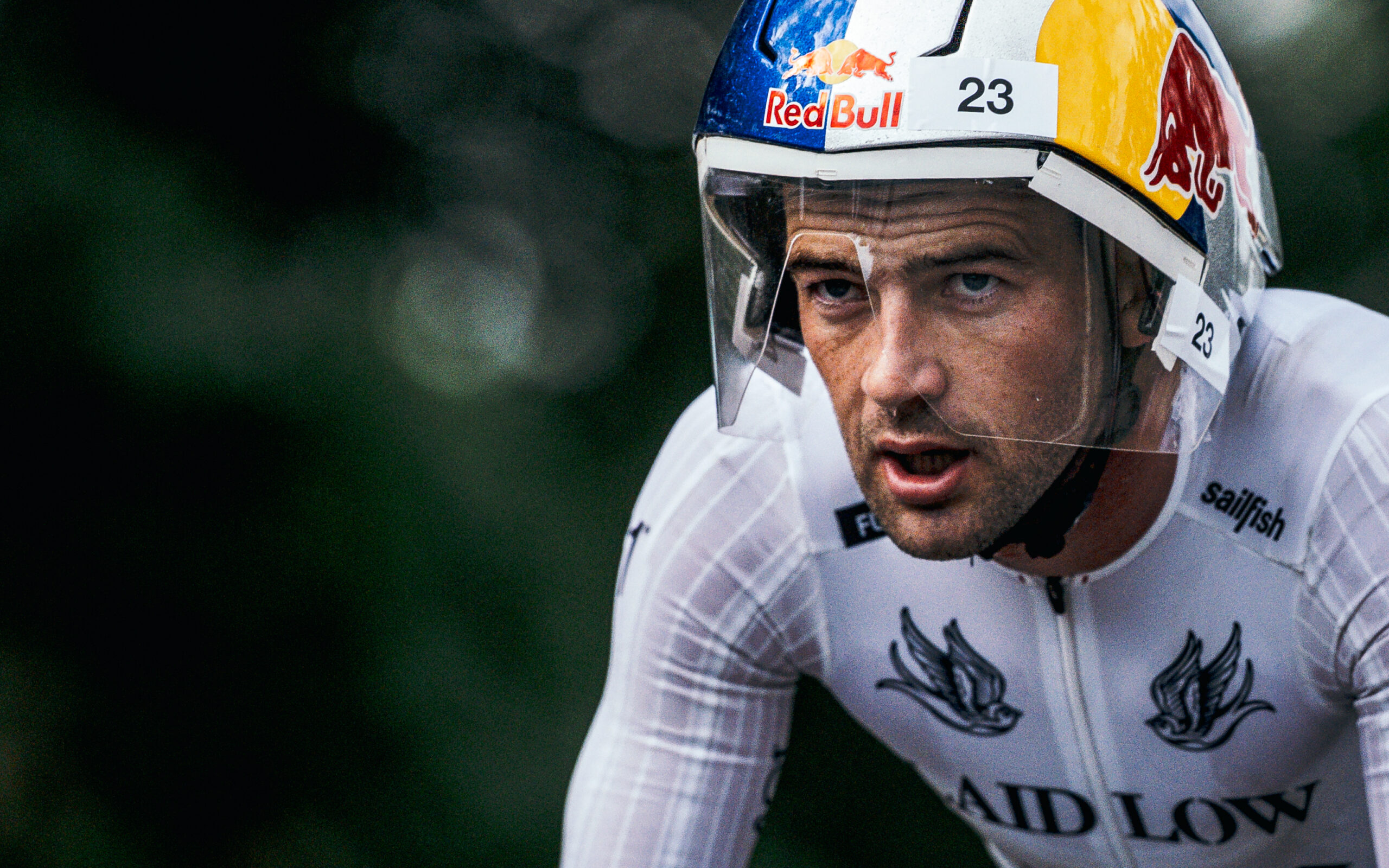
With that in mind, the Tri Aero Helmet features a few concessions to heat management. There are dedicated air intakes at the front of the helmet, which the company claims allows for proper ventilation without compromising aero performance. In addition, the magnetic shield collection is also intended to give more comfort. There are two standard shields — one is clear, the other is mirrored. And then there’s the SL Extended Shield. Developed in conjunction with Laidlow, this version has a central cut-out that allows hands to be positioned closer to the face in an aero position (with potentially some visibility help there, too).
The helmet does conform to CPSC / CE certification standards, and features a somewhat traditional magnetic strap and a two-way BOA closure for sizing adjustment. The helmet comes in two T-shirt size ranges: a small which measures 52-55cm, and a medium-large that covers 56-60 cm. It won’t come cheaply, either. The standard version of the helmet retails for $675. The Laidlow edition, meanwhile, is $900.





SALTY!
especially for a brand that is typically more budget friendly
Probably not on the island though
But you can still see him wearing it!
Sigh…
For $900, in my opinion, it better be 12 watts better.
Than the $500 helmet you mean? Because it’s not that I don’t believe Ekoi, there definitely exists a helmet that’s 12 watts inferior at 50 km/h