
Anne Haug’s No-BS Guide to Spending Money on Triathlon
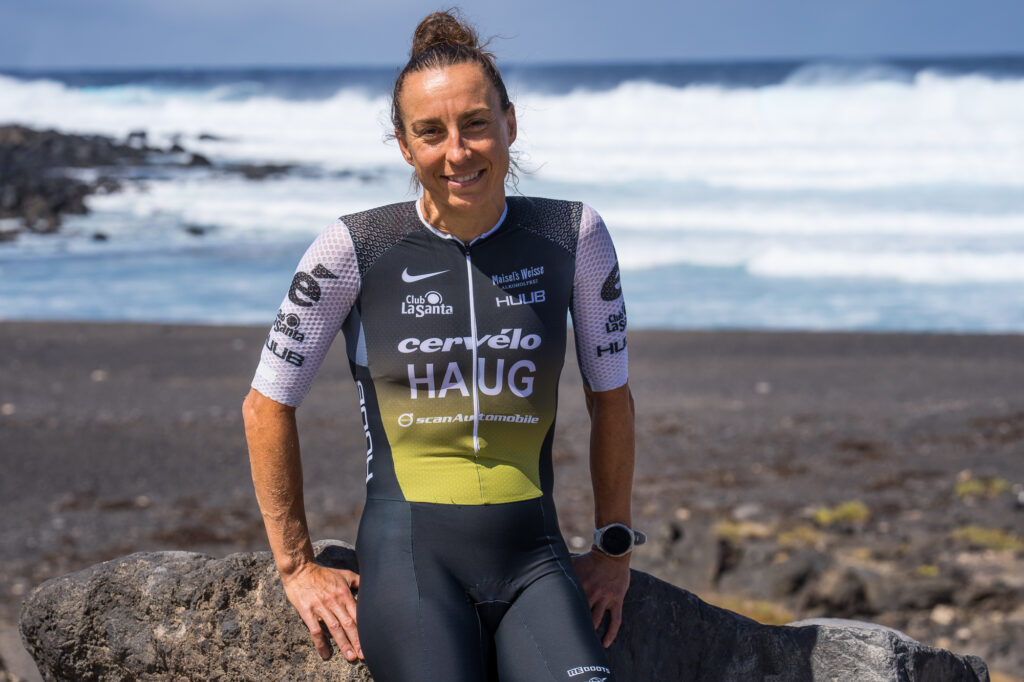
In a world where it’s easy to get distracted by the 1% gains promised by many products and extreme protocols, Anne Haug cuts through the sh*t and tells Slowtwitch where to get the best bang for your buck, where to fully invest, and what to skip on everything from equipment to nutrition.
Haug spent decades at the top of the sport. The German superstar has almost every accolade a triathlete could hope for, from racing at the Olympics to winning Kona. When she announced her retirement last year, only a year after running a 2:38 marathon at Roth, she wasn’t sure what her next move was going to be. She did know where she was going to be, however, and she and her partner (and their dog Mia), have settled in Lanzarote, Spain. A year later, Haug realized her pursuit of high performance wasn’t exactly over.
Instead of chasing her own performance, however, Haug is helping others. She currently offers high performance consulting and sport science testing for individuals. And, starting this November, she will be offering small group triathlon and running camps so anyone performance-minded can have access to her wealth of knowledge and experience.
“In November, normally athletes are coming straight from off-season,” Haug says. “You want to see where you are and where you can be if you train smart with good advice–that’s what we plan on doing.”
“After the week, they should have a deep insight into their own performance to see, ‘Where am I? Where are my weaknesses? What do I have to do to get better? What is the bottleneck of my performance? Is it that my cardiovascular system is not good enough? Is it that I don’t have enough base endurance? How do I train smart to get my own individual performance up?'”
Her camps will be hyper-focused on the individual but, until then, in a quick-fire, no-holds-barred Q&A, Haug tells us where triathletes should spend and what just isn’t worth it.
Spend or Save
Nutrition: “Nutrition is highly individual, so you should spend on what’s best for your tummy,” Haug says, whether that’s whole foods, expensive gels, or middle of the road sports drinks. “Whatever brings you the best performance is the best for you.”
Bike Fit: “It doesn’t matter which kind of bike you have, a good bike position is the base of a successful bike leg,” she says. Bike fit will be one of the key consultations at her triathlon camps. “It’s much better to spend on a good bike fit than have the best bike and sit sh*t on it.”
Wheels: “You get a lot of bang for your buck in terms of aerodynamics,” she says with raised eyebrows. “Aero wheels just make a lot of difference. And not just aero wheels, but the tires you put on them. You can gain a lot for relatively less money.”
Kit / Tri Suit “The fit is more important than the brand or the price tag on it,” she says, explaining that kit/trisuit needs to fit snug and not be flapping around in the wind. “You don’t need to spend on highly expensive products.”
Tech Wearables: “The most important thing should always be your feeling for your body, your own perceived exertion,” she says. “Every gadget you purchase, you should know what to do with the values. Otherwise, to create values with no consequences is a waste of money.”
Training Gadgets: “There’s so much sh*t out there,” she laughs. “Gadgets [like special swimming] tools and whatever. They will never get the best out of you.”
Aero Testing: “A good bike fitting can do a good job. The bike fitter can see a lot of things,” she explains. “If you are a high class athlete, then it may be the last five to six percent. But, in terms of training, rather spend on a good coach than aero testing.”
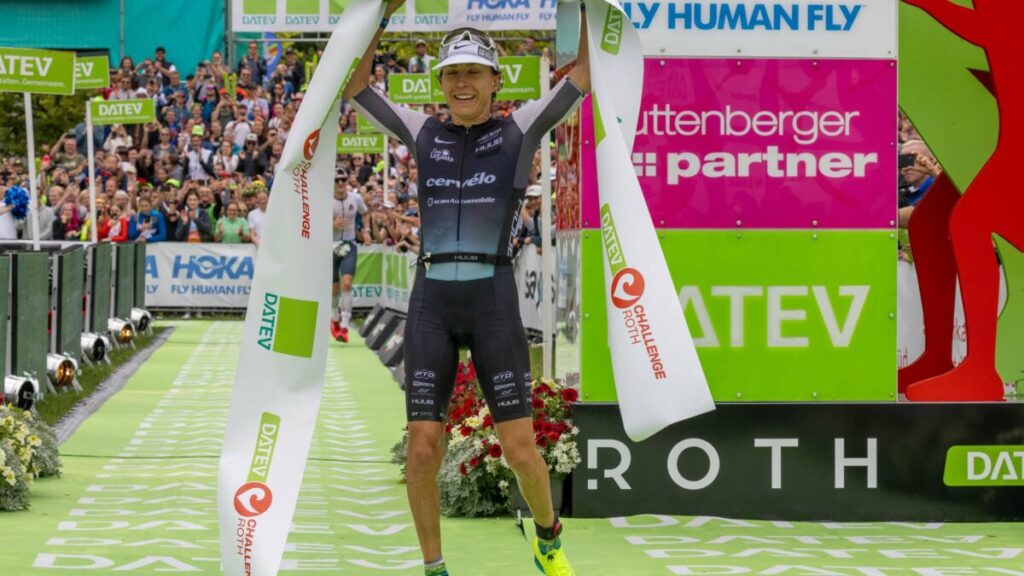
Coaching: “Spend,” Haug says vehemently. “If you train yourself, you never have an objective view on yourself, and you would highly over or underestimate what you can do.” Haug famously worked closely with Dan Lorang for almost all of her career. Lorang now coaches Lucy Charles-Barclay and Taylor Knibb, as well as overseeing the Red Bull–BORA–hansgrohe WorldTour cycling team, including Olympic gold medalist Remco Evenepoel. “It’s always good to have a critical objective view on what you’re doing,” she adds.
Training Camps: “A training camp is always good for performance because then you just focus on training, and you will make a big step forward. But you don’t need to fly to Hawaii to do that,” Haug says. The most important part of a training camp isn’t the location, but your ability to focus on executing your training in the best possible way.
International Races: “You should race because you want to be in the competition–and you can have that around the corner as well,” she says. Local and domestic races, or races without a name brand, shouldn’t be ignored.
Running Shoes: “It has to fit your running style and your running pace,” Haug says. Although she wore Nike throughout her career, choosing a shoe shouldn’t be about the brand. “A good shoe supports your running style, and that’s highly individual.”
Swim Analysis: “Swimming is the most technical sport. What you think you do, and what you actually do, is miles apart from each other,” she says with a laugh. “Swimming with a better technique makes you a lot faster. Definitely spend.”
Wetsuit: “Every model is a bit different—test it,” Haug insists. “That’s why there are test events. A wetsuit should support your swim style, and that doesn’t mean it has to be the high-end product.”
Aero Cockpit: “Work with what you have,” she says simply. “Go to a good bike fitter and get yourself in a good aerodynamic position. It’s worth much more money than you will spend on a cockpit with a sh*t position.”
Cooling Products: “It highly depends what your strengths and weaknesses are,” Haug continues. “If you’re struggling with heat or not. So if you really struggle with heat, it’s worth investing. If you’re like me and not really struggling with it, I think it would be a waste of money.”
Physiotherapy: “As soon as you feel like you’re injury prone, you have to invest in a physio and a good osteo,” she says. Haug worked consistently close with an osteopath in Lanzarote during her long distance years. “The key to be successful is consistency, and if you can’t put consistent training in, then you will never, ever be successful. That’s the best investment I could recommend.”
Recovery Products: “Get sleep,” she directly. “That’s the best recovery. Have a good meal and sleep, and that’s by far the best recovery.”



Really ?