
Parkinson’s Isn’t Going to Win: One More for David Walker at T100 Vancouver
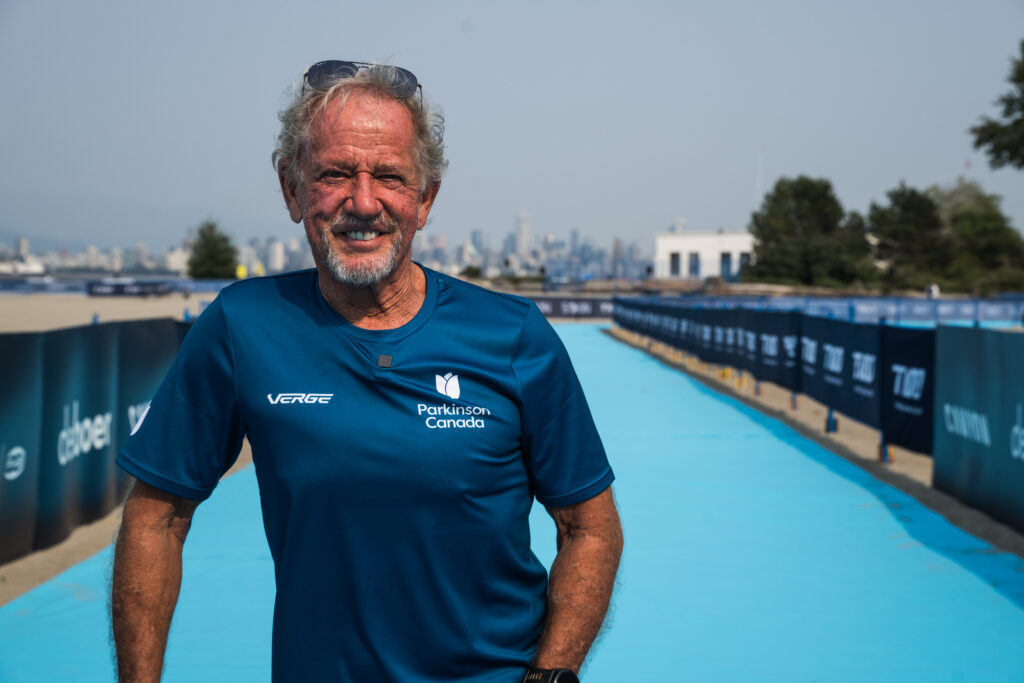
He didn’t do his first triathlon until he was 70, the year he decided to buy himself a bicycle. He had spent years running half- and full-marathons including New York and Paris, but a chance sighting of a poster while wintering in Mexico got him excited about taking on a triathlon. He found a coach to help him learn how to swim.
“For three months, she attempted to make sure that I wouldn’t drown,” Walker says. “That was where it was at.”
His first big test in the multisport world came on the day of his 70th birthday, November 3, 2019, the day of his 70th birthday.
“My gift to myself was my first 70.3,” he laughs. He came third in his age group that day.
“I figured out I’m at least the youngest in that age category, because it’s my birthday,” he laughs. “There were six, seven other guys, and I beat the ones closing in on 75. That stuck with me.”
Retiring, on His Own Terms
“Last year, at this time, was going to be my last triathlon,” Walker says. Diagnosed with Parkinson’s disease a few years earlier, by last season he’d decided he was done. Then the organizers of the T100 race here in Vancouver came calling.
“These rascals said, ‘What do you think of doing another one?'” Walker recalls. “I told them, ‘If you come back to Vancouver, I’m going to do one more.’ And they got me. I told them, don’t tell my wife, but I’ll do one more.”
“I do not want Parkinson’s to beat David,” he continues. “I got a diagnosis of Parkinson’s disease, but I was still David Walker. The diagnosis doesn’t change my determination. Parkinson’s disease is going to be with me the rest of my life — it’s going to win, it’s a master. But tomorrow is important to me, that I take one more win from this disease. It keeps taking things from me, and so tomorrow I’m going to win one more for David. And then I’m going to retire.”
Training Against an Invisible Opponent
Ask him how training has been, and he doesn’t complain about mileage or weather.
“The training is three to four times more difficult than anything I’ve done,” he says. “I’ve done Boston, New York, Paris, you name it. I’ve done Gran Fondos. But now I have to really think — where do I put my foot? How do I bring my foot up? And because I lose my rhythm in the water, how do I—” He pauses. “It’s three to four times harder in my head to do the training. That can fatigue me. But that’s no excuse. That’s what happens on the inside of a Parkinson’s person that you have to overcome.”
The swim will be the biggest challenge for the race tomorrow – a consequence of bradykinesia, the slowness of movement that comes with reduced dopamine.
“I’m not getting enough dopamine from one side of my body to my weak side, and that immediately breaks up the rhythm,” he explains. “And when you break up the rhythm, you start drowning in your head. You know how it goes. So if I can do the swim, I can do it. I can do it.”
No Tandem, No Draft … Just Company
For all that Parkinson’s has taken, Walker refuses to let it change the way he’ll approach the race.
“I do not want anything special in this race,” he says. “I don’t want to be able to draft. I don’t want a tandem. I don’t want anything different. This is David Walker, retiring from a real triathlon.”
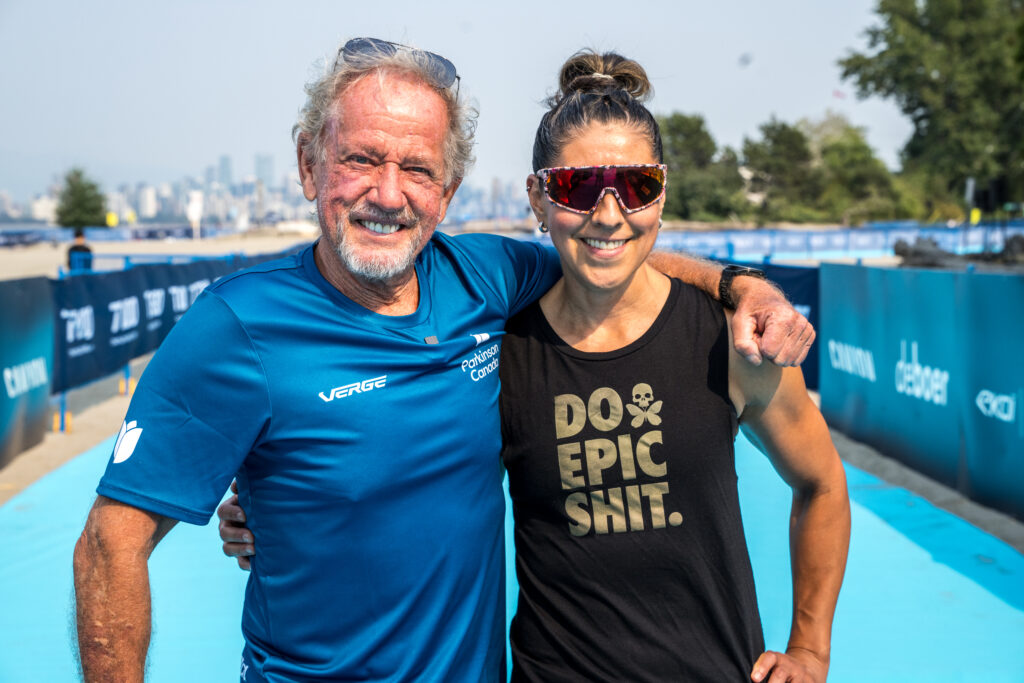
The one accommodation he has agreed to is company – a single person staying near him throughout the race – “not to draft, just to be there for safety.”
Racing for More Than Himself
Walker is also raising money for Parkinson’s Canada through the race.
“I can do this — but why not add some meaning to it?” he asks. “The meaning I can bring is, number one, to help other ‘Parkies’ see that they can get off the couch. But two, to raise awareness to others who don’t understand about this disease, and to get money coming in to help Parkinson’s Canada do what they do — the amazing research they do across Canada. So it adds a little more, that when I’m retiring myself, I’ve added some value in partnering with Parkinson’s Canada.”
What Comes Next?
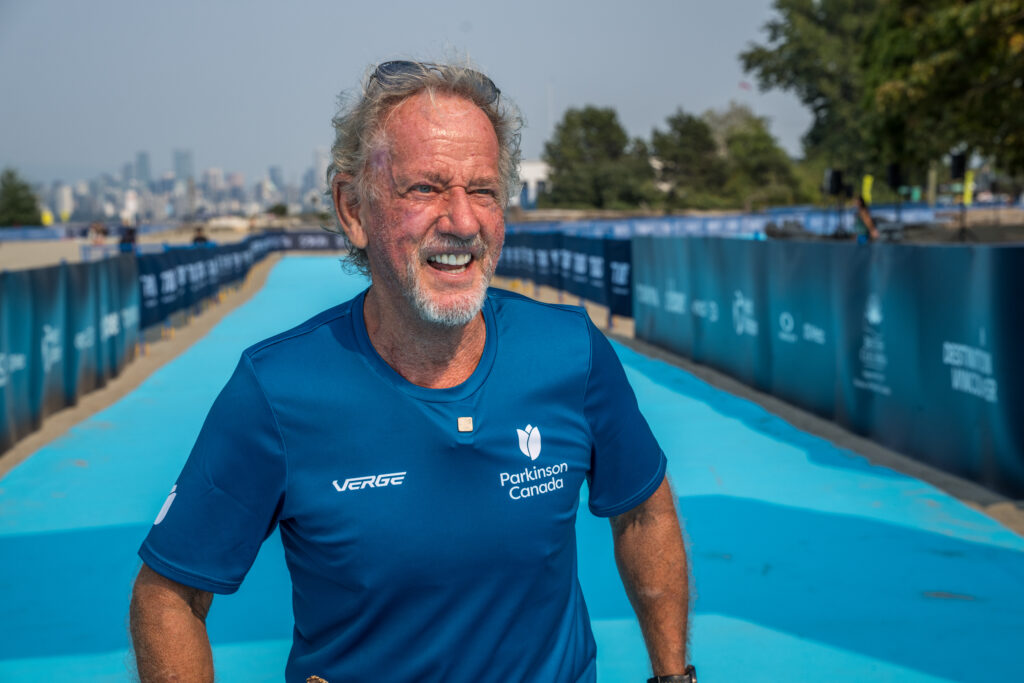
Asked what it will mean to cross the finish line, Walker’s answer looks forward as much as back.
“It’s going to mean one more, and then it’s going to mean the start of next,” he says. “Next will not be a triathlon — God bless them, they’re doing wonderful things with the T100. But it’s going to mean everything to be able to get to that finish line. And then, whatever’s next, I start next, because this disease is not going to win.”
What does “next” look like? He’s not sure, but he’s also not worried.
“It won’t take too long for David to be creative and come up with what’s next,” he says. “You can be assured it will be a goal that matches who I am — smaller than a triathlon, but bigger than anything any other Parkie can do. If that makes any sense.”
It does. Tomorrow David Walker will swim, bike and run one last time because he’s coming to the end of his triathlon career on his own terms.

Start the discussion at forum.slowtwitch.com