
Challenge Cap Québec: Race Director Dominique Piche on the Full, the PTO Deal and What’s Next
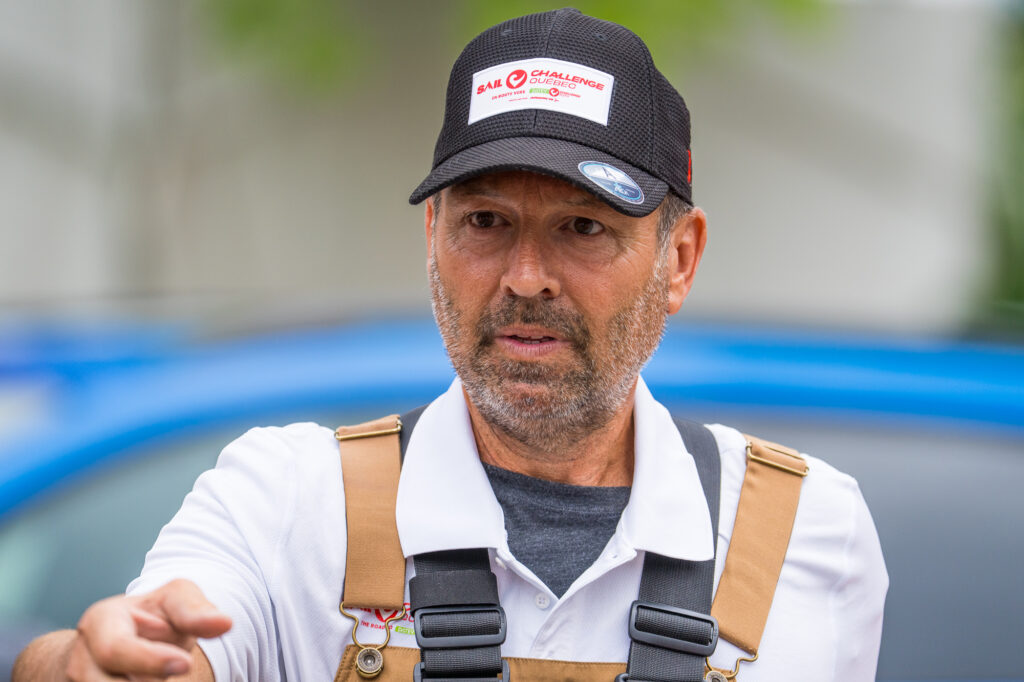
He is the man who brought IRONMAN racing to Mont-Tremblant. His tenacious ability to put on an event like no other made it an easy pick for IRONMAN to have him put on the first IRONMAN 70.3 World Championship outside of the United States, beginning what has become a global rotation for that event. Three years ago, Dominique Piche, the man who produced all those great events in Mont-Tremblant, setting the stage for the continued success of the 70.3 race there, turned his sites on a new race, Challenge Cap Quebec. He’s also taken over a the long-standing Esprit Triathlon in Montreal, creating another Challenge race there.
We were on hand last weekend for the Challenge Cap Quebec race, and caught up with Piche at the end of the first day of racing.
Day one is almost done. How are you feeling here at Challenge Cap Québec’s third edition?
I’m overwhelmed by the success of today — with the athletes, with the volunteers, with the city, with the partners, and the weather. And the new asphalt that we have here on the major street of the event, which was done, I’d say, 48 hours ago. That was a surprise — we saw the street completely demolished last Monday. And when they say, “Don’t worry, you’ll get new asphalt by Thursday,” you try not to worry, but option B, C, D, and E — I just don’t have the equipment to pave the street if it doesn’t work. Nevertheless, it was just beautiful.
Challenge events are renowned as being a festival. This is truly turning into that — you’ve got the sprint, Olympic, half, and this year the full distance. What prompted you to add the full?
For me, the full distance is the distance that brings the most out of you in any shape or form — as an athlete, as a producer, as a staff member, as a volunteer. What the athletes make us live through those 15 hours is just surreal. There’s nothing else I’ve felt in my life in producing events that a full distance can bring to you. Having the full distance in Mont-Tremblant leave the province of Québec, I was sad. So we made the decision to bring it back in an international format with Challenge, in a boutique style mixed with the half, the sprint, and an Olympic — to create this festival of distances where the athletes racing on Saturday can dream and say, “I’m staying over on Sunday because I want to witness these long-distance athletes.” Everybody learns from each other. This is why we brought it back as a boutique destination.
“Boutique destination” — that describes this event in many ways. Québec City is one of the most famous tourist spots in the world. Is that a key to the success here?
Producing in the heart of Québec City, old Québec City and the old port, is a privilege. I don’t think too many people thought that one day a full triathlon would take the streets of old Québec City — with the St. Lawrence River with current at about nine or ten knots. Our partner, Port Québec, is amazing. They let us do stuff in that basin that is completely illegal the rest of the year. You can’t swim there during the year. You can’t have any jet skis. You can’t kayak. And we’re doing all of that over the weekend, twice. So I think Québec City is a great destination now for triathlon. We have a great bike course. It’s different — we don’t have a one-loop or two-loop course, but if we want to create these magnificent events, we need to take into consideration the reality of these cities and their growing pains. If we adjust our production with our stakeholders, we can create new feelings and new festivals like we’re doing here.
There are eight loops on the bike. Would you have preferred fewer?
I would have liked a four-loop or six-loop course — I would have preferred that. But I can’t. So it’s either we don’t have it at all, or we say, well, the ones that do come here, it’s an eight-loop course. And you know what? You’re going to come back on Main Street eight times. Seeing how the crowd was encouraging the athletes on the bike today — it’s like a mini Tour de France. The sidewalk is about 14, 15 feet wide at least, and it was full for a kilometre. So, don’t tell me that when you’re on your bike and you come back here and turn around, with all of that energy and love and people having signs — that the athletes aren’t getting a boost.
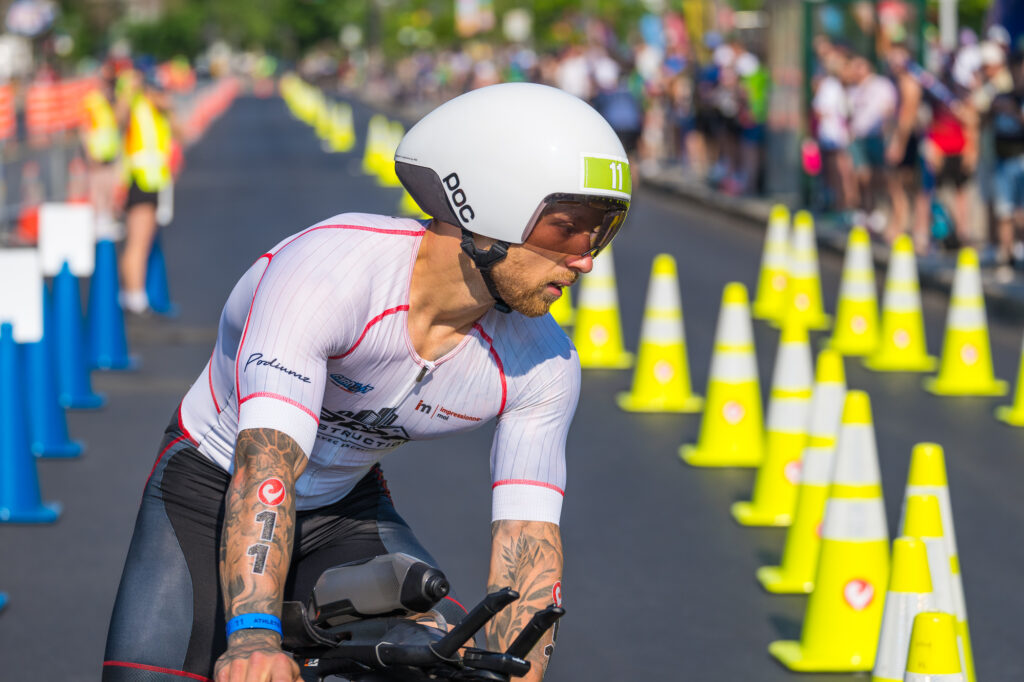
You mentioned Challenge Roth. I’ve already spoken to four people here who are excited about going after Roth next year. You were saying you could have 200 to 220 athletes between this race and Esprit heading to Roth. That’s going to be something special.
That’s surreal. Because if it wasn’t for Felix (Walchshöfer) and Felix’s family accepting this kind of partnership — to promote Roth and Québec and North America — and Felix having the confidence that we would represent his brand well, it brings me to a place where I’m overwhelmed, and I take that very seriously. We need to be at least at the standard of Felix’s event, and even better. By offering 200 spots to the first 200 registered 226 athletes, and 20 at the half here in Québec City and 10 at the half at Esprit in Montréal, we’ll create the possibility in 2027 of having over 200 athletes coming from North America to Roth who have raced either Québec City or Montréal with Challenge Family. I think it’s something that’s never been done or heard of — Felix offering 200 slots to an event.
Where do you see Challenge Family growing in North America, and where do you see yourself fitting into that?
I won’t start thinking about where I fit — I just don’t fit anywhere too much. I would love to see Challenge Family expand wisely in North America with this family-oriented triathlon festival, but not at any price. It needs to find the right city, the right community — and not because of a cheque, not because of money. I don’t think that alone assures success. And with the new transaction that happened, we’ll see how that (PTO acquiring Challenge Family) comes to play as well. I’m very excited to hear what the new calendar brings for 2027, 2028, and beyond. Definitely a very exciting time for triathletes.
Speaking of that deal — the PTO acquiring Challenge Family — what do you hope they can bring to the table?
We need to be known. We need to be out there in marketing and visibility. But we also need to be better in offering better service, better catered services to our athletes, better information prior to the race. How can we be with our athletes through that year when they decide to register — how can we bring ourselves together to race week? I’d like to see us closer to our athletes. That we talk more, we hear them, we get them involved on how we could improve these services. Challenge Family’s DNA, I think, is sitting down and discussing and seeing how we can build this together. Let’s not be in a business where we’re only thinking about the price we’re charging our athletes because we want more revenue. Let’s see how the athletes can bring us emotions and experiences, and how we can channel that into bringing them to Challenge Family. PTO and their relationship with World Triathlon is interesting too — there are now two angles. The angle that brings you to the Olympics, and the angle that brings you to The Championship. I believe we should team up and use Québec City and Montréal as a stepping stone for North America with World Triathlon and PTO, and bring these two cities to the world.
You’re at around 2,150–2,175 athletes over the weekend, with capacity around 2,600. Is the challenge simply that people don’t know you exist yet?
I believe that is because people still don’t know we exist. It’s word of mouth. And for the people who work so hard to produce these races — the town, the province of Québec, the volunteers — to have a sold-out boutique event of 2,500 or 2,600, that’s what I’d like to bring them for their work. And not sold out at 4,000 or 5,000 — sell out at a number where we can hopefully know you by your first name. There’s a race for everybody. I think we complete each other between all of the brands, and that’s why I think the merger streamlines the offer to the athlete. PTO will elevate Challenge Family with their strength, and Challenge Family will strengthen PTO, and together this will create a new identity and a new DNA. I’m very excited for them to merge their strengths.
What about Esprit Montréal — that’s a very different experience.
Montréal is a totally different experience — it cannot be compared to Québec City. People are coming out of the subway with their bikes on their shoulders, lining up — and when I saw that, I stopped and said, that is so cool. You are coming to do an international triathlon in the heart of a metropolitan city by subway. You’re going to swim in an Olympic basin, ride your bike on a Formula 1 track, and then run around that Olympic basin with all of the Olympic spirit around you. And I have plans for it — I’d like to set up a Sunset Series, where in a new metropolitan setting you could do a sprint on a Friday night at 6:30, have a beer on the terrace after, and be on your way to the cottage by 10:00. Traffic has gone, you’re in the Laurentians or the Eastern Townships for the weekend, and you did a triathlon after your week of work. I want you to start at 6:30, finish at dark, and have that whole area lit up for you. How cool would that be?
Next year — more of the same? Another full distance here, the festival format continuing?
I would hope so, but everything is on the drawing board, let’s say. In respect to the plans that we’ll put on the table with the new orientation of everyone who’s now together — it’s too early to say. We’ll see in a few weeks when registration opens for 2027. But the best is in front of us.



nice article!
do I get this right ,right now he has no real idea how the pto colab will work ?
@Ironmandad does Dominique Piche have a date for Cap Quebec NEXT year.
I want to do but I am on this stupid treadmill of doing Tremblant 70.3 (that he started) and next year would be number ten. From where I live Muskoka is two week after Tremblant with Cap Quebec on the middle weekend. I’ve done Muskoka 22 times going back to 1989 (remember Royal Lepage Canadian Tri series finale ???….maybe you can interview Graham Fraser about that series), so I have this routine of Tremblant + Muskoka weekends but wanting to go to Quebec City for Dominique’s new event. In the region we have Tremblant, Muskoka, Tupper Lake, Cap Quebec all on top of each other. It’s a great problem to have as an athlete.
Hey @devashish_paul, I am not sure on next year’s date. He said registration would open in the next couple of weeks, so I am guessing the dates are pretty much set. Those are some awesome streaks you have going! I do remember those Royal Lepage days - I raced there and would eventually announce at a bunch of the Muskoka events over the years, too!
I have also done each Muskoka after the pandemic 2021/22/23/24/25 and 26 in a few days. Looking back before 89,90,91,97,98,99,00,01,02,03,04,05,06,07,08,09,12,15 (so I counted wrong). If I can finish this year, it will be Muskoka number 24 and next year would be Tremblant 10 and Muskoka 25, so trying to figure how to also do Challenge Quebec (maybe just suffer it out and race three weekends in a row and just swim in between races haha). I have done several XC ski and swim events in Quebec City and my wife actually likes going there, so that’s a bonus (she’s been there done that for Tremblant/Muskoka)
Will keep an eye open for registration for Challenge Quebec . The biggest challenge is keeping the body together. I told my family I’ll only do and event if I can bank on running the full run leg, and thus Ironman Ottawa on home turf as tempting as it was, is something I can’t bank on and even half IM is getting iffy
Count me as another who loves the Tremblant event and can’t picture myself missing it. I was very disappointed when Challenge changed the date 1 or 2 years ago of the Quebec race to be the weekend after Tremblant.
Dominique says the reason its not full is because people don’t know about it….lol………no - its because there is a wildly popular race a few hours away that 3000 athletes do each year the week before. If they were 2+ weeks apart, I’d bet the Challenge race would sell out quickly every year.
Both Tremblant 70.3 and Challenge Quebec want our $$$ BEFORE summer tourist season gets in full swing, so both are claiming the end June slots. That is understandable so they benefit the community the most.
An end Aug or Labour day weekend race in Quebec City would be fabulous. I may just have to suck it up and do Tremblant 70.3 + Challenge Quebec half + 70.3 Muskoka on back to back to back weekends and just expect to go medium-slow-slowest on back to back to back weekends. Realistically it won’t change my swim and bike at all, but the run well that’s another story
Piché is a divisive figure in the province of Quebec’s triathlon and marathon communities.
His success in building large events has been overshadowed by his abrasive and dismissive behaviour, especially with Triathlon Québec, the local federation, and its officials, on the topics of security and rulebook application.
He has made business and technical decisions that have caused major security lapses. Entirely preventable injuries and even deaths have occurred at his couple past Ironman and Rock’n’roll branded events in Mont-Tremblant and Montréal. We are glad he left those brands but are concerned about private information of his renewed behaviour with the Challenge events in the province.
The first edition of Challenge Cap Quebec, which I completed in 2024, was marred with violent accidents on the bike course, especially near the too many u-turns and unmarked bumps and holes. There were also many falls on the run course due to surface issues (cobblestones, nails sticking out of wood planks). I will not participate in this event again as long as Piché is in charge.
I heard the opposite from many who did Challenge Quebec which is why I am considering going next year. In terms of RD’s and opinions about them, what I would say is if you run large enough races for long enough, bad things will happen under your watch. I’ll leave it at that, because deaths in races eventually are a law of large numbers thing and lots of things can happen running a large logistics operation, be it FEDEX, an airline, sporting events, rock concerts etc. There are lots of counter opinions to yours on Dominique’s contribution to endurance5 sport in Eastern Canada overall. I don’t think you can speak for all of Quebec though. I personally did 10 events organized by him (3x full tremblant, 1x70.3 worlds, 5x70.3 Tremblant, 1x Challenge Esprit) and had a good to great user experience. He created something out of nothing in Tremblant and subsequently done so at Challenge Quebec, and has taken over Esprit. He took IM 70.3 worlds from Vegas to its first international location.
Overall he has also done a major contribution to the Local ecosystem. Generally I am uninterested in backdoor politics, just user experience. You did not like the user experience and that is fair. Who he does or does not piss off at Triathlon Quebec, or mayors/cities etc, well, to a degree, I don’t care. It’s easy for all of those to critcize the builder, but none of those bureaucrats are gladiators in the ring putting on the races and taking the risks.