
The Most Common Mistakes New Swimmers Make
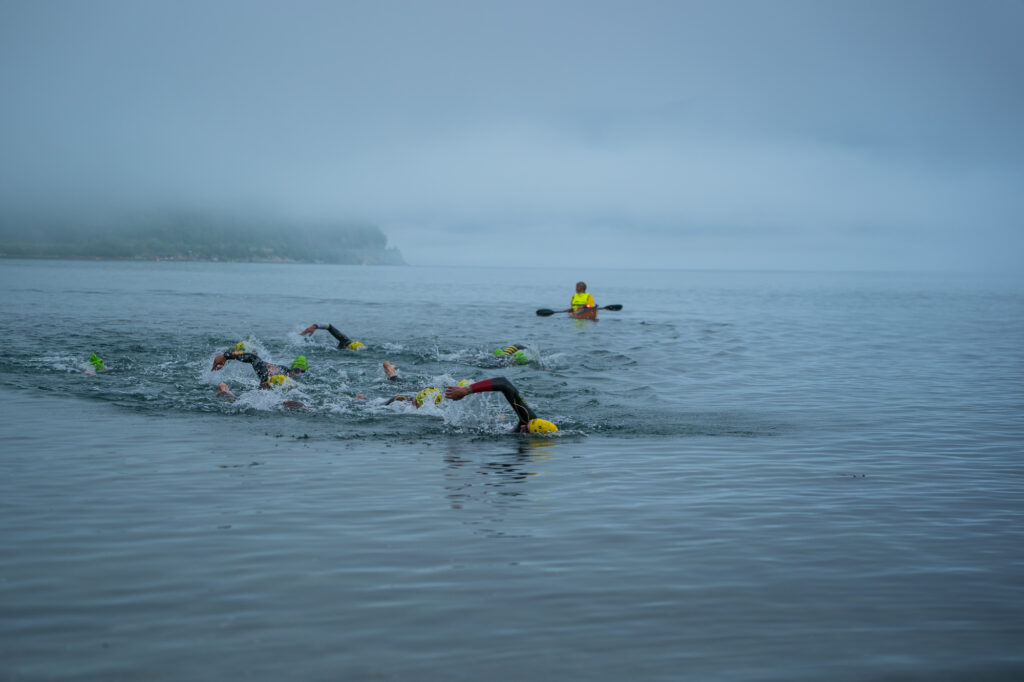
For most people, swimming is the hardest of the three sports of triathlon. Unless you grew up as a competitive swimmer, there is a lot to learn and a lot of work to be done as you prepare to race. Even if you can swim, that doesn’t mean you’re ready to dive into competition right away.
Slowtwitch spoke about rookie swimmers with Brenton Ford, an Australian swimming coach and founder of the extremely popular website and social media page Effortless Swimming. Ford has built a massive following online, with more than 420,000 subscribers on YouTube and over 380,000 followers on Instagram, where he provides swimming tips through easily digestible videos for all levels of swimmers every day.
We caught up with Ford from Tokyo, where he took the time to chat before heading to the first day of an Effortless Swimming camp (one of multiple week-long outings he organizes throughout the year). He outlined the most common mistakes he sees new swimmers and triathletes making, as well as providing tips on how to fix or avoid them.
Equipment Mistakes
When you first get started in triathlon, it can be tough to know what pieces of gear to get and which ones to skip. Ford says there is some swimming gear that he sees newbies buying that isn’t ideal. The first he mentions is long fins.
“I’m not a huge fan of those,” he says. “They can really help with your kick, but they change how you use your legs.”
Fins are still a valuable and helpful tool for swimmers of all levels, but Ford recommends shorter ones instead of the longer options on the market.
“The short fins don’t change your kick timing and rhythm,” he says.
A thick pull buoy is another thing Ford says new swimmers shouldn’t use. Like the long fins, these pull buoys can be helpful in the moment, but they aren’t ideal for developing good habits in the water.
“The really wide pull buoys can keep your hips up, which is great, but they also keep your legs a long way apart,” he says. “When that happens, you won’t engage your core as well as you would with a slimmer pull buoy, so you just end up being disconnected through the middle of your body.”
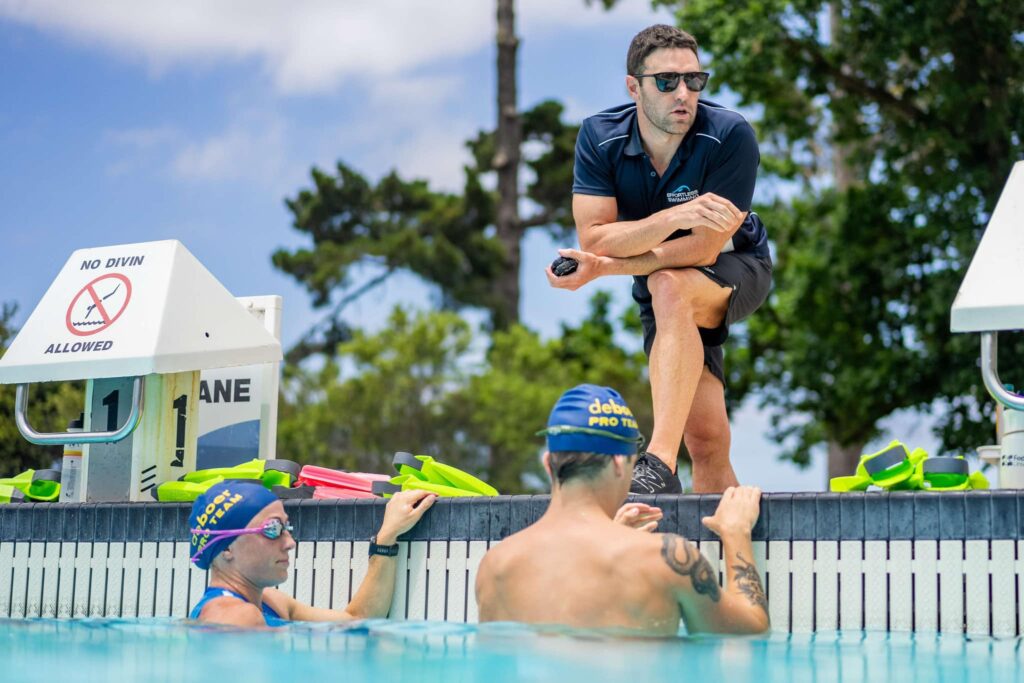
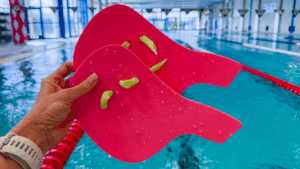
Hand paddles or another example of useful gear that can cause new swimmers issues if they choose the wrong ones. As with the fins and pull buoys, the difference between the right and wrong options comes down to the size you pick. Using paddles that are too big can lead to shoulder injuries, especially if you aren’t swimming with proper technique (which may be the case for many new swimmers). Ford says these can be a very helpful tool, but before buying some, check with a coach or experienced swimmer to be sure that you’re getting the right size for someone of your level and abilities.
A Mistake That Can Slow You Down
If you’ve ever watched a good swimmer’s stroke, you will have seen that they aren’t forcing anything. Their stroke is smooth and consistent, and it’s that relaxed rhythm that helps them skim through the water. Many new swimmers do the complete opposite, however, which only winds up making them slower.
“A lot of people feel like the faster they move their arms, the faster they’ll go,” Ford says. “They’re not accounting for the drag factor of water.”
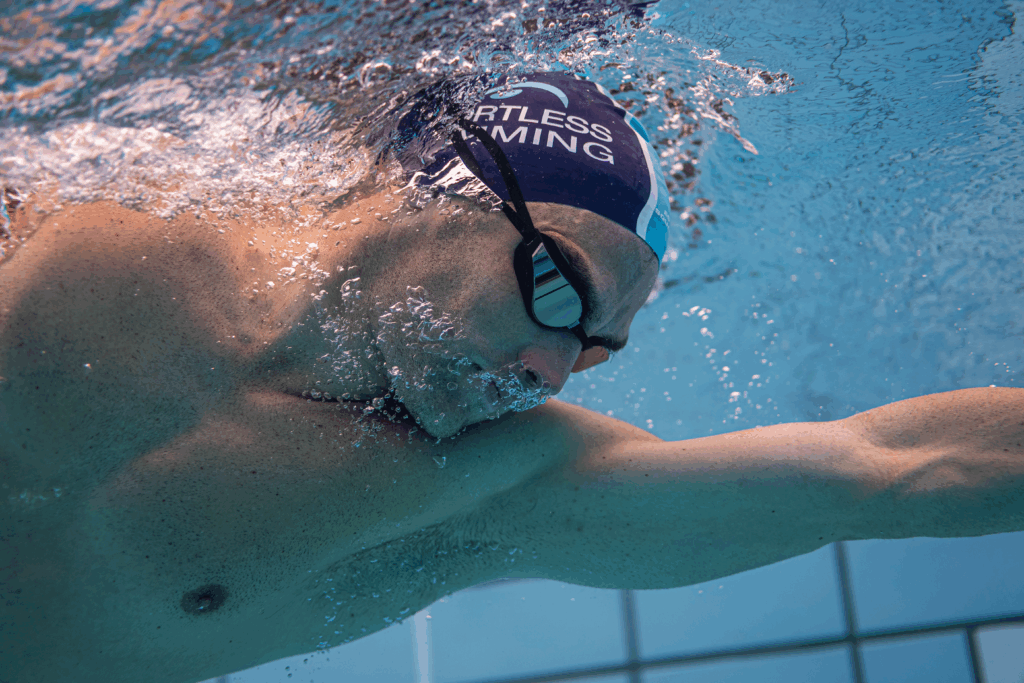
He says rookies will keep their torsos flat in the water while they windmill their arms as quickly as possible. Instead, they should have rotation through their torso from side to side with each stroke, while at the same time slowing down the rate and focusing on the pull.
“We want to accelerate through the underwater phase of the stroke,” he says. “It’s almost like a waltz with the timing. It’s a one-two-three, one-two-three, as opposed to just this constant turnover of the arms with no change in speed.”
Ford says you need to “slow down to go faster,” as the more relaxed pacing allows for longer reach and more rotation compared to fighting the water with each stroke.
Mistakes That Can Lead to Injuries
Running is the sport in triathlon that is most likely to lead to injuries, but just because swimming is low-impact doesn’t mean you can’t get hurt. Ford says one way you could injure yourself is by swimming too much with too little rest.
“I think newbies tend to swim a kilometre or two, just straight,” Ford says. “No breaks in between and all at the same pace. Swimming without intervals isn’t going to give their muscles enough recovery time.”
Another way swimmers can get hurt is by jumping into workouts without warming up. The warmup is always necessary, Ford says, but especially in the morning.
“If you’ve only been up for half an hour and you’re still getting the body moving, then yeah, that’s an issue,” he says. “You need to ease into the workout, but I see a lot of people just going for it and not warming up on the deck or in the water.”
Warmups may feel tedious, but they serve a purpose. They don’t have to be all that long, but a few minutes of band work on the deck followed by several laps of easy, light swimming and drills can go a long way in injury prevention.
Not Enough Swimming
If you’re starting fresh as a swimmer, you’ll see improvements after even just one swim a week. However, it won’t take long for you to hit a plateau if you keep that schedule. Ford says many new swimmers make the mistake of not swimming enough, and they may not even realize that just a bit more consistency could lift them to new levels.
“You need to try to be consistent within a week where maybe you get two or three swims in rather than just one,” he says. “The body will start to adapt and develop that feel for the water and that comfort if you can spread it across two or three swims instead of just one.”
When it comes to triathletes specifically, Ford says he has seen “so many people” who think just because they’re capable of swimming (meaning they won’t drown at a pool party, not that they can swim laps) means they will be able to hold their own in a race.
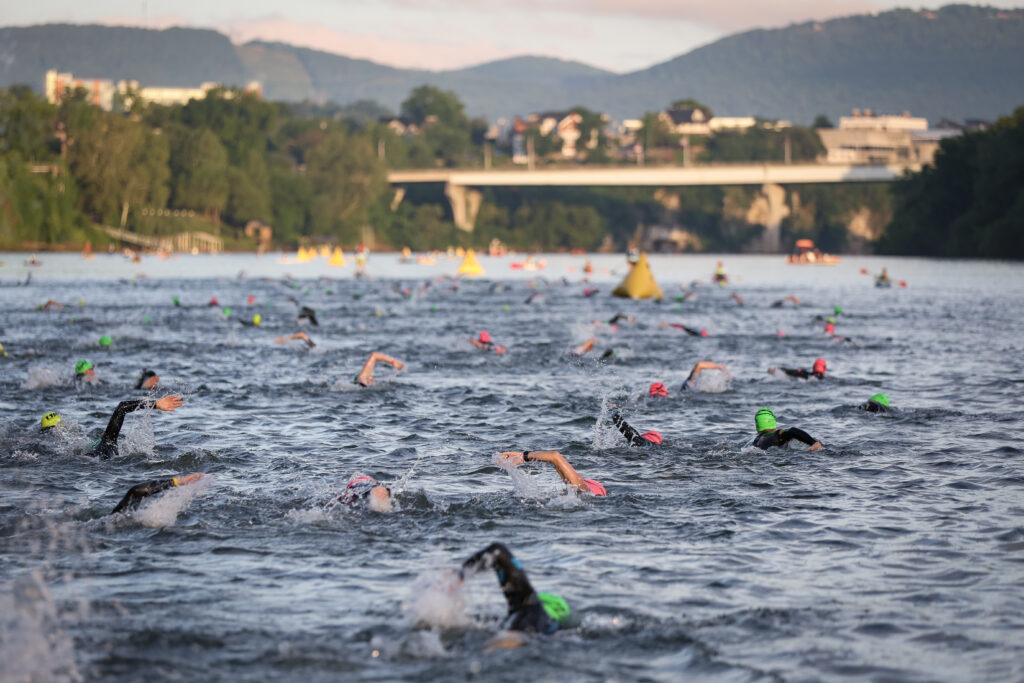
“They think they’re fit enough because they bike and run,” he says. “Then they get to the race and they struggle a lot, even it’s just a 400-metre swim. That’s a big wakeup call.”
It’s one thing to struggle and not swim as quickly as you would have liked, but Ford notes that not being prepared for the water could be dangerous, too.
“Some of these people get in a bit of trouble on race day and need the support boats,” he says. “So, yes, I think people probably overestimate what they’re capable of doing.”
The fix? Swim more. You don’t have to be a pro — you don’t even have to be fast — but you do need to feel comfortable in the water so you can make it from the race start to swim exit feeling confident and safe.

Start the discussion at forum.slowtwitch.com