
Is There a Dark Side to Modern Racing Shoes?
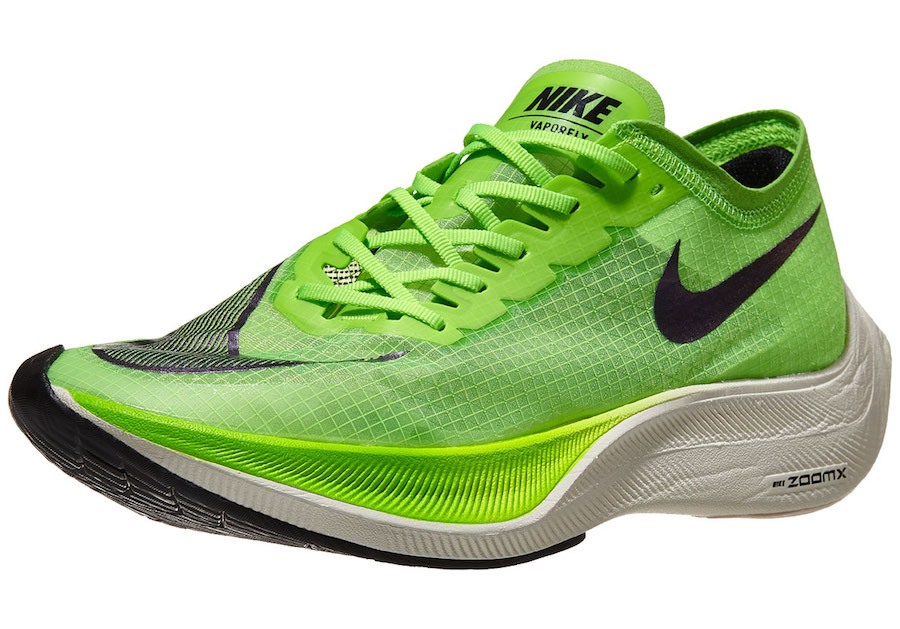
It’s hard to believe that it’s been almost 10 full years since the original generation Nike Vaporfly (then known as the Vaporfly 4% Elite) started trickling into the hands of Nike’s elite runners. It would be nearly another full year before the first releases would be open for public sale. But by that point, Nike athletes had started taking down victories everywhere; for example, the 2016 Olympic marathon men’s podium was a sweep of Vaporfly wearers. The hype train made sure that those first limited releases of shoes sold out, often times within minutes of them hitting store shelves or e-commerce sites.
It’d be another two years before the AlphaFly would come to market. Nike celebrated it by offering a pair to literally anybody who had qualified for the U.S. Olympic Trials. It was, by all accounts, incredibly successful, as hundreds of runners accepted their pair and ran the qualifier in them. The release also dovetailed with the current World Athletics regulations on stack height and carbon plate design. The regulation, which the Alphafly narrowly made it under, attempted to limit the technological push as the record books continued to be re-written.
Just about every shoe manufacturer on the block now makes some form of carbon-plated racing shoe at this point in time. It’s easier to list brands that don’t have plates in them anymore than it is to list the ones that do. Heck, in our forum, we have an entire thread dedicated to runners trying to get their hands on certain Chinese brands that otherwise don’t have presence in the U.S. Thanks to the World Athletics regulations, no matter who makes the shoe, all of the carbon racers tend to follow nearly the same recipe: maximize the stack height of some type of supercritical foam, ensure it’s just barely under the 40 millimeter maximum in the key measurement location, and put a single carbon-fiber plate in there.
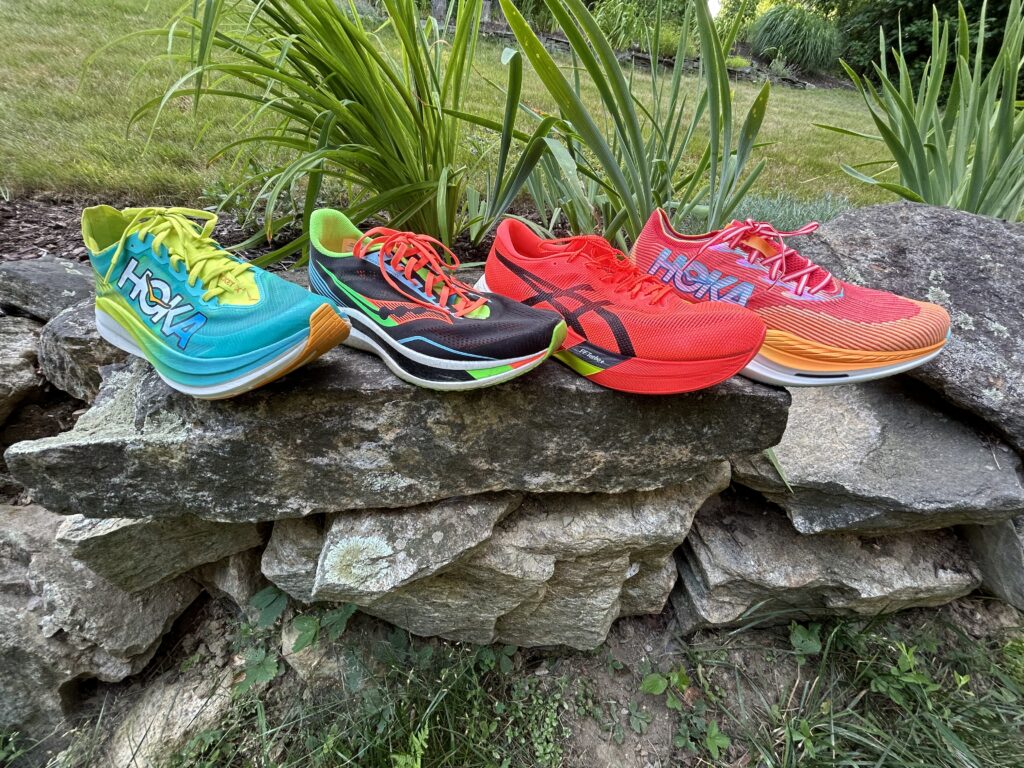
It means that there’s really only a select few places that you can see radically different approaches out of these shoes. Brands will look at foam formulations and make changes to it, either to soften the ride or provide more rebound. They’ll play around with uppers to ensure the fit is clean; look no further than On’s clever LightSpray technology in their latest generation racing shoes. Heel-to-toe drop might be different, depending on that brand’s particular philosophy towards it.
And then there’s overall weight of the shoe. It’s probably the biggest performance differentiator lever left to pull, all things being equal between the foam and plate. The general rule is that for every 100 grams a shoe is heavier, there is a corresponding 1% increase in race time. At the elite level, that can translate to nearly a minute’s worth of savings at the marathon distance. In fewer words: we probably don’t see two men run under two hours for the marathon in London without the combination of lightweight, foam, and carbon plates.
The theoretical problem, of course, is where you cut weight from — and the trade-offs that come with it. There’s really only five places you might be able to pull out grams from in a shoe. You could go with thinner, flimsier uppers that don’t hold the foot as well to the shoe (or innovate, like On has done). You could make the sockliner thinner, too, and just rely more on the cushioning in the midsole. You might be able to specify a different lay-up of carbon for your plate, but it might mean you’re sacrificing some of the energy transfer benefits you were looking for. Similarly, you might take weight out of the foam, but that generally means you’re sacrificing durability.
That leaves the outsole. There’s not much remarkable to modern outsoles, as there’s only been three options for materials. Carbon rubber is the standard option, which has good durability but often weighs a bit more. Blown rubber is effectively its lighter cousin, using…you guessed it, air to make it lighter. Lastly, you can just leave it bare, and go with an exposed midsole.
An exposed midsole is by far the lightest option. Of course, it also comes with a durability trade-off. Scuffing your feet will quickly see deterioration of the midsole. It also means that you have significantly less traction. And this is one area where we’re starting to see that perhaps the pendulum has swung perhaps a bit too far, at least for triathlon (or less than perfect running conditions).
We’ve seen two high-profile falls out of athletes at the 70.3 distance while running this year. First was Jamie Riddle, who slipped while cornering at IRONMAN 70.3 Aix-en-Provence. He was forced to stop after this hard fall.
Then came Matthew Marquardt this weekend at Happy Valley 70.3. Marquardt, rolling through an aid station, either slipped or tripped on a raised section of roadway and tumbled. Marquardt luckily was able to get back up and continue on for a fourth place finish.
Both athletes were wearing racing shoes from Adidas. Riddle was wearing the Adizero Adios Pro Evo, the same line worn to the recent marathon world record. Marquardt was in the slightly heavier Adizero Adios Pro 4. Both, however, sacrifice traditional outsole configurations in the interest of weight savings.
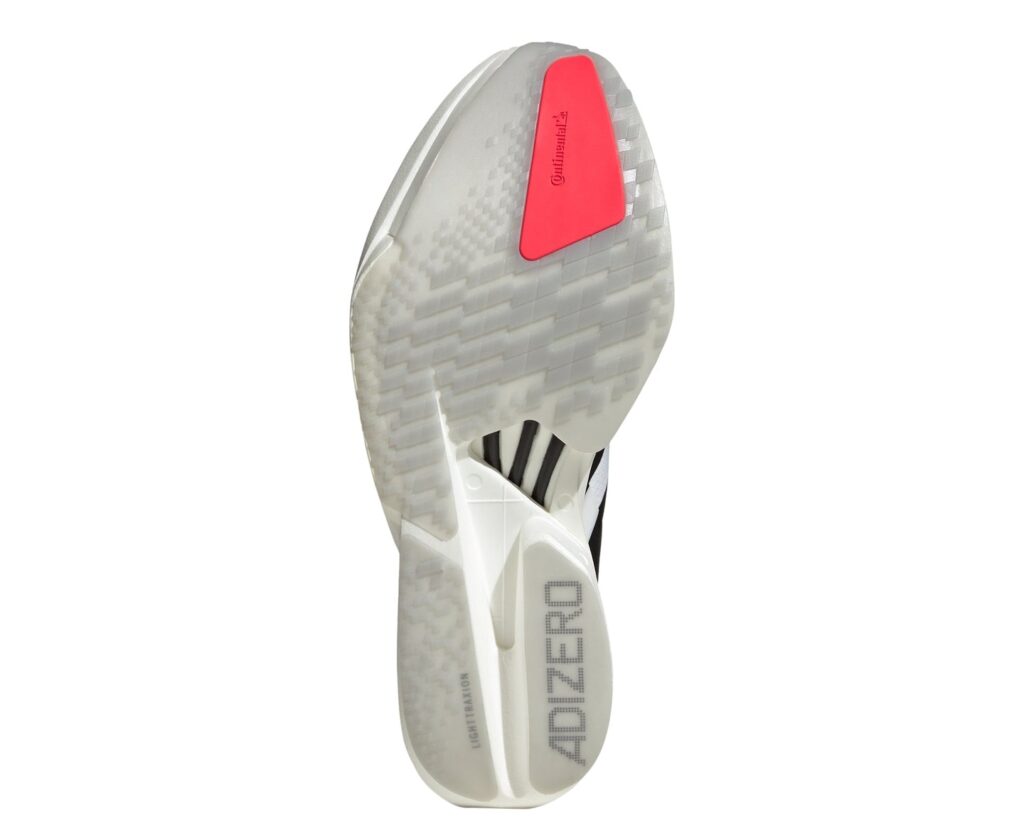
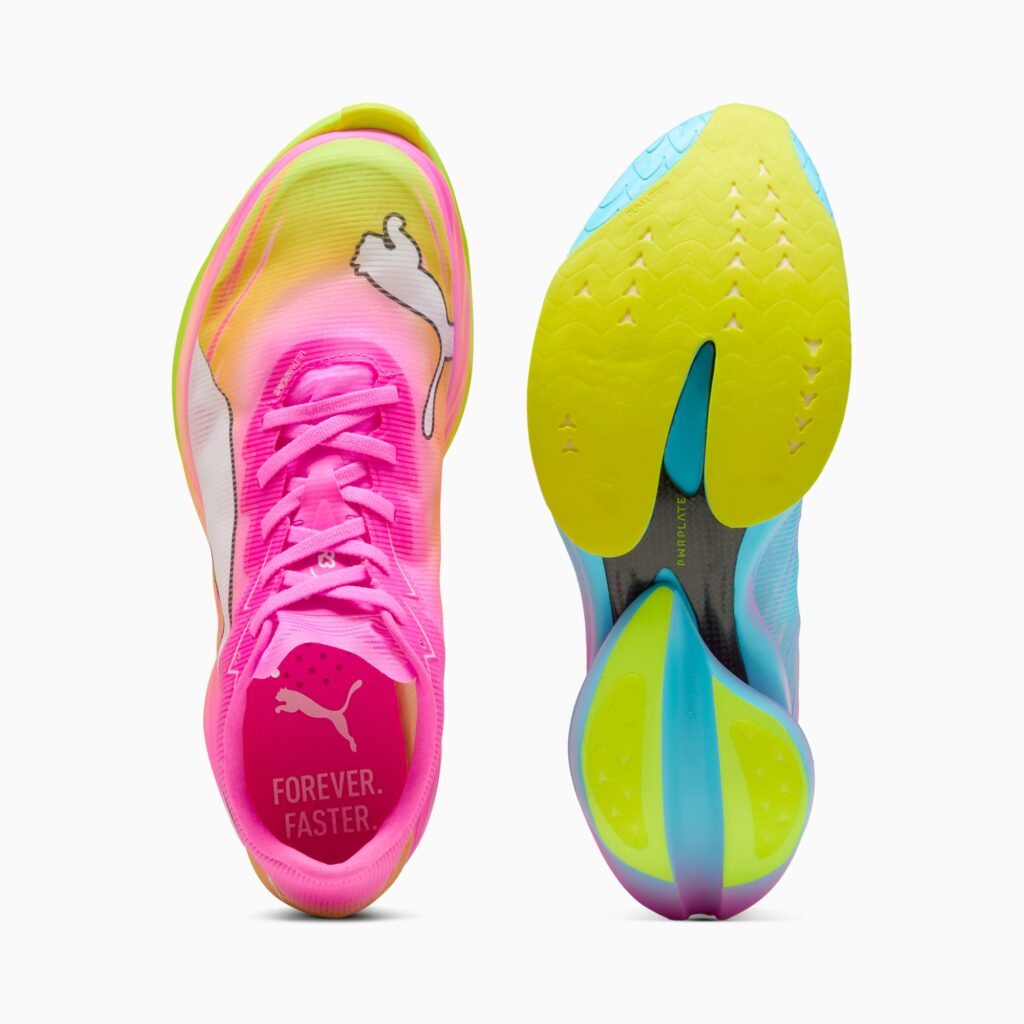
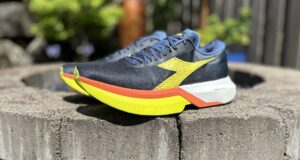
These falls are, from my memory, the first time beyond bonking or heat-related issues where professional triathletes are falling while running. That’s simply not a normal occurrence. I think it’s coincidental that both Riddle and Marquardt fell with the same shoe manufacturer on; Adidas is not the only one who has pulled this much weight out of their outsoles. For example, here’s the latest version of the Puma FAST-R Nitro Elite, which touts the new “PUMAGRIP” outsole as a feature.
Then there’s also the question as to whether this combination of foams and plates is pushing the human body too far. As we reported last week, Puma is now facing three separate lawsuits in Massachusetts from formerly sponsored athletes, all of whom claim that the company’s racing shoes caused catastrophic injuries that derailed their running careers. Along with Heather Cerney’s ongoing suit against Nike, all of them claim foot or leg injuries as a result of the force changes that come from the combination of carbon plates and foam.
It does start to beg the question — are these shoes in their current iterations safe?
I think the answer, unfortunately, is it depends. And that’s going to probably be a field day for the lawyers in the room.
I don’t think there’s any denying that modern racing shoes load stress in the body differently than running in a more traditional shoe. I also don’t think it’s unreasonable to conclude that athletes are also going to try to choose a shoe that advertises itself as being faster, and how it gets there (whether by plate, by foam, by weight reduction, or some combination thereof). It is, however, murkier when we try to figure out whether this combination of factors winds up making a shoe that is more likely to bring athletes to a fall hazard or tripping, and if the manufacturer is disclosing that kind of thing.
In the case of triathlon, I think there’s two things that could be of benefit. First, on the consumer-side, it’s important to look at traction as non-optional for your running. Aid stations are usually covered with wet wax or paper cups; the pavement doesn’t dry out; sometimes we have tight corners on our run courses. Ensuring that you stay upright by not skimping on the outsole of your run shoe is worth it.
But I do also wonder whether that stack height limitation is a source of some of the problems that the aforementioned Puma athletes ran into. Is it that, at that stack height, the modern racing shoe does introduce enough stress that could be problematic? I’d love for World Athletics to take the lead on that. In the interim, though, I don’t think the stack height limit makes any sense in a triathlon context. Far too many regular running shoes run afoul of this limit, and any look at the various race Facebook groups shows there’s a fair amount of anxiety that pops up in the week prior to the race.
Tags:
LegalNikePumaRun ShoesRelated Articles:


Continue the discussion at forum.slowtwitch.com
26 more replies




I’ve had a few pairs of nike invincibles. On the 1st gen shoe, the outsole would delaminate and separate from the midsole on I think two different pairs. So I pulled off the outsoles and just used the shoes on the treadmill. Way lighter and noticable in terms of perceived effort vs running speed. I easily got a few hundred extra miles on the TM without the outsole and without ever slipping or any other issues. I even passed on the idea to some Nike sponsored athlete that Nike should come up with a 'treadmill-only’ shoe without the traditional outsole to make it that much lighter.
Reebok actually now makes a treadmill-specific shoe, the Floatzig Tread. It’s around 9 ounces, which makes it lighter than most daily trainers, but it’s also a shoe that can be then used for the rest of your gym / lifting session.
I may need to nab a pair for testing.
HAHA it’s the shoes fault ??? he ran 21 km at about 14,000 foot landing and they only failed him once, when he was tilting his head back taking water on a uneven surface while going over a concrete lip. and the result … LETS BLAME THE SHOES!!!
Just so you know why ( people think ) the shoes are causing more issues ( they are not or a % on runners world wide) and mostly ( calf , foot) in triathlon is because the bike fit and effort is leaving the run legs exhausted , back and hip over fatigued and tighter then before and the intensity is now so much here. BUT THE SHOES actually are not the problem.
Can a shoe not be the best one for you , maybe especially a bad fitting size.
But runners with same injury all have different shoes and running with the same shoes all have different injuries.
If we see a shoe x , and it leads to 90% of runner having right medial knee pain with in the first 2 months of use with exact same protocol as before the shoe then you might say the shoe isn’t level and working properly as a flat platform??? we have never seen that.
Short answer yes.
Long answer there’s degrees of nuance.
Nuance involving “excursion angle”, ground reaction force loading patterns and footstrike patterns, pusher versus puller gait and whether a given carbon plate in a shoe aligns with an athletes anatomical bone structures or not.
I can say with certainty though that in last 5 years across many sports including the “big 3” and the push to carbon plated shoes that there has been an uptick in lower limb injuries.
That’s not true at all
I have seen lower leg run injuries for over 20 years at the same rate.
I also see a ton of lower leg injuries is the Nike frees, 5 fingers , trail running shoes etc all non carbon fibre plate.
If anything I see shit skilled runners get away with way way more bad execution with the newer runners then they would have 10 years ago.
Yeah. I suppose the question for the lawyers is going to be whether a.) the loading forces and patterns are so dramatically different than that of non-carbon plated shoes that they need to be disclosed, and b.) whether they simply conclude that, like with certain other activities, there’s a level of risk that you assume by participation and this falls within that acceptable risk standard.
On the traction front…I just can’t, for the life of me, recall seeing two high-profile athletes slipping / tripping (Marquardt said on IG that it was more of a stumble versus Riddle’s full-scale slide) while running. Can you? I’d hate to see what happens on an actually rainy / slick race.
Yep, this, you said everything I was thinking while reading the article.
Just as a tiny data point, myself and several folks I train with have been using Vaporfly’s and/or Alphaflys for tri’s and marathons for 5+ years, none have had any unusual injuries, and none have had any unusual slips/falls.
Of all the areas to fault the puma shoe for , the grip and stability is not one of them. That shoe looks like the most unstable shoe ever, but it surprisingly grips well and is stable. It does have other issues like shredding your calves over marathon distance if you don’t have a lot of miles in them (so you’ll need two pairs).
I totally agree on the general thrust of the article though. The super shoes come with downsides. The new Vaporfly 4 is by far the most unstable of the line’s history, and for no reason at all as it’s not any faster (maybe even slower) – it does feel very light though.
The new Asics Metaspeed/sky Tokyo (haven’t used the Ray) don’t feel significantly faster than earlier models but are definitely less stable. Here’s former Asics marathoner Clayton Young hitting the deck in his:
He had multiple ankle roll issues in training I think too. He’s a Brooks athlete now.
Alphafly 3 is probably the most stable of them I’ve worn and still very fast. The Puma is faster, but you need to be ready to pay the man if you want to use them!
would jan frodeno at the tri battle against sanders do it for you , and Alistair brownlees in an itu race in a 180. I could also offer Alistair B in t100 quatar.
Did you actually watch the video? He trips because he hit the toe of the shoe on the ground first….not sure how that is the fault of the shoe??
loading force comes from about to the foot not from below?? so the shoe does very little to change force loads to the foot vs your body position about the foot during load. so as long as you can stand in a shoe with no pain the shoe fits. put a piece of lego in the shoe stand on it , ouch, now would you try to run on that , no. it has a high pressure point . that’s why you can’t but lego filled shoes.
it was smooth concrete on a shoe with no grip on a sharp turn for riddle , same as bike tires on a wet surface on a hard turn do guy sue the bike tire company for their fall.
Yes unless you work 20 years in fixing running injures you may believe due to social media injury rates are higher and it’s those that use carbon shoes but… you just hear about them all now vs.
The local top trail runner is a non carbon shoes that just had hip surgery at 38 years of age.
The five fingers runner that has constant Achilles pain.
the new triathlete that’s calf tension they feel running actually comes from their swim form fatiguing the muscle pre run work. Also happens with cycling.
toe point to heel drop cycling 400 km a week then trying to run speed work fatigued and overloading our calves due to a lack of strength that day and a locked hip which makes you try to get more out of the calves due to a power loss above.
So many variable that contribute and to just say its the runners yet we see the same run inquires repeat in the same athletes with different runners??
Yeah Mathew clearly tripped so 50% of @rrheisler evidence is faulty.
Thanks for telling me, it’s cheap too. Adidas makes one called the Treadflow but it hasn’t been for sale in the US Market. So I was looking to get a Kinvara for my treadmill shoe, but now…so get one and let me know how it runs!
ETA - these Hyrox shoes that seem to be coming out seem to fit the Treadmill specific criteria.
So we are left with an N=1… (-;
I don’t know why Ryan uses the fact that he has never heard of others having issues running as some sort of proof, it is clearly not the case. I would imagine just about all of us who have done decades of training and racing, have our stories of tripping, sliding out, and toe stubbing. And as to having seen it in racing, yes dozens of times in my career, it is certainly not a “new” thing.
Now as to do you strike different from other shoes, probably for most. We all had to get used to the new fangled Nike shoe from our PF Fliers back in the day, then many, many iterations of shoe improvements since those early 70’s. And guess what, folks got injured all along the way, and I’m almost 100% certain that “all” of these athletes in these suits, have been injured before too. But hey, everyone these days want to blame someone or something else for what doesn’t go right in their lives, it is the new American way…