
The Good, the Bad, the Glitchy: Grading Live Triathlon Coverage
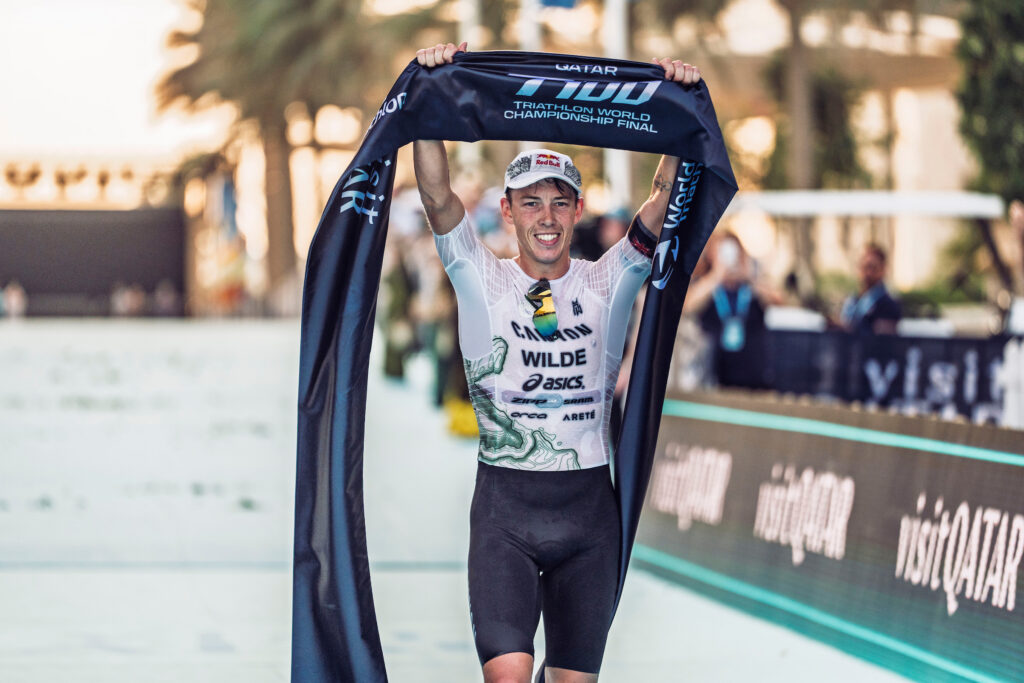
IRONMAN, the PTO and World Triathlon put on the biggest races in the sport, welcoming top pros to events all around the world. Many of these races are broadcast online, from IRONMANs to T100 triathlons and WTCS races, giving fans the opportunity to tune in and watch the world’s best athletes duke it out.
Even the best broadcasting systems, however, have both pros and cons, positives and negatives. World Triathlon has been doing a good job broadcasting one- and two-hour races for years, but things get a bit more difficult when the events last three, four or even eight hours like in IRONMAN and T100 races. We asked Slowtwitch Forum users for their takes on these longer live broadcasts, so here is what IRONMAN and the PTO get right and where they can improve according to the fans of the sport.
The Commentary
One of the things fans talk about most (both positively and negatively) when it comes to the different triathlon broadcasts is the commentary. There are some great commentators in the sport, including world champs Craig Alexander and Mirinda Carfrae for IRONMAN and Jan Frodeno and Vicky Holland for the T100, among others. Even with a pair of all-star lineups, a big complaint for many people is how out of sync these commentators can get during a race.
This issue lies in the commentary setup, not with the commentators themselves. At most IRONMAN races, the commentators are not together, but instead beaming in from around the globe. This means they cannot see each other, which leads to a lot of talking over one another and, conversely, dead air while everyone waits for someone else to speak.
While PTO coverage has had commentators in the same place in years past, this season’s T100 opener in Gold Coast, Australia, saw a change, with the system leaning toward the IRONMAN setup with the different announcers apparently doing remote commentary. (Belinda Granger and Matt Baker did the commentary for the T100 Gold Coast race, with Aaron Royle covering the on-site interviews.)
There is also the commentary team makeup itself. One user from the Slowtwitch Forum compared triathlon coverage to that of other sports, noting that most broadcast teams outside of triathlon will have a colour commentator and a play-by-play person. In IRONMAN broadcasts, however, it’s often multiple colour commentators working together.
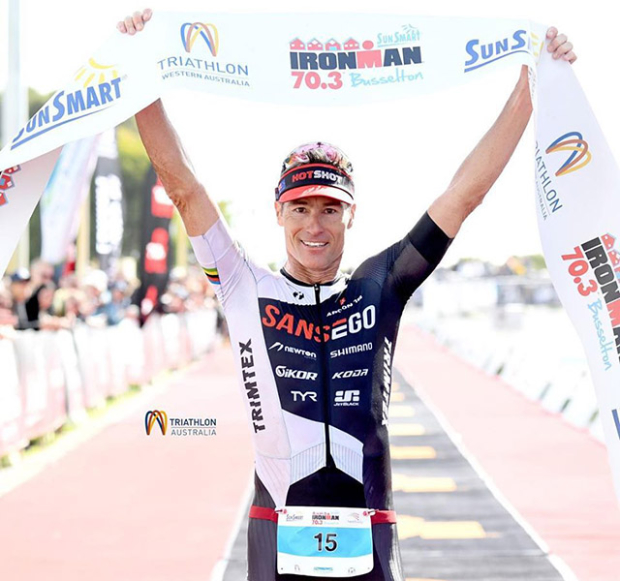
“The former pros are great for the colour commentating, but they [are] not as good at the play by play,” a Forum user says. What do they mean by this? Having raced for years themselves, the colour commentators have a great wealth of experience to draw on and many stories they can share during the broadcast, but they lack the experience necessary to keep the broadcast and conversation flowing and linear.
This can lead to tangents that drift away from the action on screen, and soon enough no one knows where to pick back up in the race play by play. Another forum user spoke to this, saying that they think there should be “some standard interruption protocol” when a commentator is in the middle of a story or explanation and something interesting happens on the screen.
“[It] feels so unprofessional when they are talking about random things we aren’t watching,” this user says. Instead, the commentators could interrupt, bring the attention to what is happening in the moment, and then when the racing calms down again, the original story can resume.
“They need to be more nimble and keep their fluff stuff to the real dead air times,” a different user says.
Another note from the forum was that it would improve broadcasts if the announcers had a list of facts on every pro athlete in the field. This way, when the athlete is on screen, they can fill the audience in on his or her life, training and history in the sport.
“Current coaches, training groups, where they’ve been, races they’ve done so far, how many times they’ve done this course, how they stack up against the particular athletes,” the user writes, listing a variety of tidbits the fact-sheets could include. Everyone knows Kat Matthews or Sam Long, but broadcasts are a chance for the commentators to introduce viewers to new, up-and-coming or lesser-known athletes.
The commentary during IRONMAN and T100 events is solid. They doesn’t need full revampings, just some tweaks here and there to take them to the next level and improve the viewing experiences.
Finding the Broadcast-Triathlon Sweet Spot
You generally need two things for a sports broadcast to succeed: people who know the sport and people who know live TV. If you can get someone who knows both of these things, that’s great, but it’s not necessary. Instead, finding a balance between people with triathlon knowledge and broadcast knowledge is the key to a successful production.
“There’s a gap [at IRONMAN],” says an insider in the sport. This can lead to gaffes like the one so many fans saw during last year’s sprint finish at the 70.3 worlds in Marbella, Spain. Jelle Geens and Kristian Blummenfelt were side by side with just a few hundred metres to go when the broadcast inexplicably cut away from the action to show an aerial shot of the Marbella waterfront. Now, the town had some beautiful scenery that was worth showing off, just not at that exact moment.
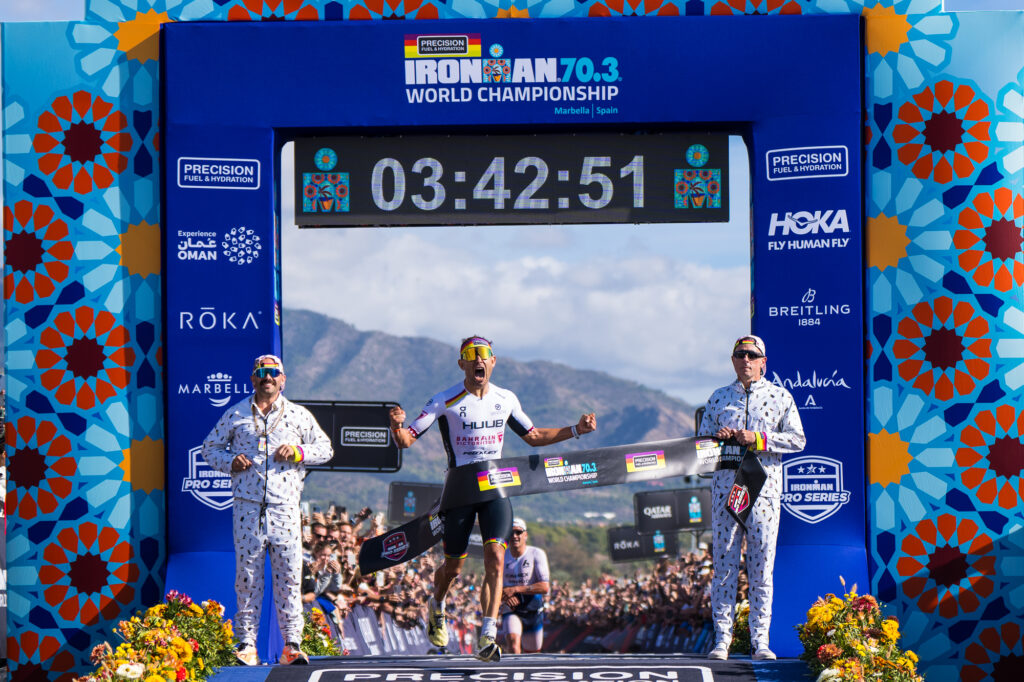
There are other instances like this in every broadcast, particularly in IRONMAN races. None as big as the Geens vs. Blummenfelt cut, but still moments when a it would be beneficial to have a mixed bag of team members in the production room to ensure that the most important moments are being broadcast as they unfold.
Graphics and Footage
Some things that many fans have said they enjoy in recent broadcasts are the interview cutaways, the split-screen coverage and on-screen graphics and information.
The pre-recorded interviews with athletes give the commentators a break, giving them a chance to regroup and catch up on the news of the race that may not have been seen on camera, whether that’s crashes, withdrawals, people being passed or dropped behind the leaders. Once the interview segment is complete, the commentators can then fill viewers in on all of this info, keeping everyone up to date as the race progresses.
The interviews are also a great way to introduce viewers to the athletes. Of course, this isn’t exactly what the note above was hoping for, as the interviews are generally only with top, well-known athletes, but they can still give viewers a look into the lives of these athletes.
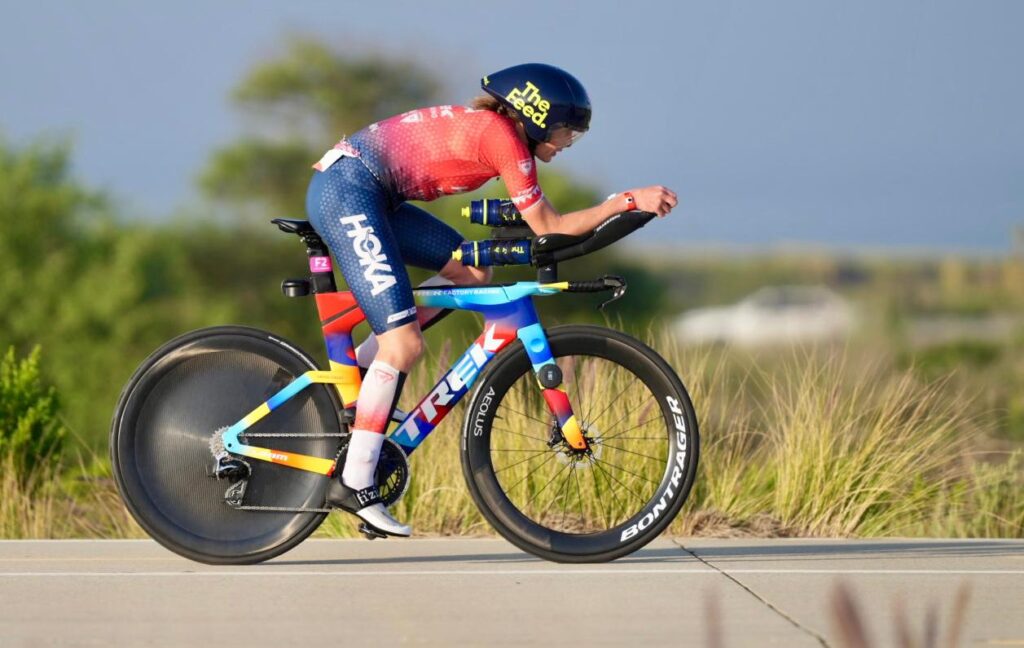
When those interviews are being shown, it’s often on a split screen. This allows viewers to watch the leaders on the bike or run while the interview runs, keeping everyone happy. This split-screen formula is also great when there are both men’s and women’s pro races so the audience can have eyes on both at once.
Finally, fans are quite happy with the IRONMAN team’s updated graphic system, while they say the T100 stats and leaderboard graphics could be improved. In years past at IRONMAN events, there were long gaps between split checkpoints, leaving commentators and viewers alike in the dark when it came to who was in what position and how big of a gap leaders had on the chasers. Now, the broadcasts have much more consistent and regular checkpoints, meaning the audience only has to wait a few minutes between each one to wait for updated live rankings.
On that note, an area that both hurts and benefits the T100 is its lapped courses. Several Forum users said they find T100 courses to be bland and boring, and that’s due to the fact that athletes are riding and running so many loops over and over. This is ideal for broadcasting the races since the cameras only need to cover a few miles of the bike and run course (compared to anywhere from 56 to 112 miles of the bike course and a half or full marathon in an IRONMAN), but it’s far from the most entertaining scenery.
Compare this to the T100 age group courses, which are not restricted by the live broadcasts. At T100 London last year, the pros raced on a not-so-exciting course some 20 miles outside of the city centre. A day later, age groupers started and finished at the same spot, but their bike course took them into the heart of the city right by Big Ben.
Similarly, many IRONMAN events feature incredibly scenery, but the trade-off is that they do not have enough cameras, camera operators and motorcycles to follow the entire pro field. This means viewers will get to see the beautiful views, but more often than not only when the leaders are passing by, no one else.
The Conclusion
IRONMAN and T100 broadcasts are far from perfect, but they’re also far from terrible. Fans in the sport are well aware of how lucky they are to have access to free live races being broadcast from all around the world.
Twenty years ago, this much coverage would have blown the minds of every triathlon fan, but as it has become easier and easier to produce live streams of events, triathlon has fallen a bit behind other sports. There is by no means the need for a complete overhaul of the broadcasting systems. Instead, a few boosts and adjustments here and there will go a long way for fans and the viewing experience.





Clash Endurance had a livestream from USAT Collegiate Nationals Mixed Relay last month. Great to watch while on the trainer. This is probably the largest mixed relay in the world with 63 teams.
Clash Endurance has done some handy work on the triathlon coverage. The NASCAR connection has been instrumental in that. I would go so far as to say NASCAR Productions work on the PTO race in 2020 Daytona as well as subsequent Clash events pushed IM and T100 to higher standards. NASCAR Productions covers 36+ races per year and are largely data driven on-screen graphics.
Good read. You have addressed a number of the key issues and challenges. I come from the world of triathlon, but now do a mix of Live Announcing and Live Commentary across Running, Track & Field, Cycling, and a still a bit in triathlon. On the live Commentary side my work in Track & Field has been with RunnerSpace and for Cycling - mostly European Professional Cycling it’s been with FloSports/FloBikes.
I’m glad you started with the Roles - because that’s where, it often has gone wrong or of-track with some of the Triathlon coverage that I have seen - several ex-Pros are hired, with no formal training in Broadcast and just let go! I was lucky early on working with RunnerSpace to be paired up with one of the absolute best Play-by-Play people in Track & Field and Running. I learned the ropes sitting alongside him, and the roles of the Play-by-Play person and the Expert Commentator or “Colour Commentator”. For RunnerSpace, I do both - going back and forth, or when you are working an Event Solo . . you are both! Ditto the work in Cycling with FloBikes. Yes the Roles are important and need to be defined, and coordinated, but notice that when there is GREAT chemistry and rapport - it just flows easily back and forth, like a conversation! That’s magic!
Almost all of my work now is remote - both RunnerSpace and FloBikes have work-arounds so that when there are two of us working together - that we can see one another - that helps tremendously, with the back-and-forth, and not breaking rule #1 in Commentary or Live Announcing - DO NOT talk over your fellow Commentator!!
The other big rule that I often seen broken with the Triathlon Commentary I have seen - ONLY talk about what is on the video screen that the viewers are seeing at home. The viewers at home DO NOT care about anything else so keep the Commentary and the conversation fixed on what’s happening on screen. Sure fill in with some off-screen info to fill in for context - but keep it focused on what the viewers are seeing, graphics that are being shown etc . .
Your conclusion is correct - things have come a LONG way! Still some rough/awkward moments, that I think could be alleviated by getting more people with Broadcast Experience involved, or at least offering some formal training in the basics of Broadcast!
(I took down my post about this article and am addressing the writer directly.)
Hey Sharon, I felt the same thing when I read it. Seemed like it left out the two best coverage’s in our sport, and just talked about the two worst. The article really should have been mostly about super Tri and how great they make their race coverage. And what about the ITU too??
Ben wrote a very nice response to my comments. Having worked in newsrooms my whole career, I do understand the time constraints and the difficulty in deciding what to include and leave out.
I completely understand, but I hope ST will make some use, even if selective, of our input that we provided when asked.
I think it’s great that Slowtwitch quotes from the forum. I would like it more if they reached out to the commenters for permission to use names and even expand on what’s said in the forum. That takes time and sometimes more people-management effort than might seem worth it, but it would elevate the forum user experience, in my opinion.
Coming back to this thread after IMTX - I thought that IM did better on this go around. Having Rinny and (not sure the other guy’s name) in the same studio definitely helped. They seemed to feed off each other better and did well splitting play by play and colour commentary (at least until the boring parts of the bike happened - it is a 9hr broadcast after all).
They need someone other than Churra in the transition. Stimpson did well, but Churra seemed to be at a loss for words to describe people as they come through transition.
Chura’s enthusiasm was unstoppable. Loved her energy. I want more. She was a bit like Fenella, but without the screaming.
It seems to me that trying to describe athletes coming through transition can be really difficult, because you’re going only by who you see with your eyes if there is not also a screen showing who’s passed through the start of transition. And it’s early in the season when the athletes are mostly in different kits than the ones that got familiar last year. I too appreciate Haley Chura’s enthusiasm and authenticity on course, I hope they keep her and provide the tools to help her develop.
Now that I think about it some more, part of the disconnect this week was that we didn’t see what she was commentating on. We were getting Churra’s enthusiastic description, but on screen it was a drone shot of all of transition.
Improvement suggestion - stick a camera on her and then have her talk about Knibb taking a min on her socks, etc.