
Tracking Your Workouts and Beyond with Amazfit
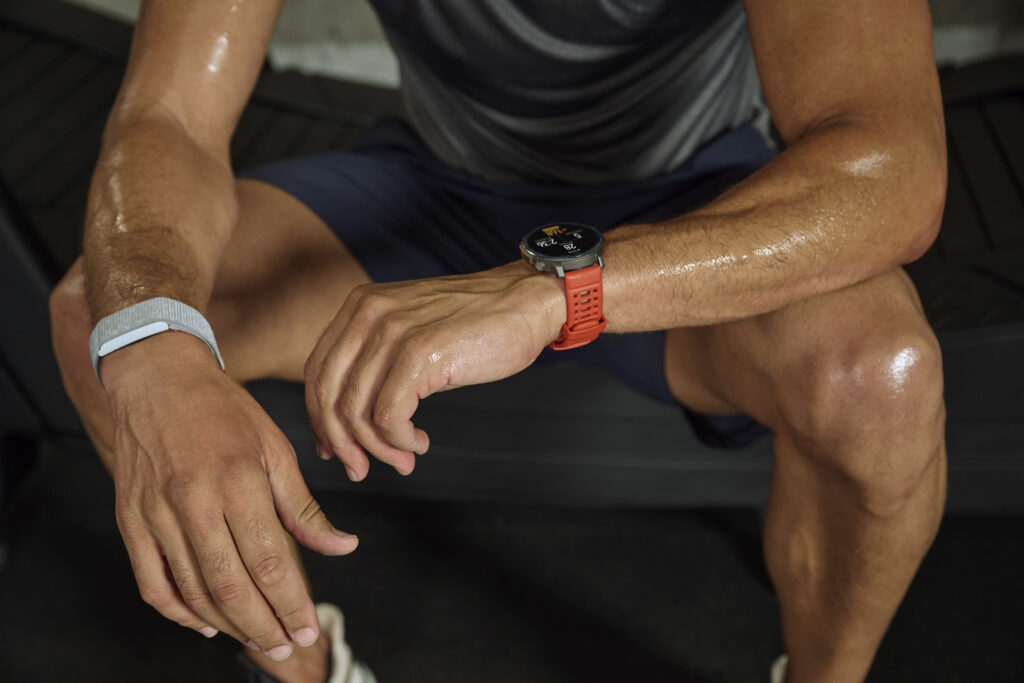
You may not be familiar with the wearable tech brand Amazfit just yet, but it is well on its way to becoming a well-known name in the world of endurance sports. With the likes of American triathlon star Morgan Pearson and runner Grant Fisher (both two-time Olympic medallists) on the company’s roster of sponsored athletes, Amazfit is clearly doing something right with its watches and other wearables.
A Dutch brand founded in 2015 (the company’s first watch came out a year later), Amazfit is still young compared to names like Garmin, Suunto and others, but a little over a decade later, it is impressing athletes worldwide with its large suite of products. Before meeting an Amazfit rep at a running expo late last year, I had never heard of the company, so I was excited to get the chance to test out some of their products. Among the gear I tried out was the Balance 2 GPS watch and the Helio Ring, both of which can help transform your workouts and everyday life to optimize your training and recovery.
Testing the Balance 2
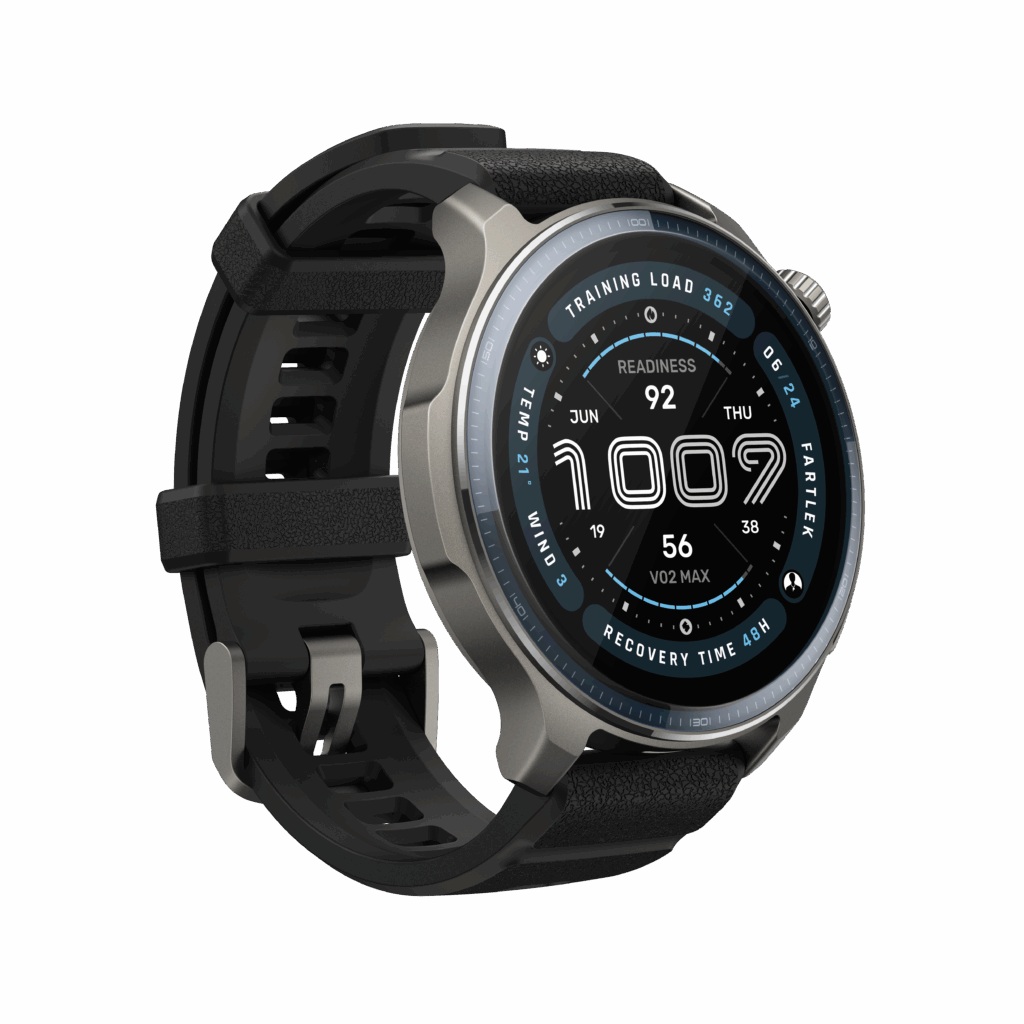
Let’s start with the Balance 2, one of Amazfit’s most popular watches. Firstly, it’s a very attractive watch. Some sport watches are bulky or brightly coloured, making them less than ideal to wear in your everyday life if you’re trying to be fashionable. The Balance 2 (which retails for US$299.99) does come with an orange strap (if you like a splash of colour in your life), but there is also a goes-with-everything black strap to match the watch’s sleek 1.5-inch grey face and buttons.
There are two ways to navigate through the watch’s many features: the touchscreen or the Balance 2’s two buttons (one of which doubles as a dial for scrolling). Accessing the more than 170 sport modes is only a couple of screens away, and, in my multiple workouts with the Balance 2, I have never waited more than a few seconds before it acquires a GPS signal and tells me I’m good to start my run or ride.
To test the Balance 2 and its tracking capabilities, I wore it on one wrist, the Suunto Run (which I have reviewed previously and trust to be accurate) on the other and used my phone to record several outdoor workouts (runs and rides) on Strava.
The result? On those 5K runs, the Amazfit Balance 2 was at most 100 metres off of five kilometres (over, not under) — same as the Suunto Run and Strava on my phone. The tests were the same on longer runs and rides following different routes, with the Balance 2 basically matching the Suunto Run’s tracking total, coming in plus or minus 30 metres.
So, when it comes to outdoor tracking on land, this watch does its job well. In the pool, however, it’s a bit of a different story. I ran similar tests during multiple swims, wearing the Run on one wrist and the Balance 2 on another (I know I probably looked very cool checking my time on both wrists whenever I stopped at the wall) while also noting my distance mentally. After selecting the 25-metre pool option on the watch, I was off and going, but the Balance 2 quickly fell behind in the tracking.
To be fair, the Suunto failed to track my kicking just like the Amazfit did, but that was all it missed. In two swims wearing both watches, the Suunto recorded 1,000 metres of a 1,200-metre swim and 2,000 metres of 2,200 total (missing only 200 metres of kicking in both). The Balance 2 recorded 700 metres and 1,900 metres, respectively, in those two workouts. (In the latter session, I did 100 metres of sculling, which accounted for the additional distance missed.)
In other swims when I left the Suunto at home, the Amazfit missed even more non-kicking and non-drill laps, including a 2,400-metre workout that read as only 1,550 metres on the watch. I found that, in addition to not clocking kick and certain drills, the watch doesn’t like very slow swimming (for example, when taking it extremely easy during cool down laps) or top-end fast efforts.
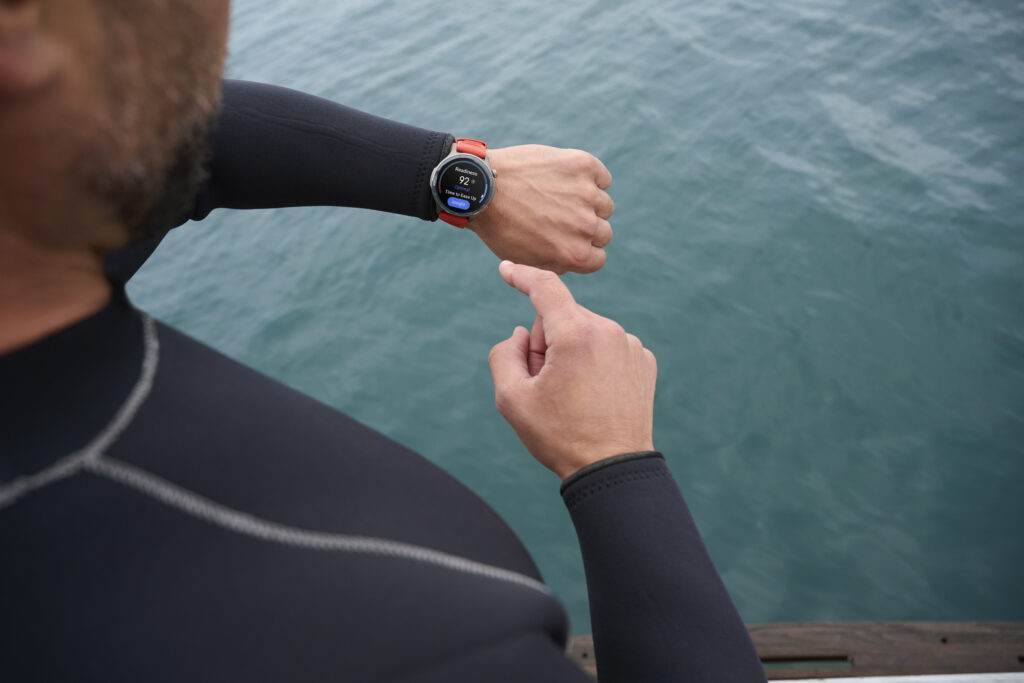
Of course, you don’t really need a smartwatch for pool swims, as you’ll have a set distance (25 or 50 metres or yards, in most cases) and almost always have a clock on the wall to keep track of your paces. Unfortunately, I was unable to get outside for an open-water test.
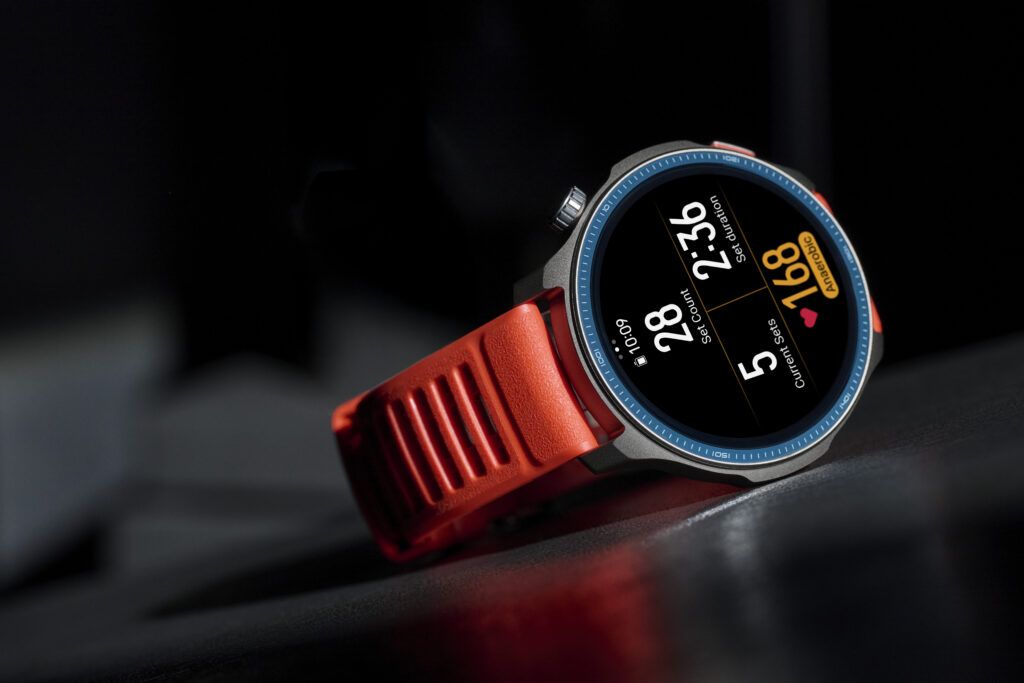
On top of the Balance 2’s many tracking capabilities, it has built-in sensors to monitor a number of health metrics, including heart rate, blood-oxygen saturation, your stress levels and more. All of these will be tracked daily and can be viewed on the Zepp app (Zepp is the parent company to Amazfit), which links to the watch seamlessly.
The Balance 2 also tracks sleep, monitoring your heart rate variability, REM and other sleep stages, your regular sleep schedule and your breathing quality to give you an overall sleep score. This is a great feature (and very important, as sleep is the body’s chance to recover after your daily workouts), and while it is effective, it is perhaps even better with the Amazfit Helio Ring.
Helio Over Oura
I have never used an Oura Ring, so I can’t speak too much on the product, but I do know this: it’s expensive. The rings start at US$345 (and go as high as US$480), but that’s just the base cost for the product itself. After that, you have to pay for a membership (which amounts to US$69.99 per year) if you want access to all of Oura’s tracking data. The rings are useable without a membership, but you’ll be fed limited information.
The Helio Ring, on the other hand, is a one-time charge of US$150, after which you can see all of your data. (There is a Zepp Health subscription you can pay for to access even more features, but the free version still gives plenty of data.)
The setup for the ring was very simple. You may need to top the battery up on the charging pad (of course included in the box), then you’ll be ready to link it to the Zepp app and start tracking your metrics.
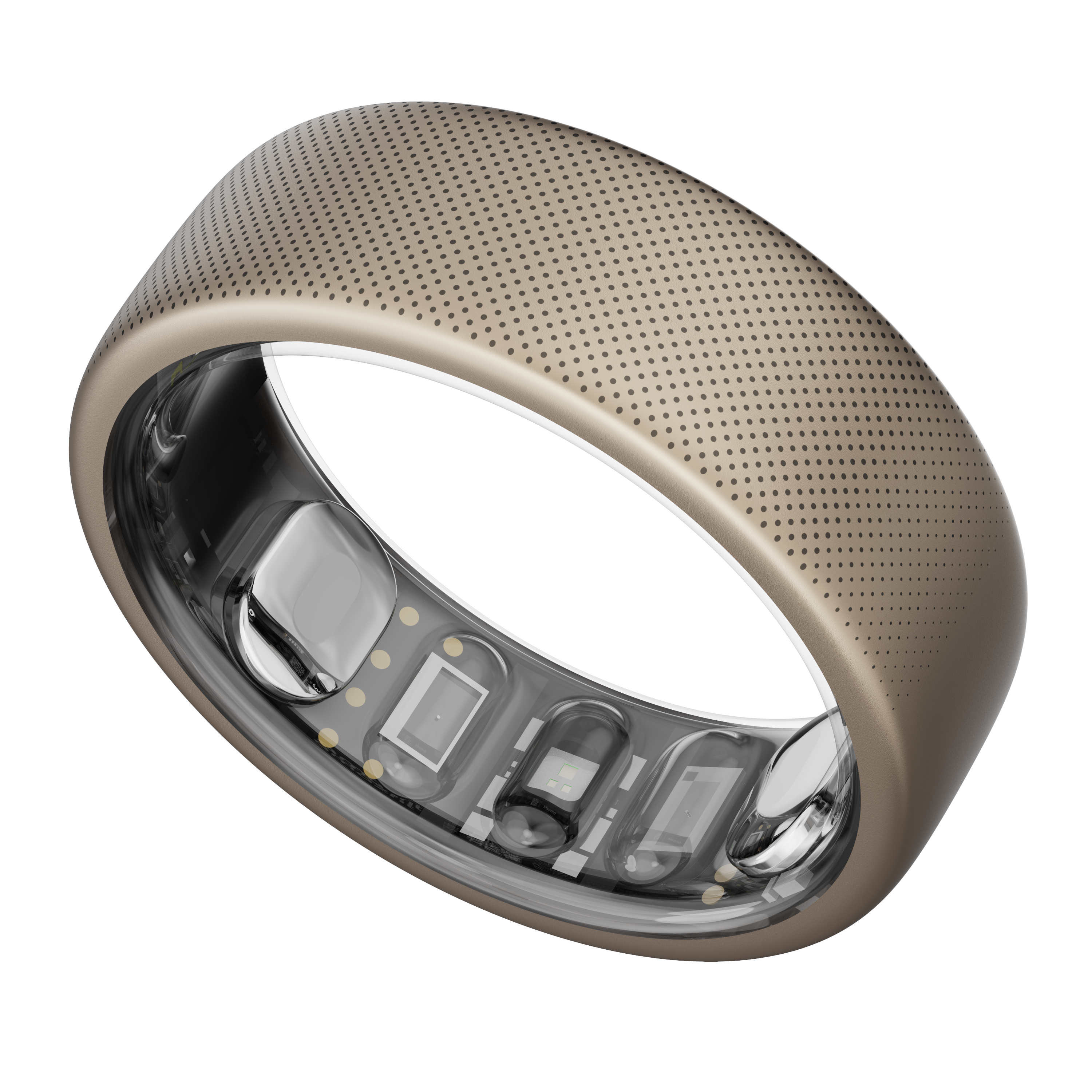
The ring will monitor your health levels throughout the day (tracking steps, exertion and other data), but, to me, it was most useful at night. Like the Balance 2, the Helio Ring tracks sleep stages (REM, deep sleep, time awake), duration, breathing quality, stress levels and more, all to give you the aforementioned sleep score.
The reason I prefer the ring over the watch when it comes to sleep tracking is the size and comfortability of it. The Balance 2 has a comfortable fit, but I have never enjoyed sleeping with a watch on. The ring, however, is easy to forget about, and I imagine that in the future (when I’m not thinking about the ring on a regular basis for work purposes and this review), I will go hours after waking up forgetting it’s even on my finger.
Further, I find that I get sleep anxiety when wearing a watch to bed, knowing full well that it is going to give me a score when I wake up. It’s like a reminder on my wrist as I try to fall asleep that I’m going to be graded in a few hours. I had no such thoughts going to sleep with the Helio Ring. That may just be a me thing, but if you can relate to sleep anxiety with wearable devices, the ring is likely the better option for you.





I have the T-Rex and it’s a good watch, especially for the price. Connects well with phone and apps, tracks my workouts well. Not worried about sleep score, but might add that to my tracking in the future.