
What Happens After Winning: Casper Stornes After Becoming World Champion
Winning the IRONMAN World Championship is something reserved for a very small list of people but, whether you’re daydreaming during a turbo session or just curious, you might have wondered what actually happens once the finishing tape is hoisted into the air. Is the phone ringing off the hook with sponsorship offers? Do people immediately start to recognize you? Does your ego explode? The broadcast coverage shows the immediate celebrations, the sweaty hugs with family, and the sea of long-lense cameras capturing the moment–but then what?
From the Finish Line
Overshadowed by the depth of talent around him, Casper Stornes wasn’t high on anyone’s list to win the IRONMAN World Championship in Nice (well, maybe ours). But, after coming out of the water with the main chase pack and clocking the fifth fastest bike split, he ran through his compatriots, Gustav Iden and Kristin Blummenfelt, with a sub 2:30 run to take the win in a blazing 7:51:39.
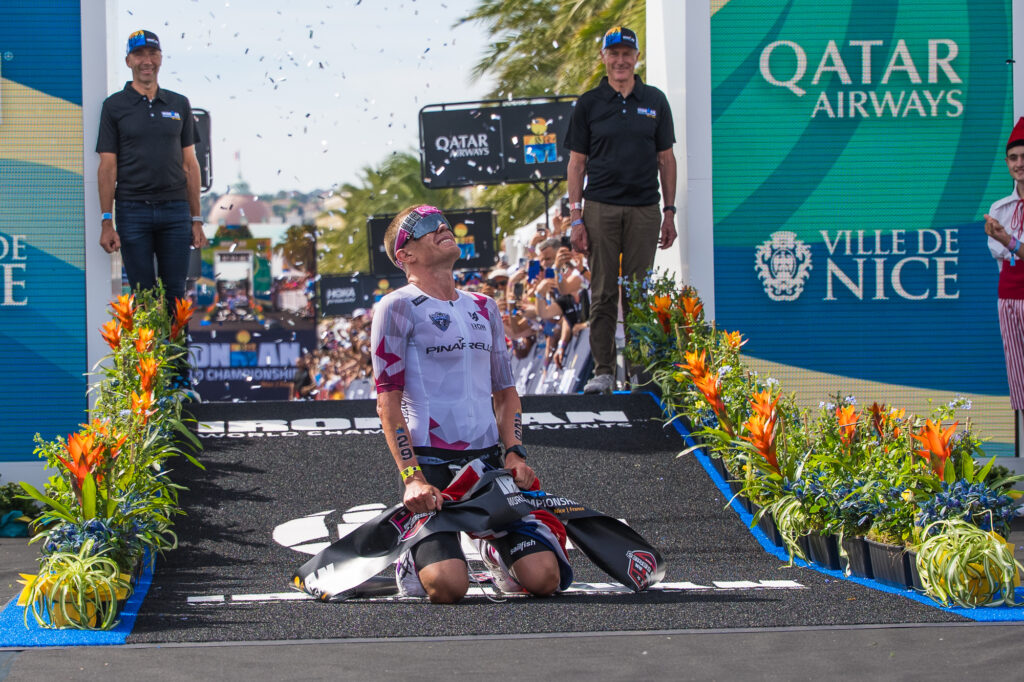
“It was just a very strange feeling crossing the finish line,” Stornes says. “Taking the tape was something I’ve been replaying in my mind since January when I started to think it was really something I wanted to do, especially because it was the last year the world championship was going to be in Nice for the full distance. It was an opportunity I didn’t want to slip away.”
He had enough of a time gap to savour the finishing carpet and wave his nation’s flag before grabbing the tape, letting out a triumphant yell, and falling to his knees among the confetti in a pile of emotion.
“It was insane,” he says. “But, after the finish line, it was just a relief. I felt things were going so slow actually, from when I took the finish tape and laid on the ground, it was just so much emotion going through my mind. Seeing my family and girlfriend and everyone standing on the sideline being so happy and in tears–I also got some tears in my eyes.”
“Having everyone there, there’s the feeling that you can give something back to the people sacrificing so much for you,” Stornes says, still with elation in his voice. “I sacrifice time with them, but they also sacrifice their time with me. It’s a project we have together, me and my girlfriend and my family, so that we succeed together–it’s insane.”
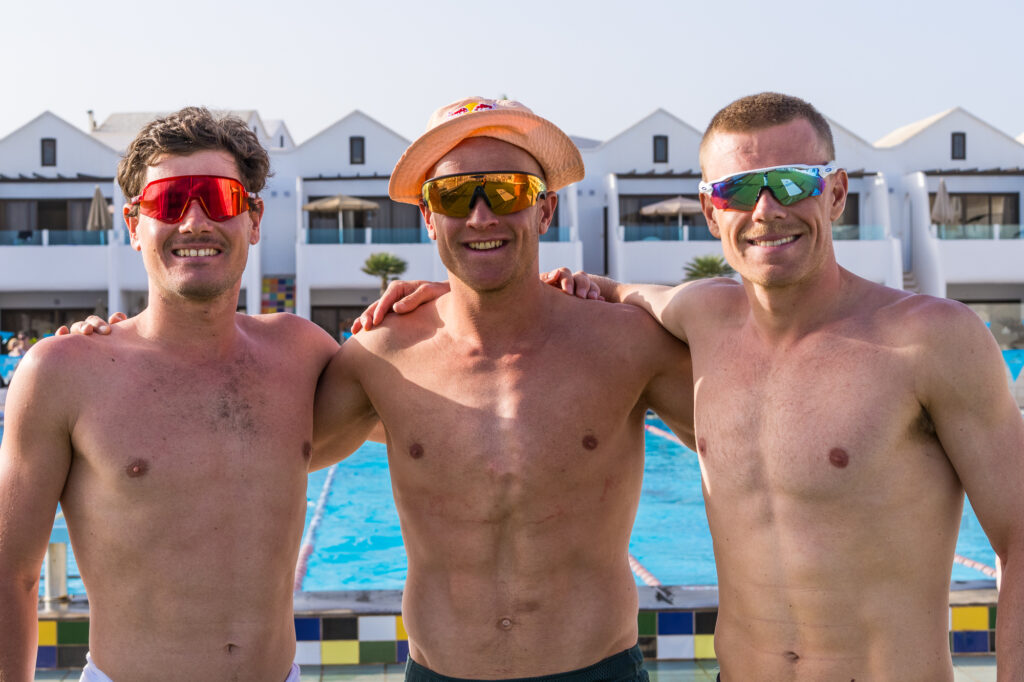
To make his win even sweeter, and a historical one, his two best friends and training partners, Iden and Blummenfelt, finished second and third, respectively, to complete the podium.
“ Seeing Gustav and Kristian so happy for me–I know they want to be in my position–but just to see how happy they were for me winning was a good feeling to have,” he says. “They didn’t need to say anything, they just showed it in a way that they were really happy for me and that says a lot.”
After the three Norwegians finished, they all went for broadcast interviews, the podium ceremony and dope control.
“It took a long time to get a shower since I needed to go to dope control,” he recalls. “I was so cold after the race, I just started shaking. I don’t know if it was lack of energy but, also, probably the wind. I was freezing and shaking.”
Finally, after a hot shower, a long press conference, and a meal with his close friends, in keeping with tradition, he went back to the finish line to hand out medals to age group finishers.
“Still in the evening, there was no partying or anything,” he says. “Just being with the closest ones–I feel that’s important.”
The Business of Winning
In the days after, Stornes put up a video on social media showing how his followers absolutely skyrocketed–and that brings us to the business side of winning. After Nice, Stornes went home to Norway for some recovery time with his girlfriend and family but business was booming.
“At home, I didn’t get much time to sleep or focus on training,” he says.
“The first two and half weeks after Nice, I didn’t have one power nap midday since there were so many things happening,” he laughs. “When I took the first power nap since Nice, I was like, this is not good at all.”
The lack of sleep was made up for by his rising stock on the sponsorship market.
“On the sponsor side, [life] is completely different to before Nice. It changed a little bit after Frankfurt but Nice was…” he pauses with a big exhale, “an insane difference.”
But Stornes is in a unique position, not just as the IRONMAN world champion, but because his two close friends also won the title.
“They share their experience with sponsor stuff and things like that,” he says. “I have a manager also, dealing with everything for me, but I discuss things with Gustav and Kristian and learn from them. They’ve been in the game for a long time and have had way bigger sponsors than me. Now I have the opportunity to get big sponsors as well so they give me tips and tricks, say what’s good and what’s not, and what I should spend time on and not. It’s a good strength we have that we are open with each other.”
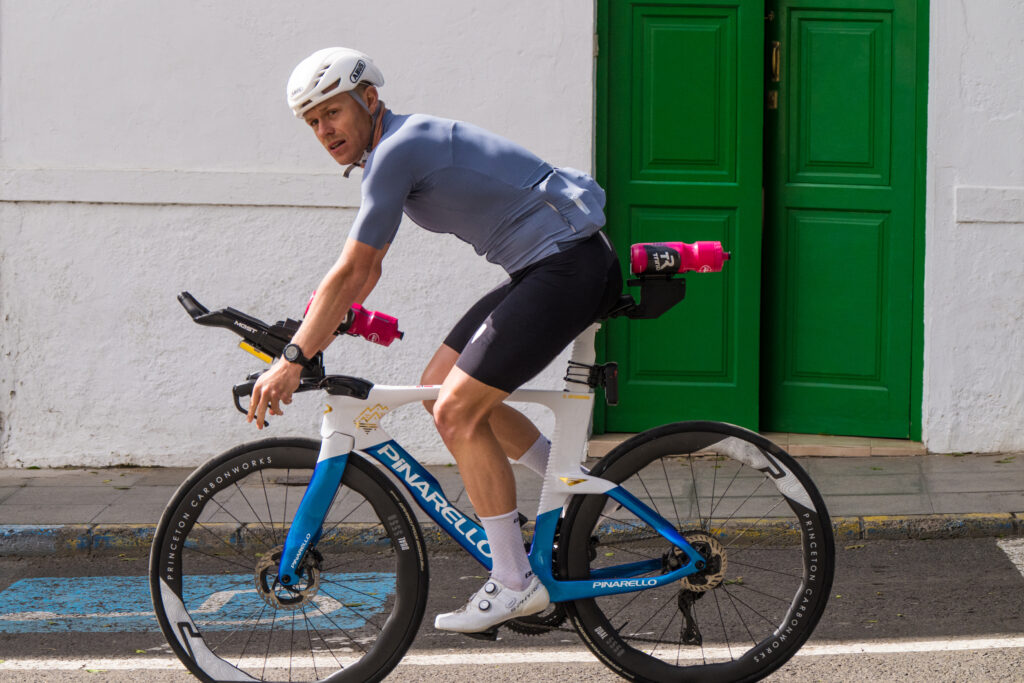
His manager is Ronnie Schildknecht, the nine-time IRONMAN Switzerland champion, and the two have been working together for a few years. In the beginning, Schildknecht says it was all about partnering with brands that would “enable him to win.” He still preaches that ethos today–referencing Pinarello so that Stornes had a top-of-the-line bike, and Fusion kit so he had access to the windtunnel–but there was a time when Stornes was losing sponsors.
Always in the shadow of his compatriots, in terms of results and also financially, who had moved on from short course racing, when brands like Canyon and Ryzon walked away, it opened up a conversation.
“We had a call and I told him, Casper, I think you should go long,” Schildknecht says. “I know you are in this for the Olympics, but I think you would be a crazy long course athlete. And, commercially, it would change a lot. But I told him, don’t do it because of that–if you have the Olympic dream, go for it–but if your heart is not a hundred percent there, then maybe consider going long–and that’s what he did.”
It only took half a season of focusing on long course for brands to start circling and once he became world champion, well, “everything changed.”
“Within 24 hours [of Stornes winning], I was talking to three or four different bike brands,” says Schildknecht. “Maybe ten different brands in total.”
“We were talking with some brands before Nice and [during the race] I had some funny WhatsApp conversations in which they said, ‘oh man, this will cost us now,’ but in a good, funny way,” he smiles. “They knew Casper was now worth much more.”
Most of the negotiating happens on WhatsApp, then calls usually follow, before ultimately it turns to emails and contracts to sign. Schildknecht says the process can take a few weeks or a few months with so many parties–and competing brands–involved. The back-and-fourth is exactly what Schildknecht handles and, for Stornes, it’s a good thing too.
“I was on the phone and I had my headphones in so Casper couldn’t hear what the others were saying but we were discussing a contract, and Casper was like, ‘I’m sweating now. I’m sweating now. My hands, my palms are sweaty,’” Schildknecht laughs.
There are tough conversations, hard decisions, and it can be difficult to weigh up benefits, relationships, and financial benefits, but at the end of the day, when it comes to the biggest title in long distance triathlon, it’s a life-changing opportunity for every IRONMAN world championship winner.
“ Percentage wise, his income, from what he had before and, of course, what he will have in the future–it’s grown a lot,” Schildknecht says. “It’s a few hundred percent.”
If You Want to Go Far, Go Together
Stornes has had a successful career, but unlike Blummenfelt and Iden, until Nice, he didn’t have a world title. Winning the IRONMAN world championship was something Blummenfelt did in 2022 (the pandemic-delayed 2021 race in St. George) and Iden later that year in Kona. Both have also been 70.3 world champion (Iden twice) and World Triathlon long distance champion. Above that, Blummenfelt was WTCS champion in 2021 and, unforgettably, Olympic champion in Tokyo. As the least decorated, Stornes was often overshadowed–but he never minded.
“ I’m a person that likes to be in the background,” he says. “If someone noticed me, it’s ‘oh, you are a Norwegian training with Gustav and Kristian.’”
“In Nice before the competition, seeing Gustav and Kristian getting so much attention, I actually enjoyed being a bit in the background…I can walk where I want without being noticed and sneak around,” he shares. “Now, I know I can’t do that anymore but it’s a privilege and it’s something I worked for, for many years, so I can take it and I can enjoy both sides.”
Now that they all have a world title to their name, it seems Stornes is finally on equal footing, but he doesn’t see it that way.
“ It’s always been equal in the group,” he says matter-of-factly.
“No one is over anyone,” he smiles. “And we always say what we have in the mind and what we have in the heart. So I feel everyone is on the same level–but, of course, it was good to get my world title that I’ve been waiting for.”
It goes back to the culture of their group, their focus on putting in the hard work, progressing their performance, and–perhaps what most people undervalue being distracted by their insane training regimes heroed on social media–their genuine friendship and shared love of the sport that keeps them grounded.
“ I think it’s important for us to still be hungry,” he says. “Before Nice, we knew we were in really, really good shape–everyone. We were talking about sweeping the podium, but then we were also like, yeah, we’ve talked about this before and it’s gone the opposite way around and we’ve gotten our ass kicked. So, it’s important to be hungry and be humble at the same time.”
“But, I must be honest, it’s taken a lot mentally after Nice,” he says. “I went so hard into that competition, not like the race would define my career, but that it could definitely change it. If I had a bad race, I knew there would be an opportunity next year in Kona; but, if I won, it would change my life completely in terms of sponsors and opportunities.”
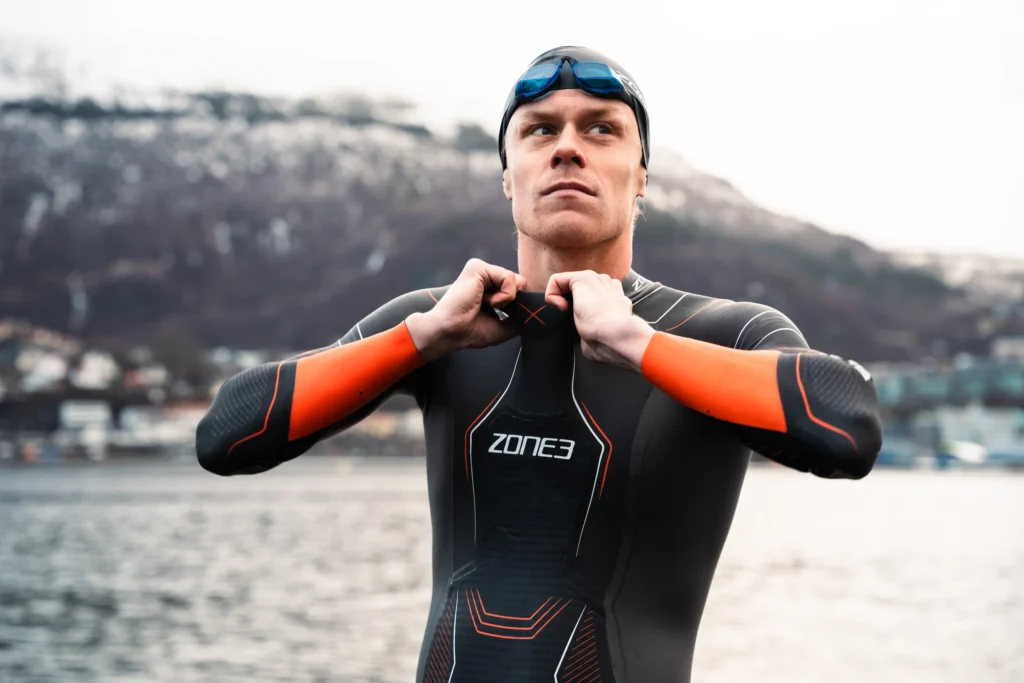
Since winning, Stornes extended his contract with Pinarello and continued with his nutrition partner OMNi-BiOTiC. New sponsors include THEMAGIC5 goggles, the Swiss cycling brand Q36.5 (which is owned by billionaire South African Ivan Glasenberg, who also owns Pinarello), and changed his wetsuit and swim kit sponsor from Sailfish to Zone3.
The sponsorship changes serve as a two-way street—not only does Stornes benefit from the new deals, but associating with the world champion can be a game changer for a brand, too.
“In terms of pro triathletes, Casper is indeed the biggest name we have ever signed as a brand,” says Zone3 CCO Mike Martin. “Having the reining IRONMAN world champion choose to partner with us, is something we are very proud about and shows how the innovation and continuous improvements we have made in our products over the last 20 years is recognized by the best in the world.”
“At the moment we are excited to be working with Casper on the development of a new top of the range Vanquish wetsuit we are planning to launch in 2027,” Martin continues. “In addition to working with Casper to assist product development he is also helping us with our global brand awareness. As a brand we have sales outlets in over 40 countries around the world and this partnership gives us credibility and awareness in them all.”
Having sponsors suddenly clamour to work with him doesn’t seem to have changed Stornes too much. Business might be booming and taking its toll but, the world champion assures: “Casper, in general, is the same. The hunger, the want to be better–it’s the same.”

Start the discussion at forum.slowtwitch.com