
Blummenfelt, Iden and Stornes Up Close and Personal in Lanzarote
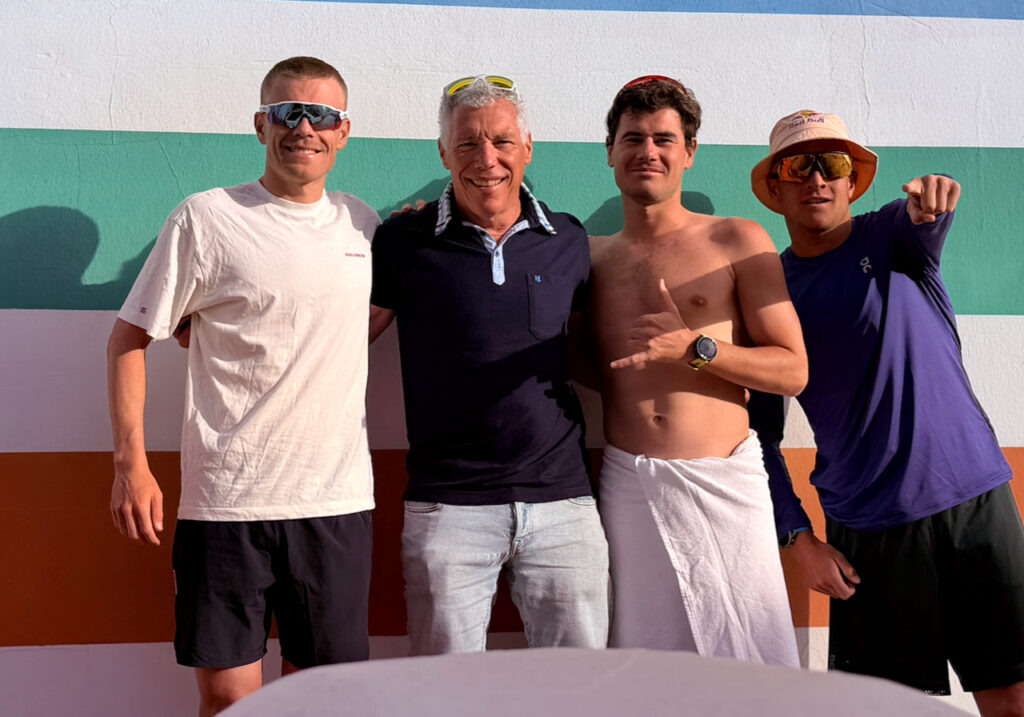
It started, as these things often do, with a small question. I’m sitting next to the 25 m pool at Sands Beach Resort in Costa Teguise, Lanzarote, with three men who have changed the world of long-distance racing over the last five years. After winning the Olympic gold medal at the Tokyo Games in 2021, Kristian Blummenfelt would win IRONMAN Cozumel just a few months later, then take the world title at the regrouped championship (it was deemed the 2021 worlds) in St. George, Utah the following year. Gustav Iden, who had also represented Norway at the Tokyo Games, took IRONMAN Florida later that fall – he would go on to win the 2022 IRONMAN World Championship in Kona. (Blummenfelt took third that day.) Rounding out the posse is their training partner Casper Stornes, who also competed in Tokyo. He made his IRONMAN World Championship debut last year in Nice, and blasted through the last half of the marathon to lead Norwegian podium sweep with Iden taking second and Blummenfelt finishing third.
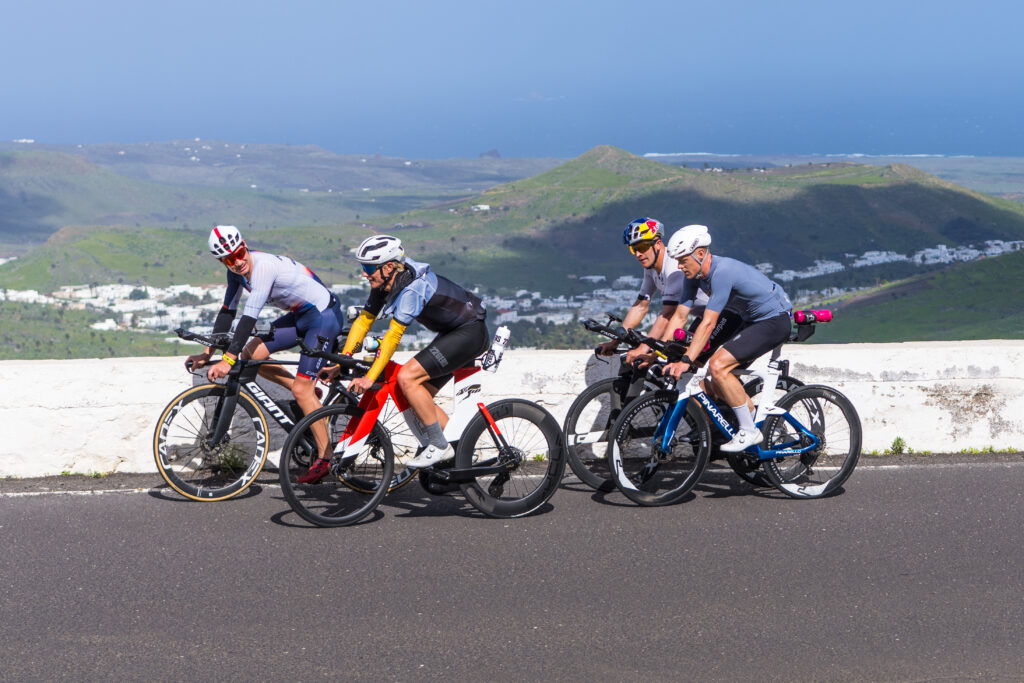
The three are in Lanzarote for a training camp – according to Blummenfelt and Stornes, they are in Lanzarote because the group’s “booking agent,” Iden, messed up and missed out on a chance to book some time at altitude in Sierra Nevada. That small question I referred to earlier was directed to that very same “booking agent.”
“So… how’s the ankle?”
There was a pause, the kind that already tells you the answer.
“Yeah,” Iden said. “I rolled it running in the mountains with the boys. Never really done that before. First time. And I think the first time is always the worst.”
It had been weeks, and it still wasn’t right. The plan had been simple: IRONMAN New Zealand, IRONMAN 70.3 Geelong in Australia, then the season would roll from there. But, as we all know, bodies don’t care about plans. Eventually Iden had to make the decision that the season opener would wait.
Oceanside would be the start for both Iden and Stornes – the reigning IRONMAN world champ is nursing an Achilles tendon injury.
“I was supposed to do New Zealand, Geelong, Oceanside, then go home,” Stornes said. “But my Achilles flared up. I’ve been running without being able to do intervals for five weeks now. I’m just building slowly.”
“So Kristian, you’re the last man standing,” I laugh. “Did you push Gustav over? Stab Kasper’s Achilles?”
“We’re actually all injured,” Blummenfelt says.
I ask if it’s ever difficult to train together and also be fierce rivals once the gun goes off.
“It’s hard to train together when two of us are injured and one is pretending that he’s injured,” Stornes laughs. “Saying he’s injured and then running 10 x 2 km and then saying, oh, my calf is hurting a bit. That’s a bit hard to hear after every session when two of the others are actually struggling.”
“I couldn’t push off on the toes, so I had to sort of do the landing phase on my heel for that session,” Blummenfelt counters. “I felt it in the calf from the first 1 km actually … so, from there, I had to sort of run like a tank – instead of bouncing in the stride, just rolling through. I managed to get through the session, but it was not pretty.”
“When it gets tough,” Blummenfelt continued, “The tough get going.”
“So you’re the only tough one?” I ask. “The rest are just wimps?”
“Luckily the calf is regrouping,” Blummenfelt says with a smile, not taking the bait. “One more solid week here, then I fly to New Zealand. I’m excited to start the 2026 season.”
Looking Ahead to 2026
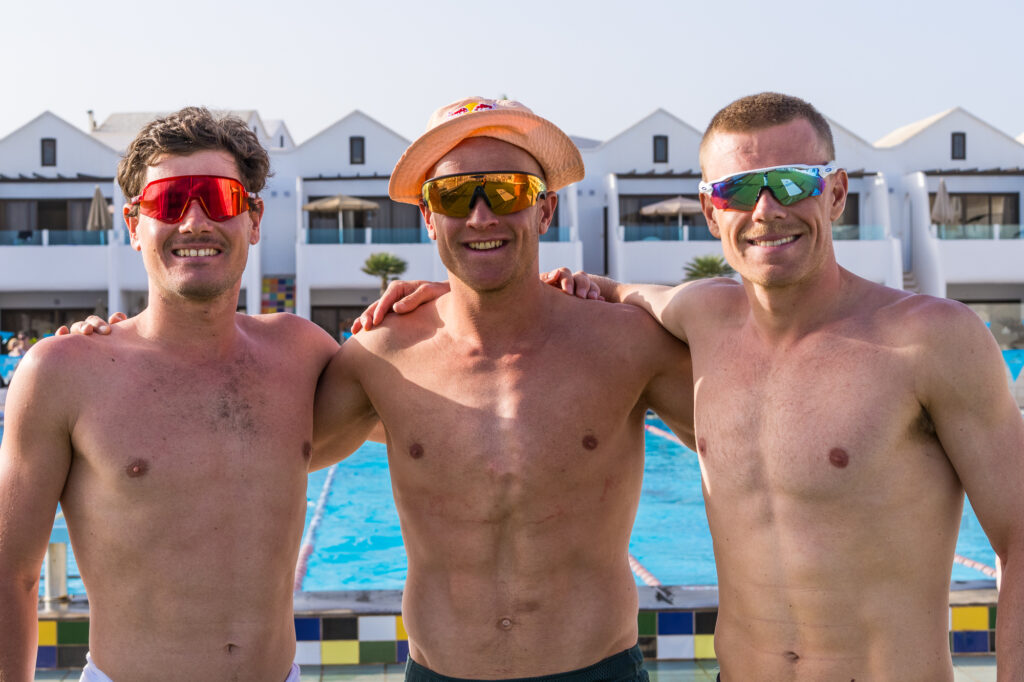
So now it’s time to explore what truly fascinates me. How do these three top the incredible year they enjoyed in 2025?
“Hawaii?” Iden says. “As a group, you can’t really do it better. But we can do it in a better order. Be happier with the result. Perform better at 70.3 Worlds. In the Pro Series too.”
Then he paused, smiled. “But really… it’s down to me.”
The others laugh.
“Can’t we give Gustav a break?” I joke. “Last year was a pretty nice comeback.”
“It was okay,” Iden nods. “Nice made it good. Nice was all that mattered. This year, I want consistency. But Kona—that’s where it’s at.”
According to Blummenfelt, the goal is simple, albeit pretty hard. At least one of the group on the podium in every race.
“Last year, Gustav saved us in Oceanside with a podium alongside Lionel Sanders and Rudy von Berg,” Blummenfelt says. “This year, I’ll carry the flag early and the others can join later.”
“So Casper,” I ask,“what’s a successful season look like for you in 2026?”
“Podium in Kona,” he says, without hesitation. “Everything is about Kona.”
This is why he’s not pushing to the early races now. He’s learned that lesson already.
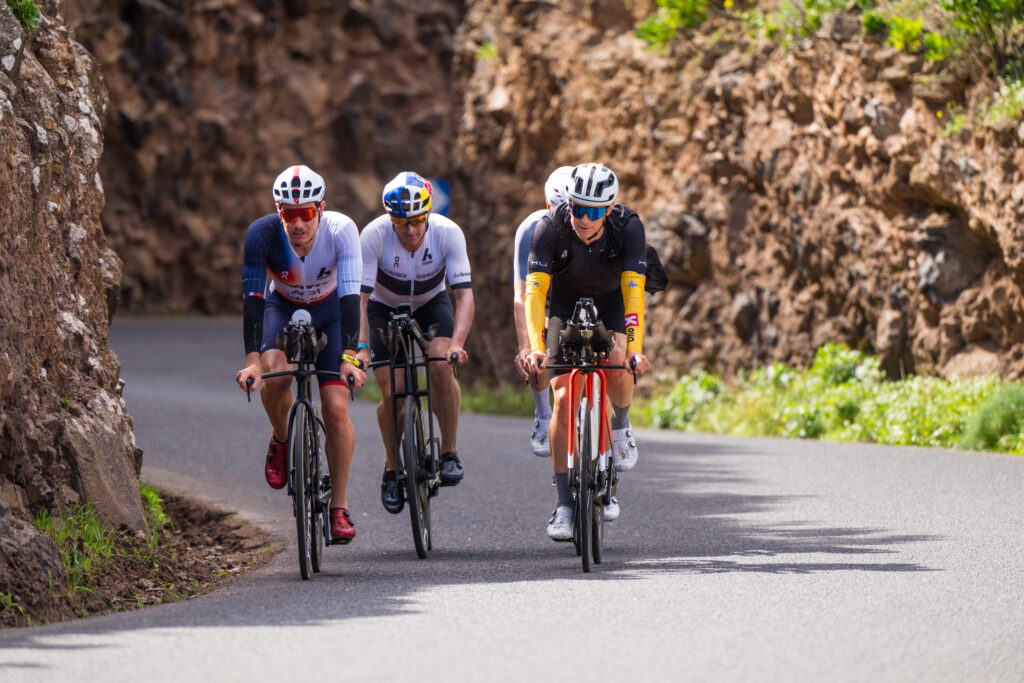
Which brings me to something I’ve always wondered. During my time running for Queens University when our cross country team won nationals three out of four years, our coach used so separate all of us for our hard workouts so we wouldn’t burn each other out. How do these three – arguably the three best long-distance triathletes on the planet – manage to train together and do so well?
“It’s hard when two of us are injured,” Iden says, “and one of us is pretending to be injured.”
Blummenfelt laughs. “I said my calf hurt.”
“You ran 10 x 2 km,” Iden replies. “And then complained after every rep.”
Still, the three refer to their own informal system. They are all self-coached, and everyone is responsible for getting fit and staying healthy. They’re each happy to share advice, which, of course, is sometimes ignored.
And it turns out missing out on the altitude camp wasn’t the end of the world. The weather in Sierra Nevada has been extremely cold, with many pro cyclists reporting that they’re doing most of their training indoors on trainers. Lanzarote might be extremely windy, but it’s been sunny. For the first time in a decade, Blummenfelt jokes he’ll arrive at the first race of the season with tan lines.
So what will the other two do while Blummenfelt is down under? Iden managed to book himself a spot in Sierra Nevada, and Stornes will join him a week later.
I feel that I need to follow up with Iden on the 2025 season. After a few tough years, that runner-up finish in Nice was a game changer.
“It is making my career much longer,” he says. “It would be very tough to continue for another 10 years. Having won before and then making the kind of podiums on the 70.3 … having won the world championship before, it was a step in the wrong direction. It would be hard to maintain motivation for a long time, but last year reminded me I’m still a winner. Even though I didn’t win. I can still find those days when it matters and fight for the win. So now I can have 10 more years to enjoy the sport.”
For Blummenfelt 2026 isn’t about repeating 2025. It’s about learning from the year, being patient. Building toward October. Which won’t be easy for a man who always wants to race for the win.
“I’m trying to be a little bit more patient with the training and build it into October,” he says. “So I guess I will be fit enough to fight for the win in New Zealand and Australia, but that’s not the key focus. The key focus is to be ready in October, and to build into October. Being a bit more patient in terms of the volume and intensity in training.”
I ask Stornes what it’s like to suddenly be in the same conversation as his two training partners.
“He’s finally rich,” Iden jumps in with a laugh.
“He’s looking at a house in my neighbourhood in Bergen now,” Blummenfelt continues. “He’s been living in the ghetto part of Bergen, so now he’s looking to invest in my neighbourhood.”
When Stornes finally gets a chance to get a word in, he’s quick to point out just how much his life has changed over the last year.
“It’s been a completely turnover from how it was this time last year,” he says. “So, like, had it been me last year, I would probably maybe risk (heading to New Zealand) a little bit more for the points for the Pro Series and everything. Last year I wasn’t in the position where I could choose the races I wanted to do. Now I feel like I kind of have to win in Kona, which is why I’m not risking anything at the start of the season so I can show up quite fit in Oceanside and Texas, then build from there. I haven’t felt, since I started a training again after the off season, that I’ve managed to get a long period of good training. So that’s what I’m going to get now and build from there and towards the next races and, in the end, Kona.”
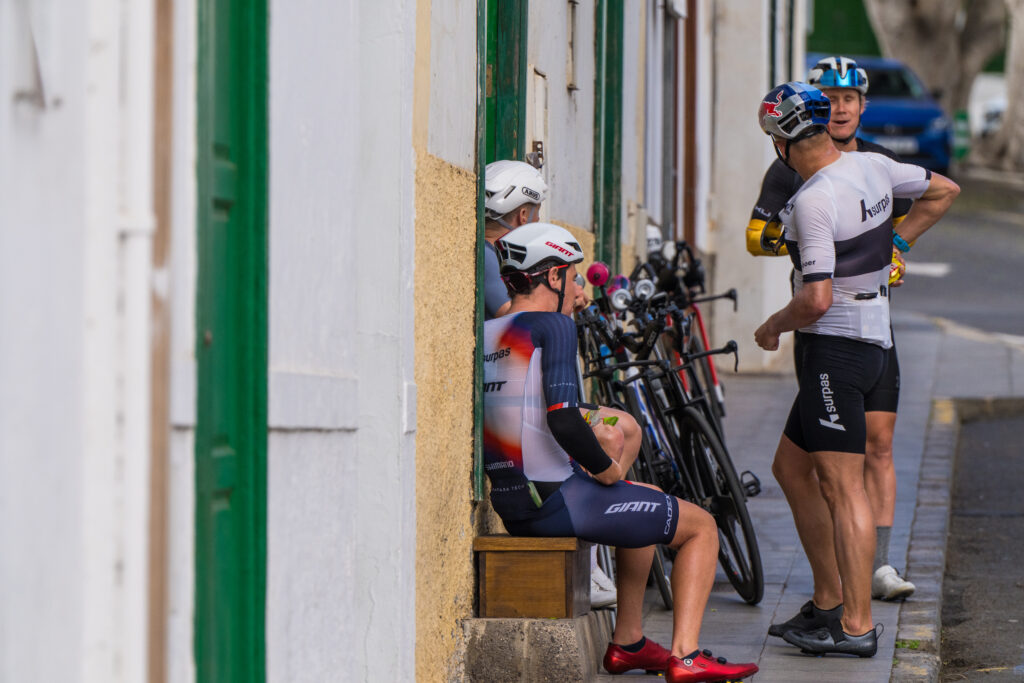
How hard is it going to be to dominate in Kona the same way they did in Nice last year, I wonder. I mention that three-time IRONMAN world champ Peter Reid used to always say the toughest thing to do in the world of triathlon was to defend the Kona title.
“I haven’t been able to defend anything,” Blummenfelt says in his usual blunt fashion. “To win the thing once is easy, but to do it twice, that’s the hardest part. I don’t know why its so hard to defend – I mean, its a full-distance IRONMAN so a lot of things have to go right and only a few things can go wrong.”
“The first Kona,” Iden (who did defend his 70.3 worlds title in 2021 after winning in 2019) says, “was the easiest. You don’t know what to expect. You prepare for everything.”
“He won because he had trampoline shoes,” Stornes jumps in. “He was bouncing down the road.”
With all the time spent together, so much of the year spent on the road racing and training, I wonder if doing all this is still fun for them?
“Some days are a bit tougher when you can’t do the job,” Iden says. “But I think it’s a good sign when the worst days are the days where you can’t do your job.”
“Yeah, it’s not so fun to have a stiff Achilles, but it’s very fun to go out and swim and bike, and I really appreciate the runs I get, so I still enjoy it,” Stornes continues.
“I’d say it’s fun, but at the same time life hasn’t evolved in 15 years,” Blummenfelt says. “We did exactly the same thing 15 years ago, except in Las Playitas (on the nearby island of Fuerteventura), so in one way we’re keeping it as fun as it was, but at the same time we’re just doing the same thing in our daily lives as we did for 15 years. The other day I was thinking of this – it’s just like copy and paste.”
Short Course and a Return to the Olympics?
They don’t miss short course racing. They especially don’t miss the restrictions placed on them by their federation. Long-distance racing has given them freedom—and responsibility. Now there are agents to take care of the business side of the sport. They make the choices instead of being told where to train and race.
“It would have been cool to go back to LA,” Blummenfelt says, “but again, it’s better to be young, wild and free than being locked in with a federation.”
Iden points out how the federation resisted Blummenfelt even getting an agent as his career started to take off, and pushed back when he signed deals with Red Bull and Bahrain 13.
“It’s nice to be in good shape in short distance,” Stornes continues. “Doing the VO2 stuff and hard brick sessions is nice, but I enjoy this lifestyle more. It’s better to control my life and career myself and hang around with Gustav and Kristian.”
As much as they seem to enjoy each other (as you can tell, there’s almost constant banter between the three), things must get tense at times, right?
“No, never,” they almost chime in unison, laughing at their own lie.
“In Norway we call it ‘en kule varm,’ which translates to ‘a warm bullet,’” Iden explains. “Sometimes it can get a bit tense, heated …”
“But then we’re good to leave it at the session,” Blummenfelt continues. “It’s like a football match when the referee blows the whistle and the battle is over and then we can laugh it off.”
I wonder if that’s how they can remain such close friends despite the fact that only one of them can win when they all toe the line.
“It’s important that one of us takes the title and not someone from Belgium or France or Germany,” Blummenfelt says with a grin. “So we have to keep it Norwegian, then after that we can battle internally.”
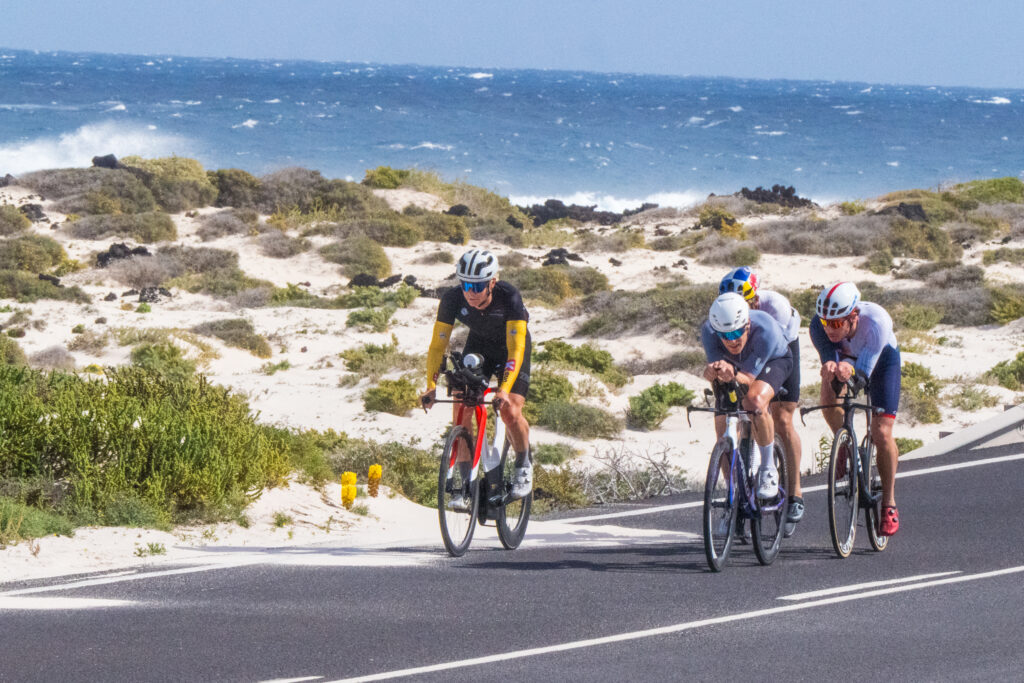
Having Marius Bjerkeset with them also keeps the group fresh. The 26-year-old is, Blummenfelt points out, on paper, the man very capable of taking the Kona bike course record in October.
“He was almost 14 minutes quicker than Frederic Funk in Thun (IRONMAN Switzerland) last year, and Frederic was 90 seconds behind Sam Laidlow (in Roth),” he continues. “So, it’s great to get a guy like that into the group because he keeps us on our toes, and that’s healthy. It’s like bringing a young bull into the group – you know, who is just pushing and trying to show his skills in every session. It’s good to get some youth in the group, because that keeps us young as well.”
While I could keep going for a while, it’s time to let these guys go. I can’t help but ask what they think of Lanzarote.
Lanzarote, they agreed, was a perfect place to prepare for Kona. Crosswinds. Rolling hills. Brutal rides. Not as humid as Kona, but good preparation. This camp, though, is probably too early in the season to get the benefits.
I can’t help myself and ask yet another question. I wonder if they realize how much they’ve changed the world of long-distance racing over the last five or six years. How their group dynamics is so unique, and the results have proven the benefits of what they’ve been doing.
“Sometimes I feel a bit sad for the other athletes,” Iden says. “They’re just training all alone and I hope they enjoy their life, or else it would be strange to keep on doing it years on end. It’s not like we have just ended up having fun, it’s making decisions that make it a good life. It’s not like other athletes can’t have the same positive group that we have. I think many people make it out that ‘they just have fun,’ but we’re not actively working to have fun. It’s better to have a group and, in a group, you have to make certain sacrifices. I think a lot of long-distance athletes are not willing to take these small sacrifices to, in the end, have a better group dynamic and more fun in their day-to-day life.”
It’s a group. A team. Competitors chasing the same dream—on different timelines, with different injuries, but all with the same goal for 2026: Kona.



This is a really great and fun article. Thank you.
Such a good article! I want to be like @Ironmandad when I grow up!! Thanks Kevin…
Glad you enjoyed it! It is always fun to catch up with Kristian, Gustav and Casper! Their success is very much tied to their incredible approach to sport, and life, in general.
Yes great story and a throwback to how we all used to train in San Diego back in the day. The fun factor was super important and the more the merrier. And good for you to be part of that for a bit, love the attitude and humor of that group..
So what you’re saying is that maybe the Norwegian method is the friends we made along the way