
Swimming Terms Every Triathlete Needs to Know
Use “IM” in triathlon and you’re talking about an IRONMAN. Use “IM” in the world of swimming and you’re referencing a whole different beast. Swimmers, just like triathletes, have a language all their own. You’ll see abbreviations and acronyms in written workouts, hear swimmers and coaches reference strange things and, even on race day you might encounter some specific terms. If you’re new to the sport, here are all the basic swimming terms you need to know as a triathlete.
Stroke Abbreviations
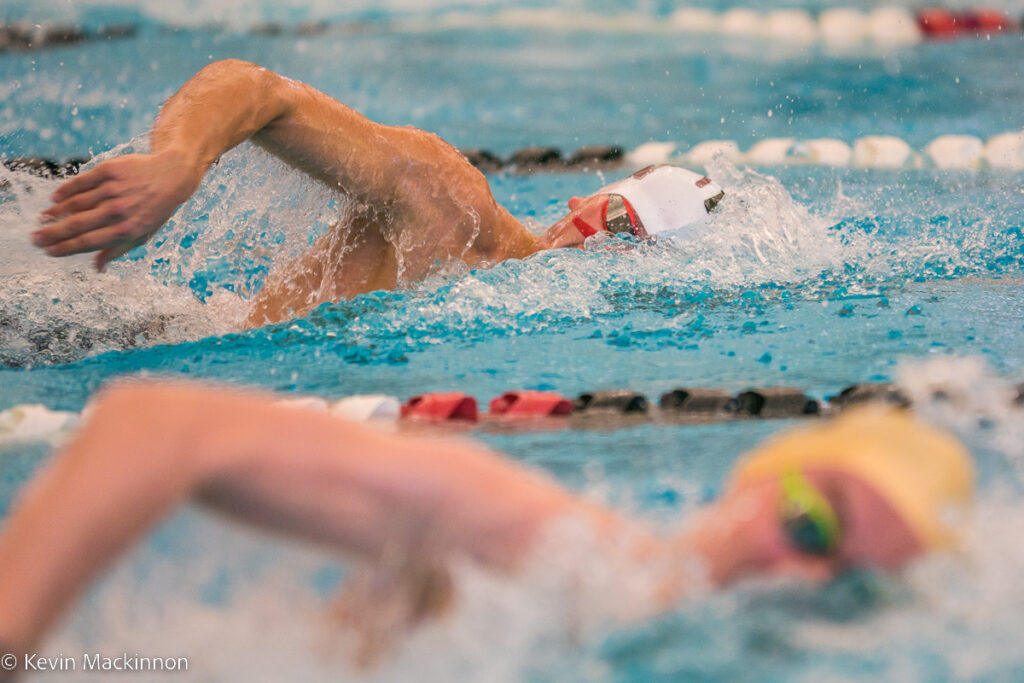
Free/FR/Crawl: Freestyle
BR: Breaststroke
BK/Back: Backstroke
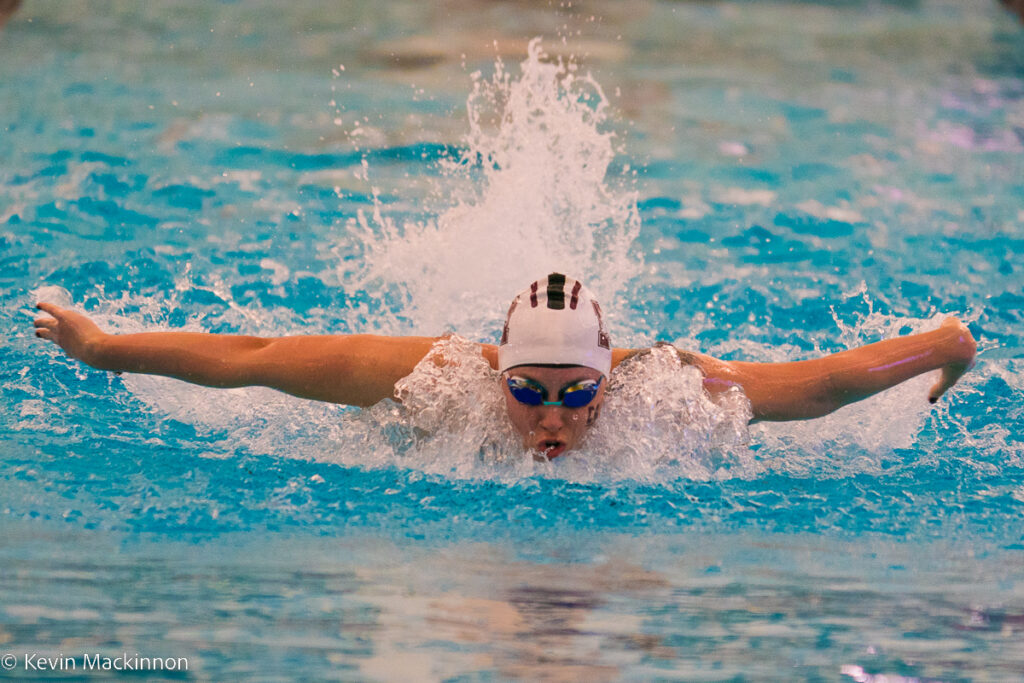
Fly: Butterfly
IM: individual medley. Swimming all four strokes in the order of butterfly, backstroke, breaststroke and freestyle. If you have 100 IM, that means 25 meters of each stroke; 400 IM means 100 meters of each.
Facilities and Gear
LCM – “Long Course Meters” which refers to swimming in a 50 meter, or Olympic size pool.
SCM – “Short Course Meters” which refers to swimming in a 25 meter pool.
SCY – “Short Course Yards” which refers to swimming a 25-yard pool. In the United States, this is the most common size of pool you’ll find.
OW – Open water swimming. In other words, anything other than swimming in a pool.
Fins – use swimming fins, rubber flippers specifically designed for pool swimming.
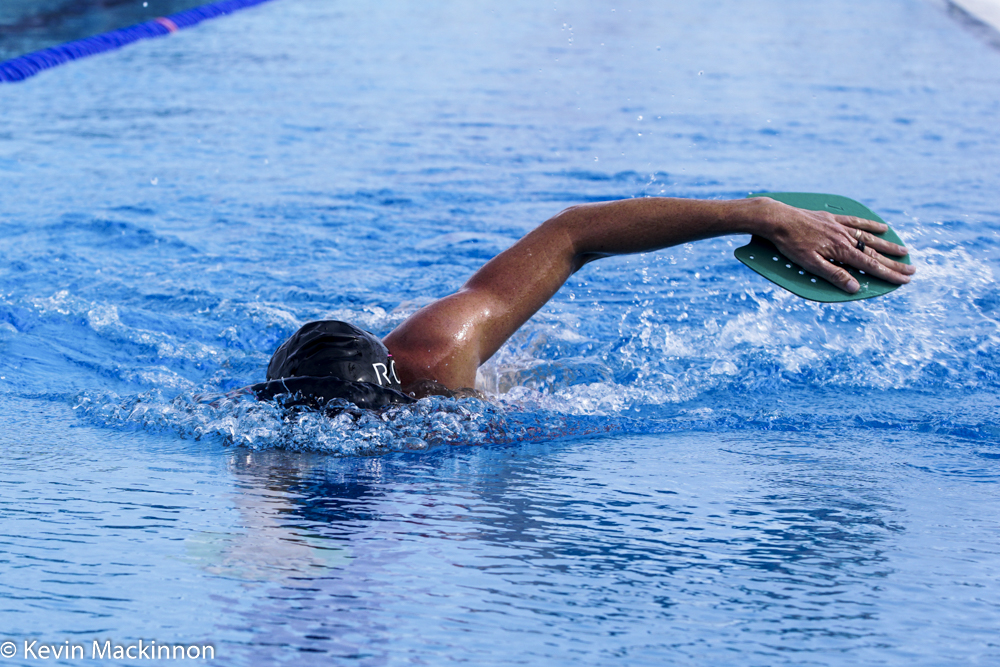
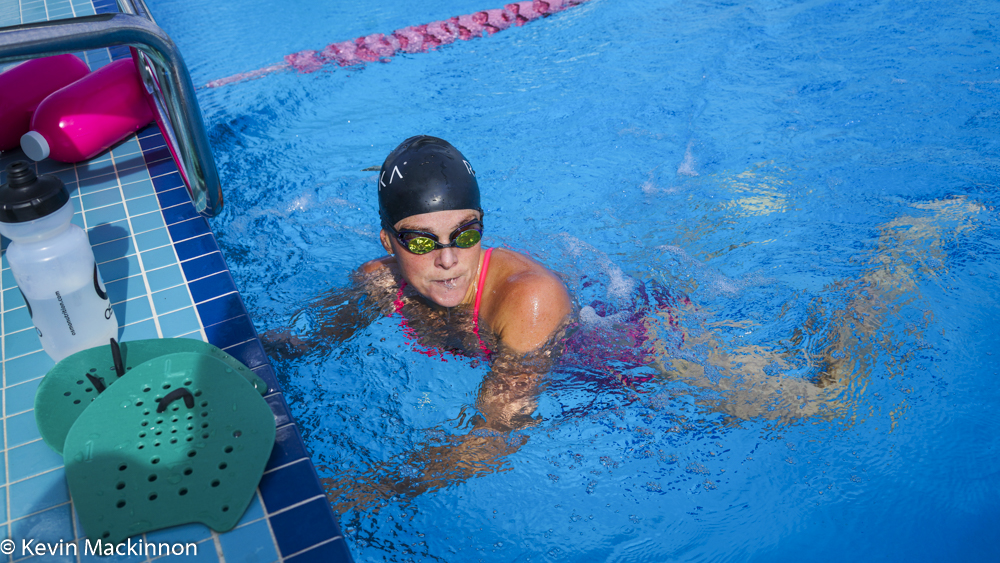
Paddles – plastic hand paddles designed specifically for swimming to increase the surface area of your hands. They come in different styles and can be used for both technique work and strength building.
Pull Buoy/Pull/Buoy – A specifically-designed float placed between the legs at your upper thighs, as close to your groin as possible, to alleviate the need to kick and assist with body position.
Snorkel – a swimming-specific snorkel that allows you to keep your head in a neutral position while breathing.
Kick Board – a floatable foam board specifically for pool swimming that you hold with your hands while kicking or doing other drills.
Band – a small stretchy band placed around the ankles, restraining a swimmer from kicking.
Flags – A rope of small flags hanging width-wise above the pool at both ends, demarcating 5 meters (or yards, depending on the size of the pool) away from the wall, specifically for backstroke so you can count your strokes and safely turn at the wall.
Circle swim – when a group of people are sharing one swimming lane so they agree to swim up one side of the lane and back down the other side, in a circle.
Blocks/Podium – the raised platforms at the end of the lane where swimmers dive from during competition and in practice.
Training
Technique – the technical aspects of swimming.
Kick – isolated kicking, either freestyle, breaststroke, or fly/dolphin kick.
Dolphin kick – the undulating kick used to swim butterfly and when you push off the wall, sometimes referred to as “fly kick.”
Pull – swimming only with your arms (no kicking), typically using a pull buoy and/or band.
Main set – the primary part of the workout, after the warm up and before the cool down.
Descend – essentially, “get faster” each consecutive repetition. For example, “4 x 50 descend” means the first 50 is the slowest and the last 50 is the fastest. It can also refer to a group of repetitions within a set. For example, “10 x 100 descending 1-5” means you get faster from the first to the fifth repetition and then repeat the descend from 6-10, where the first and sixth rep are the slowest and the fifth and tenth rep are the fastest.
Build/Progressive – similar to descending, but typically refers to effort rather than set times. It can be used within a single repetition, for example “100 build” means you start easy and build up to finishing strong or over a set of repetitions, like 4 x 50 progressive 1-4.
Leaving/Send Off – a set time you will push off from the wall. For example, “4 x 100 on 1:45” means you will leave from the wall every 1:45, regardless of how fast you swim the 100.
DPS – “Distance Per Stroke” is the distance you swim for each individual arm stroke, used as an efficiency metric.
SPL – “Strokes Per Length,” how many strokes you take per length to measure DPS.
Bilateral breathing – breathing on both sides, alternating every breath.
Drill – an exercise used to isolate one part of the stroke to work on technique
Catch – refers to the first part of the arm stroke where you initiate the propulsive phase with your hand and forearm
Scull – a drill using your hands in specific motions to improve catch and feel of the water (similar to what synchronized/artistic swimmers do with their hands). There are a variety, each focused on different parts of the stroke.
SKIPS – “Swim, Kick, IM, Pull, Swim” is an acronym referring to the specific sequence. If you have 1000 SKIPS that means 200 of each. Can often appear without the IM as SKPS.
Dive start – starting from a dive, either from the side of the pool or the start blocks
Cadence/Turn Over – the speed of your strokes (similar to bike cadence)
Open Water
Australian/Aussie Exit – in open water swimming, swimmers must exit the water and turn around a marker on land before re-entering the water. Often seen in triathlon when the swim course has two laps.
Beach start – an open water race that begins from the beach, requiring swimmers to run from the sand into the water
In-water start – an open water race that begins in the water.
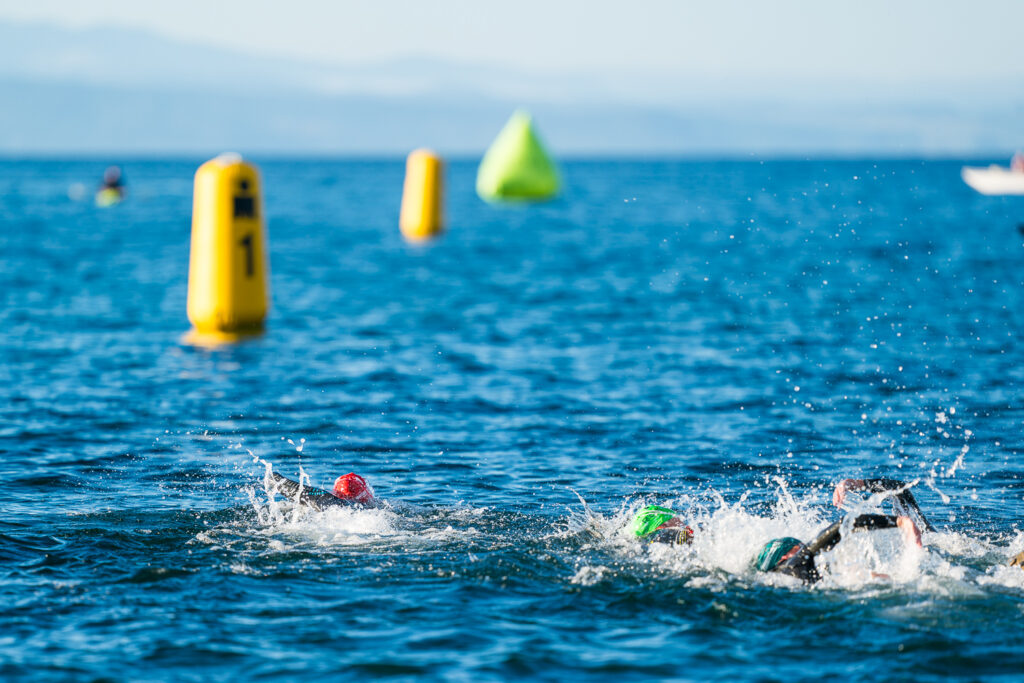
Sight Buoy – a buoy in the water used for directional guidance only, not necessarily to mark a turn.
Turn Buoy – a buoy in the water used to indicate a course turn.
Sighting – when a swimmer lifts their head so they can see above the water.
Drafting – when a swimmer swims behind another, taking advantage of the energy savings in their slipstream/wake.
On feet/ On the hip – when a swimmer is drafting, they can do so two locations: “on the feet” means directly behind the swimmer in front, “on the hip” means to the side of the front swimmer close to their hip, approximately shoulder-to-hip.




I think typically this also means using paddles, although it can be the two possibilities you refrenced
I would also add that when talking about stroke per length, to remind everyone that a stroke is “1” arm pull and not the stroke cycle of 2 arm pulls. People often get confused there..
And thanks for not getting into the length vs lap debate, one that will never be settled.. (-;.
Great post.
And so rare that one sees an image online of hand paddles set up correctly. Well done.