
The IRONMAN Pro Series Has Succeeded at Everything But Its Original Mission
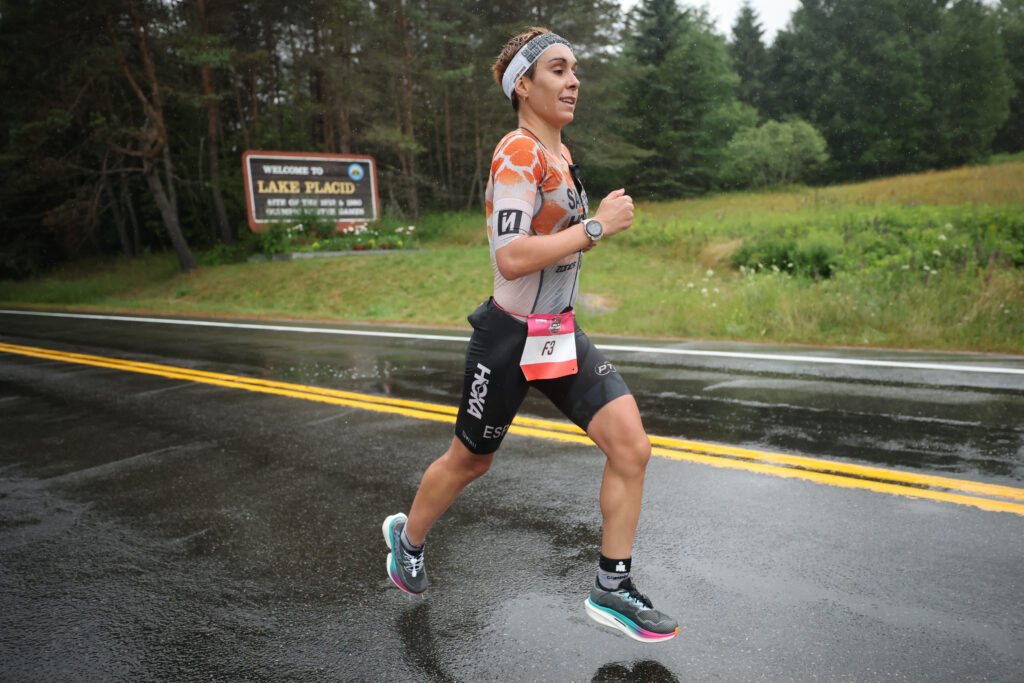
This weekend, the IRONMAN Pro Series heads to upstate New York for another running of IRONMAN Lake Placid. It is the second-to-last full distance IRONMAN in this year’s Pro Series before the grand finale at the IRONMAN World Championship in Kona. It also happens to be the second-to-last Pro Series event in North America before Kona; next weekend’s 70.3 Boise marks the final North American stop.
By all accounts, IRONMAN Lake Placid should shape up to be another tremendous event. We have the full-distance IRONMAN debut for Paula Findlay on tap, taking on a women’s field that also includes Lisa Perterer, Marta Sanchez, and 2022 IRONMAN World Champion Chelsea Sodaro. You can read more about the field this weekend in our preview article here.
Lake Placid should be the next chapter of a story of phenomenal professional racing that we’ve had all season long. It’s actually been one of the most consistently exciting season of long-course professional racing that I can remember. Between the IRONMAN Pro Series, the T100 events, and the continued elevation of Challenge Roth into the biggest full-distance prize outside of Kona, we have been spoiled rotten by the quality of the racing.
The biggest thing that we’ve seen this season is that we’re seeing the sports top stars compete against one another more frequently. We’ve seen, for instance, the mighty Norwegian trio of men race each other multiple times already. We’ve had Kat Matthews versus, well, just about everybody. The racing is close and often requiring some late-race heroics to see victory.
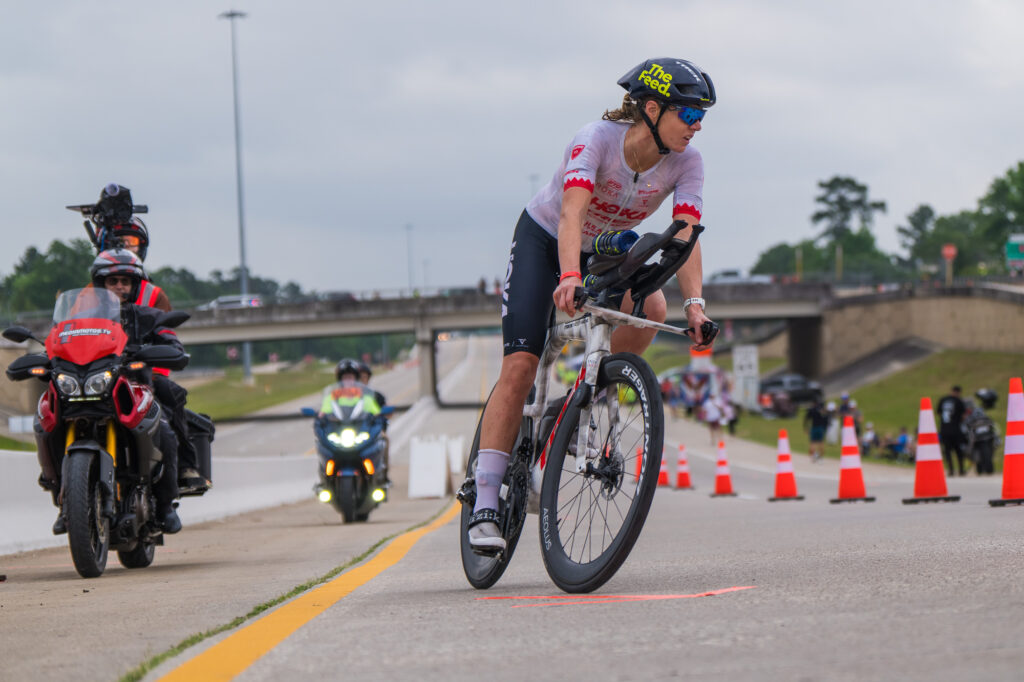
And we’ve also gotten spoiled by the elevation of live coverage for these events. Yes, even with all of the hiccups, hurdles and preferences for certain broadcasters, we are not far removed from the days of having to track these races via text updates and splits being updated alone. (Though, for those looking to tune in this weekend, this is your annual reminder that the backwoods of upstate New York usually result in the occasional disruption in the live video feed. If you’ve been up there, you know how *ahem* challenging the reception can be across any network you can think of.) We have consistently working live coverage for all of the major events, almost always on YouTube.
This has to be nearly exactly what IRONMAN had in mind when the Pro Series was created a couple of years back. And, let’s not forget, we don’t get to having the Pro Series without the legwork that the PTO and World Triathlon had done on T100. You have the best professional athletes racing each other at your events more often, and getting more eyeballs on your product.
There’s just one small problem. And you can find it right in the name of the product itself: Series.
Remember all of the initial marketing around these events? It was about how important the season-long narrative was. How the points for the Pro Series mattered. How at the end of the year there would be Pro Series champions and the sizable bonus pool attached to it. And, to their word, those bonuses do still exist.
But, whether by accident or by design, things have been a lot quieter with regard to the actual Pro Series and their standings this year. That could be in part due to having the same names that you might find fighting for the IRONMAN World Championship atop the respective standings (as in, it’s the Norwegian Trio atop the men’s standings, and defending IRONMAN World Champion Solveig Løvseth leading the women’s rankings). It could be because two-time defending women’s champion Kat Matthews is not putting forth the same kind of dominating position. It could be related to how the 2024 Series champion Gregory Barnaby has struggled ever since earning that crown, with a single podium finish to his name since.
Or it could just have to do with the fact that long-course triathlon is probably ill-suited to the Series format. It’s hard to create a season-long narrative when, on any given start list, you might be lucky to get 40-50% of the top end of the sport there. Depending on the athlete and their schedule, there’s typically 4-5 moments that you can reliably count on exceeding those numbers:
- 70.3 Oceanside as the unofficial kick-off to the North American season;
- IRONMAN Texas as the big “check the Kona box” moment;
- Challenge Roth;
- IRONMAN 70.3 Worlds;
- IRONMAN World Championship
That’s it. That’s the list.
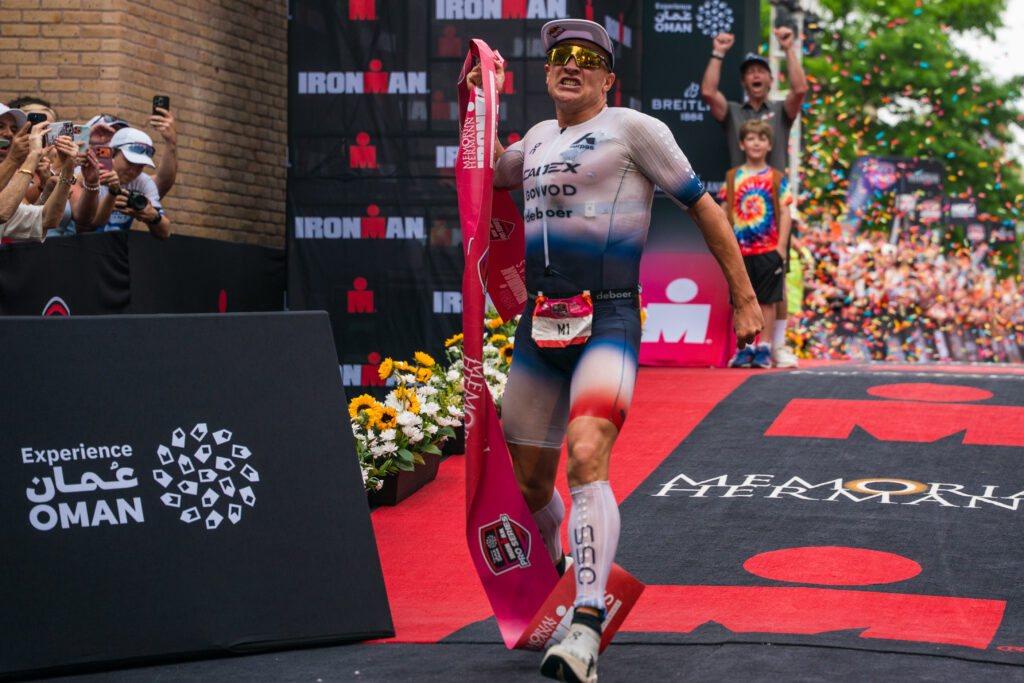
What that probably tells us is that if there’s desire to create a “true” season-long narrative, there needs to be fewer of these races. That’d take to a model more similar to what we see out of the World Triathlon Championship Series and, to a lesser extent, to what T100 has done. You’d have 6-8 of these races, award points, and go from there. Heck, WTCS makes a whole ceremony out of whomever is leading the series at each event — in part because they’re all there at the same time.
But I think that would be the wrong lesson to learn here. Though I think the points model is broken (it does not properly reward finishing position, especially when you win), and that there really isn’t a “season long” narrative to find, the Pro Series races bring a level of consistent excitement to triathlon as a whole that hasn’t been there since the glory days of races selling out before online registration even opened. The single greatest advertisement that IRONMAN has for its product is high-quality professional racing, and the Pro Series delivers nearly every single time.
I also think it is correct, strategically, for IRONMAN to continue to have prize purses available for non-Pro Series events. What I would like to see is a slightly stricter barrier to entry for Pro Series races so that, say, we don’t run into the situation where top-ranked athletes are potentially shut out of a top-tier event because they simply didn’t click the registration button fast enough. I’d also prefer that there be some non-Pro Series races available that athletes who have either won races or currently competing on the Pro Series couldn’t enter, so that athletes might breakthrough and win there, then come up onto the Pro Series itself.
For now, though, I’m going to sit back and enjoy the racing.






I always thought the IMPS was intended way less of a “season long narrative” (that sure sounds like a soundbite from T100), and more to simply limit the athlete’s ability to race “other” races. More to get them to be motivated to race ~2 more IM events a year and the associated financial bonuses with that strategy. Most top pro’s were already racing 4 IM branded events on basic qualification requirements (1 x IM to qualify for IM worlds, 1 x 70.3 to qualify for 70.3 worlds, IM Worlds, 70.3 worlds).
Hell I don’t even remember “season long narrative” until T100 came and basically trademarked it, I never heard it being applied to the IMPS.
I am in favor of somehow improving the starting list procedures for IMPS and non-IMPS races.
The tag line for the series is “every second counts” and while I don’t think I’ve heard it uttered once this year it was the driving message at launch. The intent of the series is exactly as you say, to force more of the best athletes into more IM branded races, but they were definitely trying to sell a season long narrative when this series launched.
Good call, I guess the actual real original mission that everyone agrees and understands why there is an IMPS to begin with- “we want more pro’s to race our races and not T100 races” doesn’t trademark or make for catchiness on the broadcasts very well.
Yeah it’s capturing the top long course pro’s and without doubt hurting T100 participation.
I think it would be much better if they picked one full IM in the spring or mid summer (north america), and have around 4-5 70.3 plus Kona. then MAYBE the season long narrative works. Once you have multiple Ironmans to pick from, it just does not work
Don’t think Ironman was going after the season long narrative or promoting the pro series as a “best-of-the-best” battle
it really serves as a vehicle to make the brand more sticky to the pros so they will build their season around it rather than just pop in
The two WCs are their showcase events every year and almost everyone shows up
Did you hire someone else to write your headline? Because you mention Mission in the headline and then do not define the mission anywhere.
The IRONMAN Pro Series Has Succeeded at Everything But Its Original Mission
I think we’ve been told elsewhere that AI suggests a title.
But you have articulated the question that played for me as soon as I’d read the article. I scrolled back up to review in an effort to find what the author was framing as Ironman’s “Mission” for their IM Pro Series. But let’s run with the author’s list.
[Minor edit to create a list]
I have made some comments in the IM Pro Series thread - too long for here, but suffice it to say, I am more sanguine than the author, who ends on a more positive note.
Agree. Perhaps this is actually the ‘Mission’ to enhance Ironman’s reputation for staging races with high-quality professional racing which is worth broadcasting.
I’d argue the opposite - maybe not chatter (Blu putting down 4 scores right off the bat will do that) but there’s a lot more uncertainty about who might win. Last year Blu and Matthews were imperious - and you knew halfway through the year who’d win. Matthews didn’t even finish the 70.3 and still was way ahead (same with Perterer in 3rd).
This year on the men’s side, it’s more open. Blu’s 6th in IMNZ plus the extra race in Roth gives room for Stornes to potentially take it away, and Foley is sitting on a perfect score. Lots of guys can come 3-6th.
On the women’s side, Løvseth looks like the favourite (again because of a hiccup at Texas and Roth for Matthews), but a high score from Perterer tomorrow could push Matthews 3rd/4th, and a poor showing from Løvseth at the 70.3 WC might well open up the whole thing.
This thing might well all come down to the wire at Kona, which is what IM surely wants
1.) I don’t use AI in my writing. Coding is another story.
2.) I’m the headline writer for 90% of what you read on ST.
3.) Yes, you are being pedantic, but we love you anyways.